


Blanket vs. DSCR Loans: The Core Difference for Florida Investors
For real estate investors managing multiple properties in bustling markets like Miami and Orlando, financing strategy is paramount. The choice often boils down to two powerful but distinct options: a blanket loan or a series of Debt Service Coverage Ratio (DSCR) loans. Understanding their primary difference is the first step toward optimizing your portfolio.
A blanket loan is a single mortgage that consolidates two or more properties under one financial umbrella. Instead of juggling multiple payments, due dates, and lenders, you have one streamlined loan. This approach treats your portfolio as a single, cohesive asset.
A DSCR loan, on the other hand, is a loan for a single investment property. Its qualification power comes not from your personal income but from the property's own ability to generate enough cash flow to cover its mortgage payment and expenses. If you have five properties, you would secure five individual DSCR loans.
The decision isn't just about convenience; it fundamentally alters your leverage, cost structure, and operational flexibility.
Interest Rate and Fee Comparison in Miami
Let's analyze a realistic scenario for an investor with a four-property portfolio in Miami, valued at a total of $2 million, with each property valued at $500,000. The goal is to secure 75% loan-to-value (LTV) financing, totaling a $1.5 million loan amount.
Analyzing Blanket Loan Costs
A blanket loan simplifies closing but comes with its own cost structure. Because the lender is underwriting a more complex, multi-asset deal, the perceived risk can be slightly higher, sometimes reflecting in the interest rate.
- Interest Rate: A typical rate for a $1.5M blanket loan might be around 8.0%. (The data, information, or policy mentioned here may vary over time.) The rate is applied to the entire loan balance.
- Origination Fees: Lenders often charge points, typically 1-2% of the total loan amount. (The data, information, or policy mentioned here may vary over time.) For our Miami investor, a 1.5% origination fee on $1.5M would be $22,500.
- Closing Costs: This is where blanket loans offer a clear advantage. You pay for one set of closing costs. This includes a single appraisal fee (though it's a more complex portfolio appraisal), one title policy, one set of legal fees, and other standard charges. This could total between $8,000 and $12,000. (The data, information, or policy mentioned here may vary over time.)
Total Upfront Cost Example (Blanket): Approximately $30,500 - $34,500 in fees.
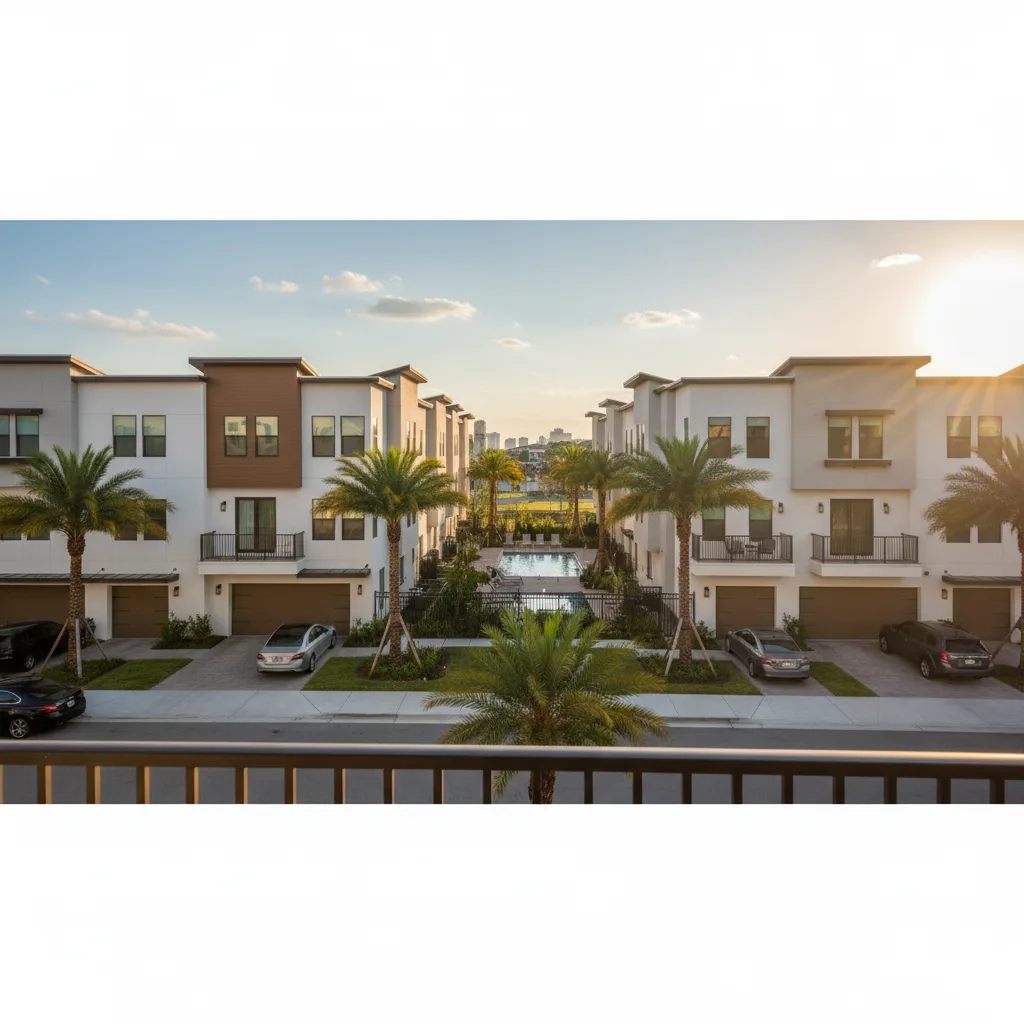
Breaking Down Multiple DSCR Loan Costs
Financing the same portfolio with four separate DSCR loans spreads the financing across individual assets. Rates can be very competitive because each deal is a simpler, standalone transaction for the lender.
- Interest Rate: Rates might be slightly lower per loan, perhaps averaging 7.75%. (The data, information, or policy mentioned here may vary over time.) Each of the four $375,000 loans (75% LTV of $500k) would have its own note.
- Origination Fees: The fee percentage might be similar, say 1.5%, but it's charged on each loan. So, 1.5% of $375,000 is $5,625. Multiplied by four properties, the total origination comes to $22,500—the same as the blanket loan in this case.
- Closing Costs: Here lies the major difference. You must pay for four separate closings. Four appraisals, four title policies, four sets of recording fees. If a single closing costs $4,000, the total for four properties becomes $16,000. (The data, information, or policy mentioned here may vary over time.)
Total Upfront Cost Example (DSCR): Approximately $38,500 in fees.
In this Miami scenario, the blanket loan saves roughly $4,000 to $8,000 in upfront costs, primarily by consolidating closing fees.
Cash-Out Refinancing Terms in Orlando: A Head-to-Head
Imagine an investor with a portfolio in Orlando who wants to tap into their equity to fund a new acquisition. The structure of their existing financing dramatically impacts their ability to pull out cash.

With a blanket loan, you tap into the pooled equity of the entire portfolio. This is a powerful tool if your equity is distributed unevenly. For example, if you have one property that has appreciated significantly while others have remained flat, the blanket loan allows you to leverage that one star performer's equity to benefit the whole portfolio. A lender might allow a cash-out refinance up to 70% of the total portfolio's value, giving you a substantial single lump sum. (The data, information, or policy mentioned here may vary over time.)
With multiple DSCR loans, you must refinance each property individually. This provides targeted access to equity but can be limiting. If you need $200,000 in cash, but your equity is spread thinly across five properties, you might need to execute two or three separate and costly cash-out refinances to cobble together the funds. The high-performing property can be refinanced, but its equity cannot be used to increase the cash-out potential of the others.
For investors in a rapidly appreciating market like Orlando, a blanket loan can offer a more efficient and powerful method for accessing capital locked within a portfolio.
Selling a Single Property: The Release Clause Explained
What happens when you want to sell one property from your portfolio? With DSCR loans, the process is simple: you sell the asset and use the proceeds to pay off its corresponding loan. The other properties and their loans are unaffected.
With a blanket loan, the situation is governed by a critical feature: the partial release clause. This clause must be negotiated upfront and specifies the terms for selling a single property without having to pay off the entire blanket mortgage.
Typically, the lender will require you to pay down a portion of the principal that is greater than the proportional value of the property being sold. For instance, to release a property that makes up 25% of the portfolio's value, the lender might require a principal paydown of 125% of the loan amount allocated to that property. (The data, information, or policy mentioned here may vary over time.) This is to protect their overall LTV and risk position. There may also be a 'release fee' associated with the transaction.
Without a favorable partial release clause, selling one property could trigger a 'due-on-sale' clause for the entire loan, forcing you to pay it off completely—a costly and disruptive event.
Flexibility for a Growing Florida Rental Portfolio
Your long-term strategy for acquiring more properties directly influences which loan structure is better.
Scaling with DSCR Loans
DSCR loans offer maximum flexibility for growth. You can add properties one at a time, whenever a good deal arises. Each new purchase is a separate transaction, allowing you to move quickly without disturbing your existing financing. This 'a la carte' approach is perfect for investors who are opportunistic and value agility. The main downside is the growing administrative burden of managing many individual loans.
Scaling with a Blanket Loan
Adding a property to an existing blanket loan is often cumbersome. In most cases, it requires a full refinance of the entire portfolio to incorporate the new property. This means repeating the entire underwriting process and paying new closing costs. While some lenders might offer a loan modification, it is not standard. Therefore, blanket loans are generally better suited for stabilizing a completed portfolio rather than actively building one.
Underwriting Deep Dive: Blanket vs. DSCR
The lender's evaluation process differs significantly between the two loan types.
Blanket Loan Underwriting: The lender analyzes the portfolio as a single economic unit. They calculate an aggregate DSCR across all properties, ensuring the total income sufficiently covers the total debt service. They also look at the overall LTV, property type diversity, geographic concentration (e.g., all in Miami-Dade County), and the investor's experience. Your entire portfolio must be financially sound.
DSCR Loan Underwriting: The focus is microscopic. The underwriter is primarily concerned with one question: does this specific property generate enough rent to pay for its own mortgage, taxes, and insurance? While your credit score and real estate experience are considered, your personal income is not. Each property must stand on its own financial merits.
Calculating Your Total Borrowing Power
Your choice impacts the total leverage you can achieve.
A blanket loan bases its LTV on the aggregate value of the portfolio. This can be an advantage if you have properties with low individual LTVs that can balance out a property where you need higher leverage.
DSCR loans determine borrowing power on a per-property basis. The total amount you can borrow is simply the sum of what each property qualifies for individually, typically capped at 75-80% LTV per asset. (The data, information, or policy mentioned here may vary over time.) If one property doesn't meet the DSCR or LTV requirements, you simply cannot finance it, even if the rest of your portfolio is strong.
The Best Option for a Mixed-Performance Portfolio
Here is where the blanket loan truly shines. Consider an investor with a mixed portfolio of properties in both Miami and Orlando. A high-cash-flow condo in Miami could be generating a DSCR of 1.5, while a newly acquired single-family rental in a developing Orlando suburb might have a DSCR of only 0.95 (temporarily negative cash flow).
With DSCR loans, the Orlando property would not qualify for financing on its own. It's a dead end.
With a blanket loan, the lender looks at the blended performance. The Miami property's strong cash flow can offset the Orlando property's temporary shortfall. If the combined portfolio meets the lender's required aggregate DSCR (e.g., 1.20), the entire portfolio can be financed. (The data, information, or policy mentioned here may vary over time.) This allows you to acquire and hold properties that have long-term potential even if their short-term cash flow is weak, making it a strategic tool for value-add investors. Choosing between a blanket loan and a series of DSCR loans is a critical decision that impacts your costs, flexibility, and ability to scale. If you are weighing these options for your Florida properties, a strategic review of your specific portfolio can reveal the most profitable and efficient path forward.
Choosing between a blanket loan and multiple DSCR loans is a pivotal decision for any real estate investor. If you're ready to craft a financing strategy that aligns with your portfolio goals, our experienced advisors are here to help. Discover the most profitable path for your Florida properties and Apply now for a tailored loan solution.
Author Bio
David Ghazaryan is the expert mortgage strategist and founder behind iQRATE Mortgages. With a mission to fund home loans that traditional banks won't touch, David specializes in helping clients with unique financial situations, including those recovering from foreclosure or bankruptcy. He expertly crafts smart, strategic, and stress-free mortgages by leveraging a vast network of over 100 lenders to secure competitive rates for investors and homebuyers alike. Praised for exceptional customer service, David has helped hundreds of families with a 97% satisfaction rate, guiding them to the mortgage they deserve.
References









