


What is a blanket mortgage and how does it work for Orlando rental properties?
A blanket mortgage is a single loan that covers two or more real estate properties. Instead of juggling multiple mortgages with different terms, rates, and payment dates, a real estate investor can consolidate them into one streamlined financial instrument. This is particularly valuable for investors looking to scale their holdings efficiently.
Here’s how it works for an investor with a growing portfolio in Orlando: imagine you own four single-family rental homes in different neighborhoods. Managing four separate loans means four sets of paperwork, four monthly payments, and four different lenders to deal with. A blanket mortgage allows you to refinance all four properties under a single loan agreement. You'll have one monthly payment, one interest rate, and a unified view of your portfolio's debt.
This consolidation offers several advantages:
- Simplified Management: Reduces administrative tasks and paperwork, freeing up time to find new deals.
- Improved Cash Flow Management: A single, predictable payment makes budgeting and financial planning easier.
- Increased Borrowing Power: By leveraging the collective equity of your Orlando properties, you may be able to access more capital for future investments.
Is a blanket loan better than multiple DSCR loans in Tampa?
Deciding between a blanket loan and multiple Debt Service Coverage Ratio (DSCR) loans depends entirely on your investment strategy and portfolio size. Neither is universally 'better'; they serve different purposes for investors in a market like Tampa.
DSCR Loans: These loans qualify you based on the individual property's ability to generate enough income to cover its debt payments. The lender focuses on the property's cash flow, not your personal income. This is ideal for investors buying properties one at a time, especially if they have strong cash-flowing assets but may not have traditional W-2 income.
Blanket Loans: This type of loan assesses the entire portfolio's financial health. A lender looks at the combined value, equity, and cash flow of all properties included. A high-performing property can help offset a lower-performing one within the same loan.
Here’s a direct comparison for a Tampa investor:
- Application Process: With multiple DSCR loans, you complete one application per property. A blanket loan requires only one application for the entire portfolio.
- Underwriting Focus: DSCR loans analyze each property's cash flow independently. A blanket loan assesses the aggregate cash flow and value of all properties combined.
- Flexibility for Sales: It is easier to sell a single property financed with its own DSCR loan. To sell a property from a blanket loan, the agreement must include a 'release clause' to avoid refinancing the entire portfolio.
- Ideal Use Case: Multiple DSCR loans are best for investors scaling one property at a time or those with strong individual deals. A blanket loan is ideal for managing and leveraging a larger, established portfolio of 4+ properties.
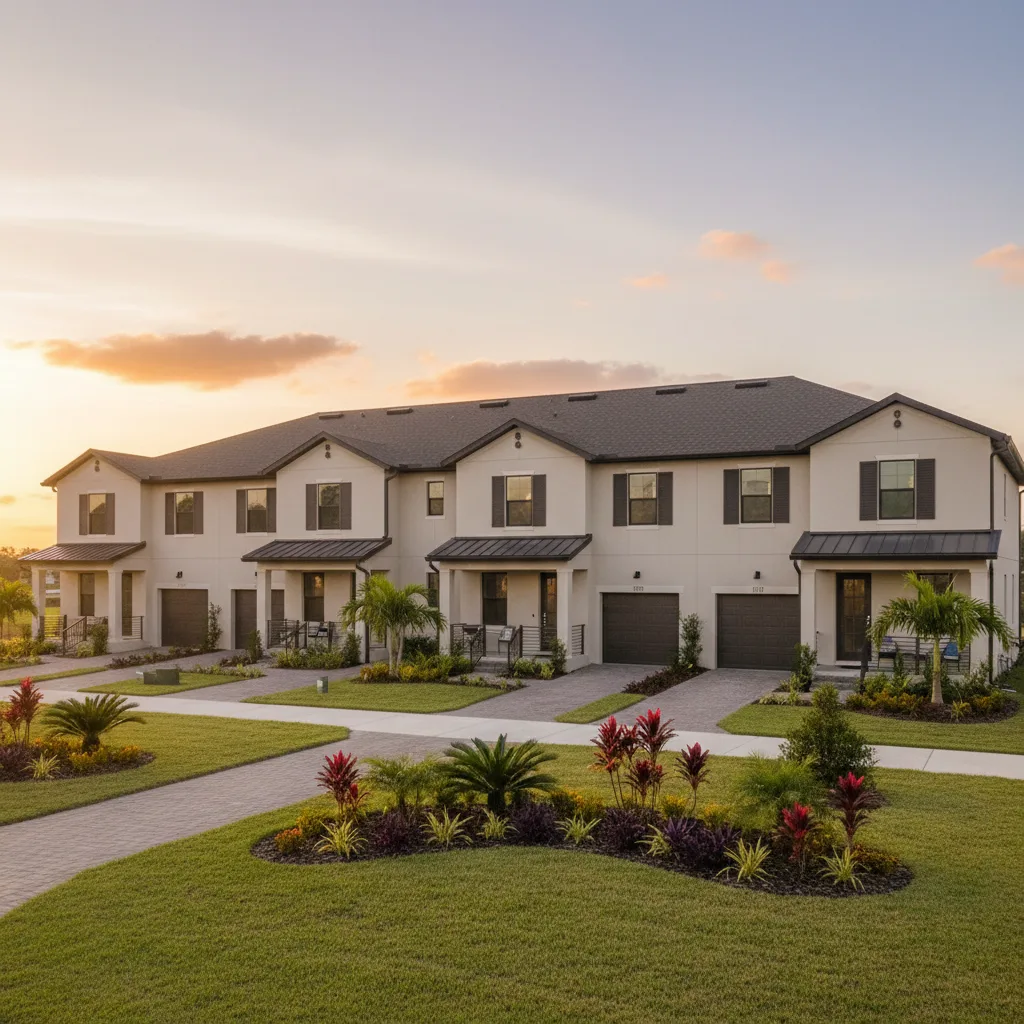
For a Tampa investor with six properties, a blanket loan simplifies management significantly. However, if those properties were acquired over time using individual DSCR loans, the cost and complexity of refinancing into a blanket loan must be weighed against the administrative benefits.
What are the typical down payment requirements for a blanket loan?
Down payment requirements for blanket loans are generally higher than for conventional owner-occupied mortgages. Because these are commercial or portfolio loans, lenders see them as having a higher risk profile.
Typically, you should expect to need a down payment equivalent to 25% to 35% of the portfolio's total value. (The data, information, or policy mentioned here may vary over time.) This is often expressed as a maximum Loan-to-Value (LTV) ratio of 65% to 75%. For example, if your portfolio of properties is appraised at a combined value of $2 million, a lender might offer a maximum loan of $1.5 million (75% LTV), requiring you to have $500,000 in equity or as a down payment.
Several factors can influence this requirement:
- Portfolio Strength: A portfolio with a strong history of rental income and low vacancies may qualify for a higher LTV.
- Property Types: Lenders may require a larger down payment for portfolios that include more volatile assets like short-term vacation rentals versus long-term residential rentals.
- Borrower Experience: A seasoned investor with a proven track record may be offered more favorable terms than a newcomer.
- Cash Reserves: Lenders will want to see that you have sufficient liquid reserves (often 6-12 months of total mortgage payments) after closing.
How do lenders evaluate a portfolio of Kissimmee properties for one loan?
When a lender underwrites a blanket loan for a portfolio of properties in Kissimmee, they conduct a holistic analysis that goes beyond looking at each property in isolation. The goal is to understand the risk and profitability of the portfolio as a single business entity.
Here are the key evaluation points:
Global Portfolio Cash Flow: The lender calculates the total rental income from all the Kissimmee properties and subtracts the total operating expenses (taxes, insurance, maintenance, property management). The resulting Net Operating Income (NOI) must be sufficient to cover the proposed single mortgage payment. They will calculate a portfolio-wide DSCR to ensure it meets their minimum threshold, typically 1.20x or higher. (The data, information, or policy mentioned here may vary over time.)
Aggregate Property Value and Condition: Each property in the portfolio will be appraised to determine its current market value. The lender assesses the overall quality and condition of the properties. A portfolio of well-maintained homes in desirable Kissimmee neighborhoods is viewed more favorably than scattered properties in poor condition.
Geographic Concentration: While your portfolio is in Kissimmee, the lender will note the geographic diversification within the area. Having properties spread across a few different zip codes can be seen as less risky than having them all on the same street, which could be vulnerable to a localized issue.
Investor Experience and Credit: The lender will scrutinize your track record as a real estate investor. They want to see that you have experience managing rentals successfully. Your personal credit score and financial history also play a crucial role, as they indicate your reliability as a borrower.

Can I add or remove properties from a blanket mortgage later?
Yes, it is often possible to add or remove properties from a blanket mortgage, but this capability depends entirely on the specific terms negotiated in your loan agreement. This flexibility is a key feature that attracts sophisticated investors.
Removing a Property: To sell a single property from the portfolio, your loan must include a 'release clause'. This provision outlines the process for releasing one property's title from the mortgage lien, typically after a specified portion of the loan balance is paid down. Without this clause, you would have to refinance the entire portfolio just to sell one house.
Adding a Property: Some blanket loans are structured to allow for future acquisitions. This is often called a 'collateral substitution' or 'addition' clause. It enables an investor to add a newly purchased property to the existing loan, usually by re-appraising the portfolio and adjusting the loan amount. This is far more efficient than seeking a new loan for every new purchase.
It is critical to discuss these options with your lender upfront. Ensure the loan documents clearly state the terms for releases and additions, including any associated fees or principal pay-down requirements.
What are the interest rates for blanket loans versus individual investor loans?
Interest rates for blanket loans are typically higher than those for conventional primary residence mortgages and often slightly higher than rates for individual investment property loans like a DSCR mortgage.
You can generally expect the interest rate on a blanket loan to be 0.50% to 1.5% higher than what you might get on a single Freddie Mac or Fannie Mae-backed investment property loan. (The data, information, or policy mentioned here may vary over time.) For example, if a 30-year fixed loan on a single rental property is 7.5%, a blanket loan covering five such properties might have a rate closer to 8.0% or 8.5%.
This premium exists for several reasons:
- Increased Complexity: Underwriting a portfolio of properties is more complex and time-consuming for the lender.
- Commercial Nature: Blanket loans are commercial financing products, which inherently carry higher rates than consumer mortgages.
- Portfolio Risk: The lender is taking on the aggregated risk of multiple properties. While diversification helps, the loan amount is much larger.
Despite the higher rate, the total cost of borrowing can sometimes be lower over the long term due to savings on closing costs. Closing one large loan is often cheaper than closing five smaller ones, each with its own set of administrative, appraisal, and title fees.
What is a release clause and why is it important for my Florida portfolio?
A release clause is arguably the most critical component of a blanket mortgage for an active real estate investor. This provision in the loan agreement allows the borrower to sell one or more of the properties covered by the blanket loan without having to pay off the entire mortgage balance.
How it works: When you want to sell a property from your Florida portfolio, the release clause specifies the terms under which the lender will release its lien on that specific property's title. This usually involves paying down a predetermined portion of the principal loan balance. The amount is often a set percentage of the property’s appraised value or sale price (e.g., 110-120% of the loan amount allocated to that property). (The data, information, or policy mentioned here may vary over time.)
Why it’s essential for your Florida portfolio:
- Flexibility: The real estate market in cities like Tampa and Orlando is dynamic. A release clause gives you the agility to capitalize on opportunities. You can sell a property that has appreciated significantly, offload an underperforming asset, or execute a 1031 exchange without disturbing the financing on the rest of your portfolio.
- Unlocking Equity: By selling one property, you can access its equity to reinvest in new opportunities or improve other properties within your portfolio.
- Risk Management: It allows you to strategically exit certain neighborhood markets if you foresee a downturn, all while keeping your core holdings financed.
Without a release clause, your entire portfolio is locked together. To sell just one property, you would be forced to refinance all the remaining properties, a costly and time-consuming process.
How many properties do I need to qualify for a blanket loan?
The minimum number of properties required for a blanket loan can vary by lender, but the industry standard typically starts at two properties. (The data, information, or policy mentioned here may vary over time.)
However, most lenders and investors find that the real efficiencies of a blanket loan begin to appear when the portfolio includes four or more properties. At this scale, the benefits of consolidating payments and reducing administrative workload start to significantly outweigh the slightly higher interest rate and setup costs.
- Small Portfolios (2-3 properties): Some lenders will offer blanket loans for as few as two properties, but the terms may be less competitive. It's often a good option for an investor who plans to scale quickly.
- Medium to Large Portfolios (4+ properties): This is the sweet spot. Lenders are more interested, and the financial and administrative advantages become much more compelling for the investor.
Before applying, it's wise to have your portfolio organized, with clear records of income, expenses, and property details for each asset. This will demonstrate your professionalism and make the underwriting process smoother, regardless of whether you have two properties or twenty.
Ready to streamline your Florida real estate portfolio and unlock its full potential? A blanket loan could be the strategic tool you need. Apply now to discuss your options and see how consolidating your financing can help you scale more efficiently.
Author Bio
David Ghazaryan is the expert mortgage strategist and founder behind iQRATE Mortgages. With a mission to fund home loans that traditional banks won't touch, David specializes in helping clients with unique financial situations, including those recovering from foreclosure or bankruptcy. He expertly crafts smart, strategic, and stress-free mortgages by leveraging a vast network of over 100 lenders to secure competitive rates for investors and homebuyers alike. Praised for exceptional customer service, David has helped hundreds of families with a 97% satisfaction rate, guiding them to the mortgage they deserve.
References









