


What is the difference between a down payment and closing costs?
Many first-time homebuyers in California mistakenly believe the down payment is the only cash they need to buy a home. The reality is that your down payment and your closing costs are two separate and significant expenses. Understanding the distinction is the first step to a smooth home purchase.
Down Payment: This is a portion of the home's purchase price that you pay upfront. It represents your initial ownership stake, or equity, in the property. The amount varies based on your loan type and financial situation, typically ranging from 3% to 20% or more. For example, on an $800,000 home in Los Angeles, a 10% down payment would be $80,000. This money goes directly toward the principal of your loan, reducing the total amount you need to borrow.
Closing Costs: These are the fees you pay to the various parties involved in the real estate transaction to finalize, or 'close', the deal. This includes your lender, the title company, the escrow company, government agencies, and other third parties. These fees do not reduce your loan balance; they are purely the cost of doing business. The total of your down payment and all your closing costs combined is your final cash-to-close amount.
How much should I budget for closing costs as a percentage of the price?
As a general rule, homebuyers in California should budget between 2% and 5% of the home's purchase price for closing costs. (The data, information, or policy mentioned here may vary over time.) The exact percentage can fluctuate based on the home's price, your location, the lender you choose, and the time of month you close.
Let's look at a realistic example for a home in San Diego:
- Purchase Price: $900,000
- Estimated Closing Costs (at 3%): $27,000
- Down Payment (at 10%): $90,000
- Estimated Total Cash-to-Close: $117,000 ($90,000 + $27,000)
As you can see, the closing costs represent a substantial amount of money on top of the down payment. In high-cost areas like Los Angeles or San Francisco, where home prices are well over a million dollars, this 2-5% can easily add $20,000 to $50,000 or more to your upfront expenses. It's crucial to get a detailed Loan Estimate from your lender early in the process to see a personalized breakdown of these potential costs.

Can my closing costs be rolled into the mortgage loan?
This is a common question, but the answer is nuanced. Generally, you cannot simply add closing costs to your loan amount and finance them in the traditional sense, as this would change the loan-to-value (LTV) ratio. However, there are a few strategies that achieve a similar outcome:
Lender Credits: This is the most common method. You can opt for a slightly higher interest rate on your mortgage in exchange for a 'credit' from the lender that covers some or all of your closing costs. You pay less cash upfront, but your monthly mortgage payment will be higher for the life of the loan. It's a trade-off between upfront cash and long-term cost.
Seller Concessions: You can negotiate with the seller to have them pay for a portion of your closing costs. The seller agrees to contribute a certain percentage of the sales price toward your fees. This is often written into the purchase agreement. We'll cover this in more detail later.
Specific Loan Programs: Some government-backed loans, like the VA loan, have rules that allow certain closing costs to be financed into the loan amount without impacting the LTV in the same way a conventional loan would. This is not available for all loan types. (The data, information, or policy mentioned here may vary over time.)
It's important to discuss these options with your mortgage advisor to see if they make financial sense for your situation. While reducing your cash-to-close is appealing, it's essential to understand the long-term impact on your monthly payment and total interest paid.
What are non-recurring vs. pre-paid closing costs?
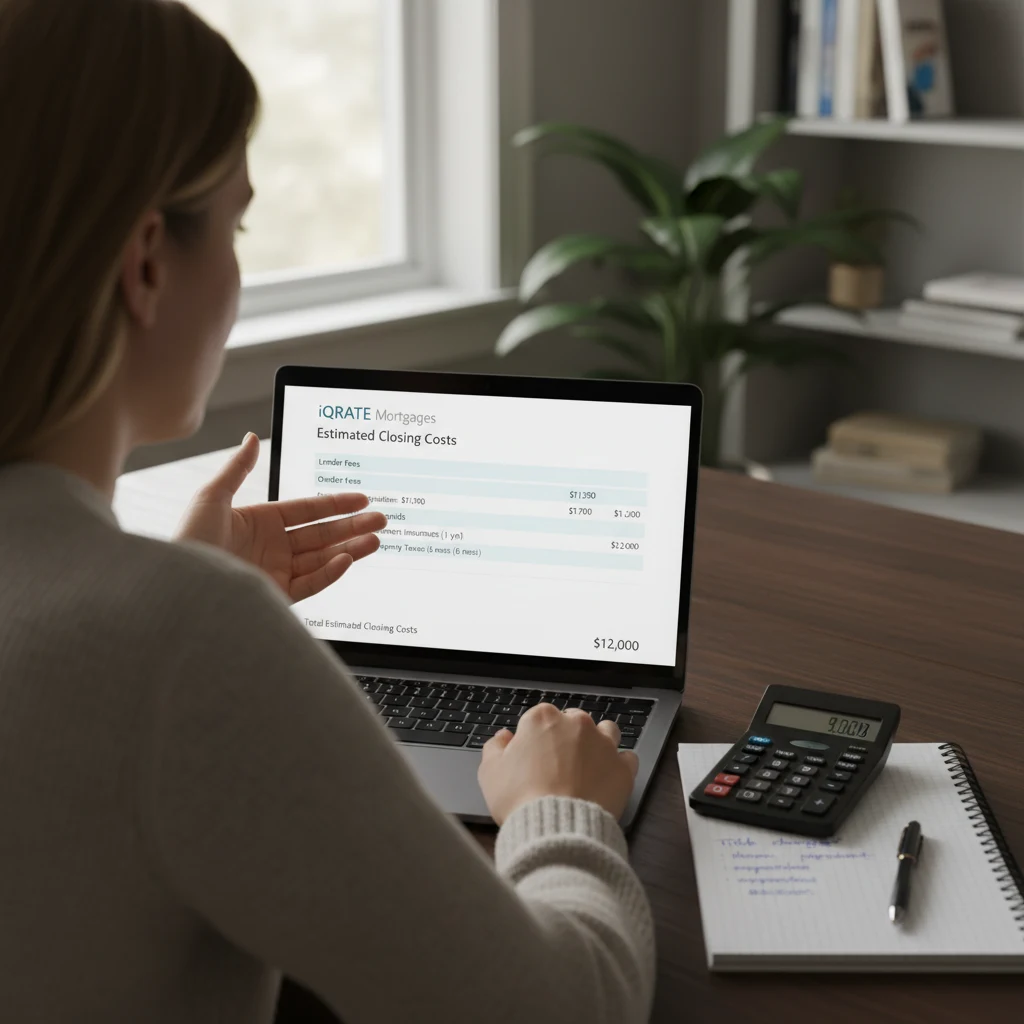
Closing costs are not one single fee. They are a collection of different charges that can be categorized into two main types: non-recurring costs (one-time fees) and pre-paid items (recurring homeowner expenses paid in advance).
H3: Non-Recurring Closing Costs
These are the one-time service fees you pay to complete the mortgage and title transfer. Once you pay them at closing, you won't pay them again.
- Lender Fees:
- Origination Fee: A charge from the lender for processing and underwriting your loan, often around 0.5% to 1% of the loan amount. (The data, information, or policy mentioned here may vary over time.)
- Discount Points: An optional fee paid to 'buy down' your interest rate.
- Appraisal Fee: Pays a licensed appraiser to verify the home's market value.
- Credit Report Fee: The cost for the lender to pull your credit history.
- Title and Escrow Fees:
- Title Search & Insurance: Fees for searching public records to ensure there are no liens or claims on the property, plus an insurance policy to protect you and the lender from future claims.
- Escrow Fee: Paid to the neutral third-party escrow company that handles the funds and documents during the transaction.
- Government Fees:
- Recording Fee: Paid to the county (e.g., Los Angeles County or San Diego County) to officially record the sale and transfer of the property deed.
- Transfer Taxes: A state or local tax on the transfer of real property.
H3: Pre-Paid Closing Costs
These are not fees for services but rather your own homeowner expenses that you must pay in advance at closing. Your lender requires this to ensure your property is protected and taxes are paid on time.
- Homeowners Insurance: You will typically be required to pay for the first full year's insurance premium at closing.
- Property Taxes: You'll need to prepay a few months of property taxes, which are then placed into an escrow account. The exact number of months depends on the time of year you close and when the next tax bill is due.
- Prepaid Mortgage Interest: This covers the interest on your loan from the date of closing to the end of that month. Closing at the end of the month reduces this specific cost, while closing at the beginning of the month increases it.
How can I reduce my total cash-to-close requirement?
While some costs are fixed, there are several effective strategies to lower your final cash-to-close number:
- Shop for Lenders: Not all lenders charge the same origination and administrative fees. Compare Loan Estimates from at least three different lenders to see who offers the most competitive fee structure.
- Negotiate Seller Concessions: In a balanced or buyer's market, you can often negotiate for the seller to contribute to your closing costs. This is a powerful tool, but its success depends on market conditions.
- Close at the End of the Month: As mentioned, closing on the last few days of the month significantly reduces the amount of prepaid mortgage interest you owe at the table.
- Explore Assistance Programs: Look into state and local first-time homebuyer programs. Organizations like the California Housing Finance Agency (CalHFA) offer grants and subordinate loans that can be used to cover down payment and closing costs.
- Review Your Fees: Carefully read your Loan Estimate and question any fees that seem unclear or excessive. Sometimes, 'junk fees' with vague names can be negotiated or removed.
What specific closing costs are highest in California?
Due to high property values and specific local practices, a few closing costs tend to be more substantial in California than in other states.
- Escrow and Title Fees: In California, transactions are typically handled by neutral escrow companies. The fees for both escrow services and title insurance are often based on the home's purchase price. For an expensive home in San Francisco, these combined fees can easily run into several thousand dollars, making them one of the largest non-recurring costs.
- Property Taxes: California's property taxes, governed by Proposition 13, are calculated as 1% of the home's assessed value plus any local assessments. When you close, you must prepay several months of these taxes to fund your escrow account. On a high-value home, this initial deposit can be a significant portion of your cash-to-close.
- Lender Origination Fees: While the percentage (e.g., 1%) might be standard nationwide, the dollar amount is much larger in California simply because the loan amounts are higher. A 1% origination fee on a $750,000 loan in Los Angeles is $7,500, a significant sum.
Does the seller ever pay for the buyer's closing costs?
Yes, this is quite common through a mechanism called seller concessions or seller contributions. As part of the negotiation process, a buyer can ask the seller to pay for a specified amount or percentage of the buyer's closing costs.
Here's how it works: The contribution is written into the purchase contract. For example, you might offer the full asking price for a home on the condition that the seller contributes 3% towards your closing costs. This amount is then deducted from the seller's proceeds at closing and applied directly to your fees.
It's important to know there are limits to how much a seller can contribute, which are set by the type of mortgage you have:
- Conventional Loans: Up to 3% of the sales price if your down payment is less than 10%. Up to 6% if your down payment is between 10% and 25%. Up to 9% if your down payment is 25% or more.
- FHA Loans: Up to 6% of the sales price.
- VA Loans: The seller can pay for all of the veteran's reasonable and customary closing costs, plus up to 4% of the loan amount in additional concessions. (The data, information, or policy mentioned here may vary over time.)
Seller concessions are a fantastic way to reduce your cash-to-close, but their availability depends heavily on local market dynamics. In a competitive seller's market, it can be much harder to negotiate them successfully.
Why is my final cash-to-close number different from the first estimate?
It's a common source of anxiety for homebuyers when the final number is different from the initial one. This discrepancy usually comes down to the difference between two key documents: the Loan Estimate (LE) and the Closing Disclosure (CD).
The Loan Estimate (LE): You receive this document within three business days of applying for a mortgage. It is your lender's best estimate of your closing costs and loan terms based on the information available at that time. Some figures, like third-party services you can shop for (e.g., title insurance), can change.
The Closing Disclosure (CD): You must receive this document at least three business days before your scheduled closing date. The CD is the final, itemized statement of all your loan terms and closing costs. By law, most figures on the CD cannot be significantly different from what was quoted on the LE.
There are three categories of costs, and their ability to change from the LE to the CD varies:
- Zero Tolerance: Fees like the lender's origination charge and transfer taxes cannot increase at all.
- 10% Cumulative Tolerance: Fees for third-party services that the lender requires and for which you can't shop (like the appraisal or credit report fee) can't increase by more than 10% cumulatively.
- Unlimited Tolerance: Costs for services you can shop for (like title insurance or pest inspection), prepaid interest, and initial escrow deposits can change without limit, as the lender doesn't control these choices or variables. (The data, information, or policy mentioned here may vary over time.)
If you see a major difference, ask your lender for a clear explanation immediately. It could be due to a changed circumstance, like a change in your loan amount or locking in your interest rate, but you have the right to understand every single dollar you are being asked to bring to the table. Feeling more prepared for closing day? Understanding your cash-to-close is the first step. To get a detailed, no-surprise breakdown for your specific situation and navigate California’s unique market with an expert, you can Apply now and start your homeownership journey with confidence.
Ready for a clear, no-surprise breakdown of your potential mortgage costs? Apply now to get personalized numbers from a California market expert.
Author Bio
David Ghazaryan is the expert mortgage strategist and founder behind iQRATE Mortgages. With a mission to fund home loans that traditional banks won't touch, David specializes in helping clients with unique financial situations, including those recovering from foreclosure or bankruptcy. He expertly crafts smart, strategic, and stress-free mortgages by leveraging a vast network of over 100 lenders to secure competitive rates for investors and homebuyers alike. Praised for exceptional customer service, David has helped hundreds of families with a 97% satisfaction rate, guiding them to the mortgage they deserve.
References
CFPB - Closing costs explained









