


How a DSCR Renovation Loan Combines Funds in Austin
A DSCR (Debt Service Coverage Ratio) renovation loan is an all-in-one financing tool designed specifically for real estate investors. Unlike traditional financing that often requires separate loans for purchasing a property and funding its repairs, this product consolidates both needs into a single mortgage. This streamlines the process, reduces closing costs, and simplifies your financial obligations.
For investors eyeing properties in competitive markets like Austin, this is a significant advantage. Instead of juggling a purchase mortgage and a separate, often difficult-to-secure construction or personal loan, you close once. The loan amount is calculated to cover the property's purchase price plus the total estimated cost of the planned renovations.
A Practical Example
Imagine you find a distressed duplex in an up-and-coming Austin neighborhood for $400,000. It needs an estimated $100,000 in renovations to be rent-ready. A DSCR renovation loan would address the total project cost of $500,000.
- Purchase Price: $400,000
- Renovation Budget: $100,000
- Total Project Cost: $500,000
The lender might offer a loan covering up to 80% of this total cost, meaning you would receive a $400,000 loan. The funds for the purchase are paid to the seller at closing, while the $100,000 for renovations is held in an escrow account to be disbursed as work is completed.
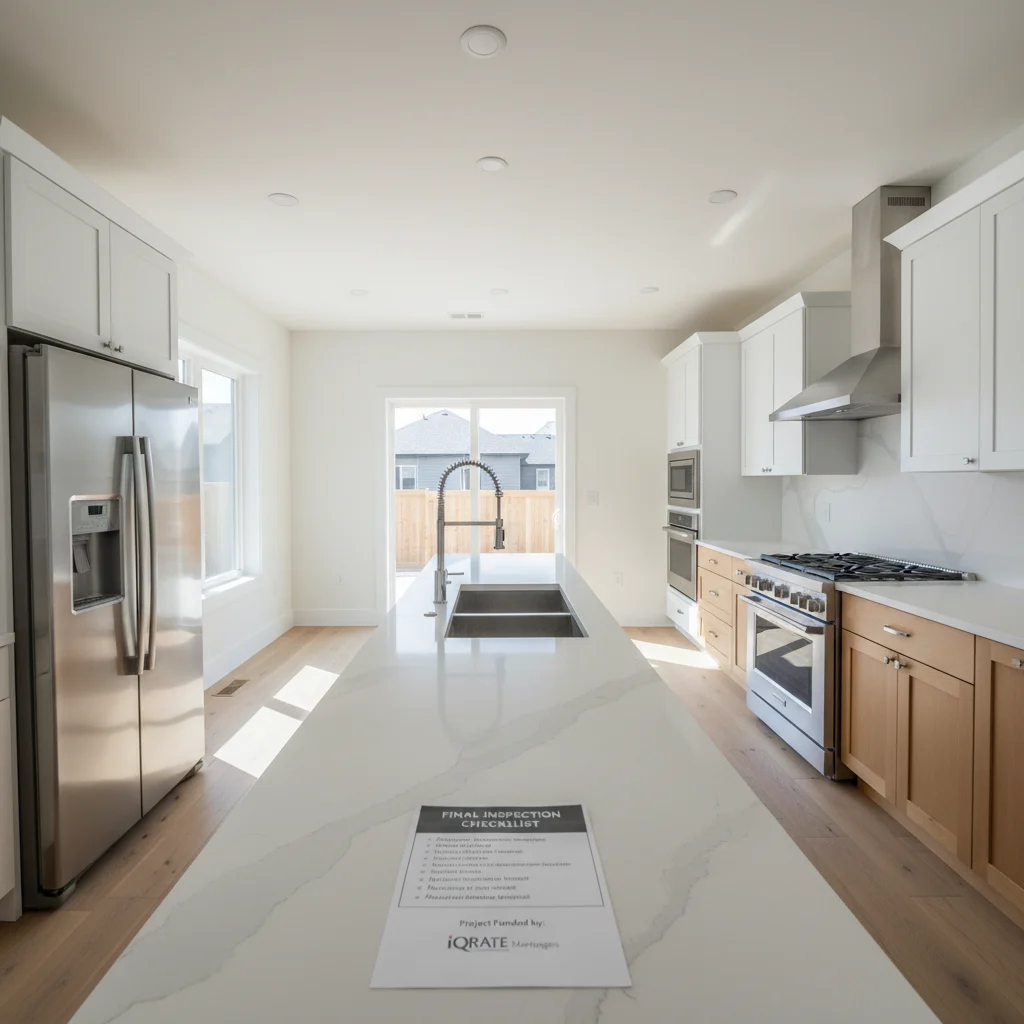
Qualification: Current Value vs. After-Repair Value (ARV)
The most critical concept in renovation lending is the After-Repair Value (ARV). Lenders don't base the loan amount on the property's current, distressed condition. Instead, they qualify the loan based on what the property will be worth after all the planned renovations are finished. This is a forward-looking approach that allows investors to leverage the future equity they are creating.
An independent appraiser is hired to assess the property and your detailed renovation plans. The appraiser evaluates your scope of work, contractor bids, and comparable sales of recently renovated properties in the area to determine a credible ARV. The lender then calculates the loan-to-value (LTV) ratio based on this future value.
For example, if the Austin duplex from before is appraised to have an ARV of $650,000 after the $100,000 in upgrades, the lender will base their LTV calculation on that higher figure. A loan of $400,000 against a $650,000 ARV represents a loan-to-ARV of about 61.5%, which is a very safe and attractive ratio for lenders.
Typical Interest Rates and Terms for San Antonio Loans
DSCR renovation loans are considered non-qualified mortgages (Non-QM), meaning they don't conform to the strict standards of conventional loans. As such, their interest rates and terms differ.
- Interest Rates: Expect rates to be 1.5% to 3% higher than a conventional 30-year fixed mortgage. The exact rate depends on your credit score, the LTV, your experience as an investor, and the lender. (The data, information, or policy mentioned here may vary over time.)
- Loan Terms: Most DSCR renovation loans have a 30-year amortization schedule. However, they often include an initial interest-only period, typically for the first 12 months. This is designed to keep your payments low during the renovation phase when the property is not generating rental income. Once the renovation is complete and the property is leased, the loan converts to a standard principal-and-interest payment.
In a market like San Antonio, where rental demand is strong, this structure allows an investor to manage cash flow effectively during the critical construction period.
Permitted Renovations: What Can You Finance?
Lenders require that the renovation funds be used for improvements that permanently add value to the property. They are investing in the asset's future income potential, so the upgrades must support a higher rental rate or resale value.
Acceptable Renovations
- Structural Repairs: Foundation work, roof replacement, new siding.
- System Upgrades: New HVAC, electrical rewiring, plumbing updates.
- Interior Remodeling: Complete kitchen and bathroom overhauls, new flooring, new windows.
- Value-Add Additions: Adding a bathroom, converting a basement into a legal dwelling unit, or building a small addition to increase square footage.
Prohibited Renovations
- Luxury Items: Swimming pools, hot tubs, or high-end landscaping that don't provide a clear return on investment in the rental market.
- Personal Property: Furniture, decorations, or any items not permanently affixed to the home.
- DIY Work: Most lenders require that all work be completed by licensed and insured contractors. They will not typically fund 'sweat equity'.
The Construction Budget Disbursement Process
Lenders do not simply hand you the renovation funds at closing. The money is placed in an escrow account and released through a structured process called a draw schedule. This protects the lender's investment by ensuring the work is completed as planned before funds are paid out.

- Budget Approval: Before closing, you submit a detailed scope of work and budget, which the lender approves.
- Initial Work: Your contractor completes the first phase of the project (e.g., demolition and framing).
- Draw Request & Inspection: You or your contractor submits a draw request to the lender. The lender sends an inspector to the property to verify that the work has been completed to standard.
- Fund Release: Once the inspection is approved, the lender releases that portion of the funds from escrow, either to you or directly to your contractor.
This cycle repeats for each phase of the project until the renovation is complete and all funds have been disbursed.
Using a DSCR Renovation Loan for a Fix-and-Flip in Round Rock
While DSCR loans are primarily designed for buy-and-hold rental properties, they can absolutely be used for fix-and-flip projects, especially in rapidly growing suburbs like Round Rock. The qualification principle remains the same: the loan is based on the property's value and income potential, but the 'income' in a flip scenario is the final sale price.
The lender's main concern with a flip is the exit strategy. They will want to see a clear plan for selling the property quickly after renovations are complete to pay off the loan. Since the loan term is often 30 years, you need to be mindful of any prepayment penalties. Many DSCR loans have a prepayment penalty for the first 3-5 years. If you plan to sell within 6-12 months, it is crucial to find a lender who offers a loan product with no prepayment penalty or a penalty period that fits your timeline.
Required Documentation for Renovation Plans
Lenders need a comprehensive and professional renovation plan to underwrite the loan and approve the ARV. Vague or incomplete plans will lead to delays or denial. Be prepared to provide:
- Detailed Scope of Work (SOW): A line-by-line description of every task to be completed, from demolition to final paint.
- Itemized Budget: A detailed cost breakdown for both labor and materials for every item in the SOW.
- Contractor Bids: Professional bids from licensed and insured contractors who will be performing the work. The lender will also need copies of their licenses and insurance.
- Architectural Plans/Drawings: Required for any projects involving structural changes or additions.
- Permits: Evidence that you have applied for or secured all necessary municipal permits for the planned work.
Does Personal Income Matter for a DSCR Renovation Loan?
This is the defining feature of a DSCR loan: your personal income is not a primary factor in qualification. Lenders do not ask for tax returns or W-2s to calculate your personal debt-to-income (DTI) ratio. The underwriting is focused entirely on the property itself.
The key metric is the Debt Service Coverage Ratio, which is calculated as:
DSCR = Gross Monthly Rental Income / Monthly PITI (Principal, Interest, Taxes, Insurance)
Most lenders require a DSCR of 1.20 or higher, meaning the property's projected rental income must be at least 20% greater than the total monthly mortgage payment. (The data, information, or policy mentioned here may vary over time.)
However, lenders do look at other aspects of your financial profile to assess risk:
- Credit Score: A minimum credit score is required, typically 660 or higher. (The data, information, or policy mentioned here may vary over time.)
- Liquidity: You will need to show you have cash reserves (typically 3-6 months of PITI) to cover payments during vacancies or unexpected repairs. (The data, information, or policy mentioned here may vary over time.)
- Experience: While not always required, having prior experience as a real estate investor can help you secure better terms. If you're evaluating a fixer-upper investment in Austin, San Antonio, or surrounding Texas communities, understanding your financing options is the first step. A mortgage expert specializing in investor loans can help you model the numbers for a DSCR renovation loan to see if it aligns with your project's goals.
If you're ready to explore how a DSCR renovation loan can fund your next investment project, our specialists are here to guide you through the numbers. Apply now to start the conversation.
Author Bio
David Ghazaryan is the expert mortgage strategist and founder behind iQRATE Mortgages. With a mission to fund home loans that traditional banks won't touch, David specializes in helping clients with unique financial situations, including those recovering from foreclosure or bankruptcy. He expertly crafts smart, strategic, and stress-free mortgages by leveraging a vast network of over 100 lenders to secure competitive rates for investors and homebuyers alike. Praised for exceptional customer service, David has helped hundreds of families with a 97% satisfaction rate, guiding them to the mortgage they deserve.
References









