


FHA Mortgage Insurance vs. Conventional PMI Differences
When comparing Federal Housing Administration (FHA) and conventional loans, the primary long-term cost difference is mortgage insurance. They operate under completely different rules and structures.
An FHA loan requires two forms of mortgage insurance:
- Upfront Mortgage Insurance Premium (UFMIP): This is a one-time fee, currently 1.75% of the base loan amount. It's paid at closing but is almost always rolled into the total loan balance, meaning you pay interest on it for the life of the loan.
- Annual Mortgage Insurance Premium (MIP): This is a recurring charge, paid monthly as part of your mortgage payment. For most borrowers making a minimum 3.5% down payment, the annual rate is 0.55% of the average loan balance for that year. (The data, information, or policy mentioned here may vary over time.)
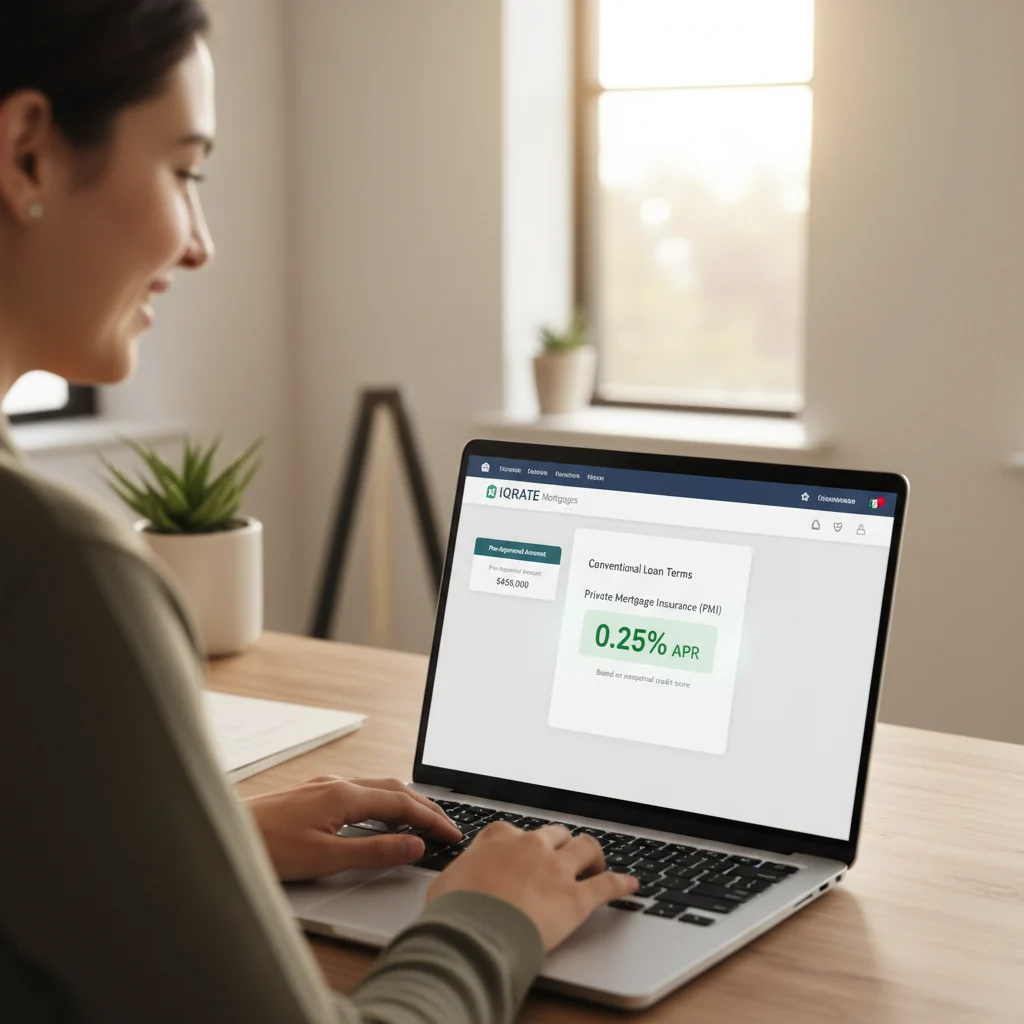
A conventional loan uses Private Mortgage Insurance (PMI). Unlike FHA insurance, there is typically no upfront premium. PMI is a monthly premium with a rate determined by three key factors: your down payment amount, your credit score, and your loan-to-value (LTV) ratio. The key advantage is that PMI is temporary.
Can I ever cancel the mortgage insurance on an FHA loan?
This is a critical distinction that impacts your long-term housing costs. For most FHA loans originated after June 2013, the answer depends on your down payment:
- Down Payment Less Than 10%: If you make the minimum 3.5% down payment, you will pay the annual MIP for the entire loan term. The only way to remove it is to refinance into a different loan type, like a conventional mortgage, once you have sufficient equity.
- Down Payment of 10% or More: If you put down 10% or more, the annual MIP is only required for the first 11 years of the loan. After that, it automatically cancels.
In contrast, conventional PMI can be removed without refinancing. Lenders are required by the Homeowners Protection Act to automatically terminate PMI when your loan balance reaches 78% of the original property value. You can also request its removal once your balance hits 80%.
How does my credit score affect the cost of conventional PMI?
Your credit score has a substantial impact on your PMI rate for a conventional loan. Lenders see a higher credit score as an indicator of lower risk, so they charge you less for insurance.
Consider a borrower in Saint Petersburg buying a home. With a 5% down payment:
- A borrower with a 760 credit score might pay a PMI rate of approximately 0.35% of the loan amount per year.
- A borrower with a 680 credit score might face a much higher PMI rate, potentially around 0.75% or more for the same loan. (The data, information, or policy mentioned here may vary over time.)
For an FHA loan, your credit score has very little impact on the MIP rate. Whether you have a 640 or a 780 score, the UFMIP remains 1.75% and the annual MIP is typically 0.55% (for a 3.5% down payment). This makes FHA an accessible option for those with lower scores, but a potentially more expensive one for those with excellent credit.
A 10-Year Cost Comparison for a Tampa Home
The initial savings of a low down payment can be misleading. Let's analyze the true cost of mortgage insurance over a decade for a $400,000 home in Tampa, Florida.
Scenario: FHA Loan
- Down Payment (3.5%): $14,000
- Base Loan Amount: $386,000
- Upfront MIP (1.75%): $6,755 (rolled into the loan)
- Total Loan Amount: $392,755
- Annual MIP Rate: 0.55%
Over 10 years, the total MIP paid would be approximately $20,500. This insurance premium is paid for the life of the loan.
Scenario: Conventional Loan (Excellent Credit)
- Down Payment (5%): $20,000
- Loan Amount: $380,000
- PMI Rate (example 0.40%): This would result in a monthly PMI payment of about $127.
Assuming modest home appreciation, the borrower would likely reach 20% equity and cancel PMI in about 8 years. The total PMI paid over those 8 years would be roughly $12,192. After year 8, the payment drops, resulting in significant savings.
The 10-Year Verdict: In this common Tampa scenario, the conventional loan borrower saves over $8,300 in mortgage insurance costs alone within the first decade and continues to save every month thereafter. (The data, information, or policy mentioned here may vary over time.)
Which loan helps me build home equity at a faster rate?
A conventional loan almost always builds equity faster for two primary reasons.
- No Financed Insurance Premium: With an FHA loan, the $6,755 UFMIP in our example was added to the loan balance. That means you start with negative equity on day one. A conventional loan has no upfront premium, so every dollar of your principal payment immediately builds equity.
- Eventual Cancellation of PMI: Once PMI is removed from a conventional loan, the portion of your monthly payment that was going toward insurance can now be applied directly to the principal (if you choose to pay extra) or simply becomes savings. With an FHA loan, that MIP payment continues, slowing down how quickly you pay down your principal balance.
Are the property approval standards different for each loan type?
Yes, the property standards are notably stricter for FHA loans. FHA appraisals are focused on ensuring the home is safe, secure, and structurally sound according to guidelines set by the Department of Housing and Urban Development (HUD).

An FHA appraiser will check for issues like peeling paint in homes built before 1978, missing handrails on stairs, or evidence of a leaky roof. If these issues are found, they must be repaired before the loan can close. This can be a deal-breaker, especially in competitive markets like Saint Petersburg or Tampa where sellers may prefer a conventional offer with fewer potential hurdles.
Conventional loan appraisals are primarily focused on determining the property's market value to ensure it's sufficient collateral for the loan. While they will note significant safety or structural issues, the standards are generally more flexible than FHA's.
How do closing costs compare between these two mortgage options?
Standard closing costs like title fees, appraisal fees, and lender origination fees are often comparable between FHA and conventional loans. The major difference is the FHA's Upfront Mortgage Insurance Premium (UFMIP).
While it can be paid in cash at closing, over 95% of FHA borrowers choose to roll it into the loan amount. This keeps cash-to-close lower but increases the total amount you borrow and pay interest on. A conventional loan avoids this large, financed closing cost, which is a significant advantage. (The data, information, or policy mentioned here may vary over time.)
Which loan is better if I plan to sell the home in five to seven years?
Even with a shorter ownership timeline, a conventional loan is often the more financially strategic choice if you qualify. While the FHA loan might offer a slightly lower monthly payment initially (depending on credit), the equity position is what matters most when you sell.
Because the conventional loan avoids the large upfront MIP and builds equity faster, you will have a larger principal balance paid down after 5-7 years. This translates directly to more cash in your pocket when you sell the property. The FHA loan's slower equity growth means more of your sale proceeds will go back to the lender to pay off the higher loan balance. The choice between an FHA and conventional loan depends on your credit, savings, and long-term goals. To see a personalized, side-by-side comparison of your options for a Florida home, it's best to consult with a mortgage strategist who can analyze your complete financial picture.
Ready to see how these numbers stack up for your specific situation? A personalized analysis can clarify your best path forward. Apply now to get a detailed comparison from a mortgage expert.
Author Bio
David Ghazaryan is the expert mortgage strategist and founder behind iQRATE Mortgages. With a mission to fund home loans that traditional banks won't touch, David specializes in helping clients with unique financial situations, including those recovering from foreclosure or bankruptcy. He expertly crafts smart, strategic, and stress-free mortgages by leveraging a vast network of over 100 lenders to secure competitive rates for investors and homebuyers alike. Praised for exceptional customer service, David has helped hundreds of families with a 97% satisfaction rate, guiding them to the mortgage they deserve.
References









