


How Lenders Calculate Potential Income for a Miami Beach Airbnb
When you apply for a traditional mortgage, lenders scrutinize your personal income and debt-to-income (DTI) ratio. For an investment property, particularly a luxury short-term rental in a dynamic market like Miami Beach, this method is often inadequate. Instead, a Debt Service Coverage Ratio (DSCR) loan shifts the focus entirely to the property's income-generating potential.
Lenders calculate this potential income in two primary ways:
Appraisal with a Comparable Rent Schedule (Form 1007): A licensed appraiser analyzes comparable short-term and long-term rental properties in the immediate vicinity. They assess factors like proximity to the ocean, amenities, property condition, and recent rental rates to produce a projected monthly rental income. For a luxury condo in South Beach, this would involve comparing it to other units in the same or similar buildings.
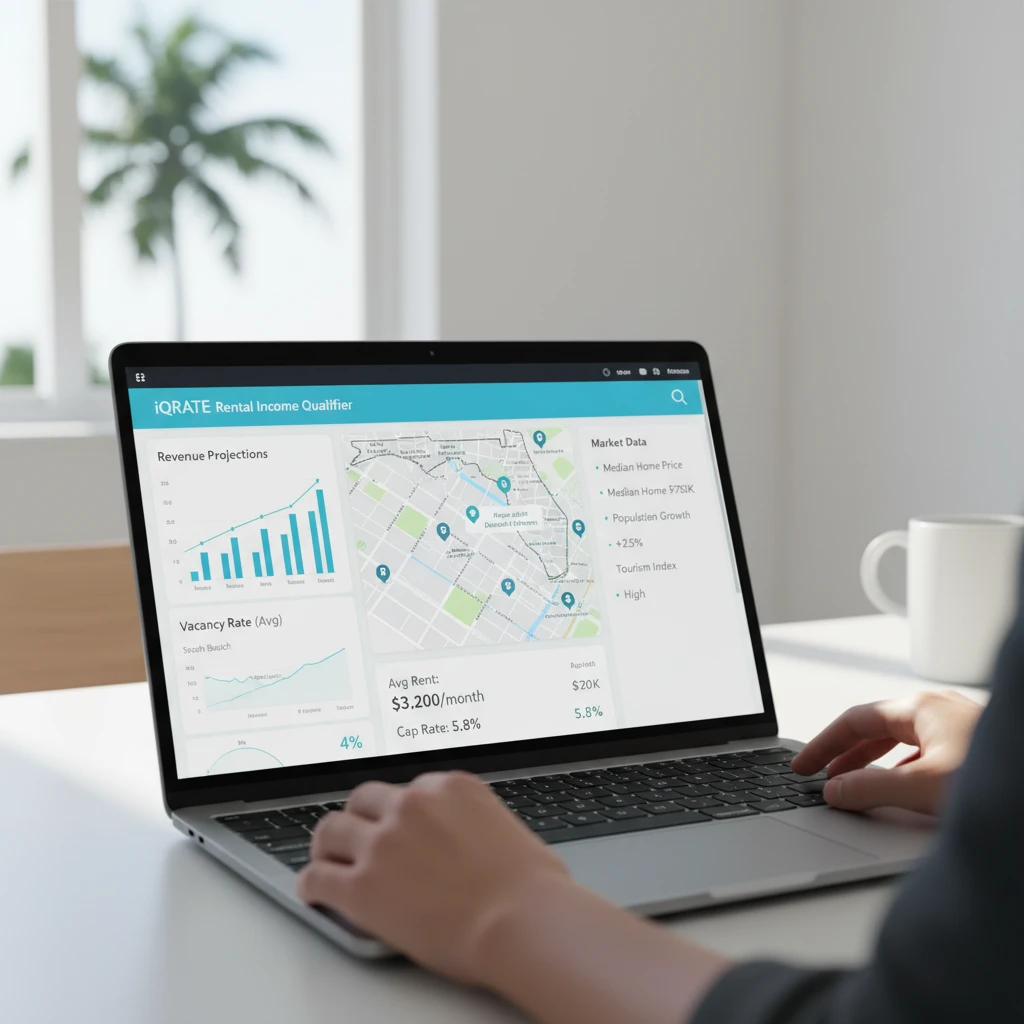
Third-Party Short-Term Rental Data: More progressive lenders are now using sophisticated data from platforms like AirDNA or Mashvisor. These services provide detailed analytics on a specific property's potential occupancy rates, average daily rates (ADR), and projected gross annual revenue based on historical performance of nearby Airbnbs. This is often more accurate for predicting vacation rental income than a traditional long-term rent schedule.
For example, if a 3-bedroom oceanfront condo in Miami Beach is projected by AirDNA to gross $150,000 annually ($12,500/month), the lender will use that $12,500 figure as the 'income' portion of the DSCR calculation. The goal is to ensure this projected income covers the total monthly mortgage payment.
What are the Down Payment Requirements for a Luxury DSCR Loan?
The down payment for a DSCR loan on a high-end property is typically higher than for a primary residence. For a luxury Airbnb in a market like Miami Beach or Fort Lauderdale, expect to put down between 20% and 30%. (The data, information, or policy mentioned here may vary over time.)

Several factors influence this requirement:
- Loan-to-Value (LTV) Ratio: Lenders are more conservative with investment properties. A 20% down payment corresponds to an 80% LTV, which is often the maximum allowed.
- Property Value: For properties exceeding $1.5 million, some lenders may require a larger down payment, such as 25% or 30%, to mitigate their risk.
- Credit Score: A stronger credit score (720+) may help you secure terms with a lower down payment, while a score in the high 600s might push the requirement closer to 30%.
- Projected DSCR: If the property's projected income only barely covers the mortgage payment (e.g., a DSCR of 1.05), the lender may ask for more money down to create a stronger financial cushion.
Example: For a $2 million luxury condo in Fort Lauderdale, a 25% down payment would be $500,000. This substantial equity reduces the lender's risk and demonstrates your commitment as an investor.
Can I Get a DSCR Loan if the Miami Beach Property Is in an LLC?
Yes, and it's highly recommended. One of the most significant advantages of a DSCR loan is that it's designed for business entities. Lenders not only permit but often expect investors to purchase properties through a Limited Liability Company (LLC).
Holding your Miami Beach investment property in an LLC provides:
- Asset Protection: It separates your personal assets from your business assets. If a legal issue arises related to the property, your personal home and savings are shielded.
- Anonymity: It offers a layer of privacy for property ownership.
- Tax Advantages: An LLC can offer potential tax benefits and make it easier to manage business expenses.
When you apply, the loan is made to the LLC, but you (and any other members) will act as personal guarantors. This means the lender will still review your personal credit report and history, even though your personal income isn't used for qualification.
Do High Insurance Costs Affect DSCR Loan Approval in South Beach?
Absolutely. High insurance costs are a critical factor in coastal Florida and directly impact the DSCR calculation. The formula for DSCR is:
DSCR = Gross Monthly Rental Income / Total Monthly Housing Expense (PITIA)
'PITIA' stands for:
- Principal
- Interest
- Taxes
- Insurance
- Association Dues (HOA fees)
In areas like South Beach, flood and windstorm insurance premiums can be substantial, significantly increasing the 'I' in PITIA. Similarly, luxury condo buildings often have high HOA fees, inflating the 'A'.
Example: A property projects $10,000 in monthly rent. The mortgage principal and interest are $6,000, taxes are $1,500, but insurance is $1,000 and the HOA fee is $1,000. The total PITIA is $9,500. The DSCR would be $10,000 / $9,500 = 1.05. While this is technically 'passing' (above 1.0), it's a very thin margin that could make lenders hesitant.
Are There Specific Condo Rules That Block Short-Term Rental Loans?
Yes, this is a major hurdle in many Miami Beach condo buildings. Before a lender approves a DSCR loan for a short-term rental, they will perform a 'condo review' to examine the association's bylaws and regulations.
Many condo associations have strict rental restrictions, such as:
- Minimum lease terms of 30, 90, or even 180 days.
- Outright bans on transient or 'hotel-like' rentals.
- Limits on how many times a unit can be rented per year.
If the building's rules prohibit the short-term rental strategy you plan to use, the lender will deny the loan because the property cannot legally generate the income needed to qualify. It is crucial to verify the condo association's rental policies before you make an offer.
What Credit Score Is Needed for a High-Value DSCR Mortgage?
While DSCR loans don't rely on your income, your credit score is still a key indicator of your financial responsibility. For a high-value DSCR mortgage in a competitive market, lenders generally look for a minimum credit score of 680. (The data, information, or policy mentioned here may vary over time.) However, to secure the most favorable terms, including a better interest rate and lower down payment, a score of 720 or higher is strongly preferred.
A higher credit score reduces the perceived risk for the lender, which is especially important when financing multi-million dollar assets.
How Do I Use Market Rental Data to Strengthen My Application?
Being proactive with data can significantly improve your loan application. Instead of waiting for the lender's appraisal, you can commission your own report from a service like AirDNA. Presenting this detailed analysis to the lender upfront accomplishes several things:
- Demonstrates Due Diligence: It shows you are a sophisticated investor who has thoroughly researched the property's potential.
- Sets a Benchmark: It provides a data-backed income projection that the appraiser's report can be compared against.
- Provides a Counterpoint: If the appraiser's rent schedule seems unusually low or is based on long-term rentals, your AirDNA report provides a specific, data-driven argument for a higher short-term rental income figure.
This is particularly effective in unique sub-markets like South Beach, where short-term rental performance can vary dramatically from one block to the next.
Can a Non-United States Citizen Use This Loan for an Investment Property?
Yes. Florida, and especially Miami, is a global hub for real estate investment. As a result, many lenders have developed 'Foreign National' DSCR loan programs specifically for non-U.S. citizens.
These programs typically have slightly different requirements:
- Higher Down Payment: A down payment of 30-40% is common. (The data, information, or policy mentioned here may vary over time.)
- Proof of Funds: You will need to show sufficient funds in a U.S.-based bank account.
- Visa Documentation: A valid passport and visa may be required, although some programs are more flexible.
These loans allow international investors to capitalize on the lucrative Miami Beach rental market without needing a U.S. credit history or income documentation. Understanding the nuances of a DSCR loan is the first step to securing your luxury Miami Beach rental. To get a clear picture of your financing options and potential property performance, connect with a mortgage strategist who specializes in investment properties.
Ready to explore financing for your Miami Beach investment? To see how a DSCR loan can work for your luxury rental property, take the first step and apply now for a clear analysis of your options.
Author Bio
David Ghazaryan is the expert mortgage strategist and founder behind iQRATE Mortgages. With a mission to fund home loans that traditional banks won't touch, David specializes in helping clients with unique financial situations, including those recovering from foreclosure or bankruptcy. He expertly crafts smart, strategic, and stress-free mortgages by leveraging a vast network of over 100 lenders to secure competitive rates for investors and homebuyers alike. Praised for exceptional customer service, David has helped hundreds of families with a 97% satisfaction rate, guiding them to the mortgage they deserve.
References
Fannie Mae: B3-3.1-08, Rental Income
CFPB: What is the difference between a second home and an investment property?









