


Why are the financing deadlines for a 1031 exchange so unforgiving?
A 1031 'like-kind' exchange is a powerful tool for real estate investors, allowing you to sell an investment property and defer capital gains taxes by reinvesting the proceeds into a new property. However, this tax benefit comes with strict, non-negotiable deadlines set by the IRS.
The clock starts the moment you close on the sale of your original property, known as the 'relinquished property'. From that day, you have exactly 45 days to formally identify potential replacement properties. This is a short window to find, vet, and commit to one or more properties. Following that, you have a total of 180 days from the original sale date to close on the purchase of the identified replacement property.
These two deadlines create a high-pressure scenario. The 45-day identification period leaves no time for hesitation, and the 180-day closing period leaves absolutely no room for lender delays. A conventional mortgage process, which can often take 45-60 days or more, is simply too slow and risky. (The data, information, or policy mentioned here may vary over time.) If your financing falls through or gets delayed beyond the 180-day mark, the entire exchange fails. This means the proceeds from your original sale become taxable, potentially costing you tens or even hundreds of thousands of dollars in capital gains taxes you planned to defer.
What is the best type of loan for a fast closing on a Texas investment property?
For investors executing a 1031 exchange in competitive Texas markets like Dallas or Austin, the best financing tool is often a Debt Service Coverage Ratio (DSCR) loan. Unlike conventional mortgages that scrutinize your personal income, tax returns, and employment history, a DSCR loan qualifies you based on the investment property's ability to generate income.
The core of a DSCR loan is a simple calculation:
DSCR = Gross Rental Income / Total Debt Service (Principal, Interest, Taxes, Insurance, HOA)
Most lenders look for a ratio of 1.25 or higher, meaning the property generates 25% more income than its total housing expense. (The data, information, or policy mentioned here may vary over time.) Because the underwriting focuses on the asset itself rather than the borrower's personal finances, the process is dramatically faster.
Key advantages of a DSCR loan for a 1031 exchange include:
- Speed: DSCR loans can often close in 21-30 days, fitting comfortably within the 180-day timeline. (The data, information, or policy mentioned here may vary over time.)
- Reduced Paperwork: No need to provide W-2s, pay stubs, or years of complex personal and business tax returns.
- Unlimited Properties: Many DSCR lenders do not limit the number of financed properties you can own, unlike conventional loans which often cap at ten. (The data, information, or policy mentioned here may vary over time.)
- Designed for Investors: These loans are specifically created for real estate investors, so lenders understand the unique needs and urgency of transactions like a 1031 exchange.

Can I get fully pre-approved before I even identify my replacement property?
Yes, and this is one of the most powerful strategies for a successful 1031 exchange. You can secure a fully underwritten pre-approval for a DSCR loan on a 'To Be Determined' (TBD) property. This is far more robust than a simple pre-qualification.
Here’s how a TBD underwriting process works:
- Submit Financials: You provide the lender with your credit report, asset statements (to verify down payment and reserves), and information about your real estate experience.
- Full Underwriting: The underwriter reviews your credit, assets, and background, issuing a conditional loan approval before you've even identified your replacement property in a market like Houston or Dallas.
- The Only Condition: The final approval is contingent only on the property you select meeting the lender's criteria, primarily through an appraisal and a rent schedule to confirm the DSCR.
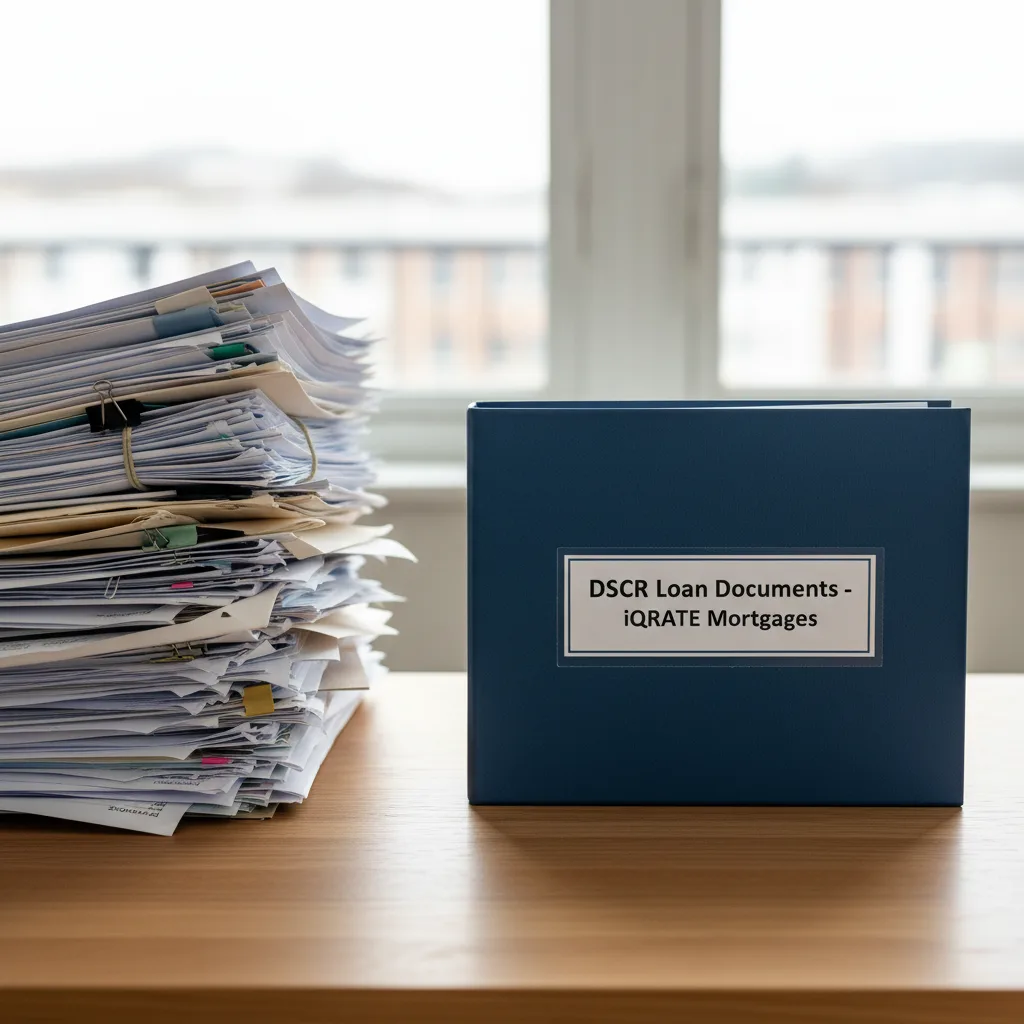
Having a TBD approval in hand makes you a much stronger buyer. When you make an offer, you can show the seller you are a serious, fully vetted borrower whose financing only depends on the property itself. This can give you a crucial edge in a competitive bidding situation, helping you secure a property within the tight 45-day identification window.
How does a DSCR loan speed up the underwriting process for an exchange?
The speed of a DSCR loan comes directly from what the underwriter doesn't have to review. Let's compare the documentation and verification process for a conventional loan versus a DSCR loan.
Conventional Loan Underwriting Checklist:
- Two years of personal tax returns
- Two years of business tax returns (if self-employed)
- Profit & Loss statements
- Recent pay stubs and W-2s
- Verification of Employment (VOE) sent to your employer
- Detailed review of all large deposits in bank accounts
- Calculation of personal Debt-to-Income (DTI) ratio
This process is invasive and time-consuming. An underwriter must analyze complex tax returns and verify every source of personal income, which can take weeks.
DSCR Loan Underwriting Checklist:
- Credit report
- Bank statements to verify assets for down payment and closing costs
- Property appraisal
- Lease agreements (if the property is currently rented)
- Form 1007 (Single-Family Comparable Rent Schedule) completed by the appraiser to estimate market rent
By eliminating the need to verify personal income, the DSCR loan underwriting process removes the biggest bottleneck. The focus shifts entirely to the property's cash flow potential. As soon as you identify a property and get it under contract, the lender can order the appraisal. Once the appraisal confirms the value and the projected rent meets the DSCR requirement, you are essentially cleared to close. This streamlined path is purpose-built for the unforgiving timeline of a 1031 exchange.
What specific documents should I have ready for the lender on day one?
To ensure your financing process starts without a hitch, you should have a complete package ready for your lender the moment you begin your 1031 exchange. Being prepared can save you critical days. (The data, information, or policy mentioned here may vary over time.)
Your 1031 Exchange Loan Toolkit:
- Relinquished Property Contract: A fully executed copy of the sales contract for the property you are selling.
- Relinquished Property HUD-1/Closing Disclosure: The final settlement statement from the sale of your old property. This shows the net proceeds that will be held by your intermediary.
- Qualified Intermediary (QI) Information: The name, contact person, and phone number for the QI handling your exchange funds.
- Photo ID and Social Security Number: Standard identification for all borrowers.
- Recent Bank/Asset Statements: Two to three months of statements for all accounts you will use for the down payment, closing costs, and required reserves.
- Entity Documents (if applicable): If you are purchasing the property in an LLC or other entity, you will need the Articles of Organization, Operating Agreement, and Certificate of Good Standing.
- Real Estate Owned (REO) Schedule: A list of all other properties you currently own, including their value, mortgage balance, and rental income.
Having these items organized and ready to submit electronically will demonstrate to your lender that you are a serious and prepared investor, allowing them to begin the TBD underwriting process immediately.
What are the biggest financing risks when buying a replacement property in Austin?
While a DSCR loan mitigates many risks, purchasing a replacement property in a hot, competitive market like Austin presents unique challenges that can jeopardize your exchange. (The data, information, or policy mentioned here may vary over time.)
- Appraisal Gaps: In a bidding war, you might offer more than the property's appraised value. DSCR lenders base their loan amount on the lesser of the purchase price or the appraised value. If the appraisal comes in low, you must cover the difference in cash. If you don't have the extra funds, the deal could fall apart.
- DSCR Calculation Issues: Austin has high property values and, consequently, high property taxes. These higher costs are factored into the DSCR calculation. A property might not generate enough rent to meet the lender's ratio requirement, especially if you are paying a premium price. You must analyze the numbers carefully before making an offer.
- Intense Competition: The sheer volume of buyers means you may lose out on several properties before getting one under contract. This can eat away at your 45-day identification period, forcing you to make hasty decisions on properties you haven't fully vetted.
To combat these risks, work with a real estate agent and a mortgage strategist who are experts in the Austin investment market. They can help you identify properties that are more likely to appraise and meet DSCR requirements, ensuring you don't waste precious time on deals that are destined to fail.
Can I use one 1031 exchange to purchase multiple smaller Texas properties?
Yes, this is a common and effective strategy for diversifying your portfolio. The IRS provides specific rules for identifying multiple replacement properties.
The most commonly used rules are:
- The Three-Property Rule: You can identify up to three potential replacement properties, regardless of their fair market value. You can then purchase any one, two, or all three of them to complete your exchange.
- The 200% Rule: You can identify any number of replacement properties as long as their total fair market value does not exceed 200% of the value of your relinquished property.
Example: You sell a large commercial building in Dallas for $2 million. Using the three-property rule, you could identify:
- A duplex in Austin for $800,000
- A single-family rental in Houston for $500,000
- Another single-family rental in a Dallas suburb for $600,000
The total value is $1.9 million. As long as you close on all three properties within the 180-day window, you can successfully complete your exchange. Using fast-closing DSCR loans for each purchase is critical to coordinating multiple closings within this tight timeframe. Your 1031 exchange deadline is non-negotiable. Partnering with a mortgage strategist who specializes in fast-closing investment loans for the Texas market can be the difference between a successful exchange and a massive tax bill. Ensure your financing is as strategic as your investment.
Your 1031 exchange deadline is non-negotiable, and the right financing is critical. To ensure you're prepared to act quickly on your next investment property, you can start the TBD underwriting process today. Apply now to secure your financing and make your next offer with confidence.
Author Bio
David Ghazaryan is the expert mortgage strategist and founder behind iQRATE Mortgages. With a mission to fund home loans that traditional banks won't touch, David specializes in helping clients with unique financial situations, including those recovering from foreclosure or bankruptcy. He expertly crafts smart, strategic, and stress-free mortgages by leveraging a vast network of over 100 lenders to secure competitive rates for investors and homebuyers alike. Praised for exceptional customer service, David has helped hundreds of families with a 97% satisfaction rate, guiding them to the mortgage they deserve.
References
IRS: Like-Kind Exchanges - Real Estate Tax Tips
Consumer Financial Protection Bureau: What is a debt-to-income ratio?









