


Why Conventional Lenders Stop at Ten Financed Properties
For many real estate investors in Texas, hitting the ten-property financing limit feels like an arbitrary roadblock. You've successfully managed a growing portfolio, proven your ability to handle multiple mortgages, and are ready to expand further. So, why do conventional lenders suddenly pump the brakes? The answer lies with the gatekeepers of the conventional mortgage market: Fannie Mae and Freddie Mac.
These government-sponsored enterprises (GSEs) buy mortgages from lenders, which provides liquidity and allows those lenders to issue more loans. However, to manage their own risk exposure, the GSEs set specific rules for the loans they are willing to purchase. One of the most significant rules for investors is the limit on the number of financed properties an individual can have. Fannie Mae, for instance, has a well-known policy limiting a single borrower to a maximum of ten financed residential properties. This cap is not a reflection of your personal creditworthiness but rather a broad portfolio management strategy by the GSEs. Once you exceed this number, your loans are no longer considered 'conforming', and most traditional banks that rely on selling their loans will be unable to help you. (The data, information, or policy mentioned here may vary over time.)
This is a common challenge for successful investors in high-growth markets like Houston and Dallas. You've played by the rules and built a strong foundation, only to find the path forward is blocked by the very system that helped you start. Fortunately, this is not the end of your investment journey; it's simply the point where you graduate to a different class of financing solutions designed specifically for seasoned investors.
What Is a Portfolio Loan and How Does It Work in Houston?
A portfolio loan is a mortgage that a bank or lending institution originates and keeps on its own books, or 'in its portfolio', rather than selling it on the secondary market to Fannie Mae or Freddie Mac. Because the lender is not bound by GSE guidelines, it has the freedom to set its own underwriting criteria. This flexibility is the key that unlocks financing for your 11th, 12th, and beyond properties.
For an investor in Houston looking to acquire another rental property, the process with a portfolio lender looks quite different.
- Focus on the Asset: Instead of scrutinizing your personal debt-to-income (DTI) ratio, the lender is primarily interested in the performance of the property you're buying and your existing portfolio. They will analyze rental income, vacancy rates, and operating expenses.
- Relationship-Based Lending: Portfolio lenders often operate more like business partners. They want to understand your investment strategy and are looking to build a long-term relationship. A strong track record managing your other nine or ten properties carries significant weight.
- Customized Terms: Because they are not following a rigid GSE checklist, portfolio lenders can offer more tailored loan structures. This might include interest-only periods, specific prepayment penalty structures, or the ability to finance a property that might not fit the perfect conventional mold, like a unique multi-unit building in the Heights.
The trade-off for this flexibility is that the terms may be slightly different. You might see a slightly higher interest rate or a larger down payment requirement, but you gain the invaluable ability to continue scaling your real estate business. (The data, information, or policy mentioned here may vary over time.)

Are Interest Rates for Investor Loans Competitive in Dallas?
When investors in Dallas start exploring non-conventional financing, a primary concern is cost. Will the interest rates on these portfolio or commercial-style loans be prohibitively expensive? The answer is nuanced, but generally, the rates are highly competitive, though structured differently.
Portfolio loan interest rates are typically a bit higher than a conventional 30-year fixed rate for a primary residence—perhaps 1% to 2.5% higher, depending on the market and the deal. However, it's crucial to evaluate this cost in the context of the opportunity it creates. (The data, information, or policy mentioned here may vary over time.)
Here’s what influences the rate you'll be offered:
- Loan-to-Value (LTV): A lower LTV (meaning a larger down payment) reduces the lender's risk and can result in a more favorable interest rate.
- Credit Score: While the property's performance is paramount, your personal credit history still matters. A strong credit score demonstrates financial responsibility and can help secure a better rate.
- Property Performance: Lenders will use a metric called the Debt Service Coverage Ratio (DSCR) to analyze the property's cash flow. A property with a strong DSCR (e.g., 1.25x or higher) proves it can comfortably cover its debt obligations and is seen as a less risky investment, leading to better pricing.
- Relationship and Experience: A lender may offer better terms to an experienced investor with a well-managed portfolio in the Dallas-Fort Worth area than to a novice. Your track record is part of the negotiation.
Ultimately, the slightly higher rate is the price of access to capital that allows you to continue acquiring cash-flowing assets. The net return on investment from adding another profitable property to your portfolio almost always outweighs the marginal increase in borrowing costs.
Can I Group Multiple Properties Under a Single Blanket Mortgage?
Yes, and this is one of the most powerful strategies available to investors who have scaled beyond the conventional limit. A blanket mortgage is a single loan that covers two or more properties. Instead of juggling over ten individual mortgages, you can consolidate them or finance a new group of properties under one umbrella loan, simplifying your financial life significantly.
Advantages of a Blanket Mortgage
- Streamlined Management: One monthly payment instead of many. This simplifies bookkeeping and financial planning.
- Increased Buying Power: By leveraging the equity in your existing portfolio, you can often secure financing for new acquisitions more easily.
- Flexibility: Blanket mortgages typically include a 'release clause'. This provision allows you to sell one of the properties under the mortgage without having to refinance the entire loan. The lender will specify a certain amount of the sale proceeds that must be used to pay down the principal balance of the blanket loan.
Potential Considerations
A blanket mortgage is a more complex financial instrument. You’ll want to work with a mortgage strategist who understands their structure. For example, the terms of the release clause are critical. You need to ensure they are fair and won't hinder your ability to sell individual assets when the time is right. This is a common financing tool for investors acquiring multiple properties simultaneously in cities like Austin, Houston, and Dallas.
How Underwriting Differs from Conventional Home Loans
The shift from conventional to portfolio lending involves a fundamental change in how lenders evaluate your application. The underwriting process moves away from your personal finances and zooms in on the investment's viability.
Conventional Underwriting
- Primary Focus: Your personal income, employment history, and Debt-to-Income (DTI) ratio.
- Key Question: 'Can your personal salary cover this new mortgage payment on top of all your other debts?'
- Documentation: W-2s, pay stubs, tax returns, and bank statements to verify personal income and assets.
Portfolio and DSCR Loan Underwriting
- Primary Focus: The property's cash flow and Debt Service Coverage Ratio (DSCR).
- Key Question: 'Can the rental income from the property cover the new mortgage payment, taxes, insurance, and other expenses?'
- DSCR Calculation:
DSCR = Gross Rental Income / Total Mortgage Payment (PITI)- A DSCR of 1.0 means the property's income exactly covers its debt. Lenders typically require a DSCR of 1.20x or higher. (The data, information, or policy mentioned here may vary over time.)
Example: Let's say you're buying a duplex in Dallas.
- Gross Monthly Rent:
$4,000 - Proposed Mortgage Payment (PITI):
$2,800 - A portfolio lender using a DSCR calculation might see that the property's income (
$4,000) is more than enough to cover the debt ($2,800), resulting in a DSCR of 1.42x ($4,000 / $2,800). This is a strong ratio, and the loan is likely to be approved, often without even needing to verify your personal W-2 income.
This is why these are often called 'investor cash flow loans' or 'DSCR loans'. They are business-purpose loans based on business logic.
What Are the Typical Down Payment and Credit Score Requirements?
While portfolio lenders offer flexibility, their requirements are still designed to mitigate risk. Expect standards to be different from the FHA or low-down-payment conventional loans you may have used for earlier properties.
- Down Payment: For investment properties financed with a portfolio loan, the typical down payment requirement is between 20% and 30%. A larger down payment reduces the lender's risk and demonstrates your commitment to the investment. For investors looking to maximize leverage, some programs may be available at 20% down, but 25% is a more common benchmark.
- Credit Score: Your personal credit score still signals your financial discipline. Most portfolio lenders look for a minimum credit score of 680, with the best terms and rates reserved for borrowers with scores of 720 or higher. While a lower score might not be an automatic denial, it could result in a larger down payment requirement or a higher interest rate.
- Reserves: Lenders will also want to see that you have liquid reserves—typically six months' worth of principal, interest, taxes, and insurance (PITI) payments for the subject property and sometimes for your other financed properties as well. This ensures you can cover expenses during vacancies or unexpected repairs.
(The data, information, or policy mentioned here may vary over time.)
Is It Better to Get These Loans in an LLC or Personal Name?
This is a critical strategic question for any serious real estate investor. The decision to hold properties in your personal name versus a Limited Liability Company (LLC) has significant legal and financial implications.
Financing in a Personal Name
- Pros: The process can sometimes be simpler, and occasionally, you might get slightly better loan terms because of the personal guarantee.
- Cons: You have unlimited personal liability. If a tenant sues for an issue at one of your Houston properties, all of your personal assets—your home, car, and savings—could be at risk.
Financing in an LLC Name
- Pros: The primary benefit is liability protection. The LLC creates a legal separation between your business and personal assets. A lawsuit against the LLC is generally limited to the assets held by the LLC. This is a crucial protection as your portfolio grows.
- Cons: Setting up and maintaining an LLC involves costs and administrative work. Some lenders may charge a slightly higher rate for loans to an LLC, though many lenders that specialize in investor loans are perfectly comfortable with this structure. (The data, information, or policy mentioned here may vary over time.)
For most seasoned investors, the liability protection offered by an LLC is well worth the minor additional complexity. It's a standard business practice for scaling a real estate portfolio. Always consult with a legal and a tax professional to determine the best structure for your specific situation.
How Can I Start Preparing My Portfolio for This Next Step?
Transitioning to portfolio and commercial financing requires a professional approach to managing your investments. Lenders will be underwriting you as a business operator, not just a borrower. Get ahead by taking these steps now:
- Organize Your Documentation: Create a master file for your entire portfolio. For each property, you should have the lease agreements, insurance declarations, property tax statements, and mortgage statements readily available.
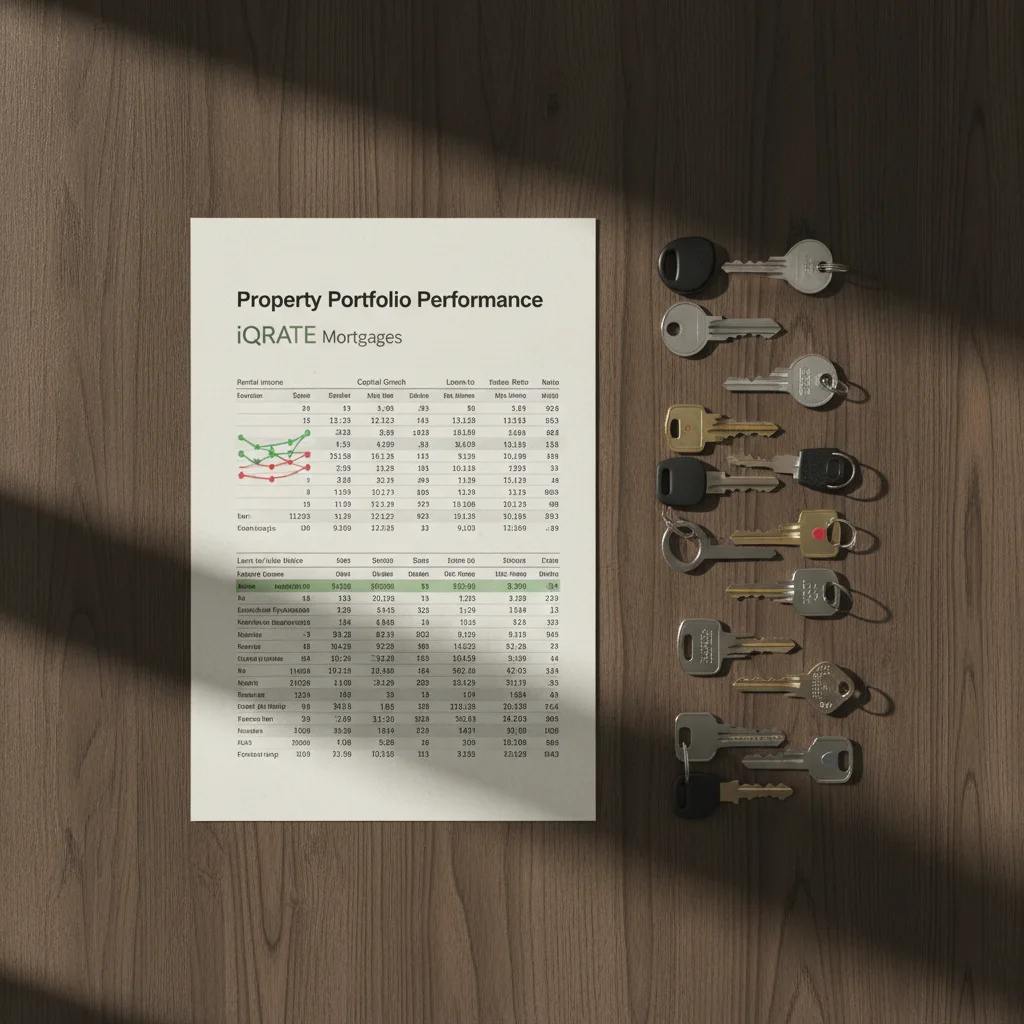
- Create a Schedule of Real Estate Owned (SREO): This is a spreadsheet that details all your properties. It should include the property address, purchase price, current market value, loan balance, interest rate, PITI payment, gross rent, and net cash flow.
- Calculate Your Portfolio's Performance: Know your numbers inside and out. What is the total cash flow? What is the overall occupancy rate? Be prepared to discuss your investment strategy and the performance of your existing assets in Dallas, Houston, or wherever they may be located.
- Clean Up Your Credit: Review your personal credit report and address any errors or issues. A clean report will make the underwriting process smoother and help you secure the best possible terms.
- Build Your Team: You're moving into a new league of real estate investing. This is the time to connect with a mortgage strategist who specializes in portfolio loans, a real estate-savvy CPA, and a real estate attorney. Their expertise is invaluable in structuring deals for long-term success. Ready to scale your Texas real estate portfolio beyond ten properties? A mortgage strategist can clarify your options with portfolio and DSCR loans, mapping out a clear path to your next acquisition. Apply now to explore your financing solutions.
Ready to scale your Texas real estate portfolio beyond ten properties? A mortgage strategist can clarify your options with portfolio and DSCR loans, mapping out a clear path to your next acquisition. Apply now to explore your financing solutions.
Author Bio
David Ghazaryan is the expert mortgage strategist and founder behind iQRATE Mortgages. With a mission to fund home loans that traditional banks won't touch, David specializes in helping clients with unique financial situations, including those recovering from foreclosure or bankruptcy. He expertly crafts smart, strategic, and stress-free mortgages by leveraging a vast network of over 100 lenders to secure competitive rates for investors and homebuyers alike. Praised for exceptional customer service, David has helped hundreds of families with a 97% satisfaction rate, guiding them to the mortgage they deserve.
References









