


Understanding the Clergy Housing Allowance for Mortgages
For ministers, pastors, and other clergy members in Florida, the compensation structure is often unique. A significant portion of your income may come in the form of a 'clergy housing allowance', also known as a 'parsonage allowance'. This is an amount designated by your church or religious organization to cover housing-related expenses. Under Section 107 of the Internal Revenue Code, this allowance is excluded from gross income for income tax purposes. While this is a substantial financial benefit, it can create a challenge when applying for a mortgage.
Mortgage lenders primarily evaluate your ability to repay a loan by calculating your debt-to-income (DTI) ratio. This ratio compares your gross monthly income (before taxes) to your monthly debt obligations. Because the housing allowance is non-taxable, simply adding it to your base salary understates your true purchasing power. For example, a homebuyer earning a taxable $60,000 salary has less take-home pay than a clergy member earning a $40,000 salary plus a $20,000 non-taxable housing allowance. Lenders need a standardized way to account for this difference, which is where the concept of 'grossing up' comes into play.
Why is it Treated Differently?
Lenders treat this income differently because its non-taxable nature means every dollar goes further. A traditional borrower loses a portion of their gross income to federal and state taxes, but you receive the full designated amount. To level the playing field and accurately assess your financial capacity, underwriters apply a specific calculation to inflate the non-taxable portion of your income to a pre-tax equivalent. This ensures your application is evaluated fairly against those with fully taxable W-2 income.
How Lenders 'Gross Up' Your Non-Taxable Jacksonville Income
The process of making non-taxable income comparable to taxable income is called 'grossing up'. It's a standard practice recognized by major mortgage investors like Fannie Mae, Freddie Mac, and the Federal Housing Administration (FHA). Lenders are permitted to increase the value of your non-taxable housing allowance by a certain percentage to calculate your qualifying income.
Typically, lenders will 'gross up' the income by 15% to 25%. (The data, information, or policy mentioned here may vary over time.) The exact percentage depends on the loan program and the lender's specific underwriting guidelines. The most common figure used, especially for FHA loans, is 25%. (The data, information, or policy mentioned here may vary over time.)
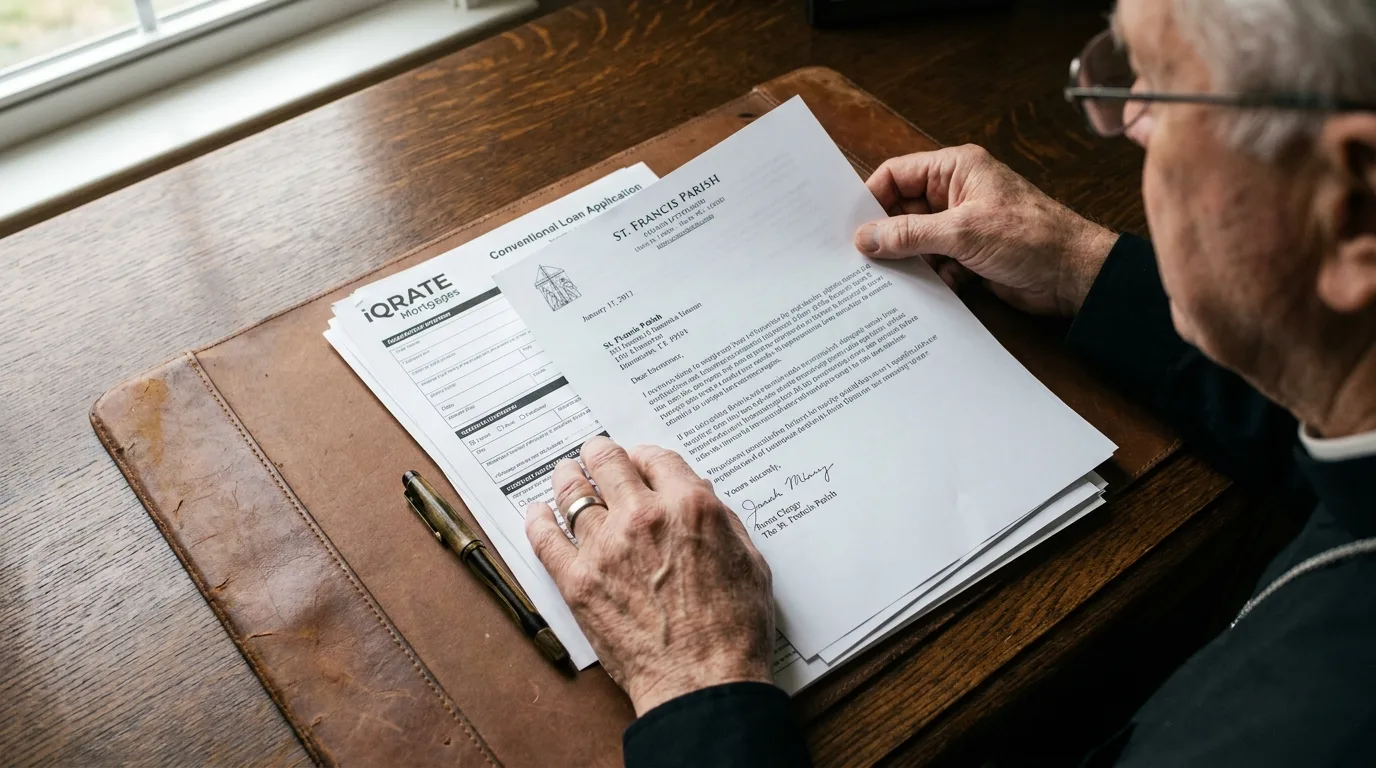
Let's look at a practical example for a clergy member seeking a mortgage in Jacksonville, Florida:
- Monthly Base Salary (Taxable): $3,500
- Monthly Housing Allowance (Non-Taxable): $2,000
- Gross-Up Percentage: 25% (0.25)
Calculation:
- Calculate the Gross-Up Amount: $2,000 (allowance) * 1.25 = $2,500
- Determine Total Qualifying Income: $3,500 (salary) + $2,500 (grossed-up allowance) = $6,000
Without grossing up, the lender would only consider a total income of $5,500 ($3,500 + $2,000). By correctly applying the gross-up formula, your qualifying income increases by $500 per month. This seemingly small adjustment can significantly boost your purchasing power and help you qualify for a larger home loan in the competitive Jacksonville market.
Essential Documents for Your Housing Allowance
To have your housing allowance grossed up, you can't just tell the lender about it; you must provide clear and official documentation. The underwriter needs to verify the amount, frequency, and likelihood that the income will continue. Vague or incomplete paperwork is a common reason for delays or denials.

Be prepared to provide the following:
- A Detailed Letter from Your Church: This is the most critical document. It should be on official church letterhead and explicitly state:
- Your name and title.
- The exact amount of your housing allowance, specified on a monthly or annual basis.
- A clear breakdown distinguishing your base salary from your housing allowance.
- A statement confirming the allowance is non-taxable for federal income tax purposes.
- The letter must be signed by an authorized church official, such as a board member or treasurer.
- Recent Pay Stubs: Your pay stubs for the last 30 days should corroborate the information in the letter, showing the separate line items for salary and the housing allowance.
- W-2s or Tax Returns: You will need to provide W-2s for the past two years. While the housing allowance isn't taxable, it may be reported in Box 14 of your W-2 for informational purposes. If you are considered self-employed by the church, you may need to provide two years of tax returns.
- Verification of Employment (VOE): The lender will send a VOE form to your church to confirm your employment details, salary, allowance, and probability of continued employment. Ensure your church's financial administrator is prepared to fill this out accurately.
Using Salary and Housing Allowance for Your Miami Mortgage
Yes, you can and must use both your base salary and your housing allowance to qualify for a mortgage in Miami or anywhere else in Florida. Lenders look at your total stable monthly income. The key is how they combine these two different types of earnings.
Your taxable base salary is counted at its full value. Your non-taxable housing allowance is counted at its grossed-up value. The two are then added together to form your total qualifying income. This combined figure is what the lender uses to calculate your DTI ratio.
Let's illustrate with a Miami homebuyer scenario:
- Annual Base Salary: $50,000 ($4,167/month)
- Annual Housing Allowance: $24,000 ($2,000/month)
- Proposed Monthly Housing Payment (PITI): $2,800
- Other Monthly Debts (Car, Credit Cards): $700
Qualifying Income Calculation (with 25% Gross-Up):
- Grossed-Up Allowance: $2,000 * 1.25 = $2,500
- Total Qualifying Monthly Income: $4,167 (salary) + $2,500 (grossed-up allowance) = $6,667
DTI Calculation:
- Total Monthly Debt: $2,800 (PITI) + $700 (other debt) = $3,500
- DTI Ratio: ($3,500 / $6,667) * 100 = 52.5%
In this scenario, the DTI is high but may still be acceptable for some loan programs like FHA. Without the gross-up, the qualifying income would be only $6,167, resulting in a much higher DTI of 56.7%, which would likely lead to a loan denial. This demonstrates how crucial the gross-up process is for securing a mortgage in a high-cost area like Miami.
FHA vs. Conventional Loans with a Parsonage Allowance
The ability to gross up a clergy housing allowance is available for both FHA and Conventional loans, but the guidelines can differ slightly.
Federal Housing Administration (FHA) Loans
The FHA has very clear and established guidelines for non-taxable income, making it a popular choice for clergy members. The FHA handbook explicitly allows for 'grossing up' income that is verified to be non-taxable and likely to continue for at least three years. Lenders typically use a standard 25% gross-up factor for FHA loans, as this aligns with common tax brackets. The documentation requirements are strict, so having the detailed letter from your church is non-negotiable.
Conventional Loans (Fannie Mae & Freddie Mac)
Conventional loans also permit the grossing up of non-taxable income. Fannie Mae's Selling Guide states that a lender may gross up non-taxable income if it is documented, stable, and likely to continue. However, the percentage is not fixed. A lender might gross up the income by the actual tax rate you would pay if the income were taxable, which often ends up being around 15-25%. This requires the underwriter to do a bit more analysis, and they may ask for more documentation than an FHA loan might. It's crucial to work with a loan officer who is experienced with Conventional underwriting for clergy members.
The Impact of 'Grossing Up' on Your Home Loan Qualification
To fully appreciate the power of grossing up your allowance, let's compare two scenarios for a clergy member in Orlando, Florida, looking to buy a home.
- Income: $45,000 annual salary + $20,000 annual housing allowance ($1,667/month).
- Other Debts: $500/month.
- Loan Program Target DTI: 45%. (The data, information, or policy mentioned here may vary over time.)
Scenario 1: No Gross-Up (Incorrect Method)
- Monthly Income: ($45,000 + $20,000) / 12 = $5,417
- Max Allowable Monthly Debt (including housing): $5,417 * 0.45 = $2,438
- Max Housing Payment (PITI): $2,438 - $500 (other debt) = $1,938
- Approximate Loan Amount: ~$320,000 (assuming current rates, taxes, and insurance) (The data, information, or policy mentioned here may vary over time.)
Scenario 2: With 25% Gross-Up (Correct Method)
- Grossed-Up Monthly Allowance: $1,667 * 1.25 = $2,084
- Monthly Salary: $45,000 / 12 = $3,750
- Total Qualifying Monthly Income: $3,750 + $2,084 = $5,834
- Max Allowable Monthly Debt: $5,834 * 0.45 = $2,625
- Max Housing Payment (PITI): $2,625 - $500 (other debt) = $2,125
- Approximate Loan Amount: ~$355,000 (The data, information, or policy mentioned here may vary over time.)
By correctly grossing up the housing allowance, this Orlando clergy member increased their potential loan qualification by $35,000. This can mean the difference between buying a starter home and a home that truly fits their family's needs.
Common Mistakes to Avoid with a Clergy Housing Allowance
Navigating the mortgage process with a clergy housing allowance can be smooth if you avoid these common pitfalls:
- Assuming Every Lender is an Expert: Many loan officers are unfamiliar with the specific rules for parsonage allowances. Work with a mortgage professional who has experience with this type of income structure.
- Submitting a Vague Letter: A letter that simply says, 'Pastor Smith receives a housing allowance' is not enough. It must clearly break down the amounts and confirm its non-taxable status.
- Not Having a Two-Year History: Lenders need to see stable, consistent income. You must be able to document that you have received the allowance for at least the past two years.
- Failing to Separate the Allowance: Ensure your church's payroll system clearly distinguishes between your taxable salary and your non-taxable allowance on your pay stubs.
Buying a Home in Orlando with Your Clergy Income
Whether you are ministering to a congregation in Jacksonville, Miami, or Orlando, the rules for using your clergy housing allowance for a mortgage are consistent across the state of Florida. The guidelines are set by federal agencies and national mortgage investors, not by city or county. Your ability to qualify depends on the same factors everywhere: stable income, good credit, manageable debt, and, most importantly, thorough documentation of your unique pay structure. By understanding and preparing for the gross-up process, you can confidently approach the homebuying journey, knowing your full income is being recognized. If you're a clergy member in Florida struggling to get your housing allowance properly counted, it's crucial to work with a mortgage expert who understands non-traditional income.
Ready to take the next step towards homeownership with confidence? If you're a clergy member in Florida, let our experts help ensure your unique income is fully recognized. Apply now to begin your personalized home loan application and see how your full financial strength can work for you.
Author Bio
David Ghazaryan is the expert mortgage strategist and founder behind iQRATE Mortgages. With a mission to fund home loans that traditional banks won't touch, David specializes in helping clients with unique financial situations, including those recovering from foreclosure or bankruptcy. He expertly crafts smart, strategic, and stress-free mortgages by leveraging a vast network of over 100 lenders to secure competitive rates for investors and homebuyers alike. Praised for exceptional customer service, David has helped hundreds of families with a 97% satisfaction rate, guiding them to the mortgage they deserve.
References
Fannie Mae Selling Guide B3-3.1-09: Other Sources of Income









