

Investor Loans for Foreign Nationals
When purchasing property in the United States as a non-citizen, you will typically use a Foreign National Loan. Unlike conventional loans designed for U.S. residents, these mortgages are specifically underwritten for international buyers. Lenders recognize that you will not have a U.S. credit history, social security number, or U.S.-based income.
Instead, they focus on other factors:
- Significant Down Payment: Expect a minimum down payment of 25% to 30%, which is higher than for domestic buyers. This provides the lender with a greater security interest in the property. (The data, information, or policy mentioned here may vary over time.)
- Asset Verification: Lenders will meticulously verify that you have sufficient funds for the down payment, closing costs, and required cash reserves.
- Interest Rates: Rates for foreign national loans are often slightly higher than conventional rates to compensate for the perceived additional risk. (The data, information, or policy mentioned here may vary over time.)
These loans are ideal for investment properties or second homes in popular Florida markets like Miami and Orlando.
Essential Identification for a Florida Mortgage
Your identity is the first thing a lender must verify. You cannot proceed without providing clear, valid, and unexpired identification documents. Prepare to submit copies of the following:
- Valid Passport: Your primary form of identification will be your passport from your country of citizenship. Ensure it is not expired and that the photo is clear.
- U.S. Visa: You must provide a copy of your visa that permits entry into the United States. For most real estate investors, a B-1 (Business Visitor) or B-2 (Tourist) visa is sufficient. The visa proves you can legally be present in the U.S. to sign closing documents.
- Proof of Residence: You will need to provide a document, such as a recent utility bill or bank statement, showing your name and current address in your home country.
Documenting Foreign Income for a Miami Property
Proving your income is one of the most critical steps. Since your income is earned and taxed outside the U.S., lenders require specific documentation to verify its stability and amount.

If you are employed, you will likely need:
- A Letter from Your Employer: This letter must be on company letterhead, state your position, your salary in the local currency, and your start date. It must be signed by a representative from the human resources or finance department.
- Recent Pay Stubs: Typically, you'll need the last two to three months of pay stubs.
- Foreign Tax Returns: Lenders may ask for the last two years of tax returns filed in your home country.
If you are self-employed, prepare to provide:
- A Letter from Your Accountant: This letter should confirm your business ownership, its nature, and your income for the past two years.
- Business Registration Documents: Proof that your business is legally established.
- Business Bank Statements: At least 12 months of statements may be required to show consistent cash flow.
Lenders will convert your income to U.S. dollars using an approved currency exchange index to determine your purchasing power. For example, if you earn £90,000 annually in the United Kingdom, the lender will convert that to USD to calculate your debt-to-income ratio for your Miami condo purchase.
Verifying Overseas Assets for Your Orlando Home
Lenders must verify that you have sufficient liquid assets to cover the down payment, all closing costs, and post-closing reserves. Reserves are extra funds left over after closing, typically equal to 12 months of the full mortgage payment (principal, interest, taxes, and insurance). (The data, information, or policy mentioned here may vary over time.)
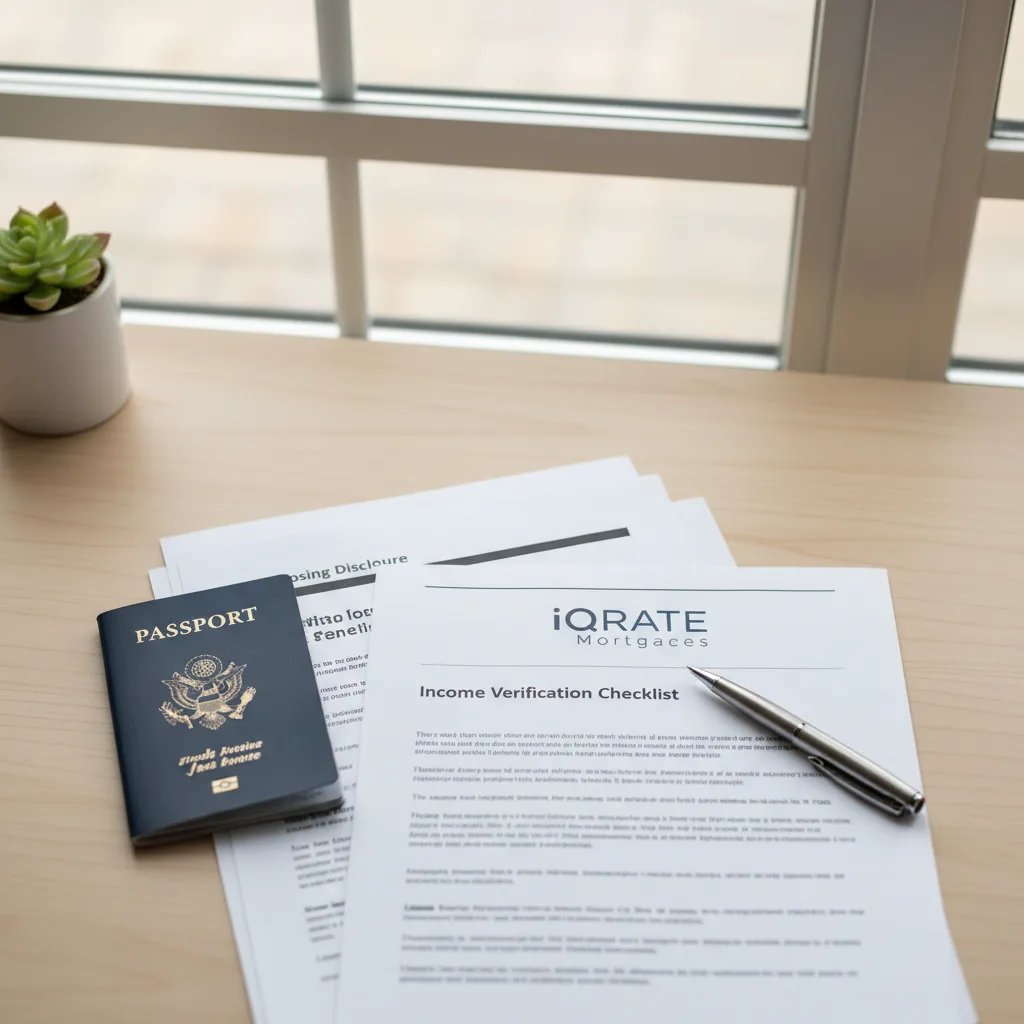
To verify your assets held in foreign bank accounts, you must provide:
- Bank Statements: At least two to three months of statements from all accounts you will use for the transaction. The statements must show your name, account number, and the bank's name.
- Source of Funds: Be prepared to explain any large, recent deposits. Lenders need to ensure the funds are yours and not a loan from another party. This is a key part of anti-money laundering regulations.
- Gift Letter: If a portion of your funds is a gift from a family member, you will need a signed gift letter stating that the funds are a gift and do not need to be repaid.
For example, if you are buying a $500,000 investment property in Orlando with a 30% down payment ($150,000), you will need to show documentation for that amount plus closing costs (approx. 3-5%) and 12 months of reserves. (The data, information, or policy mentioned here may vary over time.)
Will I need to have my foreign documents translated into English?
Yes, absolutely. Any document that is not originally in English must be accompanied by a complete and certified translation. A certified translation includes a signed statement from the translator or translation company affirming the accuracy and completeness of the translation. You cannot translate the documents yourself. This rule applies to bank statements, pay stubs, employment letters, tax returns, and any other supporting paperwork.
Do You Need a United States Bank Account?
While you can start the process without one, you will need to open a U.S. bank account before your loan can close. It is a mandatory requirement for nearly all lenders for several reasons:
- Closing Funds: You will need to wire your down payment and closing costs into the U.S. financial system, typically to the title company or closing attorney's escrow account. Having your own U.S. account makes this transfer much smoother.
- Mortgage Payments: Lenders require a U.S. account for automated mortgage payments (ACH debits).
- Reserves: Many lenders prefer to see the required cash reserves held in a U.S. bank account at the time of closing.
It is wise to open an account with a major U.S. bank that has international banking services as soon as you begin your property search in Florida.
Buying Under a Limited Liability Company (LLC)
Many foreign investors choose to hold title to their U.S. property in an LLC for liability protection and potential privacy benefits. While this is a smart legal strategy, it adds a layer to the mortgage process. If you are buying through an LLC, the lender will still underwrite the loan based on your personal financial profile.
Be prepared to provide:
- The LLC's formation documents, such as the Articles of Organization and Operating Agreement.
- A Certificate of Good Standing for the LLC.
- A personal guarantee for the loan. This means you are personally responsible for repaying the debt if the LLC defaults.
Getting a loan for an LLC can sometimes mean slightly higher interest rates or fees, but the protection it offers is often worth the cost. (The data, information, or policy mentioned here may vary over time.)
Understanding FIRPTA in Florida Real Estate
FIRPTA, the Foreign Investment in Real Property Tax Act, is a U.S. federal law that imposes a withholding tax on the sale of real estate by foreign sellers. It is crucial to understand this from the time of purchase, even though it only applies when you eventually sell the property.
Here’s what you need to know:
- It’s a Withholding Tax: When a foreign person sells U.S. real estate, the buyer is generally required to withhold 15% of the gross sales price and send it to the IRS. For example, on the sale of a $600,000 Orlando property, $90,000 would be withheld. (The data, information, or policy mentioned here may vary over time.)
- It's Not the Final Tax: The 15% is a prepayment on any capital gains tax that may be due. The seller must file a U.S. tax return to report the sale, calculate the actual tax owed, and request a refund of any overpayment.
- Exemptions Exist: The withholding may be reduced or eliminated in certain situations, such as if the sales price is under $300,000 and the buyer intends to use the property as their primary residence. However, these exemptions rarely apply to foreign investors.
Consulting with a tax advisor familiar with FIRPTA at the beginning of your investment journey will save you from major surprises down the road.
The journey to securing a U.S. property requires careful navigation, especially with documentation. If you're ready to explore your financing options for a home in Miami or Orlando, our team of specialists is here to help. Apply now to begin the conversation and get your questions answered.
Author Bio
David Ghazaryan is the expert mortgage strategist and founder behind iQRATE Mortgages. With a mission to fund home loans that traditional banks won't touch, David specializes in helping clients with unique financial situations, including those recovering from foreclosure or bankruptcy. He expertly crafts smart, strategic, and stress-free mortgages by leveraging a vast network of over 100 lenders to secure competitive rates for investors and homebuyers alike. Praised for exceptional customer service, David has helped hundreds of families with a 97% satisfaction rate, guiding them to the mortgage they deserve.
References









