


How the SAVE Plan Impacts Mortgage Qualification in Texas
The federal Saving on a Valuable Education (SAVE) plan is a game-changer for millions with student debt, offering significantly lower monthly payments—sometimes as low as $0. For public service professionals in Austin participating in programs like Public Service Loan Forgiveness (PSLF), this relief is essential. However, when you apply for a mortgage, that $0 payment shown on your credit report creates a major underwriting challenge.
Mortgage lenders must verify and calculate a stable, long-term monthly payment for every debt you hold to determine your debt-to-income (DTI) ratio. A DTI ratio that is too high is one of the top reasons for mortgage denial. While your SAVE plan provides immediate cash-flow benefits, lenders are required by underwriting rules to look past the temporary payment amount and assess the risk associated with the total loan balance. They need to ensure you can afford the home loan both now and in the future, when your student loan payments might be recalculated.
Why Lenders Recalculate Your $0 SAVE Plan Payment
When an underwriter sees a $0 monthly payment on your credit report for a substantial student loan balance, it raises a red flag. They know this payment is based on your current income and won't last forever. Their primary concern is 'payment shock'—the risk that you won't be able to afford your mortgage if your student loan payment increases significantly later on.
To standardize how they account for this, both conventional (Fannie Mae and Freddie Mac) and government-backed (FHA) loan programs have specific guidelines for calculating a payment when the reported amount is zero or doesn't cover principal and interest. In most cases, they will ignore the $0 figure and instead calculate a new, hypothetical monthly payment, typically using a percentage of your total outstanding loan balance. This newly calculated, and often much higher, figure is then used in your DTI calculation, which can drastically reduce the loan amount you qualify for or lead to an outright denial.
Required Documentation for Your SAVE Plan Mortgage Application
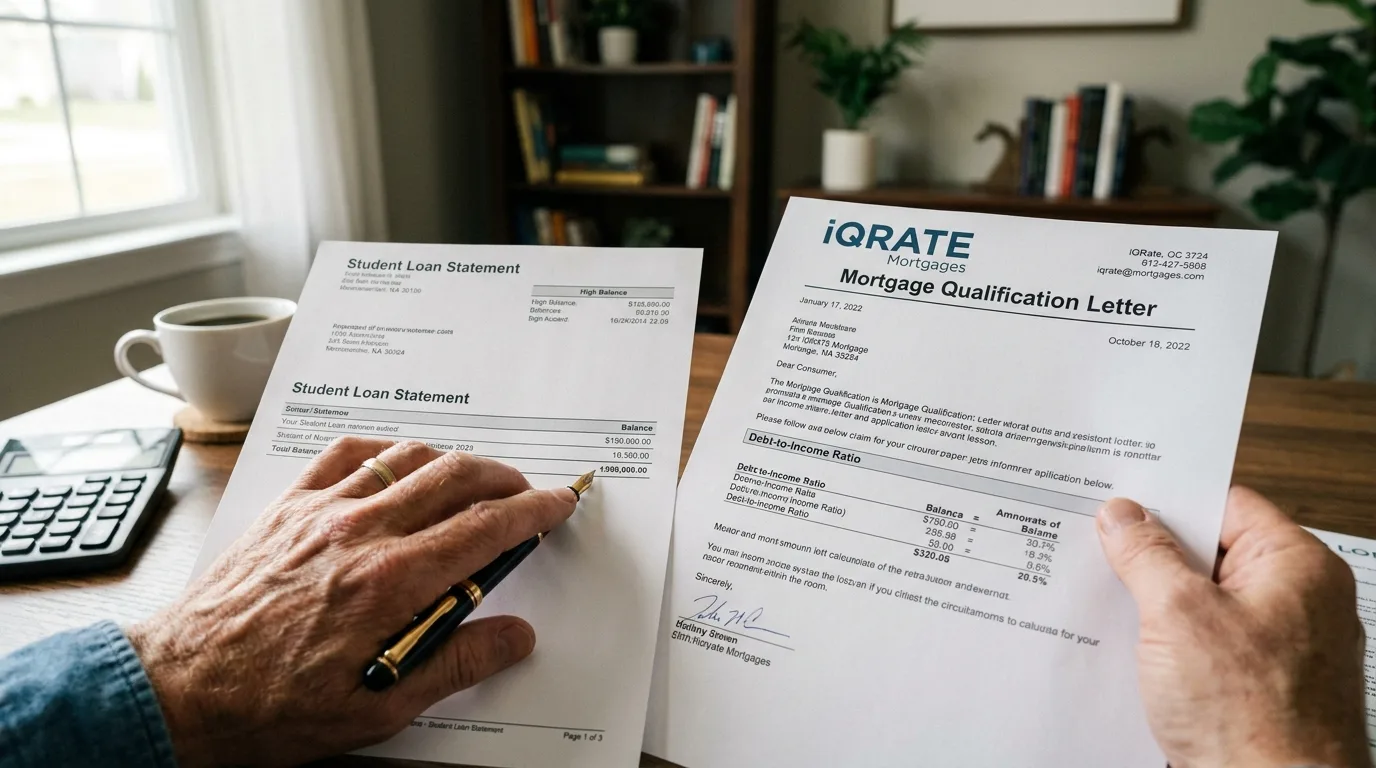
The single most important step to overcoming this obstacle is providing the correct documentation directly from your student loan servicer (like MOHELA, Nelnet, or Aidvantage). Your credit report is not sufficient. Lenders are permitted to use your actual SAVE plan payment, even if it's $0, if and only if you provide an official statement that substantiates it.

Your documentation must include the following:
- Your Full Name: The name on the statement must match your loan application.
- Student Loan Account Number: This allows the lender to verify the specific debt.
- The Exact Monthly Payment Amount: The statement must clearly list your required monthly payment under the income-driven repayment plan (e.g., SAVE). If the payment is $0.00, it must state that explicitly.
- The Repayment Plan Type: The document should identify the plan as 'SAVE' or another qualifying income-driven plan.
A recent, clear printout from your servicer’s online portal is usually acceptable. Proactively providing this document with your initial application can prevent weeks of delays and confusion.
FHA vs. Conventional Loans: Calculating Student Debt in Austin
How your student loan payment is calculated depends heavily on the type of mortgage you're seeking. The rules for FHA vs. Conventional Loans are often more flexible than for FHA loans, which can make a significant difference for buyers in competitive markets like Austin.
Conventional Loan Guidelines (Fannie Mae/Freddie Mac)
Conventional loans offer the most favorable path for borrowers on the SAVE plan. According to Fannie Mae guidelines, if a borrower provides documentation verifying their income-driven payment is $0, the lender is permitted to use $0 as the monthly payment for DTI calculation. This is a huge advantage.
However, if you fail to provide this documentation, the lender must revert to a standard calculation. They will take 0.5% of the outstanding loan balance and use that as your monthly payment. (The data, information, or policy mentioned here may vary over time.)
- Example: You have a $120,000 student loan balance and a $0 payment under the SAVE plan.
- With Documentation: The lender uses a $0 monthly payment for your DTI.
- Without Documentation: The lender calculates 0.5% of $120,000, resulting in a $600 monthly payment being added to your DTI calculation. This could reduce your purchasing power by over $100,000.
FHA Loan Guidelines in Round Rock
FHA loans, insured by the Federal Housing Administration, have historically been stricter with student loan calculations. This can be a hurdle for homebuyers in areas like Round Rock who might rely on FHA's lower down payment options.
The FHA requires lenders to use the payment listed on the credit report only if it is above zero and will fully amortize the loan. If your payment is $0, as it might be with the SAVE plan, the FHA directs the lender to calculate a monthly payment equal to 0.5% of the outstanding loan balance.
While you should still provide your official SAVE plan statement, many lenders with FHA approval will strictly adhere to the 0.5% rule due to FHA's less flexible guidelines. It is crucial to have a conversation with your loan officer upfront to confirm how they will interpret your $0 payment for an FHA loan, as some lenders may have 'overlays,' which are internal rules that are even stricter than the FHA's official position. (The data, information, or policy mentioned here may vary over time.)
Can Future Loan Forgiveness Count as a Mortgage Asset?
No, the anticipated amount of your future loan forgiveness cannot be counted as an asset for a mortgage application. Lenders can only consider tangible, verifiable assets that are currently available to you, such as funds in checking, savings, or investment accounts.
Loan forgiveness, whether through PSLF or another program, is a future event contingent on meeting specific requirements over time. It reduces a liability (your debt), but it does not provide liquid cash for a down payment or closing costs. You cannot use the promise of future forgiveness to meet the asset requirements for your home loan.
Crafting Your Letter of Explanation for Student Loans
If the underwriter requests more information about your student loans, you will likely need to write a Letter of Explanation (LOE). The goal is to be clear, concise, and factual. Do not add emotional details or unnecessary information.
Your letter should simply state:
- 'My student loans, account number [Your Account Number], are enrolled in the federal SAVE income-driven repayment plan.'
- 'As per the terms of this plan and my current income, my required monthly payment is currently $[Your Payment Amount].'
- 'Please see the attached statement from my loan servicer, [Servicer Name], which confirms this payment amount.'
That’s it. Your goal is to direct the underwriter to the official documentation you've provided. The documents, not a lengthy story, are what will satisfy the requirement.
Timing Your Home Purchase: Buy Now or Wait for Forgiveness?
Deciding whether to buy a home in a rapidly appreciating area like Georgetown now or wait until your loans are fully forgiven is a major financial calculation.
- Buying Now: The primary advantage is getting into the market and beginning to build equity. If home values continue to rise, waiting could mean you pay significantly more for the same type of house later. With the right documentation for your SAVE plan, you can still secure a mortgage and begin your journey as a homeowner.
- Waiting for Forgiveness: The main benefit of waiting is the complete elimination of your student loan debt from your DTI ratio. Once forgiven, that debt is gone, which will significantly increase your purchasing power. However, you are betting that the increase in your borrowing ability will outweigh the potential rise in home prices and interest rates during your waiting period. There is a real risk that you could be priced out of the market while you wait.
Common Lender Mistakes with SAVE Plan Calculations
Even savvy borrowers can run into trouble if their loan officer is not experienced with the nuances of income-driven repayment plans. Be aware of these common errors:
- Defaulting to the 0.5% Rule: Many lenders, especially on conventional loans, automatically use the 0.5% calculation without asking the borrower for the official servicer statement. This is the most common and damaging mistake.
- Misunderstanding Conventional Guidelines: A loan officer may be unaware that Fannie Mae and Freddie Mac explicitly allow the use of a documented $0 payment. They might incorrectly believe they are forced to use a calculated payment.
- Applying FHA Rules to Conventional Loans: An inexperienced lender might mistakenly apply the stricter FHA standard (0.5% of balance) to a conventional loan application, unnecessarily crippling your borrowing power.
- Not Disclosing Lender Overlays: Some mortgage companies have their own internal rules that are more restrictive than agency guidelines. A lender might have an overlay that says 'we never accept a $0 payment, regardless of documentation' and fail to communicate this to you upfront. Navigating student loan rules for a mortgage can be complex. If your lender is struggling with your SAVE plan documentation, connect with an expert who understands these specific guidelines to ensure your DTI is calculated correctly and your home buying power is maximized.
Understanding how your SAVE plan impacts your home loan eligibility can be complex, but you don't have to navigate it alone. If you're ready for clarity and want to see what you qualify for, take the next step. Apply now to partner with an expert who understands the nuances of your situation.
Author Bio
David Ghazaryan is the expert mortgage strategist and founder behind iQRATE Mortgages. With a mission to fund home loans that traditional banks won't touch, David specializes in helping clients with unique financial situations, including those recovering from foreclosure or bankruptcy. He expertly crafts smart, strategic, and stress-free mortgages by leveraging a vast network of over 100 lenders to secure competitive rates for investors and homebuyers alike. Praised for exceptional customer service, David has helped hundreds of families with a 97% satisfaction rate, guiding them to the mortgage they deserve.
References
Fannie Mae Selling Guide: Student Loan Debt
CFPB: How do my student loans affect my ability to get a mortgage?
HUD Handbook 4000.1 - FHA Single Family Housing Policy Handbook









