


How Lenders Average Inconsistent 1099 Income in Austin
For gig workers in the fast-paced Austin market, income rarely looks like a steady paycheck. One month you might crush your earnings goals, and the next could be slower. Mortgage lenders understand this variability but need to establish a reliable, predictable income figure to approve your loan. To do this, they use a specific averaging method.
Typically, a lender will require your last two years of complete federal tax returns, including all schedules (like Schedule C, which details your profit or loss from a business). They add up the net income reported on your Schedule C for the past 24 months and divide that total by 24. This gives them a conservative monthly qualifying income.
The Calculation in Action
Let's say you're an Austin-based freelance designer aiming to buy a home:
- Year 1 (2022) Net Income: $65,000
- Year 2 (2023) Net Income: $85,000
The lender's calculation would look like this:
- Total Income: $65,000 + $85,000 = $150,000
- Average Annual Income: $150,000 / 2 = $75,000
- Qualifying Monthly Income: $75,000 / 12 = $6,250
The Declining Income Rule
This is a critical point that trips up many applicants. If your income has decreased from one year to the next, lenders will almost always use the lower, more recent year's income for qualification. For example, if your income was $85,000 in 2022 but dropped to $65,000 in 2023, they would base their calculation on the $65,000 figure, resulting in a qualifying monthly income of only $5,416. They see declining income as a risk and will qualify you based on the most conservative number.
Minimum History for Gig Work to Qualify for a Mortgage
Lenders need to see a track record of stability. For gig work and self-employment, the industry gold standard is a minimum two-year history. This two-year period shows an underwriter that your business is established, has a history of generating income, and is likely to continue doing so. This history must be documented through tax returns filed as a self-employed individual for at least two consecutive years.
Can You Qualify with Less Than Two Years?
While two years is the standard, some exceptions exist, though they are rare and require a strong compensating factor. You might be able to qualify with as little as 12 months of self-employment history if:
- You have a previous two-year history of W-2 employment in the exact same field or a similar line of work.
- You have a strong educational background that supports your business (e.g., an accountant who leaves a firm to start their own practice).
- Your income for the most recent 12 months is well-documented, substantial, and appears stable.
This is a high bar to clear. Most lenders will still default to the two-year requirement to mitigate their risk. Starting the home buying journey after you've crossed that two-year threshold will give you the most options and the best chance of success.
Organizing Your Financials: Bank Statements and App Earnings
For a gig worker, your paperwork is your resume. A messy, incomplete application is the fastest way to a denial. Underwriters need a crystal-clear picture of your finances. Providing them with a well-organized file from the start demonstrates professionalism and makes their job easier, which works in your favor.

A Step-by-Step Document Preparation Checklist
Before you even speak with a loan officer, gather the following:
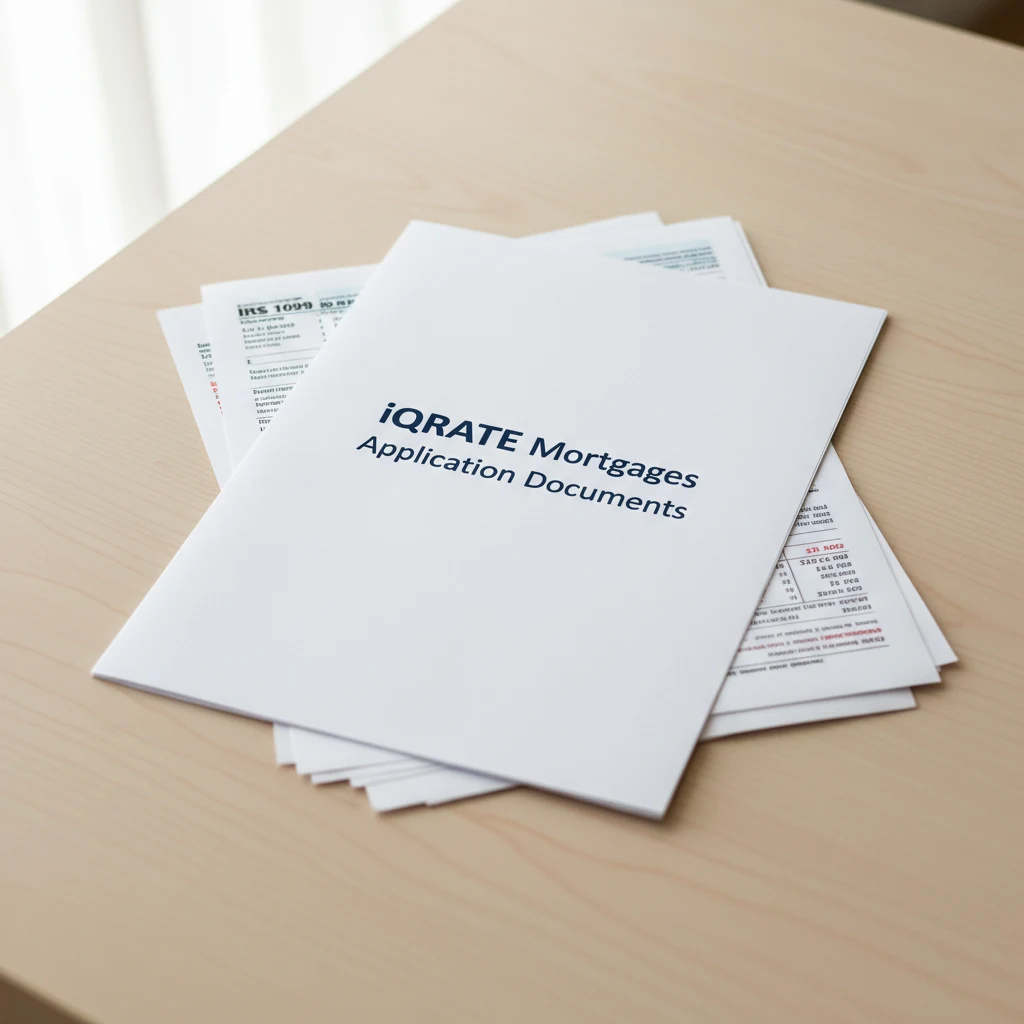
- Complete Federal Tax Returns (Past Two Years): This means every single page and schedule you filed with the IRS. Don't just send the summary pages.
- Year-to-Date Profit & Loss (P&L) Statement: A simple document, often created with accounting software or a spreadsheet, showing your total income and expenses for the current year up to the most recent full month.
- 1099 Forms (Past Two Years): Collect all 1099 forms from every platform and client.
- Business and Personal Bank Statements: Lenders will typically ask for the last two to three months of statements for all accounts. Ensure every page is included, even the blank ones.
- App Earnings Reports: For platforms like Uber, DoorDash, or Instacart, download the annual or year-to-date summary reports. These often provide a clean breakdown of gross earnings, fees, and mileage that can support your P&L.
Pro-Tip: The single best thing you can do for your mortgage application is to maintain a separate bank account exclusively for your business income and expenses. Commingling funds makes it incredibly difficult for an underwriter to verify your actual business cash flow and is a major red flag.
Can I Add Back Business Write-Offs to My Income?
Yes, and this is one of the most powerful tools a self-employed borrower has. Your tax return's net income is your gross income minus business expenses. However, many of those expenses are 'paper losses'—they don't actually represent cash leaving your account. Underwriters can add these non-cash or one-time expenses back to your net income, increasing the amount you can qualify for.
Common Add-Backs for Gig Workers
- Depreciation: If you depreciated an asset like a vehicle, computer, or camera for your business, that annual depreciation amount can be added back.
- Mileage: Instead of deducting actual car expenses (gas, oil changes, insurance), most gig workers take the standard mileage deduction. This non-cash deduction can be added back to your qualifying income. Example: 15,000 business miles driven in a year at the IRS rate of $0.67/mile (2024 rate) equals $10,050 that can be added back. (The data, information, or policy mentioned here may vary over time.)
- Business Use of Home: The portion of your rent or mortgage payments you deduct for a home office can be added back.
- One-Time Major Purchases: If you had a significant, isolated business expense (e.g., buying $5,000 in new equipment), a lender may be willing to add that back with a letter of explanation, as it's not a recurring monthly cost.
Let's see how this boosts a Dallas-based rideshare driver's income:
- Net Income on Schedule C: $48,000
- Depreciation Claimed: $3,500
- Mileage Deduction: $10,050
- Adjusted Qualifying Income: $48,000 + $3,500 + $10,050 = $61,550
This adjustment increases their qualifying monthly income from $4,000 to $5,129, significantly expanding their purchasing power.
Home Loan Options for Self-Employed Individuals in Dallas
Gig workers in Dallas are not limited to a single type of loan. While traditional mortgages are the goal, powerful alternatives exist for those whose tax returns don't reflect their true cash flow.
Traditional Mortgages (Fannie Mae/Freddie Mac)
This is the most common path. These loans, also known as 'conventional' or 'conforming' loans, require full documentation: two years of tax returns, a P&L, and bank statements. They follow the income averaging and add-back rules discussed above. If you can qualify this way, you will secure the most competitive interest rates and terms.
Non-QM Loans: The Alternative for Dallas Gig Workers
When tax returns are a roadblock due to extensive write-offs, Non-Qualified Mortgages (Non-QM) offer a solution. These loans use alternative methods to verify income.
- Bank Statement Loans: This is the most popular Non-QM product for the self-employed. Instead of looking at your tax returns, lenders analyze 12 or 24 months of your business or personal bank statements. They calculate an 'expense factor' (typically 30-50%) and subtract it from your total deposits to determine a qualifying income. This is a game-changer for gig workers who show a low net income on paper but have strong, consistent cash flow.
- 1099-Only Loans: Some lenders offer programs that qualify you based only on your 1099 forms from the past one or two years, completely bypassing tax returns and bank statements. These are less common and often have stricter credit score and down payment requirements.
Non-QM loans provide crucial flexibility, but they typically come with slightly higher interest rates and may require a larger down payment (15-20% or more) compared to traditional loans. (The data, information, or policy mentioned here may vary over time.)
What Common Mistakes Do Gig Workers Make on Their Mortgage Applications?
- Over-Deducting Before Applying: The same write-offs that save you money on taxes can kill your mortgage application. The best strategy is to consult a mortgage professional in the fall before you plan to buy. They can help you model how different levels of deductions will impact your qualifying income, allowing you to make an informed decision when you file your taxes.
- Disorganized Paperwork: Submitting an application with missing bank statement pages, an unsigned tax return, or a P&L that doesn't align with your bank deposits creates immediate suspicion and will, at best, cause major delays.
- Applying with Multiple Lenders Simultaneously: While shopping for a rate is smart, formally applying with multiple lenders in a short period can result in several hard credit inquiries, which can lower your credit score.
- Forgetting Business Debts: If you have a car loan, credit card, or personal loan that you pay from your business account, it must be included in your debt-to-income (DTI) ratio. Failing to disclose it will cause problems when the underwriter finds it.
Does a Part-Time W-2 Job Help My Application in Houston?
Absolutely. Having a part-time W-2 job can dramatically strengthen your mortgage application, especially in a competitive market like Houston. This is because a W-2 income is viewed by lenders as stable, predictable, and reliable. It creates a solid income floor that balances the inherent volatility of your gig work.
An underwriter can use the gross monthly income from your W-2 job and add your averaged 1099 income on top of it. This hybrid income model makes your financial profile much more attractive.
Example: A Houston homebuyer works part-time at a retail store, earning $2,500/month (W-2). They also drive for a delivery app, with a two-year averaged monthly income of $3,000 (1099).
- Without W-2 Job: Qualifying Income = $3,000/month
- With W-2 Job: Qualifying Income = $2,500 + $3,000 = $5,500/month
This combined income nearly doubles their borrowing power and significantly improves their DTI ratio, opening the door to more home options and a smoother approval process. Qualifying for a mortgage with gig economy income requires a clear strategy and expert guidance. If you're a 1099 worker in Texas, understanding how to properly present your financial history is the first step toward homeownership. Partner with a mortgage professional who specializes in self-employed scenarios to navigate the process and find the right loan for your unique situation.
If you're ready to turn your gig economy success into a home, the next move is to see where you stand. Apply now with our straightforward online application to get a clear picture of your options.
Author Bio
David Ghazaryan is the expert mortgage strategist and founder behind iQRATE Mortgages. With a mission to fund home loans that traditional banks won't touch, David specializes in helping clients with unique financial situations, including those recovering from foreclosure or bankruptcy. He expertly crafts smart, strategic, and stress-free mortgages by leveraging a vast network of over 100 lenders to secure competitive rates for investors and homebuyers alike. Praised for exceptional customer service, David has helped hundreds of families with a 97% satisfaction rate, guiding them to the mortgage they deserve.
References
Fannie Mae: Self-Employment Income









