


What a 'No-Cost' VA IRRRL in Jacksonville Really Means
The term 'no-cost' is one of the most misleading phrases in the mortgage industry. For Veterans receiving offers for a VA Interest Rate Reduction Refinance Loan (IRRRL), it suggests a free transaction. The reality is that there are always costs involved in a refinance. A 'no-cost' IRRRL simply means you aren't paying for those costs out of pocket at the closing table.
Instead, the lender handles these fees in one of two ways:
- Rolling Costs into the Loan: This is the most common method. The lender adds the closing costs (origination fees, title insurance, appraisal waivers, etc.) directly to your new loan principal. While you avoid upfront expenses, you are now borrowing more money and paying interest on those costs for the life of the loan.
- Lender Credits: The lender offers you a slightly higher interest rate in exchange for a 'credit' that covers some or all of your closing costs. You pay nothing upfront, but your monthly payment will be higher than it would be with a lower rate where you paid the costs yourself.
Example: You're refinancing a $300,000 mortgage on your home in Jacksonville. The closing costs are $4,000. In a 'no-cost' scenario, your new loan balance becomes $304,000. You've successfully refinanced without writing a check, but your debt has increased.
How to See if Closing Costs Are Added to Your Mortgage
Transparency is legally required. Your lender must provide a Loan Estimate (LE) within three business days of your application. This standardized document is your key to understanding the true costs. To see if costs are being rolled in, compare the 'Loan Amount' on page 1 of the LE to your current mortgage principal. If the new loan amount is higher, costs are likely included.

Next, go to Page 2, Section D: 'Total Closing Costs'. This line item gives you the full picture. It totals all the fees from various sections:
- Section A: Origination Charges (lender fees)
- Section B: Services You Cannot Shop For (e.g., credit report fee)
- Section C: Services You Can Shop For (e.g., title insurance)
If the loan is a true 'no-cost' refinance via lender credits, you will see a negative number in Section J: 'Total Closing Costs (Borrower-Paid)' that offsets the fees.
Common Hidden Fees in VA IRRRL Offers
While the VA limits certain fees, lenders can still charge for various services. Scrutinize your Loan Estimate for these common charges that can be rolled into your loan:
- Origination Fee: A fee charged by the lender for processing the loan. The VA caps this at 1% of the loan amount. (The data, information, or policy mentioned here may vary over time.)
- Discount Points: This is prepaid interest you can pay to lower your rate. On a 'no-cost' loan, lenders might charge points and roll them into the balance, which inflates your debt for a rate reduction you're ultimately financing.
- Title and Escrow Fees: Costs for title search, title insurance, and settlement services to ensure the property transfer is legitimate. (The data, information, or policy mentioned here may vary over time.)
- Recording Fees: The fee charged by the county (e.g., Duval County or Escambia County) to officially record the new mortgage lien. (The data, information, or policy mentioned here may vary over time.)
- VA Funding Fee: Most veterans using an IRRRL will pay a 0.5% funding fee, which is often financed into the loan. (The data, information, or policy mentioned here may vary over time.) Some veterans are exempt, including those receiving VA disability compensation.
Is Paying Closing Costs Upfront Better on VA Loans?
Deciding whether to pay closing costs out of pocket or finance them depends entirely on your financial situation and goals. There are clear advantages and disadvantages to each approach.
Pros of Paying Costs Upfront
- Lower Loan Balance: You start with a smaller mortgage principal, which means you'll pay less in total interest over the loan's term.
- Build Equity Faster: A lower loan balance means more of your monthly payment goes toward principal, accelerating equity growth.
- Potentially Lower Rate: You may secure a lower interest rate because the lender isn't providing credits to cover the costs.
Cons of Paying Costs Upfront
- Requires Liquid Cash: Closing costs can be thousands of dollars. Paying them upfront can significantly deplete your savings, which could be used for emergencies or investments.
- Reduced Financial Flexibility: The cash you use for closing costs is money you no longer have available for other opportunities.
How to Compare Multiple IRRRL Offers in Pensacola
Never accept the first offer you receive. Predatory lenders often target veterans with aggressive marketing that highlights a low payment without disclosing the full cost. To make an informed decision on your Pensacola property, follow these steps:
- Request Loan Estimates: Get an official LE from at least three different lenders. A verbal quote or marketing flyer is not enough.
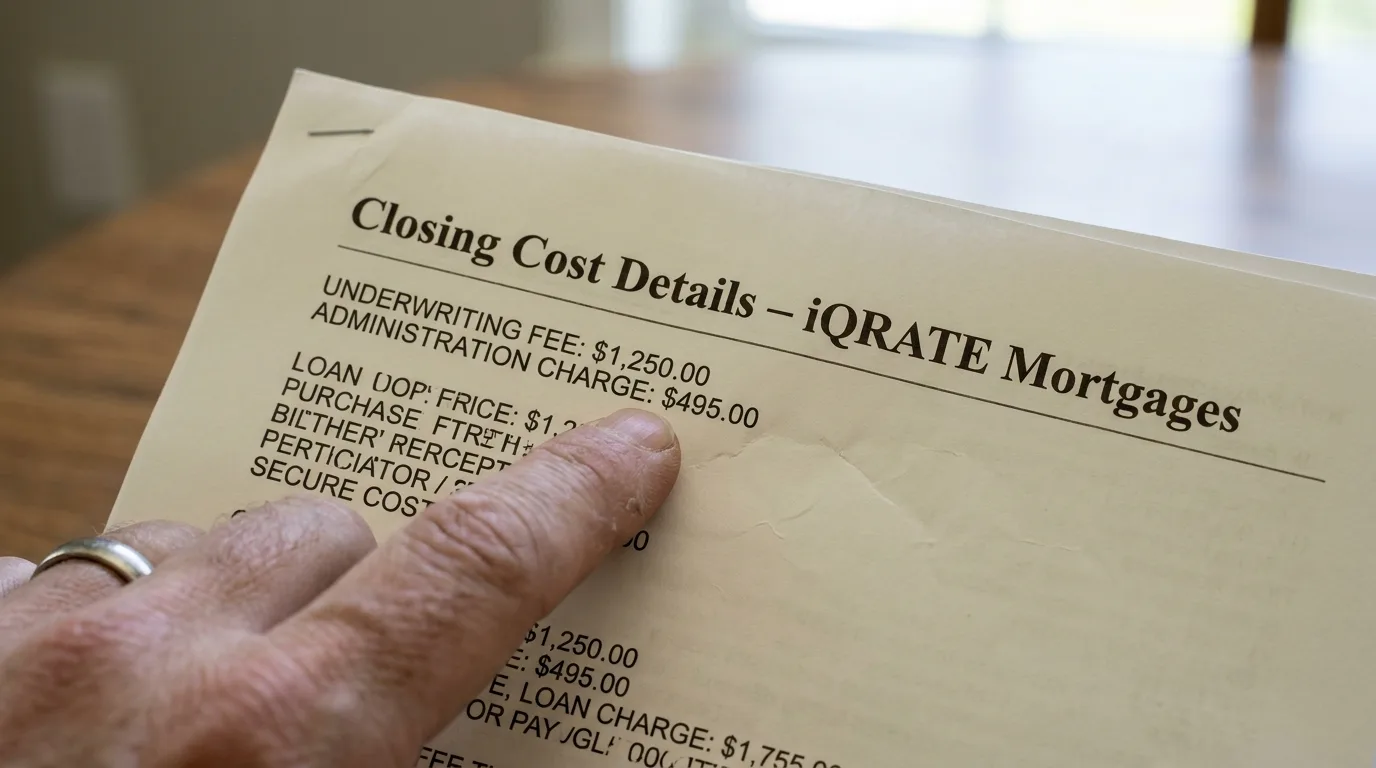
- Compare Interest Rate and APR: The interest rate is the cost of borrowing, while the Annual Percentage Rate (APR) includes the interest rate plus most of the fees. A loan with a low interest rate but high fees will have a much higher APR. The APR gives a more accurate view of the loan's true cost.
- Analyze Total Closing Costs: Look at Page 2, Section D on each LE. Compare the total dollar amount of the fees. Ask lenders to explain any significant differences.
- Calculate the Break-Even Point: This is the most crucial calculation. Divide the total closing costs by your monthly savings. The result is the number of months it will take to recoup your costs. For example, if costs are $3,000 and you save $100 per month, your break-even point is 30 months.
The VA's Rule for Recouping Costs on a Refinance
The Department of Veterans Affairs has a strict consumer protection rule to prevent 'loan churning', where lenders repeatedly refinance a veteran's loan to generate fees. For an IRRRL, the lender must be able to prove that you will recoup all fees and costs within 36 months. (The data, information, or policy mentioned here may vary over time.)
Calculation Example: Let's say a lender in Pensacola offers you an IRRRL with total closing costs and fees (including the VA Funding Fee) of $4,500. The new mortgage payment must be low enough to save you at least $125 per month ($4,500 / 36 months = $125).
If the monthly savings are only $100, the recoupment period is 45 months ($4,500 / $100). This loan would not meet VA guidelines and is a sign of a potentially predatory offer.
Can a VA IRRRL in Florida Actually Hurt You Financially?
Yes, a seemingly beneficial IRRRL can have negative consequences if not structured properly. Here are scenarios where it can hurt you:
- Resetting the Clock: If you have 20 years left on a 30-year mortgage and refinance into a new 30-year loan, you are extending your debt timeline by a decade. Even with a lower payment, you could pay significantly more in total interest.
- Cash-Out Disguised as an IRRRL: An IRRRL is strictly for reducing your interest rate or converting an adjustable-rate mortgage to a fixed rate. It is not a cash-out refinance. If a lender offers you cash back beyond recouping costs, it is not a true IRRRL.
- Inflated Costs: When the closing costs are so high that the break-even point is far in the future, you lose the financial benefit, especially if you plan to sell the home before reaching that point.
Where to Report a Misleading VA Loan Offer
If you believe you have received a misleading or predatory loan offer that violates VA guidelines, you have recourse. Do not let these lenders take advantage of your hard-earned benefits.
- Contact the VA: You can call your regional VA loan center to report the lender and the specific offer. They take these complaints seriously and investigate lenders who violate their rules.
- File a Complaint with the CFPB: The Consumer Financial Protection Bureau (CFPB) is a federal agency that protects consumers in the financial sector. You can submit a complaint online, and they will work to get a response from the company.
Protecting your financial health is the top priority. A VA IRRRL can be an excellent tool, but only when it provides a clear, tangible net benefit to you, the veteran. Before signing any VA IRRRL offer, it's crucial to have an expert review your Loan Estimate. A qualified mortgage strategist can help you verify the numbers, ensure compliance with VA rules, and confirm the refinance truly benefits your financial goals.
Navigating VA IRRRL offers can be complex. To ensure you're getting a deal that truly benefits your financial future without hidden costs, let an expert review your options. When you're ready for a clear and honest assessment, take the first step and apply now with our team.
Author Bio
David Ghazaryan is the expert mortgage strategist and founder behind iQRATE Mortgages. With a mission to fund home loans that traditional banks won't touch, David specializes in helping clients with unique financial situations, including those recovering from foreclosure or bankruptcy. He expertly crafts smart, strategic, and stress-free mortgages by leveraging a vast network of over 100 lenders to secure competitive rates for investors and homebuyers alike. Praised for exceptional customer service, David has helped hundreds of families with a 97% satisfaction rate, guiding them to the mortgage they deserve.
References
VA Interest Rate Reduction Refinance Loan (IRRRL)









