


The SAVE Plan and Your Mortgage Qualification
The new Saving on a Valuable Education (SAVE) plan is a game-changer for federal student loan borrowers, often reducing monthly payments to as low as zero. While this provides immediate financial relief, it can create a significant roadblock when you apply for a mortgage. The core issue is the disconnect between your actual monthly payment and the payment a mortgage underwriter is required to use when calculating your debt-to-income ratio (DTI).
Your DTI, which compares your gross monthly income to your total monthly debt obligations, is a critical factor in mortgage approval. Lenders have strict limits on how high this ratio can be. When a lender disregards your $50 SAVE plan payment and instead calculates a hypothetical $800 payment based on your loan balance, it can instantly inflate your DTI and lead to a denial.
Why Lenders Use a Different Number
Mortgage lending guidelines, especially for government-backed loans, are designed to be conservative. They aim to assess your long-term ability to repay the mortgage, and income-driven repayment plans like SAVE are not permanent. The payment amount is subject to change based on your future income. To mitigate this risk, lenders follow specific rules set by entities like the Federal Housing Administration (FHA), Fannie Mae, and Freddie Mac.
These rules often require them to use a fixed percentage of your total student loan balance as your monthly payment, regardless of your actual payment under the SAVE plan. This standardized approach creates a frustrating hurdle for otherwise qualified buyers in cities like Sacramento and Fresno.
How FHA Loans Treat Student Debt in Sacramento
Federal Housing Administration (FHA) loans are popular, especially among first-time homebuyers, due to their lower down payment and credit score requirements. However, their guidelines for student loans are notoriously strict, which can be a major challenge for borrowers on the SAVE plan looking to buy in Sacramento.
FHA rules mandate that lenders calculate the monthly student loan payment using one of the following methods, regardless of the actual payment amount shown on your credit report:
- 0.5% of the outstanding loan balance, if the actual documented payment is less than this amount (including $0 payments).
- The actual documented payment, only if it will fully amortize the loan over its term. (The data, information, or policy mentioned here may vary over time.)
Since SAVE plan payments are based on income and not designed to fully pay off the loan by a specific date, the 0.5% rule almost always applies.
A Sacramento Homebuyer Example
Let's consider a prospective homebuyer in Sacramento with a $150,000 student loan balance. Under the SAVE plan, their required monthly payment is $50.
- Actual Payment: $50 per month.
- FHA-Calculated Payment: 0.5% of $150,000 = $750 per month.
For DTI purposes, the FHA underwriter must use the $750 figure. This additional $700 in calculated monthly debt dramatically reduces the buyer's purchasing power, potentially making it impossible to qualify for a home in their desired price range in Sacramento.

Conventional Loan Guidelines for Fresno Mortgages
Conventional loans, which are not government-insured, conform to guidelines set by Fannie Mae and Freddie Mac. Fortunately for homebuyers in Fresno and across California, these guidelines are significantly more flexible and favorable for borrowers on the SAVE plan.
Fannie Mae and Freddie Mac allow lenders to use the payment amount that appears on your credit report. Here’s how it typically works:
- If a monthly payment is reported on your credit report: The lender can use that amount, even if it is $0.
- If no monthly payment is reported on the credit report (or it shows $0): The lender can still use a $0 payment if you provide documentation showing the payment is indeed zero. If not documented, they will calculate a payment, usually 0.5% of the loan balance. (The data, information, or policy mentioned here may vary over time.)
This is a critical distinction. A conventional loan can allow you to use your true monthly obligation, preserving your DTI and maximizing your home buying potential.
A Fresno Homebuyer Example
Let's take a buyer in Fresno with the same financial profile: $150,000 in student loans and a $50 monthly SAVE plan payment.
- Actual Payment: $50 per month.
- Conventional-Calculated Payment: $50 per month (assuming it's properly documented and shows on the credit report).
By using the actual $50 payment, this buyer's DTI is $700 lower than it would be under FHA rules. This difference could be enough to qualify for an additional $100,000 or more on their mortgage, a substantial advantage in the competitive Fresno market.
Providing the Right Documentation for Your SAVE Plan
To ensure a conventional loan underwriter accepts your low or zero-dollar SAVE plan payment, you must provide clear and definitive proof. Simply having it on your credit report is often not enough. You need to proactively gather and submit the correct paperwork with your mortgage application.
The essential document is your official student loan statement from your loan servicer (like MOHELA, Nelnet, or Aidvantage). This statement must clearly show:
- Your full name.
- The outstanding loan balance.
- The type of repayment plan (it must explicitly state 'SAVE' or 'Saving on a Valuable Education').
- The required monthly payment amount.
- The payment due date.
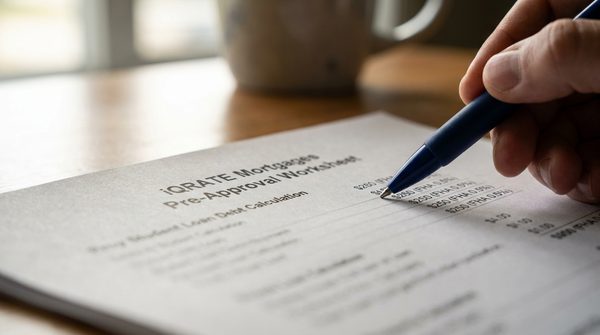
Make sure the statement is recent, typically within the last 30 days. Submitting a comprehensive and easy-to-read statement prevents underwriters from defaulting to a higher calculated payment and avoids unnecessary delays in your approval process.
Using a Manual Underwrite to Your Advantage
If your application is initially rejected by an automated underwriting system (AUS) due to DTI issues related to student loans, a manual underwrite can be a powerful solution. An AUS is a computer algorithm that provides an initial risk assessment. A manual underwrite involves a human underwriter reviewing your entire financial profile.
This human element can be invaluable. A skilled underwriter can analyze the specifics of your situation, including compensating factors that an algorithm might miss. These factors could include:
- Significant cash reserves: Having several months' worth of mortgage payments saved.
- A large down payment: More equity in the home reduces the lender's risk.
- A long, stable employment history: Demonstrates reliable income.
- Potential for increased future earnings: Common in many professional fields.
A manual underwrite allows for a more holistic review, where a lender can apply reason to your SAVE plan payment, especially within the more flexible framework of conventional loan guidelines. This approach can be the key to getting an approval that an automated system would otherwise deny.
Alternative Strategy: Should You Pay Off Other Debts?
If you are determined to use an FHA loan but the 0.5% student loan calculation is hurting your DTI, one effective strategy is to reduce or eliminate other debts. This is a game of numbers: you need to free up enough room in your DTI to absorb the 'phantom' student loan payment.
Think back to the Sacramento homebuyer example. The FHA underwriter added a hypothetical $700 to their monthly debts ($750 calculated payment - $50 actual payment). To offset this, the buyer would need to eliminate other debts with monthly payments totaling $700.
This could mean:
- Paying off a car loan: A $450/month car payment is common.
- Closing credit card balances: Eliminating $250/month in minimum payments.
While using savings to pay off debt reduces your cash for a down payment or closing costs, it can be the necessary trade-off to get your DTI in line for FHA approval. Carefully weigh the cost-benefit of this strategy with your loan officer to see if it makes financial sense for your situation.
Best Loan Type for Sacramento Buyers on the SAVE Plan
For the vast majority of California homebuyers on the SAVE plan, a conventional loan is the superior choice. The flexibility of its underwriting guidelines allows you to qualify based on your actual, lower monthly student loan payment.
This directly translates into greater purchasing power, giving you more options in competitive markets like Sacramento and Fresno. It removes the unnecessary financial penalty imposed by the FHA's rigid calculation method.
While FHA loans have their place, particularly for buyers with lower credit scores or smaller down payments, the student loan calculation is a significant disadvantage. If you are on the SAVE plan, your primary goal should be to meet the qualifications for a conventional mortgage. Improving your credit score or saving for a slightly larger down payment can be well worth the effort to unlock the more favorable DTI treatment offered by conventional loans. Navigating student loan rules for a mortgage can be complex. If you're on the SAVE plan, speaking with a mortgage strategist can clarify your options and build a clear path to homeownership in California.
Ready to see how your SAVE plan impacts your home buying power? Take the next step and Apply for a Mortgage to get a clear picture of your options.
Author Bio
David Ghazaryan is the expert mortgage strategist and founder behind iQRATE Mortgages. With a mission to fund home loans that traditional banks won't touch, David specializes in helping clients with unique financial situations, including those recovering from foreclosure or bankruptcy. He expertly crafts smart, strategic, and stress-free mortgages by leveraging a vast network of over 100 lenders to secure competitive rates for investors and homebuyers alike. Praised for exceptional customer service, David has helped hundreds of families with a 97% satisfaction rate, guiding them to the mortgage they deserve.
References
CFPB - Can I get a mortgage if I have student loans?
Fannie Mae Selling Guide - B3-6-05, Monthly Debt Obligations









