
Written and reviewed by David Ghazaryan, Mortgage Broker, NMLS 1486726 · iQRATE Mortgages, NMLS 1862492 · 6360 S Rainbow Blvd, Las Vegas, NV · Last updated: October 24, 2026
Quick answer: For a builder's new home in a Las Vegas master plan, you use a regular jumbo purchase loan that closes when the home is finished. The work is in timing your rate lock, comparing builder incentives against your total cost and getting the appraisal right in a new phase. For a true custom home on your own lot, in places like Ascaya or MacDonald Highlands, you need a construction loan, either a one-time-close construction-to-permanent loan or a construction loan followed by a jumbo "takeout" loan when the house is done.
New construction is one of the most common ways people end up with a jumbo loan in Southern Nevada, and it's also where we see the most avoidable surprises. The two paths below work very differently, so start by figuring out which one you're on.
First: which kind of "new construction" is it?
Path A: A builder's home. You sign a purchase contract with a production or semi-custom builder. The builder owns the land and builds the house, and you buy it when it's finished. Financing is a jumbo purchase loan that closes at completion. This covers most new luxury homes in the valley's master plans.
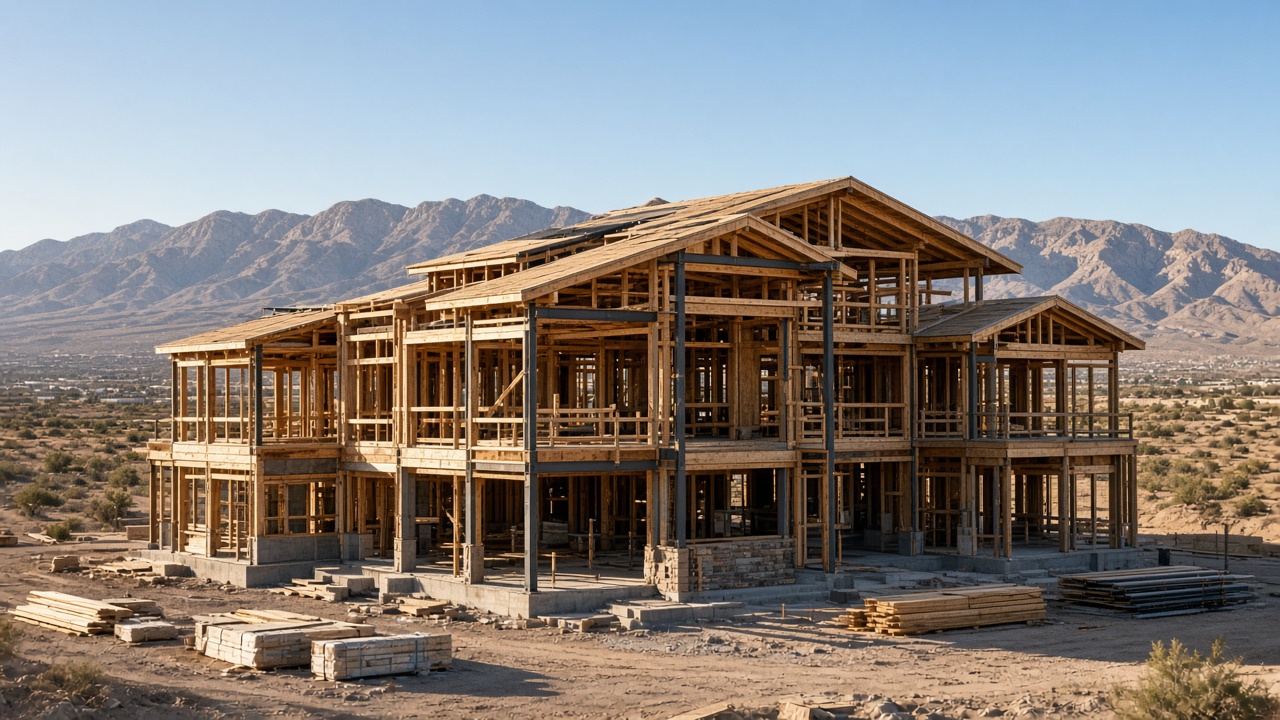
Path B: A custom home on your lot. You own (or are buying) the homesite and hire your own builder. You're the owner during construction, so you need financing that pays the builder in stages. This is how most custom homes in guard-gated hillside communities get built.
If your loan will be above $832,750, the 2026 FHFA one-unit conforming limit for Clark County, it's a jumbo either way. Our jumbo loan page explains how Nevada jumbo programs work.
Path A: Financing a builder's new home with a jumbo
Timing your rate lock
Builder timelines move. A home that's six months from completion when you sign may take longer. A standard rate lock covers a set number of days, and longer locks usually cost more. Some lenders offer extended locks or a one-time "float down" feature for new construction. The right answer depends on how firm the completion date is. We usually wait to lock until the builder's completion date is reliable, and we keep an eye on the market in the meantime.
Builder incentives and the "preferred lender"
Builders often offer closing-cost credits or other incentives if you use their affiliated or preferred lender. Sometimes that's a good deal. Sometimes the incentive is offset by higher costs elsewhere in the loan. The only way to know is to compare full Loan Estimates side by side: total closing costs, lender credits and the long-term cost of the loan. If the builder's offer wins, take it. We'd just want you to see the comparison first.
The appraisal in a new phase
In a brand-new phase, the best comparable sales may be the builder's own recent closings. Appraisers also look at resale homes nearby. If you've added expensive upgrades or a premium lot, the appraisal may not give dollar-for-dollar credit. If the appraisal comes in below the contract price, you'd typically cover the gap or renegotiate, so it pays to discuss upgrade budgets with the lender's appraisal reality in mind.
Deposits and upgrade payments
Builders often take earnest money plus additional deposits for design-center upgrades. Keep a clean paper trail: where each payment came from and proof it cleared. Those dollars count toward your investment in the home, but only if the lender can document them.
Master-plan costs: HOA and SIDs
New master plans often carry master association dues, sub-association dues and sometimes Special Improvement District assessments that paid for roads and utilities. All of those count in your debt-to-income ratio. Ask the builder's sales office for the full list early. In the northwest valley, for example, Skye Canyon is a roughly 1,700-acre master plan where Century Communities took over as master developer in 2020; buyers in any newer master plan should check for those layered costs.
Property taxes on a brand-new home
Nevada's partial tax abatement (3 percent a year for a qualifying owner-occupied primary residence) doesn't apply to new construction in its first fiscal year on the roll, according to the Clark County Assessor; it starts the following fiscal year. The first tax bill on a new home can look very different from the builder's estimate, so we budget for it.
Path B: Building a custom home on your own lot
Step 1: Buying the lot
Jumbo purchase loans are for finished homes, not land. Lots are usually bought with cash, a lot loan or as part of a construction loan that includes the land. Lot loans generally need more down than a home loan, and fewer lenders offer them. If you already own the lot free and clear, its equity may count toward your stake in the construction loan.
Step 2: Design review and permits
Guard-gated custom communities have their own approval process before you ever pull a permit. Every custom home in Ascaya goes through its Architectural Review Committee, and MacDonald Highlands has design guidelines and a review process of its own, plus City of Henderson permits. Lenders generally want approved plans, a signed construction contract and a detailed budget before they'll close a construction loan, so the design-review timeline becomes part of your financing timeline.
Step 3: Choose the loan structure
- One-time close (construction-to-permanent). One application, one closing. The loan funds construction in draws and converts to permanent financing when the home is done. Fewer closing costs and less re-qualifying, but fewer lenders offer it at jumbo loan sizes. Our guide to one-time close loans in Nevada walks through the mechanics.
- Two-time close (construction loan, then jumbo takeout). A short-term construction loan covers the build, then you refinance into a permanent jumbo when the home is finished. More flexibility in picking the final loan, but you qualify twice, and your income, credit or the market could change in between.
Step 4: The builder has to qualify too
Construction lenders review your builder: a Nevada State Contractors Board license, insurance, experience with similar homes and a realistic budget. A builder your lender won't approve means a delay, so we check this before you sign the construction contract.
Step 5: Draws, inspections and contingencies
Construction loans pay the builder in stages after an inspector confirms the work. Budget for a contingency reserve; hillside lots and high-end finishes are where cost overruns tend to show up. If the budget runs over, the lender usually expects you to cover the difference in cash before more draws are released.
Down payment and reserves on new construction jumbos
New construction doesn't lower the jumbo bar. Expect the lender to look for:
- A down payment (or land equity) consistent with the program's maximum loan-to-value for your loan size.
- Reserves after closing, measured in months of the full housing payment. Requirements rise with loan size and with each other financed property you own. On a two-time close, plan for reserves at both closings.
- Credit and income documentation that will still hold up at completion. On a builder's home, the lender re-verifies before closing, so avoid job changes, big purchases and new credit while you wait.
What we'd do
- Identify the path. Builder's home or custom build? Everything else follows from that.
- For a builder's home: pre-approve you before you sign, compare the builder's incentive offer against our lender options on full Loan Estimates, and set a lock strategy based on the real completion date.
- For a custom build: price the lot, construction and permanent financing as one plan, check the builder's eligibility with the lender and build design-review time into the schedule.
- Budget the full monthly cost, with HOA layers, SIDs and a realistic first-year tax bill.
- Keep your file stable from contract to completion so nothing changes before final approval.
Ready to talk through a new build? Call our Las Vegas office or start on our jumbo loan page.
FAQ
Can I get a jumbo loan on a new construction home in Las Vegas?
Yes. For a builder's home, a standard jumbo purchase loan closes when the home is finished. For a custom build on your own lot, you'd use a construction-to-permanent loan or a construction loan followed by a jumbo takeout loan.
Do I have to use the builder's preferred lender?
No. Builders often offer incentives for using their affiliated lender. Compare full Loan Estimates, including credits and long-term cost, and pick whichever is better for you.
How long can I lock my rate on a new build?
Lock periods vary by lender, and longer locks usually cost more. Some lenders offer extended locks for new construction. We usually time the lock to a reliable completion date.
Can I use a jumbo loan to buy a lot in Ascaya or MacDonald Highlands?
Generally not. Jumbo purchase loans are for completed homes. Lots are usually bought with cash, a lot loan or a construction loan that includes the land.
Does Nevada's property tax cap apply to a brand-new Las Vegas home?
Not right away. Per the Clark County Assessor, new construction doesn't qualify for the abatement cap in its first fiscal year; the 3 percent primary-residence cap (or the up-to-8 percent cap for other homes) starts the following fiscal year. We budget your taxes with that in mind.
iQRATE Mortgages LLC, NMLS 1862492. Equal Housing Opportunity. Not a commitment to lend; terms subject to underwriting.