


Why Your First Property Tax Bill in Orlando is Deceptively Low
If you've recently closed on a new construction home in Orlando, Florida, you might feel a sense of relief looking at your first mortgage statement. The monthly payment, especially the portion allocated to property taxes in your escrow account, seems surprisingly low. This initial affordability is a common and misleading feature of buying a new build, and it’s crucial to understand why it occurs to avoid significant financial shock down the road.
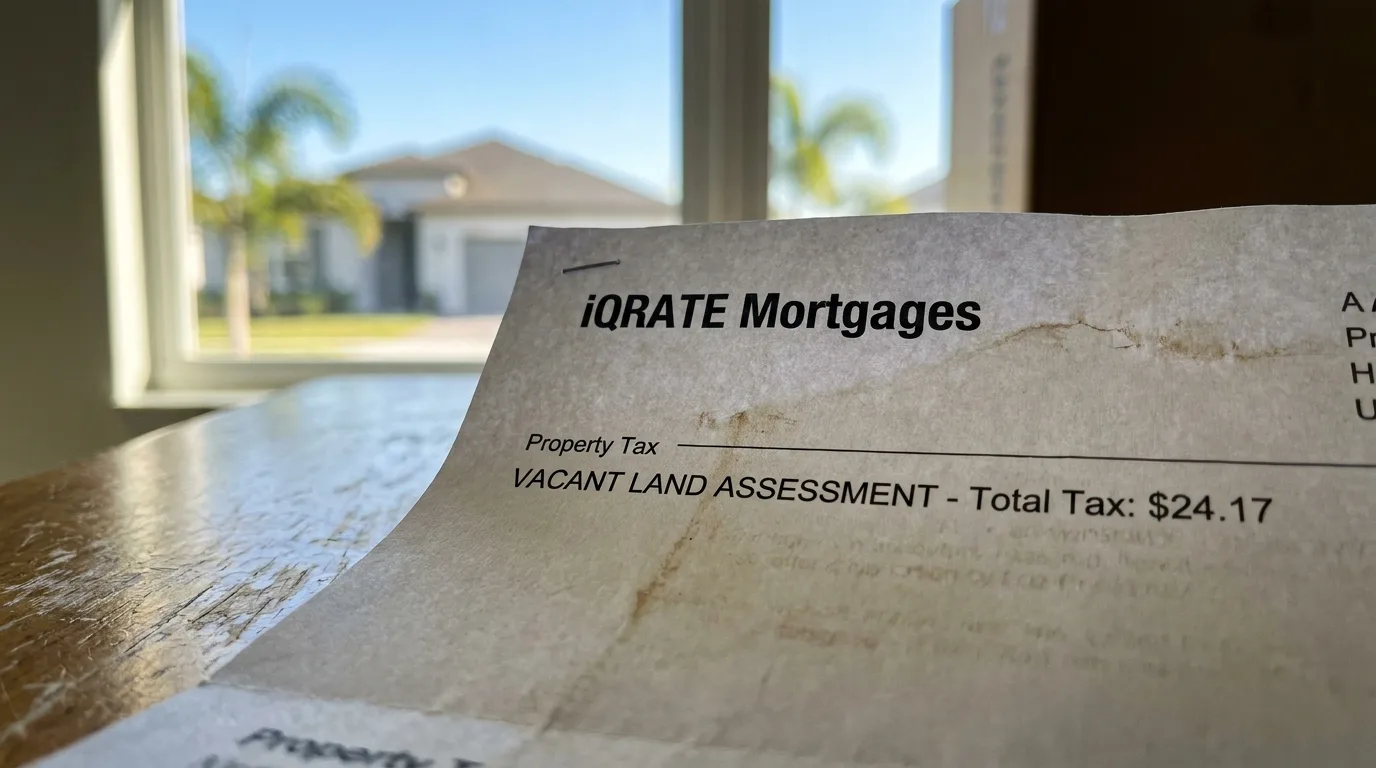
The primary reason for this low initial tax bill is rooted in the annual property assessment calendar used by Florida counties. Property taxes for any given year are based on the assessed value of the property as of January 1st of that year. If you purchased a home in May, the tax bill you receive later that year is calculated based on the property's condition back on January 1st—when it was likely just a vacant lot or a foundation slab. Your first bill reflects the tax on the land alone, not the valuable home now sitting on it.
How Florida Counties Initially Assess New Construction Properties
County Property Appraisers, such as those in Orange County (for Orlando) and Osceola County (for Kissimmee), are responsible for determining the value of all properties for tax purposes. Their assessment cycle is rigid. An appraiser assesses the market value of every property on January 1st to create the tax roll for that calendar year.
Here’s a practical timeline:
- January 1, 2024: Your lot is vacant land, valued by the county at $70,000.
- March 2024: Construction begins on your new home.
- August 2024: You close on your completed home.
- November 2024: The 2024 property tax bill is issued. This bill is based on the $70,000 land value from January 1st.
Your mortgage lender uses this artificially low tax bill to calculate the initial escrow portion of your monthly payment. They are required by law to base their initial calculations on the known tax liability. This sets the stage for a dramatic increase once the property is reassessed with the completed home.

The Timeline for Property Tax Reassessment on Your Completed Home
The 'payment shock' arrives after the first full calendar year of owning your home. The county property appraiser will reassess your property on the next January 1st after the home's construction is complete or substantially complete. This new assessment will include the full market value of both the land and the structure.
Continuing the previous example:
- January 1, 2025: The County Property Appraiser now assesses your property, which includes the brand-new house. The value is no longer $70,000; it's now assessed at its full market value of, say, $450,000.
- August 2025: You receive a 'Notice of Proposed Property Taxes' (also known as a TRIM notice) reflecting this new, much higher assessed value.
- November 2025: The official 2025 tax bill is issued based on the $450,000 value. It is sent to your mortgage lender to be paid from your escrow account.
This is the critical moment. Your lender will pay a tax bill that is potentially five to ten times higher than what they collected from you over the past year, leading directly to an escrow shortage.
How to Estimate Your True Annual Property Tax in Kissimmee
Instead of waiting for the surprise, you can proactively estimate your true annual property tax liability. This allows you to prepare your budget and start saving immediately. The process is straightforward.
Step 1: Determine the Taxable Value of Your Home For a new build, the simplest starting point is your home's purchase price. For example, let's use a home in Kissimmee with a purchase price of $400,000.
Step 2: Find the Local Millage Rate The millage rate is the tax rate used to calculate property taxes. One 'mill' is equal to $1 for every $1,000 of taxable property value. These rates are set by various local taxing authorities (county, city, school district, etc.) and are combined into a single rate. You can find the current millage rates on your County Property Appraiser's website. Let's assume the combined millage rate for your area in Kissimmee is 15.5 mills. (The data, information, or policy mentioned here may vary over time.)
Step 3: Calculate Your Estimated Annual Taxes The formula is: (Taxable Value / 1,000) x Millage Rate = Annual Tax Bill
Using our example: ($400,000 / 1,000) x 15.5 = $6,200 per year
Your estimated monthly tax payment would be $6,200 / 12 = $516.67.
Note on Exemptions: Florida offers a Homestead Exemption that can reduce your property's taxable value by up to $50,000. (The data, information, or policy mentioned here may vary over time.) You must apply for this after you own and occupy the home as your permanent residence on January 1st. This would lower your annual tax bill, but it's safer to use the full value for your initial savings estimates.
Understanding Escrow Shortages and a Rising Mortgage Payment
An escrow account is a holding account managed by your mortgage lender to pay your property taxes and homeowners insurance premiums on your behalf. Each month, a portion of your mortgage payment is deposited into this account.
When the first, land-only tax bill arrives, your lender sets up your escrow payments based on that low amount. Let's say the tax on the vacant land was only $900 for the year. Your lender would collect just $75 per month ($900 / 12) for property taxes.
Here’s how the shortage develops:
- Under-Collection: Over the next 12 months, your lender collects a total of $900 from you for taxes.
- The Real Bill Arrives: The new tax bill for $6,200 (based on our Kissimmee example) is sent to your lender.
- Lender Pays the Bill: Your lender is obligated to pay the full $6,200 to the county.
- Shortage is Created: The account now has a deficit. The lender paid out $6,200 but only collected $900. The escrow shortage is $5,300.
Federal law allows the lender to recover this shortage from you. They do this by increasing your next year's mortgage payment. Your new monthly payment will be calculated to cover:
- The New, Higher Tax Bill: $6,200 / 12 = $516.67 per month.
- The Shortage Repayment: $5,300 / 12 = $441.67 per month (lenders typically spread this over 12 months). (The data, information, or policy mentioned here may vary over time.)
Your new monthly escrow payment for taxes becomes $516.67 + $441.67 = $958.34. Compared to the initial $75 per month, your mortgage payment just increased by $883.34 per month. This is the payment shock that catches so many new homeowners off guard.
Proactive Steps to Cover the Future Tax Shortfall
Knowledge is power, and you can avoid this stressful situation with a simple strategy. As soon as you close on your new home in Orlando or Kissimmee, follow these steps:
- Estimate Your Real Taxes: Use the calculation method described above to find your likely annual tax bill.
- Check Your Current Escrow: Look at your mortgage statement to see how much the lender is actually collecting for taxes each month.
- Calculate the Difference: Subtract the amount being collected from your estimated monthly tax cost. Using our example: $516.67 (estimated) - $75 (currently collecting) = $441.67 (monthly difference).
- Save the Difference: Open a separate high-yield savings account and automatically deposit this difference ($441.67 in our example) into it every month. Label it 'Property Tax Savings.'
When your lender eventually performs their escrow analysis and notifies you of the $5,300 shortage, you will have that exact amount saved. You can then pay the shortage in a lump sum. This prevents the lender from increasing your payment to cover the shortage, meaning your new monthly payment will only increase to the correct $516.67, not the shocking $958.34.
Should You Challenge Your First Full Property Assessment in Florida?
When you receive your first TRIM notice with the full assessed value, your initial reaction might be to challenge it. You have the right to do so, but it's important to understand the valid grounds for an appeal.
A successful appeal is based on demonstrating that the county's assessed value is greater than the property's fair market value. Simply feeling that 'my taxes are too high' is not a valid basis for an appeal. You need evidence.
Grounds for a successful challenge include:
- Factual Errors: The appraiser has incorrect information about your property (e.g., wrong square footage, lists a pool you don't have).
- Overvaluation: The assessed value is higher than what similar, nearby properties have recently sold for. You will need to provide data on comparable sales ('comps').
- Inequity: Your property is assessed at a higher value than comparable properties in your neighborhood.
The first step is to contact your County Property Appraiser's office for an informal review. If you are not satisfied with the outcome, you can file a formal petition with the Value Adjustment Board (VAB). Be prepared to present a well-documented case. For most new construction homes assessed at or near the purchase price, a challenge is unlikely to succeed unless there are clear errors. Navigating the costs of new homeownership can be complex. If you have questions about your escrow account or future mortgage payments, a proactive conversation with a mortgage strategist can provide clarity and a solid financial plan for your home in Florida.
Navigating the complexities of property taxes and escrow is a key part of homeownership. If you're ready to secure a mortgage for your Florida home with a team that ensures you're prepared for every cost, take the next step and apply now.
Author Bio
David Ghazaryan is the expert mortgage strategist and founder behind iQRATE Mortgages. With a mission to fund home loans that traditional banks won't touch, David specializes in helping clients with unique financial situations, including those recovering from foreclosure or bankruptcy. He expertly crafts smart, strategic, and stress-free mortgages by leveraging a vast network of over 100 lenders to secure competitive rates for investors and homebuyers alike. Praised for exceptional customer service, David has helped hundreds of families with a 97% satisfaction rate, guiding them to the mortgage they deserve.
References
CFPB - What is an escrow or impound account?
Florida Department of Revenue - Property Tax Information for Taxpayers









