
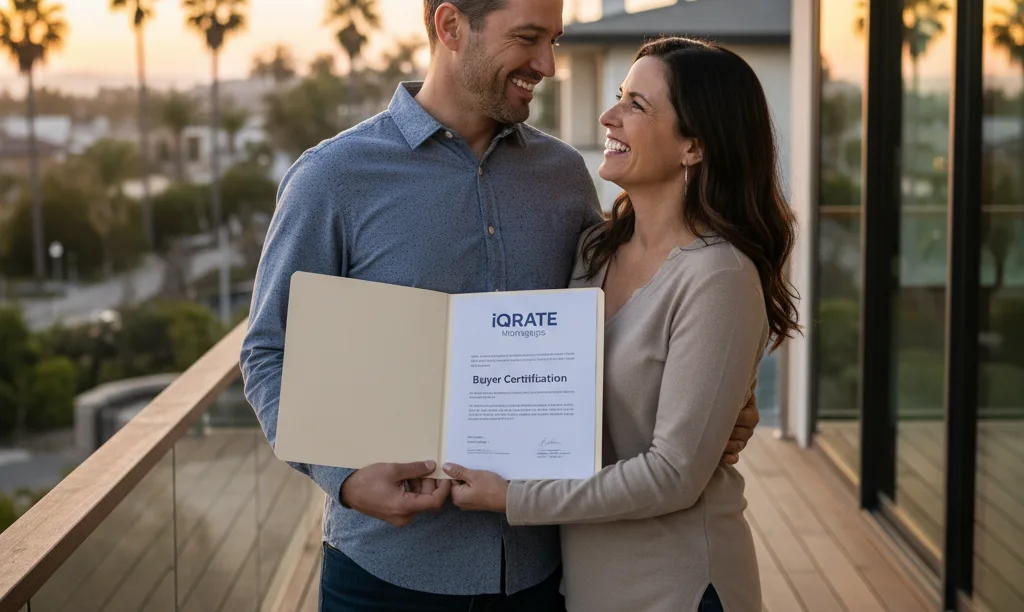

What is the difference between a pre-approval and a full underwriting certification?
Understanding the distinction between a mortgage pre-approval and a full underwriting certification is crucial in competitive real estate markets like San Diego and La Jolla. While they sound similar, they represent vastly different levels of financial scrutiny and carry different weights with sellers and their agents.
The Standard Pre-Approval Letter
A pre-approval is a preliminary step in the mortgage process. A lender typically performs a hard credit check and reviews the income and asset figures you've stated on your application. It's an educated estimate of what you might be able to borrow.
- What it is: A conditional, surface-level assessment of your borrowing capacity.
- What it isn't: A guarantee or a firm commitment to lend.
Sellers and listing agents know that pre-approvals are not promises. Deals fall apart every day when a pre-approved buyer's loan is denied in the final underwriting stage due to unforeseen issues with tax returns, bank statements, or employment history. This makes an offer contingent on financing a significant risk for the seller.
The Fully Underwritten 'Buyer Certification'
A full underwriting certification is a comprehensive, in-depth verification of your financial profile. This process happens before you make an offer on a property. A professional underwriter, the same person who makes the final loan decision, meticulously reviews and verifies all of your documentation.
- What it is: A firm commitment to lend from the lender, subject only to a satisfactory property appraisal and a clear title report.
- What it isn't: A simple estimate. It's a nearly-closed loan without a property attached to it.
Here’s a direct comparison:
A standard pre-approval involves a review of stated income and assets with a hard credit pull, is often decided by a loan officer or automated system, and carries a low level of certainty for a seller. In contrast, a full underwriting certification involves a professional underwriter verifying all documents (W-2s, tax returns, bank statements), providing a high level of certainty comparable to a cash offer. This difference in rigor is why a pre-approval often leads to a 30-45 day closing, while a certified offer can potentially close in as little as 10-15 days. (The data, information, or policy mentioned here may vary over time.)
In essence, a certification transforms you from a 'maybe' buyer into a 'definitely' buyer in the eyes of a seller.
How does removing the financing contingency impact a seller's decision-making?
When a seller in a high-demand area like La Jolla receives multiple offers, their primary goal is to identify the one with the highest probability of closing quickly and without complications. Price is important, but certainty is paramount.

Removing the financing contingency directly addresses a seller's biggest fear: the deal collapsing weeks into the process because the buyer couldn't secure a loan. This failure forces the seller to put the house back on the market, losing valuable time and momentum. A property that goes back on the market often carries a stigma, leading to lower offers later.
Here’s how a certified offer without a financing contingency influences their choice:
- Eliminates Financing Risk: The seller knows your ability to get the loan is not in question. Your offer is no longer a gamble; it's a near-guaranteed closing. This immediately elevates your proposal above any pre-approved offers, even if they are for a slightly higher price.
- Signals Seriousness and Preparation: Presenting a certified offer shows you are a serious, well-prepared buyer. It demonstrates that you have done the hard work upfront, which builds immense trust and goodwill with the seller and their agent.
- Comparable to Cash: From a risk perspective, your offer is now on par with an all-cash offer. Both eliminate the financing hurdle. This is a game-changer in bidding wars, allowing you to compete effectively without needing hundreds of thousands of dollars in liquid cash.
Imagine a seller in San Diego reviewing two offers for their $1.2 million home. Offer A is for $1.21 million with a financing contingency and a standard pre-approval. Offer B is for $1.2 million but has no financing contingency because the buyer is certified. The seller will almost always choose Offer B. The extra $10,000 isn't worth the risk and potential 30-day delay of Offer A falling through.
What specific risks does a 'Buyer Certification' eliminate for the listing agent?
A listing agent's reputation and income depend on their ability to close deals efficiently. A deal that falls through due to financing issues is not just a problem for the seller; it's a major setback for the agent.
A Buyer Certification eliminates several critical risks for them:
- Wasted Time and Resources: When a contract fails, the listing agent has to restart the entire marketing process. This means more open houses, more showings, and more administrative work, all of which costs time and money with no guarantee of a better outcome.
- Damage to Client Relationship: An agent’s primary duty is to guide their client to a successful sale. A collapsed deal can strain the relationship and cause the seller to lose confidence in their agent's ability to vet potential buyers.
- Loss of Commission: The most direct risk is the loss of a commission. Agents don't get paid until the deal closes. A certified offer represents a highly probable paycheck, making it far more attractive than a higher-risk, contingency-laden offer.
- Market Stigma: When a home's status changes from 'pending' back to 'active', other agents and buyers often assume something is wrong with the property. This can lead to lower offers and a longer time on the market. A certified offer nearly guarantees a smooth path from 'pending' to 'sold'.
For an agent in a fast-paced market like San Francisco or San Diego, presenting a seller with a certified offer is a sign of a clean, professional, and predictable transaction.
How can I leverage a certified offer to negotiate better terms beyond just price?
The power of a certified offer extends far beyond simply winning a bidding war. Because you are presenting the seller with the gift of certainty, you gain significant negotiation leverage. The seller is more likely to be flexible on other terms because they don't want to lose your risk-free offer.
You can use this leverage to negotiate for:
- Seller Concessions: You can more confidently ask the seller to contribute towards your closing costs. For example, on a $900,000 home in San Diego, asking for a $10,000 credit to cover closing costs is much more palatable to a seller when they know your financing is guaranteed. (The data, information, or policy mentioned here may vary over time.)
- Favorable Closing Dates: Need to close quickly in 14 days? Or perhaps you need a longer, 45-day rent-back period after closing? A seller is more willing to accommodate your timeline when the biggest variable—the loan—is already handled.
- Repairs or Repair Credits: If a home inspection reveals minor issues, you have more power to ask for repairs or a credit. The seller knows that if they refuse and your deal falls apart, their next offer will likely have a financing contingency, reintroducing risk and delay.
- Inclusion of Personal Property: Love the custom patio furniture or the high-end washer and dryer? You are in a much better position to ask for these items to be included in the sale.
By removing their biggest risk, you make it easier for the seller to say 'yes' to your other requests.

What documentation does my lender need from a buyer to issue a firm commitment?
To issue a full underwriting certification, the lender needs to verify every aspect of your financial life. The documentation required is the same as what you would provide for a final loan approval; you are simply doing it at the beginning of your home search instead of after your offer is accepted.
Be prepared to provide the following:
- Income Verification
Two most recent years of W-2 statementsPay stubs covering the last 30 daysTwo most recent years of [federal tax returns](https://www.iqratemortgages.com/blog/gig-worker-mortgage-guide-for-las-vegas-nevada) (all pages and schedules)
- Asset Verification
Two most recent months of bank statements for all checking and savings accountsStatements for any retirement or brokerage accounts (e.g., 401(k), IRAs)
- Debt and Credit
Authorization to pull a full tri-merge [credit report](https://www.iqratemortgages.com/blog/credit-dispute-halting-your-las-vegas-nevada-mortgage)Explanations for any recent credit inquiries or negative items
- Personal Identification
A clear copy of your driver's license or other government-issued photo ID
By gathering these documents upfront, you enable the underwriter to issue a reliable commitment, giving you the power to shop for a home with the confidence of a cash buyer.
How do I present a certified offer to a listing agent for maximum impact?
How you present your certified offer is almost as important as the certification itself. Your real estate agent should follow a clear strategy to ensure the listing agent fully understands the strength of your position.
- The Pre-Offer Phone Call: Before submitting the written offer, your agent must call the listing agent. This personal touch is critical.
- Communicate the Value: In the call, your agent should explicitly state, 'My buyer has gone through full underwriting and we have a firm loan commitment. We will be waiving the financing contingency. Our offer is as secure as cash.'
- Submit a Clean Offer Package: The written offer should be accompanied by the official Underwriting Certification letter from the lender. The letter should clearly state the loan amount, confirm that all income and asset documents have been verified, and list the underwriter's contact information for verification. This transparency builds immediate credibility.
- Highlight Speed and Certainty: Reiterate that because underwriting is complete, you can close in as little as 10-15 days. Emphasize that the only remaining steps are the appraisal and title search, which can be ordered the day the offer is accepted.
This proactive, professional presentation ensures your offer isn't just another piece of paper. It becomes the seller's safest and most attractive path to a closed sale.
Can this process truly reduce the contract-to-close timeline to under 15 days?
Yes, absolutely. A traditional 30-day closing timeline is largely dictated by the underwriting process, which typically takes 2-3 weeks. When underwriting is completed before the offer is even made, you eliminate the longest and most unpredictable part of the mortgage timeline.
Here's what a realistic sub-15-day timeline looks like with a Buyer Certification:
- Day 1: Your offer is accepted. The appraisal and title search are ordered immediately.
- Day 2-8: The appraiser visits the property and prepares their report. The title company conducts its search.
- Day 9: The appraisal report is received and reviewed by the lender. The title report is cleared.
- Day 10: The lender issues the official 'Clear to Close'.
- Day 11-14: You and the seller schedule the final signing with the closing agent.
- Day 15: The loan funds, and you get the keys to your new home.
This accelerated timeline is a massive strategic advantage in a market like La Jolla or San Diego, where sellers often need to coordinate the sale of their home with the purchase of their next one. Offering a quick and certain close can be the single most compelling reason a seller chooses your offer.
Ready to gain a decisive edge and compete with cash offers in today's competitive market? A fully underwritten Buyer Certification is your first step toward a stronger, more confident home purchase. Apply now to see if this powerful strategy is the right move for you.
Author Bio
David Ghazaryan is the expert mortgage strategist and founder behind iQRATE Mortgages. With a mission to fund home loans that traditional banks won't touch, David specializes in helping clients with unique financial situations, including those recovering from foreclosure or bankruptcy. He expertly crafts smart, strategic, and stress-free mortgages by leveraging a vast network of over 100 lenders to secure competitive rates for investors and homebuyers alike. Praised for exceptional customer service, David has helped hundreds of families with a 97% satisfaction rate, guiding them to the mortgage they deserve.
References
CFPB - What is a contingency in a real estate sales contract?
Fannie Mae - Understand the Underwriting and Approval Process









