


Qualifying for a Reno Mortgage with One Year of Tax Returns
One of the most persistent myths in the mortgage world is the strict two-year rule for self-employed borrowers. Many aspiring homeowners in Reno and Sparks delay their plans, believing they must have two full years of business tax returns on file. While two years is the standard, it is not an absolute requirement.
Under specific guidelines, particularly those from Fannie Mae, lenders can approve a conventional loan with just one year of self-employment tax returns. To qualify for this exception, your loan file must demonstrate strength and stability in other areas. Lenders will look for compensating factors such as:
- A high credit score (typically 700 or above) (The data, information, or policy mentioned here may vary over time.)
- Significant cash reserves (enough to cover several months of mortgage payments)
- A solid down payment (often 10% or more) (The data, information, or policy mentioned here may vary over time.)
- Provable history of success in the same field prior to starting your business
This flexibility allows successful entrepreneurs who have recently transitioned from a W-2 job to their own venture to enter the housing market without an unnecessary waiting period.
Essential Documents for Your New Business Income
To approve a loan with a shorter business history, an underwriter needs a crystal-clear picture of your company's financial health. Vague or incomplete documentation is the fastest way to a denial. Be prepared to provide a comprehensive package that proves your income is stable and likely to continue.
Here are the core documents you will need:
- Most Recent Federal Tax Return: You'll need the complete return, including all schedules (like Schedule C for sole proprietors or 1120-S/K-1 for S-Corps).
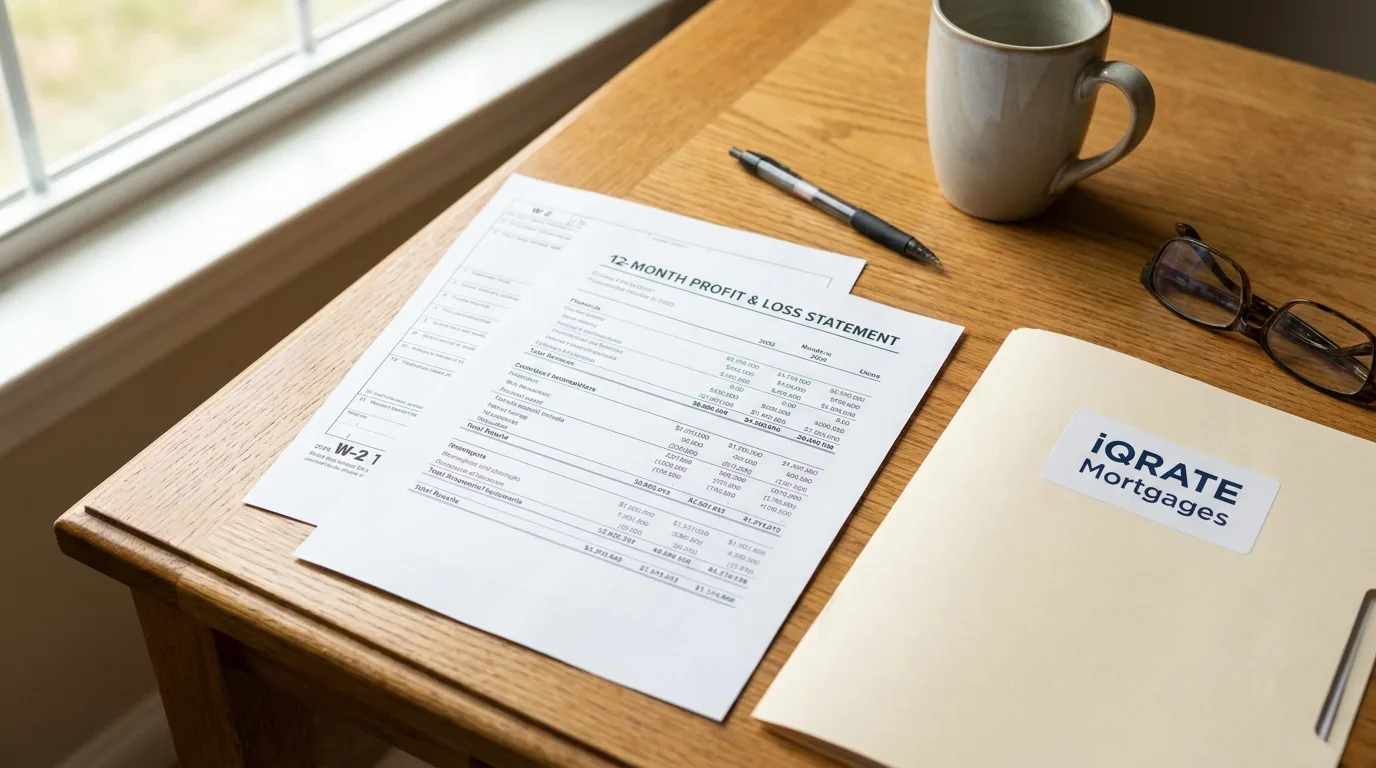
- Year-to-Date (YTD) Profit and Loss (P&L) Statement: This document shows your business revenue, costs, and net profit from the end of the period covered by your last tax return up to the most recent month.
- Business Bank Statements: Typically, you'll need the most recent two to four months of statements to verify the cash flow reported on your P&L and show consistent business activity.
- Proof of Business Existence: This could include your business license, articles of incorporation, or a letter from your CPA verifying the business start date.
How Lenders Calculate Your Qualifying Income
Calculating income for a self-employed individual is more complex than for a W-2 employee. With only one year of tax returns, the lender cannot average your income over 24 months. Instead, they will perform a detailed analysis of your single tax return and your current P&L statement to establish a stable, monthly qualifying income.
Analyzing Your Year-to-Date Profit & Loss Statement
The P&L is critical for a business operating for less than two years. The underwriter will compare your YTD net income to the net income from your last tax return. They are looking for stability or growth. If your P&L shows that you are earning a similar or greater amount per month than you did the previous year, it strongly supports your application.
For example, if your Schedule C from last year showed a net profit of $96,000, the lender initially sees an income of $8,000 per month. If your P&L for the first six months of this year shows a net profit of $54,000 ($9,000 per month), this demonstrates positive growth and strengthens your file. However, if that P&L showed a profit of only $30,000 ($5,000 per month), it signals declining income and raises a major red flag.
Accounting for Business Expenses and Add-Backs
Lenders start with the net profit shown on your tax return but can add back certain non-cash expenses. These are legitimate business deductions that don't actually impact your cash flow. Common 'add-backs' include:
- Depreciation: The tax deduction for the wear and tear on business assets.
- Amortization: The deduction for the cost of intangible assets over time.
- Depletion: A deduction used for businesses that extract natural resources.
- One-Time Major Purchases: A significant, non-recurring business expense may sometimes be added back with proper documentation and a letter of explanation.
Adding these back can increase your qualifying income, potentially helping you qualify for a larger loan for that home in Sparks.

Leveraging Previous W-2 Experience for Your Application
If you started your business in the same industry where you were previously a W-2 employee, this is a powerful compensating factor. It demonstrates to the lender that you have a proven track record of success and expertise in your field. This continuity reduces the perceived risk of a new venture.
For example, if you were a salaried graphic designer at a Reno marketing agency for five years and then started your own freelance design business, an underwriter views this favorably. You are not entering a new, unproven field. You are simply changing your employment structure. Be sure to provide your W-2s and pay stubs from your previous job to document this history.
Profit & Loss Statement Requirements for a Sparks Business
A lender will not accept a handwritten or informally prepared P&L. Your statement must be clear, detailed, and professional. While it does not always have to be prepared by a CPA, it must be accurate and signed by you.
Your P&L must clearly itemize:
- Gross Revenue/Sales: All income received by the business during the period.
- Cost of Goods Sold (if applicable): The direct costs of producing the goods your business sells.
- Operating Expenses: A detailed breakdown of all other costs (rent, utilities, marketing, salaries, supplies, etc.).
- Net Income: The final profit after all expenses are subtracted from revenue.
The P&L must cover the period from January 1st of the current year up to the most recent full month. A statement that is more than 60 days old will typically be rejected.
Interest Rates for Self-Employed Borrowers in Nevada
A common concern is whether self-employed borrowers, especially those with a shorter history, will face higher interest rates. The answer is no, not necessarily. Your interest rate is determined by your overall risk profile, not your employment type.
Factors that determine your rate include:
- Credit Score
- Loan-to-Value (LTV) Ratio / Down Payment Size
- Loan Program (Conventional, FHA, etc.)
- Overall Financial Stability
A self-employed borrower in Reno with a 780 credit score, a 20% down payment, and a well-documented, stable business is likely to receive the same competitive interest rate as a W-2 employee with a similar profile.
Underwriting Red Flags for a New Business
When reviewing a loan file with less than two years of business history, underwriters are extra vigilant. Be aware of these common red flags that can jeopardize your approval:
- Declining Revenue: A YTD P&L that shows lower monthly income than the previous tax year is the most significant red flag.
- Commingling Funds: Using your business bank account for personal expenses (or vice-versa) makes it difficult for an underwriter to verify your true business income and expenses.
- Large, Undocumented Deposits: Any large deposits in your bank statements that are not clearly part of your normal business operations must be sourced and explained.
- Inconsistent Financials: The revenue shown on your P&L should align with the deposits going into your business bank accounts. Major discrepancies will be questioned.
Strengthening Your Reno Loan File with a Letter of Explanation (LOE)
A Letter of Explanation (LOE) is your opportunity to proactively address any potential questions or concerns an underwriter might have. For a new business owner, a well-written LOE can be the deciding factor in getting an approval. It adds context and a personal narrative to the numbers on the page.
Your LOE should concisely explain:
- Your Background: Briefly describe your experience and expertise in the industry.
- The Business Transition: Explain why you decided to become self-employed.
- Business Outlook: Provide a confident and realistic projection for the future of your business.
- Address Anomalies: If there was a one-time large expense or a brief dip in revenue, explain it clearly.
This letter demonstrates professionalism and foresight, helping the underwriter feel more comfortable with the stability of your new venture. Navigating the mortgage process as a newly self-employed professional in Reno or Sparks can feel complex. To understand your specific options and get a clear picture of your qualifying income, connect with a mortgage strategist who specializes in self-employed loans.
Ready to turn your business success into a new home? We specialize in navigating the mortgage process for self-employed professionals in Reno and Sparks. Take the next step with confidence and apply now for your personalized consultation.
Author Bio
David Ghazaryan is the expert mortgage strategist and founder behind iQRATE Mortgages. With a mission to fund home loans that traditional banks won't touch, David specializes in helping clients with unique financial situations, including those recovering from foreclosure or bankruptcy. He expertly crafts smart, strategic, and stress-free mortgages by leveraging a vast network of over 100 lenders to secure competitive rates for investors and homebuyers alike. Praised for exceptional customer service, David has helped hundreds of families with a 97% satisfaction rate, guiding them to the mortgage they deserve.
References









