


Understanding the Low Appraisal Challenge in Houston
A low appraisal is one of the most stressful hurdles in a real estate transaction. It occurs when a licensed appraiser determines the market value of a property to be less than the price you agreed to pay for it. In a competitive market like Houston, this creates an immediate 'appraisal gap', a shortfall that the lender will not finance. For example, if you agree to buy a home in The Woodlands for $575,000 but it appraises for only $550,000, the lender will only approve a loan based on the $550,000 value. This leaves you with a $25,000 gap that must be covered, or the deal could collapse.
Several factors can lead to a low valuation:
- Rapid Market Shifts: In fast-appreciating areas, comparable sales data can lag behind current market values. An appraiser might use comps from three months ago that don't reflect today's higher prices.
- Appraiser Inexperience: An appraiser unfamiliar with a specific micro-neighborhood, like the unique historic homes in the Houston Heights versus new construction nearby, might not select the most appropriate comps.
- Missed Features: Key upgrades or unique property features (like a recently renovated kitchen or a premium lot) might be overlooked or undervalued during a brief inspection.
- Conservative Valuations: In times of economic uncertainty, some appraisers may adopt a more conservative approach to value, leading to lower figures.
Regardless of the cause, a low appraisal forces you into a defensive position. The key is to shift from being reactive to proactive by preparing your case before you need it.
Building Your Proactive Appraisal Defense Arsenal
Instead of scrambling after receiving bad news, the most successful approach is to prepare a package of information that supports the contract price from the beginning. This 'Appraisal Defense Arsenal' is a collection of data and documentation that provides a complete and accurate picture of the property's true value. It demonstrates professionalism and makes it easier for the appraiser to justify the sales price.

Step 1: Compile Hyper-Local Comparable Sales (Comps)
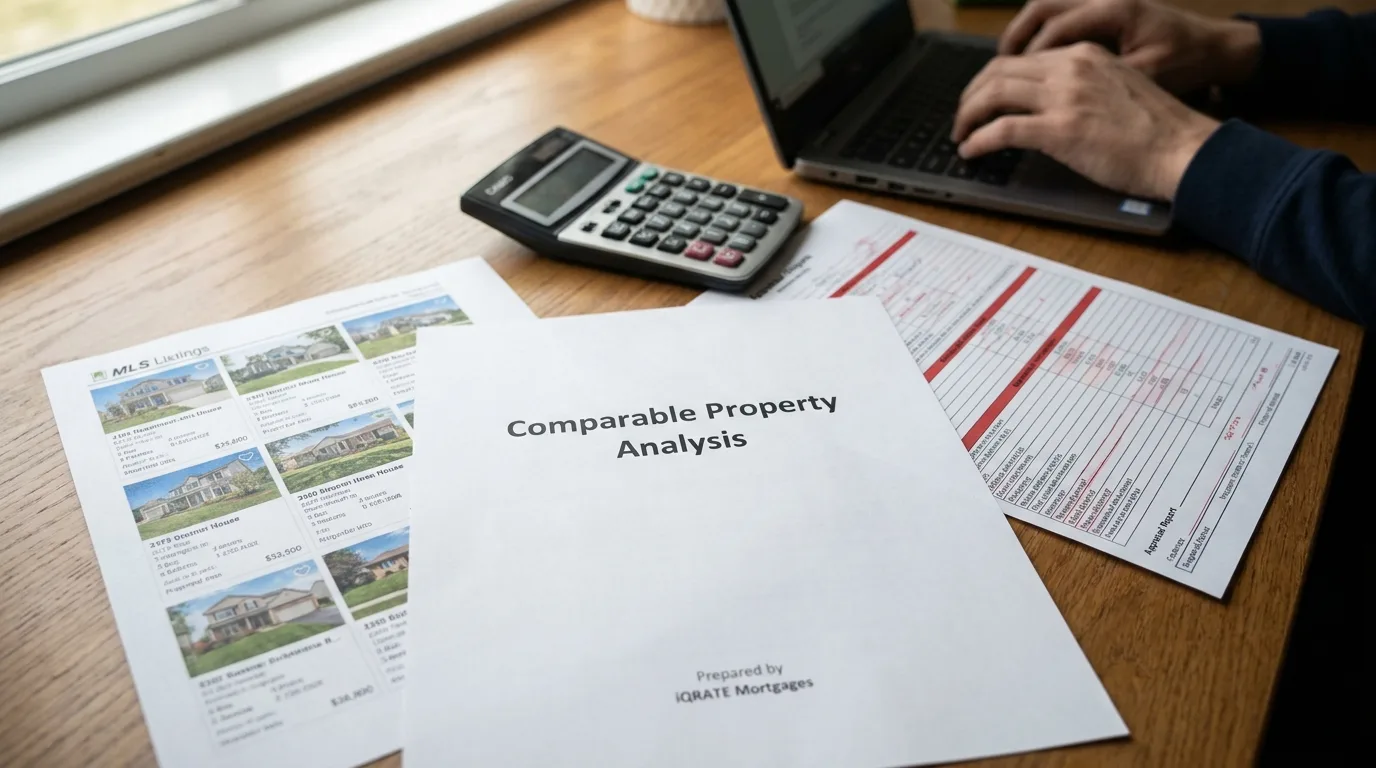
The foundation of any appraisal is comparable sales. While the appraiser will conduct their own search, providing a list of well-researched, relevant comps is your most powerful tool. A strong comp is not just any recently sold home; it must be genuinely comparable.
Here’s what to focus on when selecting comps for a property in The Woodlands or a dense Houston neighborhood:
- Proximity: The closer, the better. Ideally within the same subdivision or within a half-mile radius.
- Recency of Sale: Sales that closed within the last 90 days are strongest. Anything over six months is often considered outdated by lenders.
- Physical Similarity: Look for homes with similar square footage (within 10-15%), bedroom/bathroom count, age, and construction style.
- Condition and Upgrades: A fully renovated home should not be compared to a fixer-upper, even if they are next door to each other. Document the condition of your chosen comps.
- Lot Size and Features: A property on a premium corner lot or one with a swimming pool holds more value than one without.
Don't be afraid to include pending sales. While they can't be used as primary comps until they close, they can indicate the current direction of the market and support a higher valuation.
Step 2: Document Property Upgrades and Unique Features
An appraiser spends a limited amount of time inside the property. They can easily miss the details of recent improvements. Create a comprehensive list of all upgrades, including the date of completion and, if possible, the cost. Be specific.
Instead of writing 'Updated Kitchen', write:
- 'Full Kitchen Remodel (June 2022) - $40,000 Total Cost'
- 'Quartz Countertops'
- 'Custom Soft-Close Cabinetry'
- 'Bosch Stainless Steel Appliance Package'
- 'Undermount Sink and Professional-Grade Faucet'
Create a similar list for all major improvements:
- 'New 30-Year Architectural Roof (October 2023)'
- 'High-Efficiency 18 SEER HVAC System (2021)'
- 'Foundation Repaired with Transferable Lifetime Warranty (2020)'
- 'Energy-Efficient Double-Pane Windows Installed (2019)'
Providing this detailed list with receipts, if available, gives the appraiser concrete data to justify a higher value. It transforms subjective observations into objective facts.
Step 3: Analyze Local Market Trends
Context is critical. A home's value is also influenced by the health of the local market. Work with your real estate agent to gather data that paints a picture of a strong market, which can help justify a higher price point.
Key metrics to include are:
- Low Days on Market (DOM): If homes in the area are selling quickly, it indicates high demand.
- High List-to-Sale Price Ratio: If homes are consistently selling at or above the asking price, it shows a competitive market where buyers are willing to pay a premium.
- Low Inventory: A limited supply of homes for sale naturally drives prices up.
For example, you could state: 'In the past 60 days, homes in this specific Houston ZIP code (77008) have sold for an average of 101.5% of their original list price in just 12 days, indicating intense buyer demand that supports the contract price of the subject property.'
Crafting and Submitting the Appraisal Rebuttal
If the appraisal still comes in low despite your proactive efforts, your 'Arsenal' becomes the foundation for your formal rebuttal, often called a Reconsideration of Value (ROV).
The Anatomy of a Winning Rebuttal Letter
Your rebuttal should be professional, data-driven, and devoid of emotion. Accusing the appraiser of incompetence will only hurt your case. The goal is to respectfully present new or overlooked information.
Follow this structure:
- Professional Introduction: Clearly state the property address and the purpose of your communication. 'We are writing to request a Reconsideration of Value for the property located at [Address]. We have compiled additional data that we believe supports the original contract price of [Price].'
- Identify Factual Errors: Start with any objective errors found in the report. This could be the wrong square footage, an incorrect bedroom or bathroom count, or listing a feature as 'average' when it's been fully updated. Correcting these errors is the easiest way to get a value adjustment.
- Present Superior Comps: List the comparable sales you gathered. For each one, explain why it is a better comparison than one used in the report. For example: 'The appraiser used Comp B, which is located across a busy thoroughfare and is 25 years older. We propose using Comp X, located on the same street and sold last month, which is a more accurate reflection of the subject property's value.'
- Provide Market Context: Include your analysis of local market trends (low DOM, high list-to-sale ratio) to reinforce that the market is strong enough to support the sales price.
- Polite Conclusion: Summarize your points and restate the value you are requesting the appraiser to consider. Thank them for their time and review.
The Submission Process: Who Gets the Rebuttal?
It's critical to follow the correct procedure. You do not send the rebuttal directly to the appraiser. Federal regulations require appraiser independence.
The process is as follows:
- The homebuyer or their real estate agent sends the complete rebuttal package to the loan officer or mortgage broker.
- The lender reviews the package to ensure it is based on factual data and not just dissatisfaction with the value.
- If deemed valid, the lender formally submits the ROV to the Appraisal Management Company (AMC) or directly to the appraiser.
- The appraiser reviews the new information and decides whether a value change is warranted. They will issue a revised report if they agree or a letter explaining why they are standing by their original valuation.
Be prepared for this process to take anywhere from a few business days to over a week. (The data, information, or policy mentioned here may vary over time.)
When the Rebuttal Fails: Your Next Steps
Sometimes, even a well-crafted rebuttal won't result in a value change. If you find yourself in this situation, you still have options to save the deal.
- Renegotiate the Sales Price: The most common solution. You can go back to the seller and ask them to lower the price to the appraised value. Often, a compromise is reached where the seller reduces the price, and the buyer brings some extra cash to closing to split the difference.
- Bring More Cash to Closing: If the seller won't budge and you are determined to buy the home, your only option is to cover the entire appraisal gap with your own funds.
- Request a Second Appraisal: Some lenders may allow you to pay for a second appraisal from a different appraiser. (The data, information, or policy mentioned here may vary over time.) However, this is costly, time-consuming, and there's no guarantee the value will be higher. It could even come in lower.
- Switch Lenders: As a last resort, you can start the loan process over with a new lender, who will order a new appraisal. This is a significant risk as it can delay closing by weeks and may cause you to lose the property if the seller is unwilling to wait. Navigating an appraisal rebuttal requires precision, data, and expertise. If you're facing a valuation challenge in Houston, The Woodlands, or anywhere in Texas, our team at iQRATE Mortgages can help strategize the best path forward. Contact us to ensure your financing stays on track and your home purchase is a success.
Facing a valuation challenge can be daunting, but you don't have to navigate it alone. If you're ready to secure your financing and move forward with confidence, take the first step. Apply for your mortgage now and let our expert team help you build a strong case for your home purchase.
Author Bio
David Ghazaryan is the expert mortgage strategist and founder behind iQRATE Mortgages. With a mission to fund home loans that traditional banks won't touch, David specializes in helping clients with unique financial situations, including those recovering from foreclosure or bankruptcy. He expertly crafts smart, strategic, and stress-free mortgages by leveraging a vast network of over 100 lenders to secure competitive rates for investors and homebuyers alike. Praised for exceptional customer service, David has helped hundreds of families with a 97% satisfaction rate, guiding them to the mortgage they deserve.
References
CFPB - What to do if your home appraisal is low









