


The Appraisal Value of an Unpermitted ADU in Reno
When an appraiser visits a property in Reno or Sparks for a DSCR loan, their primary job is to determine a fair market value based on legal and permissible use. An unpermitted Accessory Dwelling Unit (ADU) presents a significant challenge.
Here’s how an appraiser will likely handle it:
- No Gross Living Area (GLA): The square footage of the unpermitted ADU cannot be included in the property's official GLA. GLA is a critical metric used to find comparable sales ('comps'). If the main house is 1,500 sq ft and the unpermitted ADU is 500 sq ft, the appraiser can only list the property as 1,500 sq ft and must find comps of a similar size, not 2,000 sq ft.
- Contributory Value: The appraiser won't ignore the structure entirely. They may assign it 'contributory value'. This is an adjustment acknowledging that the extra space adds some value, similar to a high-quality shed or a finished basement. However, this value is significantly lower than it would be if the unit were permitted. For example, a permitted 500 sq ft ADU might add $100,000 to the property value, whereas the same unpermitted structure might only receive a contributory value of $20,000 to $30,000.
- 'As-Is' vs. 'Subject-To' Appraisal: The appraisal will be marked 'as-is' and will include notes detailing the unpermitted nature of the unit. The appraiser must report what they see, and this note is a major red flag for underwriters. In some cases, a lender might request a 'subject-to' appraisal, which provides a value contingent upon the unit being legally permitted, but this is less common for a standard purchase or refinance.
Can a Lender Use Projected Rent From an Illegal Unit?
This is the central question for DSCR investors, and the answer is almost always no. A Debt Service Coverage Ratio (DSCR) loan is based entirely on the property's ability to generate enough income to cover the mortgage debt. Lenders need verifiable, stable, and legal income.
An unpermitted ADU fails this test for several reasons:
- Legal Risk: The city of Reno or Sparks could force the property owner to remove the tenant and demolish the structure at any moment. This would instantly erase the income stream the lender is relying on to get paid.
- Underwriting Guidelines: Major mortgage investors like Fannie Mae and Freddie Mac have strict rules about the legality of structures. While DSCR loans are non-QM (non-qualified mortgage) and more flexible, underwriters still operate on fundamental principles of risk management. Recognizing income from an illegal unit is a risk they are unwilling to take.
- Appraisal Limitations: Since the appraiser cannot use a market rent schedule (Form 1007) for the unpermitted unit, the lender has no official, third-party documentation to base the income on.
Example: Imagine you're buying a duplex in Sparks. The main house can rent for $2,800, and it has an unpermitted casita that could fetch $1,300. Your proposed monthly mortgage payment (PITI) is $3,200.
- Your Calculation: ($2,800 + $1,300) / $3,200 = 1.28 DSCR. This looks great.
- The Lender's Calculation: $2,800 / $3,200 = 0.875 DSCR. This loan will be denied because it doesn't meet the typical minimum 1.0 DSCR. (The data, information, or policy mentioned here may vary over time.)

Insurance and Liability Risks with Unpermitted Structures
Beyond financing, operating a property with an unpermitted ADU exposes you to massive insurance and liability risks. If an incident occurs, you could be left with no coverage and significant personal legal trouble.
Consider these scenarios:
- Fire: A fire starts in the unpermitted unit due to faulty wiring that was never inspected. Your insurance company investigates, discovers the lack of permits, and denies the entire claim. You are now responsible for the rebuilding costs and any damages to neighboring properties.
- Tenant Injury: A tenant trips on a step that isn't built to code and sues you. Your liability insurance may refuse to cover the claim because the injury occurred in an illegal structure that did not meet mandated safety standards.
Lenders see this as a direct threat to their collateral. An uninsured loss or a major lawsuit could lead to a default on the loan, making the property a toxic asset on their books.
How Reno and Sparks Regulate Unpermitted ADUs
The cities of Reno and Sparks, like many municipalities, are actively encouraging the development of permitted ADUs to address housing shortages. However, they are also cracking down on unpermitted structures that pose safety risks and violate zoning laws.
If a code enforcement officer discovers an unpermitted unit, the consequences can include:
- Notice of Violation: You will receive an official order to address the issue.
- Daily Fines: The city can levy substantial daily fines until the violation is corrected. (The data, information, or policy mentioned here may vary over time.)
- Order to Vacate: You may be forced to evict any tenants living in the unit immediately.
- Mandatory Permitting or Demolition: You will likely be given two choices: bring the entire structure up to current building code and get it retroactively permitted (which can be very expensive) or demolish it entirely at your own cost.
This regulatory risk makes it impossible for a traditional DSCR lender to consider the property a stable, income-generating asset.
Are There Investor Loans That Accept Unpermitted Unit Income?
While conventional and standard non-QM DSCR lenders will reject income from unpermitted units, some niche lenders might offer a solution, albeit a costly one.
- Hard Money Lenders: A hard money lender is your most likely option. They focus more on the asset's 'as-is' value and your exit strategy rather than verifiable income streams. They might fund the purchase knowing you plan to get the unit permitted and then refinance. However, expect much higher interest rates, high origination fees, and very short loan terms (typically 12-24 months). (The data, information, or policy mentioned here may vary over time.)
- Fix-and-Flip Loans: These are similar to hard money loans and are designed for investors who plan to renovate a property. A loan could be structured to include the funds needed to legalize the ADU.
These are transactional loans, not long-term investments like a 30-year DSCR mortgage. They are a tool to bridge the gap while you solve the permit problem.
What if the Unpermitted Unit Has a Rental History?
Even if you can provide years of bank statements and signed leases proving the unpermitted ADU has been consistently rented, it will not change the lender's decision. The issue is not whether the unit can generate income; it's whether it can do so legally. A history of illegal activity does not make it legal. For an underwriter, this documentation simply confirms that the property has been operating in violation of city ordinances, which actually increases its perceived risk profile.
The Smart Move: Permitting Your ADU Before Applying
The most effective and financially sound strategy is to legalize the ADU before applying for a DSCR loan or any long-term financing.
Benefits of Permitting First:
- Increased Appraised Value: The ADU's square footage will be added to the GLA, and its full market value will be recognized by the appraiser.
- Maximized Rental Income: The lender will fully count the ADU's market rent in the DSCR calculation, significantly boosting your borrowing power.
- Access to Better Loans: You will qualify for the best DSCR loan programs with lower rates and better terms.
- Eliminated Risk: You remove all legal, insurance, and liability risks associated with the unpermitted space.
This process will require hiring an architect or draftsman to create plans, submitting them to the city of Reno or Sparks, and having licensed contractors perform the necessary work to meet code. While it's an upfront cost, the return on investment is enormous.
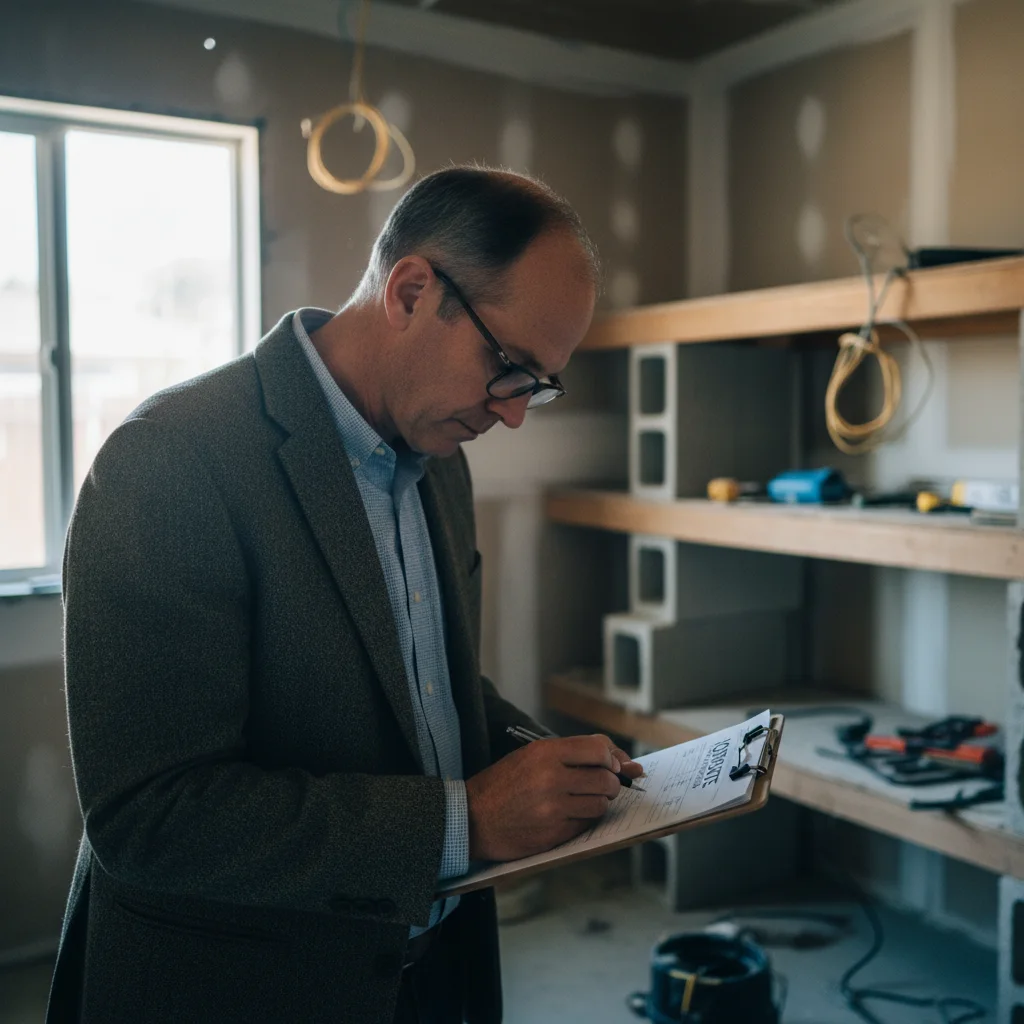
Can an Unpermitted ADU Cause a Full Loan Denial?
Yes, absolutely. The presence of an unpermitted ADU can cause the entire loan to be denied, even if you don't need its income to qualify. If the lender's underwriting policy has a zero-tolerance rule for unpermitted structures, or if the appraiser notes significant safety hazards ('subject to' conditions), the loan application will be stopped in its tracks. The risk to the collateral is simply too high for many lending institutions to proceed under any circumstances. If you're evaluating a property in Reno or Sparks with an unpermitted ADU, understanding your financing options is critical. A knowledgeable mortgage advisor can review the specifics and map out a clear strategy, whether that involves a standard DSCR loan post-permitting or exploring alternative financing.
Navigating the complexities of financing a property with an unpermitted ADU requires a clear strategy. If you're ready to explore your options and get your project funded, our experienced advisors can map out the best path forward. Apply now to begin the process.
Author Bio
David Ghazaryan is the expert mortgage strategist and founder behind iQRATE Mortgages. With a mission to fund home loans that traditional banks won't touch, David specializes in helping clients with unique financial situations, including those recovering from foreclosure or bankruptcy. He expertly crafts smart, strategic, and stress-free mortgages by leveraging a vast network of over 100 lenders to secure competitive rates for investors and homebuyers alike. Praised for exceptional customer service, David has helped hundreds of families with a 97% satisfaction rate, guiding them to the mortgage they deserve.
References
City of Reno - Accessory Dwelling Units (ADUs)









