


Why Do United States Lenders Scrutinize Assets From a Foreign Trust?
When a homebuyer in Florida wants to use assets from a foreign trust, lenders immediately shift into a high-scrutiny mode. This isn't because they are trying to be difficult; it's because they are legally obligated to comply with a framework of federal regulations designed to combat financial crimes. The two most significant drivers are the Bank Secrecy Act (BSA) and the USA PATRIOT Act. These laws mandate that financial institutions verify the identity of their customers and report suspicious activity to prevent money laundering and the financing of terrorism.
Foreign trusts, by their nature, can be complex and opaque. They are established under the laws of another country, which may have different standards for transparency and reporting. For a U.S. lender, this creates several red flags:
- Anonymity Concerns: Some foreign jurisdictions allow for a high degree of anonymity for the trust's creators (settlors) and beneficiaries. A lender must be able to positively identify every individual with a vested interest in the transaction.
- Verifying Legitimacy: The lender has a duty to establish a clear and legitimate 'source of funds'. They need to know how the money was generated and placed into the trust. Was it from the sale of a business, inheritance, or regular investment income? Without a clear history, the funds are considered high-risk.
- Complex Legal Structures: Foreign trusts can have intricate structures with multiple trustees, protectors, and layers of ownership. A U.S. underwriter needs to unravel this complexity to understand who truly controls the assets and has the legal authority to withdraw them for a real estate purchase in Naples or Aventura.
Ultimately, the lender is on the hook. If they finance a property with funds that are later traced to illicit activities, they face severe penalties, including massive fines and reputational damage. Therefore, they apply meticulous due diligence to ensure every dollar is accounted for and legally sourced.
What Specific Trust Documents Will the Lender Require for Review?
To satisfy an underwriter, you must provide a comprehensive set of documents that paints a complete picture of the foreign trust's structure, purpose, and assets. The lender needs to see, in writing, who has the authority to act and who benefits from the trust. Be prepared to provide translated and certified copies if the original documents are not in English.
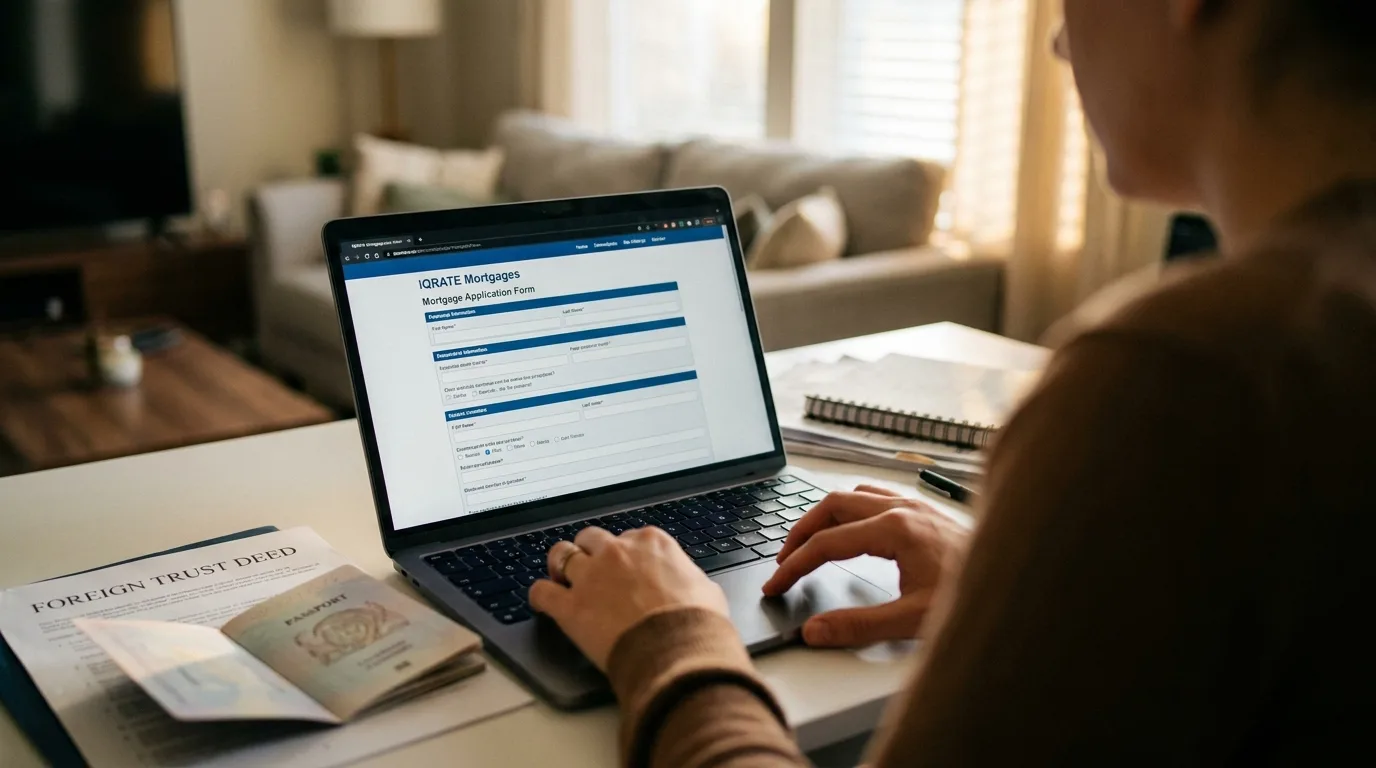
Key Required Documents
- The Executed Trust Deed/Agreement: This is the foundational legal document that created the trust. It outlines the purpose of the trust, its rules of operation, the trustees' powers, and the rights of the beneficiaries. The lender will review this document to confirm you are a legitimate beneficiary and have the right to access the funds for the purpose of buying real estate.
- Identification of All Parties: You will need to provide government-issued photo identification for all key individuals associated with the trust. This includes the settlor (the person who created the trust), all trustees (those who manage it), and all beneficiaries (those who benefit from it). This is non-negotiable for compliance with Know Your Customer (KYC) regulations.
- A Statement of Assets: The lender needs to see proof of the assets held within the trust. This typically involves providing recent financial statements for the bank or investment accounts held by the trust. These statements must show sufficient liquid funds to cover the down payment, closing costs, and any required reserves. For a purchase in a competitive market like Naples, having deep reserves can strengthen your offer.
How Do I Provide a Clear 'Source of Funds' Trail From the Trust?
Providing a clear 'source of funds' is the most critical part of the process. The lender needs to see a clean, logical, and documented path for the money from the trust's account into your possession. An unclear trail is the fastest way to a loan denial. You must document every single step.
Let's use an example. You are buying a $2.5 million condominium in Aventura and need to use $750,000 from your offshore trust for the down payment and closing costs.
- Initial Location of Funds: Provide a statement from the trust’s investment or bank account showing a balance greater than $750,000. This statement should be dated within the last 30-60 days. (The data, information, or policy mentioned here may vary over time.)
- The Transfer Instruction: You must provide a copy of the formal, signed letter of direction sent to the trustee. This letter should explicitly instruct the trustee to wire $750,000 from the trust’s account to your personal U.S. bank account for the express purpose of purchasing the property at '123 Ocean Drive, Aventura, FL'.
- Proof of Outgoing Wire: The trustee must provide a wire transfer confirmation receipt from the trust’s bank. This document shows the money leaving the trust's account, detailing the sending and receiving account numbers, names, and the date of the transaction.
- Proof of Incoming Wire: You must then provide a transaction history or statement from your personal U.S. bank account showing the corresponding deposit of $750,000. The details must perfectly match the outgoing wire confirmation.
This four-step paper trail creates an unbroken chain of evidence. It proves the money originated in the specified trust account, was legally requested by an authorized party, and was received in the borrower's account without any intermediary stops.
Will I Need an Opinion Letter From a Foreign Attorney?
Yes, in almost all cases, the U.S. lender will require a formal legal opinion letter from a licensed and reputable attorney in the trust's home jurisdiction. This letter serves as an independent, professional verification of the trust's legal standing and your rights under it. The underwriter is not an expert in Bahamian or Swiss law, so they rely on this letter to bridge the legal gap.
The opinion letter must be written on the attorney's official letterhead and should explicitly state several key points:
- The trust is valid and in good standing under the laws of its country of origin.
- The attorney has reviewed the trust deed and confirms its authenticity.
- The letter must confirm that you are a beneficiary of the trust.
- It must explicitly state that the trust's provisions permit the distribution of funds for the purchase of real estate in the United States.
- It must confirm that the trustee has the legal authority to execute the transfer of funds as directed.
This letter is not a suggestion; it is a mandatory requirement. Lenders see it as a critical piece of due diligence that protects them from legal and regulatory risk. Obtaining this letter should be one of the first steps you take, as it can take time to procure.
Are There Limitations on Using Trust Funds for a Down Payment in Naples?
Yes, there are limitations, and they are primarily centered on the 'seasoning' of the funds. Lenders want to see that the money you're using for the down payment in Naples has been under your control and in your personal account for a specific period, typically 60 days. (The data, information, or policy mentioned here may vary over time.) When you transfer a large sum from a foreign trust into your U.S. bank account just before applying for a loan, it is considered a 'large deposit' and triggers intense scrutiny.
For a purchase in Naples, where property values are high, a large down payment is common. However, the lender will not accept the funds until they have verified the source completely, as outlined above. You cannot simply move the money and expect the lender to accept it. You must provide the full paper trail for that large deposit, no matter when it was transferred.
The main limitation is not the amount but the documentation. If you can provide the four-part paper trail (trust statement, letter of direction, outgoing wire, incoming wire), you can use the funds. If any piece is missing, the lender will not allow those funds to be used for the down payment or closing costs. The best practice is to start the transfer and documentation process well in advance of making an offer on a home.
How Does This Process Differ From Using Personal Foreign Bank Accounts?
While both involve foreign assets, using a trust is exponentially more complex than using a personal foreign bank account. The core difference lies in the ownership and control structure.
Personal Foreign Account:
- Ownership: You are the direct owner of the account. Your name is on it.
- Control: You have direct, unilateral control to withdraw and transfer funds.
- Documentation: You typically only need to provide two to three months of bank statements (translated, if necessary) and source any large deposits. The paper trail is simpler because it's your money.
Foreign Trust Account:
- Ownership: The trust is the legal owner of the account, not you personally. You are a beneficiary with specific rights.
- Control: You do not have direct control. You must formally request funds from a third-party trustee who manages the assets according to the trust deed.
- Documentation: Requires the entire suite of trust documents, legal opinion letters, and a multi-step paper trail to prove the legitimacy of the transfer from the trust entity to you as an individual.
The key distinction is the extra layer of legal and fiduciary complexity. With a personal account, the lender is verifying your assets. With a trust, the lender must first verify the legitimacy of the trust itself and then verify your right to access its assets.
What Are the Common Reasons for Denial When Using Trust Assets?
Loan applications involving foreign trusts can be denied for several reasons for denial, and they almost always stem from incomplete or unconvincing documentation. Underwriters are trained to be risk-averse, and any ambiguity will lead to a 'no'.
- Incomplete Trust Documents: Failing to provide the full, executed trust deed is an immediate roadblock. Similarly, if the document is a draft or is not properly signed and notarized, it will be rejected.
- Unclear Paper Trail: A broken chain of custody for the funds is the most common reason for denial. If you cannot show exactly how the money moved from the trust's account to your account with supporting documentation for each step, the funds will be disallowed.
- Non-Cooperative Trustee: Sometimes the foreign trustee is slow to respond, unwilling to provide required documentation, or objects to providing information to a U.S. lender. Since the trustee's cooperation is essential, their refusal to help will kill the deal.
- Inadequate Legal Opinion Letter: A vague or incomplete opinion letter that doesn't explicitly confirm the key points required by the lender will be rejected. The letter must be clear, concise, and directly address the lender's concerns.
- Revocable vs. Irrevocable Trusts: Lenders heavily favor irrevocable trusts, where the terms cannot be easily changed. A revocable trust, where the settlor can alter the terms or dissolve the trust at will, may be viewed as less stable and presents a higher risk that the funds may not be available at closing.
Can the Property in Aventura Be Titled Into a Different Entity?
Yes, it is common for high-value properties, such as those in Aventura, to be titled in the name of a legal entity rather than an individual for liability and estate planning purposes. The most common entity used is a Limited Liability Company (LLC).
However, this adds another layer of complexity to the mortgage process. If you plan to title the property in an LLC, you must inform the lender at the very beginning of the application process. Here’s why:
- Lender Approval: Not all loan programs or lenders permit vesting in an LLC. Many conventional loans sold to Fannie Mae or Freddie Mac must be made to an individual. Loans that do allow LLC vesting are often considered commercial or portfolio loans and may have different rates and terms.
- Connecting the Entities: The lender will need to see the formation documents for the LLC, such as the Articles of Organization and the Operating Agreement. They must be able to connect you (the borrower and beneficiary of the trust) as the managing member of the LLC. You will still have to personally guarantee the loan.
- Clear Transaction Path: The funds from the trust would typically be transferred to your personal account, and then you would contribute those funds to the LLC to make the purchase. This path must also be meticulously documented. The loan is made to you, the individual, even if the title is ultimately held by your single-member LLC.
Planning to use an LLC is a sophisticated strategy that requires coordination between your mortgage advisor, your real estate attorney, and your tax professional to ensure it is structured correctly from the start. Navigating a mortgage with assets from a foreign trust requires expert guidance. If you're considering a property purchase in Florida and need a strategy that accommodates complex international finances, connect with a mortgage professional who specializes in these unique scenarios.
The path to securing a U.S. mortgage with funds from a foreign trust is intricate and requires specialized knowledge. If you're ready to move forward with your property purchase in Florida, take the first step towards getting expert guidance. Apply now to connect with a professional who understands these unique financial scenarios.
Author Bio
David Ghazaryan is the expert mortgage strategist and founder behind iQRATE Mortgages. With a mission to fund home loans that traditional banks won't touch, David specializes in helping clients with unique financial situations, including those recovering from foreclosure or bankruptcy. He expertly crafts smart, strategic, and stress-free mortgages by leveraging a vast network of over 100 lenders to secure competitive rates for investors and homebuyers alike. Praised for exceptional customer service, David has helped hundreds of families with a 97% satisfaction rate, guiding them to the mortgage they deserve.
References
CFPB - What documents will I need to provide to my lender to apply for a mortgage?









