


Can I Have Two VA Loans at the Same Time in Austin?
Yes, it is absolutely possible for a veteran to have two VA loans at once. This is one of the most powerful and misunderstood features of the VA home loan benefit. The ability to do this hinges on a concept called VA loan entitlement. Think of your entitlement as the dollar amount the Department of Veterans Affairs (VA) guarantees on your behalf to a lender. Every eligible veteran receives a certain amount of this entitlement.
When you buy your first home, you use a portion of that entitlement. However, you often don't use all of it, especially if the purchase price was well below the county loan limits. The unused portion is known as your remaining entitlement, and you can use it to secure a second VA loan.
Here’s a practical scenario in Austin:
- You are a veteran who bought a starter home in an Austin suburb five years ago for $300,000.
- You used a portion of your entitlement for that loan, which the VA guaranteed at 25%, or $75,000.
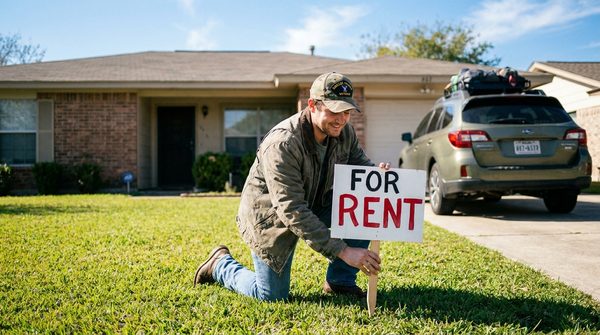
- Now, your family is growing, and you want to buy a larger home in a different Austin neighborhood for $550,000, but you want to keep your first home as a rental property.
Because you have remaining entitlement, you can apply for a second VA loan for the new property. The lender will calculate how much entitlement you have left to determine the maximum loan amount you can get with a $0 down payment. This strategy allows you to become a real estate investor without needing a new down payment.
How is My Bonus Entitlement Calculated for a Second Home in San Antonio?
Calculating your purchasing power for a second VA loan involves understanding two layers of entitlement: basic and bonus (also called second-tier entitlement).
- Basic Entitlement: Every eligible veteran has a basic entitlement of $36,000. This is enough for a lender to approve a loan of up to $144,000 ($36,000 is 25% of $144,000).
- Bonus Entitlement: For loans over $144,000, the VA provides additional guaranty known as bonus or second-tier entitlement. This amount is tied to the conforming loan limits set by the Federal Housing Finance Agency (FHFA), which vary by county. For most of the U.S. in 2024, the limit is $766,550. (The data, information, or policy mentioned here may vary over time.)
The VA guarantees 25% of your loan amount. Your total available entitlement is 25% of the conforming loan limit in your county. To find your remaining entitlement for a second home, you use this formula:
Maximum Entitlement - Entitlement Used = Remaining Entitlement
Let’s apply this to a home purchase in San Antonio:
- The 2024 conforming loan limit for Bexar County (where San Antonio is located) is $766,550. (The data, information, or policy mentioned here may vary over time.)
- Your maximum potential VA guaranty is 25% of this limit: $766,550 x 0.25 = $191,637.50.
- Let's say your first VA-backed loan was for a $280,000 home. The entitlement used on that loan was $280,000 x 0.25 = $70,000.
- Now, calculate your remaining entitlement: $191,637.50 (Max) - $70,000 (Used) = $121,637.50.
This remaining entitlement of $121,637.50 means a lender can approve a second VA loan for you of up to $486,550 ($121,637.50 x 4) with zero down payment. If the San Antonio home you want to buy costs more than that, you would need to provide a down payment equal to 25% of the difference.
What Are the Occupancy Rules for Buying a Second Property in Killeen?
The VA loan program is designed to help veterans purchase and live in a home, not to buy vacation homes or purely investment properties. This is enforced through strict occupancy requirements. When you use a VA loan, whether it's your first or second, you must certify that you intend to occupy the property as your primary residence.
- The 60-Day Rule: Typically, you are expected to move into the new home within a reasonable period after closing, which is generally defined as 60 days.
- PCS Exception: The most common reason for a veteran to get a second VA loan is a Permanent Change of Station (PCS). If you are stationed at Fort Cavazos and need to buy a home in Killeen, you can use your VA benefit for the new home while keeping and renting out your previous home near another base.
- Retirement or Job Relocation: If you get a new job in a different city or are retiring and moving, you can also use a second VA loan for your new primary residence. For example, moving from San Antonio to Killeen for work qualifies.
It’s crucial to understand you cannot use a second VA loan to buy a property you plan to rent out from day one. You must live in it first. After fulfilling the occupancy requirement (usually about a year), your plans can change, and you could then move out and convert the property to a full-time rental.
Is It Better to Use a VA Loan or an Investor Loan for a Rental?
When your goal is to build a real estate portfolio, comparing a VA loan to a conventional investor loan is essential. Each has distinct advantages and disadvantages.
Second VA Loan
- Pros:
- No Down Payment: You can often buy your second home with $0 down, provided the purchase price is within your remaining entitlement limit.
- No Private Mortgage Insurance (PMI): VA loans never have PMI, which saves you hundreds of dollars per month compared to other loans with low down payments.
- Competitive Interest Rates: Rates on VA loans are typically lower than those for conventional or investor loans. (The data, information, or policy mentioned here may vary over time.)
- Cons:
- Occupancy Requirement: You must live in the property first. This requires a life change like a move for work or family reasons.
- VA Funding Fee: Most borrowers pay a funding fee. For subsequent use with no down payment, this fee is 3.3% of the loan amount.
Conventional Investor Loan
- Pros:
- No Occupancy Requirement: You can buy a property and rent it out immediately.
- Fewer Property Restrictions: Lenders may be more flexible on property condition compared to the VA's Minimum Property Requirements (MPRs).
- Cons:
- Large Down Payment: Expect to put down at least 20-25% of the purchase price.
- Higher Interest Rates: Loans for investment properties are considered higher risk and come with higher rates.
- Cash Reserves: Lenders often require you to have several months of mortgage payments in savings.
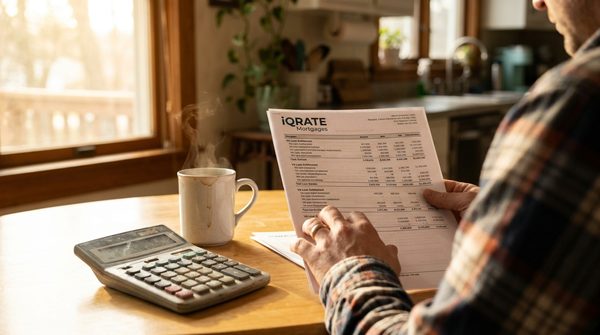
Verdict: For veterans who can meet the occupancy requirement, using a second VA loan is almost always the superior financial choice due to the $0 down payment and no-PMI benefits. It dramatically lowers the barrier to entry for real estate investing.
What Are the Debt-to-Income Ratio Rules for a Second VA Loan?
When you apply for a second VA loan, lenders will scrutinize your ability to afford two mortgage payments. The primary metric they use is your debt-to-income (DTI) ratio, which compares your gross monthly income to your total monthly debt payments.
The VA has a guideline that prefers borrowers to have a DTI of 41% or less, but this is not a strict cutoff. What makes the VA loan unique is its focus on residual income. This is the amount of money you have left over each month after paying all major expenses, including your mortgages, taxes, insurance, and other debts. The VA sets residual income thresholds based on family size and region to ensure you can comfortably afford your living expenses.
When calculating your DTI for a second home, the lender must account for the mortgage on your first property. However, there's a huge advantage if you plan to rent it out:
- Offsetting the First Mortgage with Rental Income: If you have a signed lease agreement for your first property, lenders can often use that rental income to offset the mortgage payment. (The data, information, or policy mentioned here may vary over time.) Some lenders may require a history of rental income, while others will accept a new lease. This can significantly lower your calculated DTI, making it much easier to qualify.
How Do I Restore My Full Entitlement After Selling My First Home?
If you don't want to manage two properties and instead want to sell your current home to buy a new one, you can get your full VA loan entitlement restored for the next purchase. This allows you to 'reset' your benefit and use its full power again.
There are two primary ways to achieve a full restoration:
- Sell the Property and Pay Off the Loan: This is the most common method. Once you sell the home that was secured by your VA loan and the loan is paid in full, you can apply for a one-time restoration of your entitlement. You'll need to provide the lender with a copy of the closing documents from the sale.
- Loan Assumption by Another Veteran: An eligible veteran can formally assume your VA loan. If they agree to substitute their VA entitlement for yours, your entitlement is fully restored and available for a new purchase.
To begin this process, you will need to complete VA Form 26-1880, 'Request for a Certificate of Eligibility', and submit it with the required documentation.
Can I Use My VA Loan to Buy a Multi-Family Property?
Yes, and this is one of the most effective real estate investment strategies available, known as 'house hacking'. The VA allows you to purchase a multi-unit property with up to four units (a duplex, triplex, or fourplex), as long as you occupy one of the units as your primary residence.
Imagine this scenario in Austin:
- You find a duplex for sale for $650,000.
- You use your VA loan to purchase the property with $0 down.
- You move into one unit and rent out the other unit for $2,200 per month.
That $2,200 in rental income can be used to offset your mortgage payment, drastically reducing your personal housing cost. In some cases, the rent from the other units can cover the entire mortgage. Furthermore, lenders can often count the projected rental income from the vacant units when qualifying you for the loan, making it easier to afford a more expensive multi-family property. (The data, information, or policy mentioned here may vary over time.)
What Are the Funding Fee Differences for Subsequent Use?
The VA funding fee is a mandatory cost for most veterans using the loan benefit. It's a percentage of the loan amount that goes directly to the VA to help keep the program running for future generations. The fee amount depends on three factors: your down payment amount, whether it's your first time using the benefit, and your service type.
For a veteran making a $0 down payment, the difference is significant:
- First-Time Use: The funding fee is 2.15% of the loan amount for regular military, Reserves, and National Guard.
- Subsequent Use: The funding fee increases to 3.3% of the loan amount for all service types.
On a $400,000 loan, that's a difference between a fee of $8,600 and $13,200. This fee can be paid in cash at closing or, more commonly, rolled into the total loan amount.
Important Exemptions: You are exempt from paying the VA funding fee if you are a veteran receiving VA compensation for a service-connected disability, a surviving spouse of a veteran who died in service or from a service-connected disability, or a service member who has received the Purple Heart. Understanding your remaining VA entitlement is the first step toward your next property purchase. If you're a veteran in Texas ready to explore your options for a second home or an investment property, connect with a mortgage strategist who specializes in VA loans to map out your specific scenario and maximize your hard-earned benefits.
Ready to explore your options for a second home or investment property? Take the first step and apply for a VA loan today to discover how you can maximize your hard-earned benefits.
Author Bio
David Ghazaryan is the expert mortgage strategist and founder behind iQRATE Mortgages. With a mission to fund home loans that traditional banks won't touch, David specializes in helping clients with unique financial situations, including those recovering from foreclosure or bankruptcy. He expertly crafts smart, strategic, and stress-free mortgages by leveraging a vast network of over 100 lenders to secure competitive rates for investors and homebuyers alike. Praised for exceptional customer service, David has helped hundreds of families with a 97% satisfaction rate, guiding them to the mortgage they deserve.
References
VA Home Loan Guaranty Buyer's Guide









