


What Is the VA's Definition of a Dependent Parent in Tampa?
The U.S. Department of Veterans Affairs (VA) has specific criteria for who qualifies as a 'dependent parent'. It's not enough that you provide some help; their dependency must be substantial and verifiable. For a VA home loan in Tampa, your parent is considered dependent if their income and net worth are below certain limits, making them financially reliant on you for their basic needs.
To meet the definition, the parent's income must not be sufficient to support them. The VA will look at all sources of income, including Social Security, pensions, and investments. The key factor is whether your financial support is necessary for them to maintain a basic standard of living. This is not a gray area; it requires concrete proof that they could not afford adequate housing without your direct and ongoing assistance.
Key Dependency Factors
- Income Level: The parent's gross income from all sources is the primary consideration. While there isn't a single, nationwide dollar amount, it must be low enough that a lender can clearly see the need for your support. (The data, information, or policy mentioned here may vary over time.)
- Net Worth: The VA also considers the parent's assets. A parent with a low income but significant savings or investments may not qualify as a dependent.
- Veteran's Support: You must demonstrate that you are providing regular, recurring financial support that covers essential living expenses like housing, food, and medical care.

How to Prove Parental Dependency for a Jacksonville Mortgage
When applying for a VA loan to buy a home for your parents in Jacksonville, the burden of proof is on you. The lender, acting on behalf of the VA, requires a clear paper trail to validate your parent's dependent status. Gathering this documentation early in the process is crucial for a smooth underwriting experience.
Your loan officer will guide you, but you should be prepared to provide the following items:
- Federal Income Tax Returns: Your most recent Federal Income Tax Returns showing you claim the parent as a dependent is the strongest piece of evidence.
- VA Form 21P-509 (Statement of Dependency of Parent(s)): This official VA form requires a detailed breakdown of your parent's income from all sources for the previous calendar year. You'll list everything from wages and Social Security to interest and dividends.
- Affidavit of Dependency: You will need to sign a statement certifying that your parent is genuinely dependent on you for their support.
- Proof of Shared Finances (if applicable): Bank statements showing regular money transfers to your parent or cancelled checks for their bills can further strengthen your case.
For example, if you're buying a home in Jacksonville and your father receives $1,200 a month in Social Security but his basic living expenses are $2,000, and you can show you provide the $800 difference each month, you have a strong case for dependency.
Clarifying Occupancy Rules: Do I Have to Live With My Parents?
This is one of the most important and beneficial exceptions to the VA loan rules. Typically, a veteran using a VA loan must certify that they will personally occupy the home as their primary residence within a reasonable time (usually 60 days) after closing. However, when purchasing a home for a dependent parent, the veteran is not required to live in the property.
This exception allows you to provide a safe and stable home for your parents in a community like Tampa, even if your career or duty station has you living in another city or state. The VA recognizes that a veteran's obligation to care for an aging parent is a valid reason to purchase a home. In this scenario, your parent's occupancy of the home satisfies the VA's requirement. They must move into the home and use it as their primary residence.
The Process for a VA Loan on a Multi-Generational Home
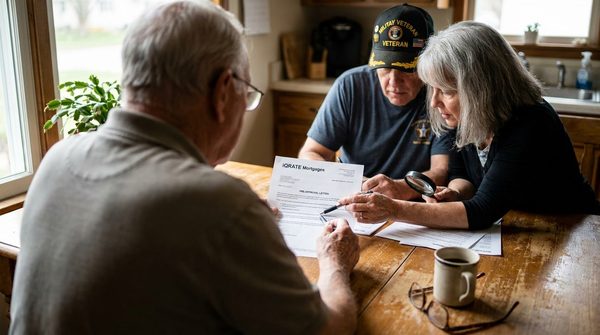
The process is slightly different if you plan to live with your parents in a multi-generational home. This is becoming an increasingly popular option for families in Florida. In this case, you will satisfy the occupancy requirement yourself, and your parent's dependency status is less of a factor in the occupancy rule itself, though it may still be relevant for other reasons.
Here is the typical process for securing a VA loan for a home you'll share with your parents:
- Obtain Your Certificate of Eligibility (COE): This is the first step for any VA loan, proving to the lender you have the required service history.
- Get Pre-Approved: Work with a mortgage lender to determine your budget based on your income, credit, and debt-to-income ratio.
- Find a Suitable Home: Look for a property in Tampa or Jacksonville that meets the needs of your entire family, potentially with features like a first-floor master suite or separate living spaces.
- Submit Your Loan Application: Provide all necessary financial documentation for yourself. If you are buying the home for a dependent parent you won't live with, this is when you would submit all the dependency documentation mentioned earlier.
- Underwriting and Approval: The lender's underwriter will review your file to ensure it meets both their and the VA's guidelines before issuing a final loan approval.
Can My Parent's Income Help Qualify for the Loan in Tampa?
No, your parent's income cannot be used to help you qualify for the mortgage. The VA loan is an entitlement you earned through your military service. Therefore, the loan qualification is based solely on the veteran's income and credit profile.
The parent's income is only reviewed for one reason: to determine their dependency status. Low income helps prove they are dependent on you. If their income was high enough to help you qualify for a mortgage, it would simultaneously disqualify them from being considered a dependent in the first place. The two concepts are mutually exclusive in this context. The financial responsibility for the mortgage rests entirely on the veteran borrower.
Rules for Active Duty vs. Veteran Homebuyers
The rules for using a VA loan to purchase a home for a dependent parent are identical for both active-duty service members and honorably discharged veterans. Your service status does not change the core requirements.
- Eligibility: Both must have a valid Certificate of Eligibility (COE).
- Dependency Proof: Both must provide the same documentation to prove their parent is financially dependent.
- Occupancy: The same occupancy exception applies to both. An active-duty service member stationed in another state can buy a home in Florida for their dependent parent without having to live in it.
The only practical difference might be the timing. An active-duty member might use this benefit to settle their parents in a future retirement location like Jacksonville before they transition out of the military.
What If My Parent's Dependency Status Changes After Closing?
Life circumstances can change. Your parent might receive an inheritance, find part-time work, or remarry, altering their financial situation. The VA and your lender make their decision based on the facts presented at the time of the loan application and closing.
As long as you provided truthful and accurate information during the loan process, a future change in your parent's dependency status generally does not jeopardize your loan. The VA does not continuously monitor dependency after the loan is funded. However, if the dependency was based on fraudulent information, that could have severe consequences.
If your parent's situation changes significantly and they no longer occupy the home, you may need to take action. For example, if they move into an assisted living facility, the property is no longer meeting the occupancy requirement. In such cases, you might consider selling the home, refinancing it into a conventional loan, or moving into it yourself to satisfy the personal occupancy rule.
Understanding the unique VA loan requirements for a parent's home is the first step. If you're ready to provide a secure home for your family, our experts can help you build a strong case for dependency and ensure a smooth approval. See what you qualify for and Apply now.
Author Bio
David Ghazaryan is the expert mortgage strategist and founder behind iQRATE Mortgages. With a mission to fund home loans that traditional banks won't touch, David specializes in helping clients with unique financial situations, including those recovering from foreclosure or bankruptcy. He expertly crafts smart, strategic, and stress-free mortgages by leveraging a vast network of over 100 lenders to secure competitive rates for investors and homebuyers alike. Praised for exceptional customer service, David has helped hundreds of families with a 97% satisfaction rate, guiding them to the mortgage they deserve.
References
VA Lender's Handbook, Chapter 3: The VA Guaranteed Loan
Consumer Financial Protection Bureau (CFPB) - What is a VA loan?









