


What types of loans are available for non-U.S. citizen investors?
As a non-U.S. citizen looking to invest in California real estate, you'll find that traditional mortgages from major banks are often out of reach. These conventional loans, backed by Fannie Mae and Freddie Mac, have strict requirements for U.S. credit history, income verification, and residency status that most foreign nationals cannot meet.
Fortunately, a specialized market of private lenders offers products designed specifically for this scenario. The primary solution is a Foreign National Loan, which falls under the category of Non-Qualified Mortgages (Non-QM). These loans are not bound by the same rigid government standards, offering greater flexibility.
Key features of Foreign National Loans include:
- No U.S. Credit Required: Lenders understand you won't have a FICO score. Instead, they may ask for a credit report from your home country or reference letters from financial institutions.
- Flexible Income Verification: You don't need U.S. pay stubs or tax returns. Lenders may use methods like asset depletion (calculating income from your total liquid assets) or bank statement analysis.
- Higher Down Payment: To offset the perceived risk, lenders typically require a larger down payment, usually ranging from 25% to 40% of the purchase price. (The data, information, or policy mentioned here may vary over time.)
- Focus on the Property's Income Potential: For investment properties, the Debt Service Coverage Ratio (DSCR) loan is an extremely popular option. A DSCR loan qualifies you based on the rental income the property is expected to generate. If the projected rent covers the mortgage payment (including taxes and insurance), your personal income becomes less relevant.
DSCR Loan Example in Anaheim
Imagine you want to buy a rental property in Anaheim for $800,000. You plan to make a 30% down payment ($240,000), leaving a loan amount of $560,000.
- Your estimated monthly mortgage payment (Principal, Interest, Taxes, Insurance) is $4,200.
- The property's projected gross monthly rent is $5,500.
- The DSCR is calculated by dividing the rental income by the mortgage payment: $5,500 / $4,200 = 1.31.
Most lenders require a DSCR of 1.25 or higher. (The data, information, or policy mentioned here may vary over time.) Since 1.31 exceeds this threshold, you could be approved for the loan based on the property's cash flow alone, without needing to document personal income.
How do I prove the source of my down payment from a foreign bank?
This is the most critical part of the loan application for a foreign national. U.S. lenders must comply with strict federal regulations, including the Bank Secrecy Act and anti-money laundering (AML) laws. They need an impeccable paper trail that clearly shows where your down payment funds originated and how they entered the U.S.
Simply showing the money in a U.S. bank account is not enough. You must prove the funds are yours and were obtained legally. Expect the underwriter to scrutinize every document.

Key Documents for Sourcing Your Down Payment
To ensure a smooth process, prepare the following items well in advance:
- Foreign Bank Statements: You will need to provide at least two, and sometimes up to twelve, months of statements from the foreign bank account where the funds originated. The statements must clearly show the account holder's name and a consistent balance.
- Clear Paper Trail: This is the evidence of the money's origin. It could be a closing statement from the sale of a property, a business financial statement showing profit distribution, or brokerage statements from the liquidation of stocks or other investments. Large, unexplained cash deposits are a major red flag.
- Letter of Explanation (LOE): A simple, concise letter written in English that explains the source of the funds. For example: 'These funds are from the sale of my primary residence located at [Address], which closed on [Date]. Attached is the final sales contract and proof of funds transfer.'
- Wire Transfer Records: Provide a complete copy of the international wire transfer receipt. This document should show the funds leaving your named foreign account and arriving in your named U.S. account. The names on both accounts must match perfectly.
An underwriter reviewing your application for a home in Irvine needs to see a clear, logical story. The money was in your foreign account, it came from a legitimate source, and you transferred it directly to your U.S. account.
What is 'seasoning' and how long must funds be in a United States account?
'Seasoning' is the period of time that funds must sit in a bank account before a mortgage lender considers them acceptable to use for a transaction. The primary purpose of seasoning is to ensure the funds are not from an unapproved source, such as an undocumented loan from a third party or a last-minute cash advance.
For foreign nationals, this requirement almost always applies to funds transferred into a U.S.-based bank account. Lenders want to see that the money is stable and truly under your control before you close on a property.
Understanding the Seasoning Timeline
While requirements can vary by lender, the industry standard is a seasoning period of 60 to 90 days. (The data, information, or policy mentioned here may vary over time.) This means the full down payment amount must be in your U.S. bank account for at least two to three full months before you close on your mortgage.
- The 60-Day Rule: Most lenders will review your last two months of U.S. bank statements. If the large deposit from your foreign account appears on the oldest statement and has been there for the full period, it is considered seasoned.
- Planning is Crucial: If you plan to purchase an investment property in Anaheim in July, you should initiate the wire transfer no later than April. This gives the funds ample time to arrive and season through May and June, ensuring they are ready for underwriting.
Transferring funds a week before making an offer is one of the most common mistakes foreign buyers make. It creates a significant underwriting problem that can delay or even derail the entire transaction.
Do my bank statements need to be translated into English?
Yes, absolutely. Every single document you submit to a U.S. mortgage lender that is in a foreign language must be accompanied by a complete and certified English translation. There are no exceptions to this rule. Underwriters cannot and will not use online translation tools or attempt to interpret documents in another language.
Certified Translation Standards
To be accepted, the translation must meet specific criteria:
- It must be a certified translation. This means the translator or translation company must provide a signed statement or 'Certificate of Accuracy'. This certificate attests that the translation is a true and accurate representation of the original document and that the translator is competent to translate from the original language into English.
- You must provide both documents. The lender will require a copy of the original, foreign-language document as well as the certified English translation.
This applies to all supporting documentation, not just bank statements. If you are providing a property sale contract, a business financial report, or a foreign credit history report, each one needs its own certified translation. Budget for this expense and complete the translations before you begin your property search to avoid delays.
What are the visa requirements for getting an investor loan in Irvine?
A common misconception is that foreign investors need a work or immigrant visa to secure a mortgage in the U.S. For a Foreign National Loan, this is often not the case. The lender's primary concern is confirming your identity and ensuring you are legally permitted to be in the country to sign the final loan documents.
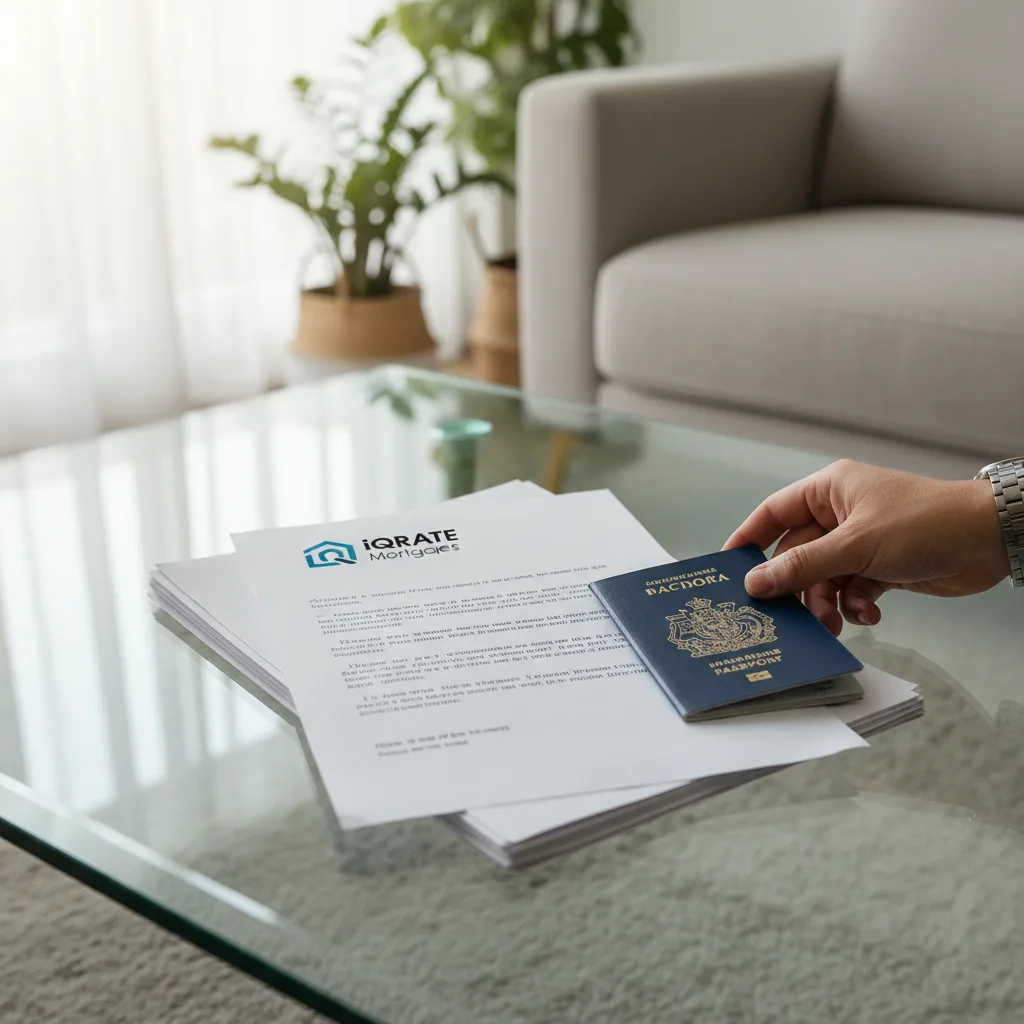
Acceptable Visa Types for Foreign National Loans
Many lenders are quite flexible with visa status, especially for investment properties where the loan is underwritten based on the property's performance (like a DSCR loan). Acceptable visas often include:
- B-1/B-2 (Business/Tourist Visa): Often sufficient for purchasing an investment property.
- H-1B (Specialty Occupation Visa): Commonly held by professionals working in the U.S.
- L-1 (Intracompany Transferee Visa): For employees of international companies.
- E-2 (Treaty Investor Visa): For investors from treaty countries who have made a substantial investment in a U.S. business.
In some cases, particularly if you are buying the property purely as an investment and will not reside in it, a lender may not have a strict visa requirement. However, you will still need a valid foreign passport and be able to demonstrate a strong financial profile in your home country. Visa rules are highly lender-specific, making it essential to work with a mortgage advisor who has experience with multiple foreign national lenders. (The data, information, or policy mentioned here may vary over time.)
How does buying in an LLC affect the loan process for a foreign national?
Buying a U.S. property through a Limited Liability Company (LLC) is a popular strategy for foreign investors. It offers two key advantages: liability protection, which separates your personal assets from the property, and a degree of privacy.
Most lenders that offer Foreign National loans are willing to lend to a U.S.-based LLC. The process is similar to an individual application but includes a few extra steps.
Lending Requirements for an LLC
When your LLC is the borrower, the lender will require the following:
- LLC Formation Documents: You must provide the Articles of Organization, the Operating Agreement, and a Certificate of Good Standing from the state where the LLC is registered.
- Personal Guarantee: The lender will require you, as the owner (or 'member') of the LLC, to sign a personal guarantee. This is a legally binding agreement stating that if the LLC defaults on the loan, you are personally responsible for repaying the debt. From the lender's perspective, this makes the risk equivalent to lending directly to you.
- Individual Financial Vetting: Even though the LLC is the official borrower, the underwriting process still focuses on you. You must provide all the same documentation for sourcing and seasoning your down payment as you would if you were buying in your own name.
Using an LLC to purchase a property in Irvine or Anaheim adds a layer of legal paperwork and may slightly increase closing costs, but it does not change the fundamental underwriting requirements for proving the legitimacy of your funds. (The data, information, or policy mentioned here may vary over time.)
Properly structuring your foreign asset documentation is the most critical step. If you're planning an investment in California, our mortgage strategists specialize in foreign national loans and can help you navigate lender requirements for a successful purchase. Apply now to get started.
Author Bio
David Ghazaryan is the expert mortgage strategist and founder behind iQRATE Mortgages. With a mission to fund home loans that traditional banks won't touch, David specializes in helping clients with unique financial situations, including those recovering from foreclosure or bankruptcy. He expertly crafts smart, strategic, and stress-free mortgages by leveraging a vast network of over 100 lenders to secure competitive rates for investors and homebuyers alike. Praised for exceptional customer service, David has helped hundreds of families with a 97% satisfaction rate, guiding them to the mortgage they deserve.
References
CFPB - What documents will I need to apply for a mortgage?
Fannie Mae - Non-U.S. Citizen Borrower Eligibility Requirements
National Association of REALTORS - International Transactions in U.S. Residential Real Estate









