


What is a Veteran Affairs Interest Rate Reduction Refinance Loan?
A Veteran Affairs Interest Rate Reduction Refinance Loan, commonly known as a VA IRRRL or a 'streamline' refinance, is a powerful tool for veterans who already have a VA mortgage. Its primary purpose is to help you refinance your existing loan into a new one with a lower interest rate or switch from an adjustable-rate to a fixed-rate mortgage. The 'streamline' name is fitting because the process typically requires significantly less documentation than a standard refinance.
Key features of a VA IRRRL include:
- Less Paperwork: The VA does not require income verification or a new Certificate of Eligibility (COE). However, be aware that most lenders will perform their own credit check and may verify income to ensure you have the ability to repay the loan.
- No Appraisal: In most situations, the VA does not require a new property appraisal. This saves you time and money, a significant benefit when managing the financial complexities after a divorce.
- VA to VA Only: An IRRRL can only be used to refinance an existing VA-guaranteed loan. You cannot use it to refinance a conventional or FHA loan into a VA loan.
- Occupancy Requirement: You must certify that you previously occupied the property as your primary residence. This is a crucial detail for post-divorce scenarios.
For a veteran in Jacksonville going through a divorce, the simplicity of an IRRRL is a major advantage. It allows you to focus on securing a more affordable mortgage payment without the exhaustive documentation requirements of a traditional refinance. The main goal is to reduce your housing costs, and the IRRRL is designed to achieve that with maximum efficiency.
Does my ex-spouse need to sign any refinance paperwork?
This is one of the most common and critical questions, and the answer brings welcome relief: No, your ex-spouse does not need to sign any paperwork for your new IRRRL. The new loan will be solely in your name, based on your credit and eligibility. Your ex-spouse is not a party to this new financial agreement and therefore has no documents to sign for it.
However, there is a crucial preceding step that must be completed. Before you can even begin the IRRRL process, ownership of the property must be legally and fully transferred to you. This is accomplished through a document called a Quitclaim Deed. During the divorce proceedings, your ex-spouse must sign a Quitclaim Deed, which officially relinquishes all of their ownership rights and interest in the property, transferring them to you. This document is then recorded with the county, making you the sole owner.

When you apply for the IRRRL, your lender will perform a title search. This search will verify that the title is clear and that you are the sole owner on the deed. If the Quitclaim Deed was not properly executed and recorded, the refinance cannot proceed. The divorce decree itself will outline this requirement, but it's the recorded deed that provides the legal proof the lender needs. Therefore, while your ex-spouse is not involved in the refinance application, their prior cooperation in transferring ownership via the Quitclaim Deed is an essential prerequisite.
How do I restore the portion of entitlement used by my ex-spouse?
Understanding VA loan entitlement is key here, and it’s a point of frequent confusion. VA entitlement is the dollar amount the Department of Veterans Affairs guarantees to a lender on your behalf. When you get a VA loan with a spouse, their status as a civilian or veteran affects how entitlement is used.
A common misconception is that you must first restore the entitlement tied to your ex-spouse before you can do an IRRRL. This is incorrect. An IRRRL reuses the exact same entitlement that was used for the original loan. Because you are refinancing the same property, you are not tapping into any new entitlement. The VA simply transfers the guarantee from the old loan to the new one.
So, when does entitlement restoration matter? It matters for your next home purchase. If you plan to buy another home in the future using a VA loan, you will want to restore the entitlement that is currently tied up in the refinanced property. The process to restore the entitlement that a non-veteran ex-spouse used is known as a 'one-time restoration'.
To do this after your IRRRL is complete, you will need to submit VA Form 26-1880, 'Request for a Certificate of Eligibility', along with a copy of your divorce decree and the recorded property deed. The divorce decree must prove that the property was awarded to you and that you are responsible for the loan. By refinancing into an IRRRL solely in your name, you have effectively released your ex-spouse from the liability, meeting a key condition for restoration. This clears the way for you to use your full VA loan benefits on a future purchase.
What does the divorce decree need to state about the property?
The divorce decree is the foundational legal document for your post-divorce IRRRL. Lenders will scrutinize it carefully to ensure all legal obligations are clearly defined. Ambiguity in the decree can halt the entire refinance process. To avoid any delays, your divorce decree must be crystal clear on several points regarding the marital home.
Specifically, the decree must explicitly state the following:
- Award of Property: It must unambiguously award the real estate property solely to you, the veteran. Language such as, 'The marital home located at [Property Address] is awarded to [Veteran’s Name] as their sole and separate property' is ideal.
- Assignment of Debt: The decree must assign the existing mortgage debt and all related financial responsibilities (taxes, insurance) exclusively to you. This clarifies who is obligated to make the payments.
- Indemnification Clause: A 'hold harmless' or 'indemnification' clause is critical. This language states that you will indemnify your ex-spouse, meaning you will be responsible for any financial losses or legal claims related to the mortgage. This legally insulates your ex-spouse from any future liability associated with the original loan.
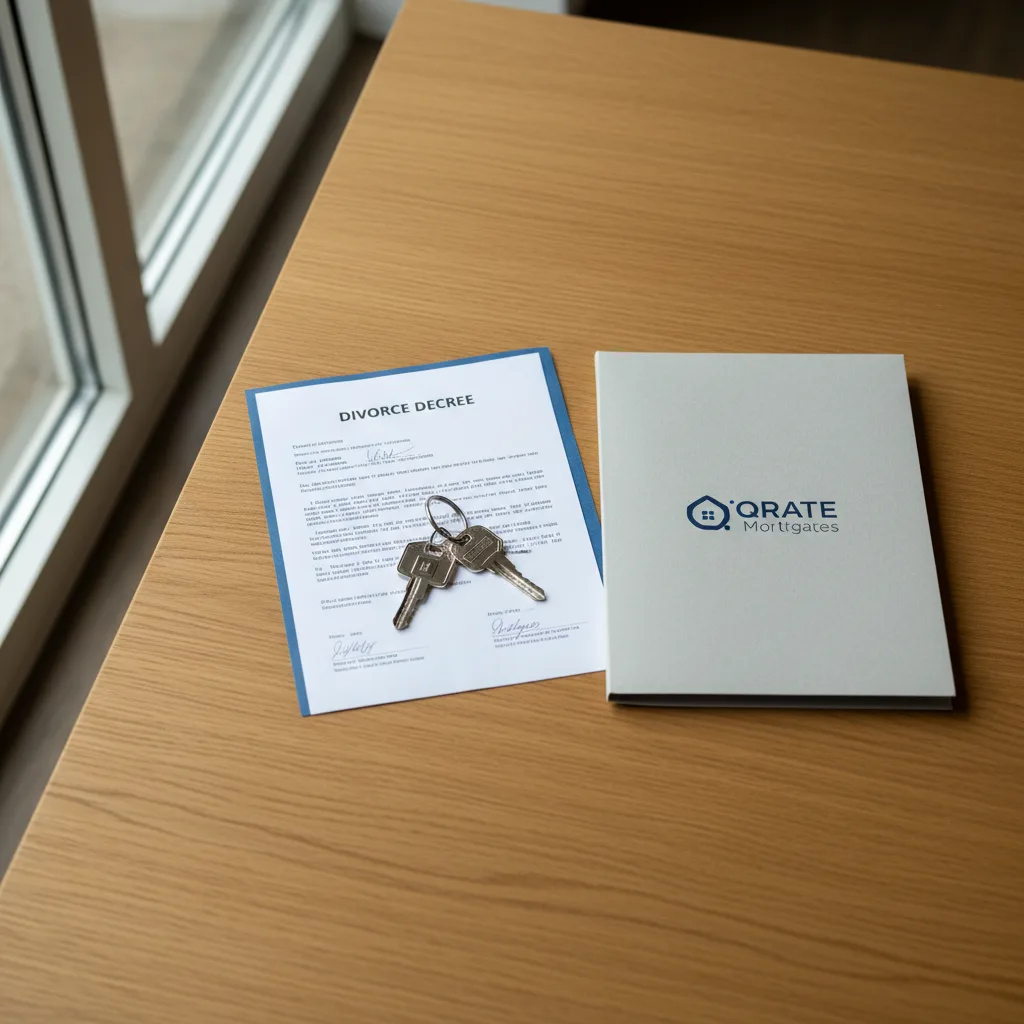
For a veteran in Pensacola, a poorly written decree could mean the difference between a successful refinance and a dead end. For example, if the decree simply states 'John will keep the house,' that is not sufficient. A lender needs to see clear, legally binding language such as: 'The property at 456 Bayfront Drive, Pensacola, FL, is awarded to John Doe. John Doe shall assume and be solely responsible for the existing VA mortgage (Loan #12345) and shall hold Jane Doe harmless from any and all liability associated with this debt.' This specific wording leaves no room for interpretation and gives the lender the legal assurance it needs to proceed.
Can I still get an IRRRL if my ex-spouse still lives in the home?
This is a challenging and sensitive situation. While the VA’s occupancy rule for an IRRRL only requires you to certify that you previously occupied the home as your primary residence, the practical reality of an ex-spouse still living there creates significant obstacles.
From a lender's perspective, this is a high-risk scenario. The primary concern is a potential tenancy or occupancy dispute after the loan closes. If your ex-spouse is living in the home but is no longer on the title or the loan, they are effectively a tenant. If they refuse to leave after the refinance, you would have to go through a formal eviction process, which can be lengthy and costly. Lenders do not want to finance a property that has a high probability of entering into a legal dispute immediately after closing.
Your divorce decree should ideally address this by setting a firm date by which the ex-spouse must vacate the property. Most lenders will refuse to move forward with the IRRRL until the ex-spouse has moved out and you can provide proof of their vacancy. They want to ensure a clean break and a smooth transition of both ownership and occupancy. Attempting to refinance while your ex-spouse is still residing in the home will, in almost all cases, lead to the lender denying the application or putting it on hold until the occupancy issue is resolved.
Are there extra steps if the original loan is in forbearance?
Yes, refinancing a loan that is or was recently in forbearance due to financial hardship involves specific requirements. The good news is that VA guidelines are flexible and designed to help veterans get back on their feet. You are permitted to do an IRRRL on a loan that was in a COVID-19 or other type of forbearance plan.
The key VA requirement is straightforward: You must have made at least one timely mortgage payment after the forbearance period has ended. (The data, information, or policy mentioned here may vary over time.) This single payment demonstrates to the lender that your financial hardship has passed and you are once again able to meet your mortgage obligations.
However, it's crucial to understand lender 'overlays'. An overlay is an additional rule a specific lender imposes that is stricter than the VA's minimum guideline. While the VA may only require one payment post-forbearance, a lender might require three or even six consecutive, on-time payments before they will approve your IRRRL application. For a veteran in Jacksonville who used forbearance to manage finances during a divorce, it is essential to ask potential lenders about their specific post-forbearance seasoning requirements. Shopping around with different lenders can help you find one whose policies align with your situation, allowing you to secure a lower rate sooner.
What is the process if my ex-spouse is also a veteran?
When both parties on the original VA loan are veterans, the process has a few extra layers related to entitlement. On the initial joint loan, you may have split the use of your VA entitlement. For example, if the loan required $100,000 of entitlement, you might have each used $50,000 of your individual entitlement.
When you refinance with an IRRRL solely in your name, you will now be using the full amount of entitlement required for that loan. In our example, you would now be using the full $100,000 of your own entitlement.
For your ex-spouse, the key is restoring their portion of the entitlement for their future use. Once the IRRRL is complete, your ex-spouse is officially removed from the liability of the original loan. They can then apply to the VA to have their $50,000 of entitlement restored. This process involves submitting VA Form 26-1880, along with the divorce decree and proof that the loan has been paid off and they are no longer on the title. Successfully restoring their entitlement allows them to use their full VA loan benefits to purchase another home in the future without being penalized for the previous joint loan.
Who is responsible for the original loan after the refinance in Pensacola?
Once your IRRRL is finalized, the original loan effectively ceases to exist. The funds from your new loan are used to pay off the old mortgage in its entirety. This legal and financial transaction is what officially removes your ex-spouse from the mortgage debt.
In legal terms, this process is a form of novation, where a new contract (your IRRRL) replaces the old one. The original loan contract, which included both you and your ex-spouse, is satisfied and closed. Your new loan is a completely separate contract between you and your lender. Your ex-spouse has no signature on it and therefore has absolutely no legal or financial responsibility for it.
This is a critical benefit for both parties. For a veteran in Pensacola, it provides a clean financial slate regarding the property. For the ex-spouse, it is equally important. The lender for the original loan will report to all major credit bureaus that the loan has been 'Paid in Full'. This removes the mortgage debt from their credit report, which can significantly improve their credit score and lower their debt-to-income ratio, freeing them to qualify for other loans in the future. The IRRRL creates a definitive financial separation, ensuring that only you are responsible for the property's mortgage moving forward.
Navigating a VA IRRRL after a divorce has unique challenges. If you're ready to move forward and secure a lower interest rate, a mortgage expert can help review your divorce decree with clarity and confidence. Apply now to explore your options.
Author Bio
David Ghazaryan is the expert mortgage strategist and founder behind iQRATE Mortgages. With a mission to fund home loans that traditional banks won't touch, David specializes in helping clients with unique financial situations, including those recovering from foreclosure or bankruptcy. He expertly crafts smart, strategic, and stress-free mortgages by leveraging a vast network of over 100 lenders to secure competitive rates for investors and homebuyers alike. Praised for exceptional customer service, David has helped hundreds of families with a 97% satisfaction rate, guiding them to the mortgage they deserve.
References
VA Interest Rate Reduction Refinance Loan (IRRRL)









