


The Standard Veteran Affairs Loan Occupancy Requirement
The U.S. Department of Veterans Affairs (VA) guarantees home loans to help service members, veterans, and eligible surviving spouses become homeowners. One of the core rules of this benefit is the occupancy requirement. The VA loan program is designed for primary residences, not for purchasing vacation homes or purely investment properties. Therefore, the VA requires the veteran to certify that they intend to personally occupy the property as their home.
Generally, the expectation is that you will move into the home within a 'reasonable time' after the loan closes. While the VA doesn't define a rigid deadline, the mortgage industry standard for a 'reasonable time' is typically 60 days. (The data, information, or policy mentioned here may vary over time.) This requirement ensures the program's integrity and directs its benefits toward providing stable housing for military families.
This rule can cause significant stress for active-duty service members, especially those receiving a Permanent Change of Station (PCS) order. If you're ordered to a new duty station like Naval Base San Diego but are immediately scheduled for deployment or temporary duty (TDY), you physically cannot move into a new home within that 60-day window. Fortunately, the VA has a specific and crucial exception built for exactly this scenario.
How Your Spouse Can Fulfill the Occupancy Rule in San Diego
For active-duty service members, the VA provides a significant exception to the personal occupancy rule. If you are on active duty and cannot occupy the property yourself within a reasonable time because of your military service, your spouse can satisfy the occupancy requirement on your behalf.
This is a game-changer for military families relocating to high-demand areas. Let’s say you receive PCS orders to Naval Air Station North Island in Coronado. You find the perfect home for your family, but your reporting duties involve a six-month deployment starting immediately after your move. Under this VA exception, your spouse can move into the Coronado home with your children, and their presence will legally satisfy the loan's occupancy condition. Your lender will simply need proof that your absence is due to your military obligations.

To use this exception, you must demonstrate two key things to your lender:
- You are an active-duty service member.
- Your inability to occupy the property is a direct result of your military service.
This exception allows your family to establish a home base and maintain stability while you serve, which is the primary intent of the VA loan program.
Essential Documents for the Permanent Change of Station Exception
To utilize the spousal occupancy exception, you must provide your lender with clear and official documentation. Lenders need to verify your status and the reason for your absence to comply with VA guidelines. Be prepared to submit the following documents.
A Copy of Your PCS Orders
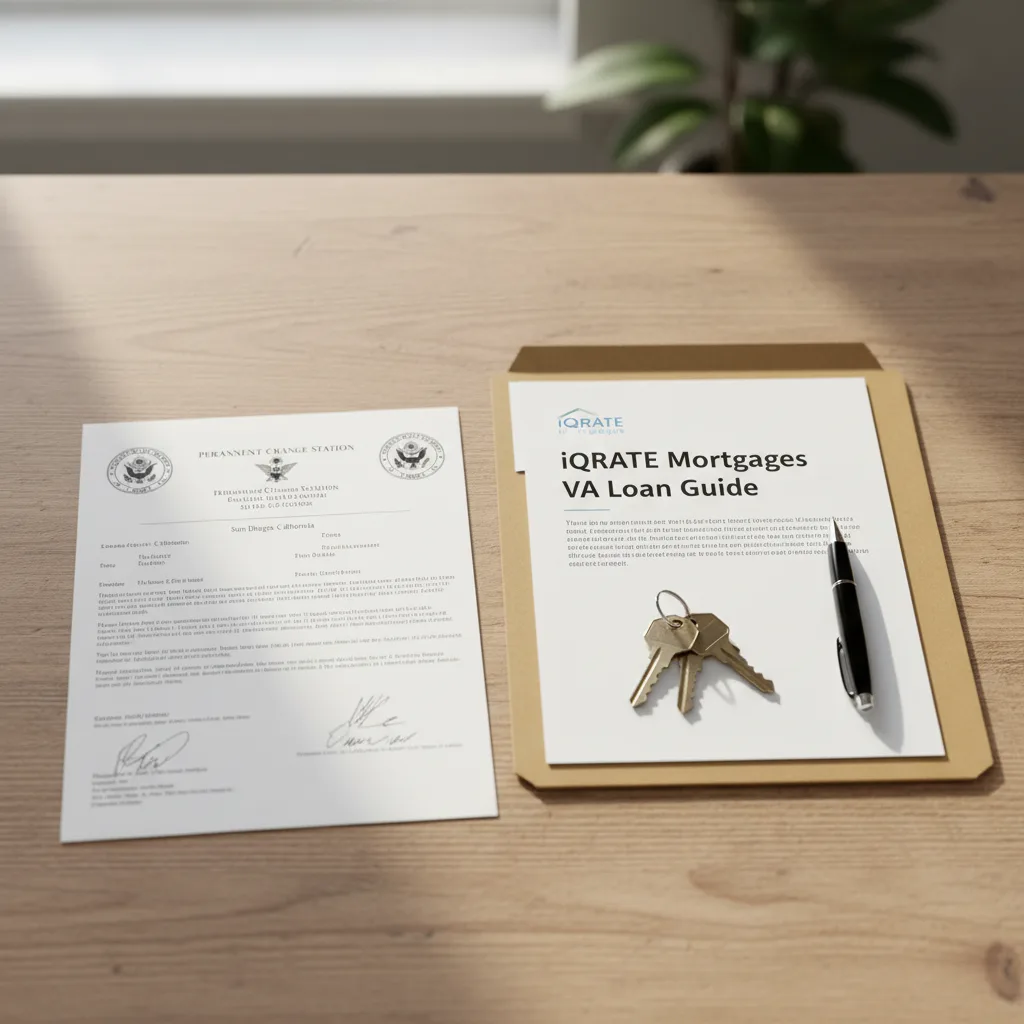
This is the most critical piece of evidence. Your Permanent Change of Station (PCS) orders officially document your relocation to a new duty station, such as one in the San Diego area. These orders serve as undeniable proof that your move is mandated by the military. They establish the 'why' behind your need for a new home and your potential inability to occupy it immediately.
Leave and Earnings Statement (LES)
Your most recent LES confirms your active-duty status and provides a detailed breakdown of your pay and allowances. Lenders use this to verify your income and employment, which are fundamental to any mortgage application. It serves as your primary proof of income and active military service.
Certificate of Eligibility (COE)
Every VA loan requires a Certificate of Eligibility. This document proves to the lender that you meet the minimum service requirements to qualify for the VA loan benefit. You can typically obtain your COE through your lender, online via the VA's eBenefits portal, or by mail.
Signed Statement of Intent
While not an official government form, most lenders will require you and your spouse to sign a statement of intent. This letter simply affirms that:
- You, the service member, intend for this property to be your primary residence upon your return from duty.
- Your spouse will occupy the property as their primary residence within a reasonable time (usually 60 days) after closing.
This document clarifies the arrangement for underwriting purposes and ensures everyone is aligned with VA requirements. (The data, information, or policy mentioned here may vary over time.)
Does My Spouse Need to Be on the Loan?
This is a common and important question. No, your spouse does not need to be a co-borrower on the VA loan to satisfy the occupancy requirement. As long as they are legally your spouse, their occupancy is sufficient under the active-duty exception.
However, you may choose to have your spouse on the loan as a co-borrower. Consider the following:
- Pros of Adding Your Spouse: If your spouse has a reliable income, adding them to the loan can help you qualify for a larger mortgage amount. This can be particularly helpful in competitive real estate markets like San Diego. Their income can be combined with yours to meet the lender's debt-to-income (DTI) ratio requirements.
- Cons of Adding Your Spouse: If your spouse is a co-borrower, their credit history and debts will also be considered in the underwriting process. They will be equally and legally responsible for the mortgage debt. If they have a lower credit score or significant debt, it could negatively impact your loan terms or eligibility.
Ultimately, the decision to include your spouse on the loan is a financial one, separate from their ability to fulfill the occupancy requirement.
Using a Power of Attorney for Closing While Deployed
What happens if the closing date for your new home arrives while you are deployed, underway, or at a training where you cannot be present to sign documents? The VA and mortgage lenders have a well-established process for this: the Power of Attorney (POA).
However, you cannot use just any general POA. You will need a specific POA that is approved by the lender and title company. (The data, information, or policy mentioned here may vary over time.) This document explicitly grants your designated agent (usually your spouse) the authority to sign mortgage and closing documents on your behalf for that specific property transaction.
Follow these steps to ensure a smooth closing with a POA:
- Notify Your Lender Early: Inform your loan officer as soon as you know you might be unavailable for closing. They will have specific requirements and may provide their own POA form.
- Obtain the Correct POA Form: Get the specific POA document from the lender or title company. A general POA is often insufficient for real estate transactions.
- Execute it Properly: You will need to sign the POA in the presence of a notary public. If you are on base or deployed, military legal assistance offices (JAG) can typically provide notary services free of charge.
- Submit for Approval: Send the executed POA back to your lender and title company well in advance of the closing date for their review and approval.
With an approved POA, your spouse can attend the closing and sign the final paperwork, allowing you to secure your home in Coronado even if you're thousands of miles away.
The Occupancy Timeline for Your Coronado Property
As mentioned, the standard for occupancy is within a 'reasonable time', which is typically interpreted as 60 days from the date of closing. (The data, information, or policy mentioned here may vary over time.) This timeline applies to the person fulfilling the occupancy requirement—in this case, your spouse.
Your spouse should have a clear plan to move into the property within that 60-day window. The VA understands that interstate moves are complex and allows for reasonable delays. A delay of a week or two due to logistical issues with movers is perfectly acceptable. The key is demonstrating a clear intent to occupy. An unexplained and lengthy vacancy could raise red flags with the lender or the VA during a random audit.
For example, if your loan for a home in San Diego closes on July 1st, your spouse should plan to be living in the home before August 30th. Documenting moving truck rentals or utility service transfers can help prove that intent if ever questioned.
Application to Multi-Unit Properties
Yes, the spousal occupancy exception also applies to multi-unit properties, which can be a powerful financial strategy for military families. The VA allows you to purchase a property with up to four residential units (a duplex, triplex, or four-plex) as long as you intend to occupy one of the units as your primary residence.
This rule extends to your spouse. If you purchase a duplex in a San Diego neighborhood, your spouse can move into one of the units, satisfying the VA requirement for the entire property. You can then rent out the other unit(s) to generate rental income, which can help offset your mortgage payment—a strategy often called 'house hacking'.
This can be an excellent way to build wealth and long-term financial stability while serving in the military. The rental income can provide a cushion for your family's budget and help you build equity in a valuable asset.
A PCS move to San Diego is a major undertaking. Let us handle the complexities of your VA loan so you can focus on your family and new assignment. If you're ready to secure your home base, our team of VA loan specialists is here to guide you. Apply now for a streamlined mortgage process.
Author Bio
David Ghazaryan is the expert mortgage strategist and founder behind iQRATE Mortgages. With a mission to fund home loans that traditional banks won't touch, David specializes in helping clients with unique financial situations, including those recovering from foreclosure or bankruptcy. He expertly crafts smart, strategic, and stress-free mortgages by leveraging a vast network of over 100 lenders to secure competitive rates for investors and homebuyers alike. Praised for exceptional customer service, David has helped hundreds of families with a 97% satisfaction rate, guiding them to the mortgage they deserve.
References









