


Why Banks Deny Jumbo Loans for Condos with Pending Litigation
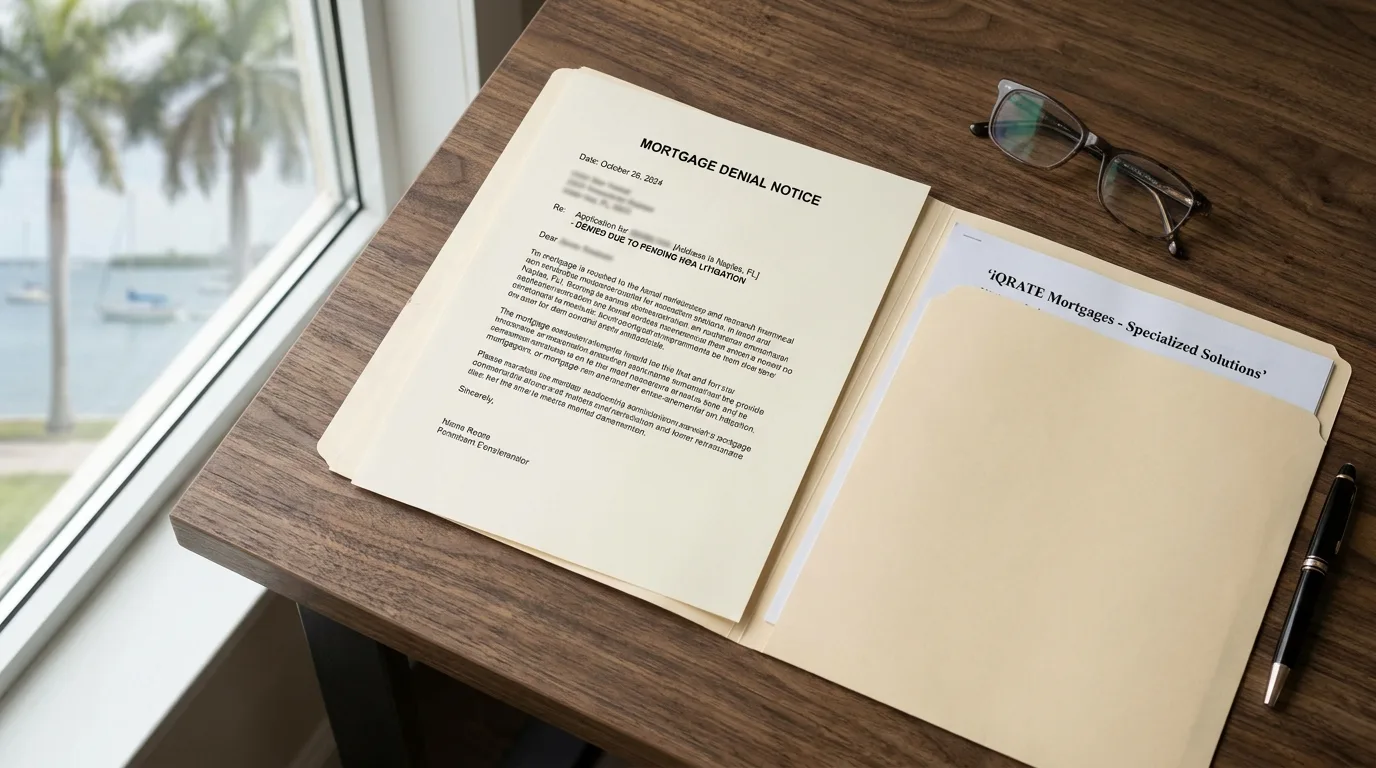
Imagine finding the perfect oceanfront condo in Miami, only to have your jumbo mortgage application rejected at the last minute. The reason? The building's homeowners association (HOA) is involved in a lawsuit. This scenario is incredibly common and frustrating for buyers in competitive markets like Miami and Naples. Most banks, especially those dealing with jumbo loans, have a zero-tolerance policy for pending litigation.
This refusal stems from the guidelines set by government-sponsored enterprises like Fannie Mae and Freddie Mac, which purchase most of the mortgages originated in the U.S. Even though jumbo loans exceed the conforming loan limits and aren't sold to these entities, large banks often apply the same rigid standards across all their products for consistency and risk management. For them, a lawsuit against the HOA represents a significant, unquantifiable risk. It could lead to:
- Large Special Assessments: If the HOA loses the lawsuit and lacks adequate insurance, the financial damages could be passed on to every unit owner through a hefty special assessment. A lender fears this could impact your ability to pay the mortgage.
- Increased HOA Dues: Litigation is expensive. Legal fees alone can drain an HOA's reserves, forcing a permanent increase in monthly dues to replenish funds, again affecting your debt-to-income ratio.
- Devaluation of the Asset: A building with known structural defects or a history of financial mismanagement becomes less desirable. The lender worries that the value of their collateral—your condo—could plummet.
Because the lender’s investment is tied to the entire building's health, not just your individual unit, they view litigation as a direct threat to their capital. They simply won't approve a loan on a property they deem an unstable asset.
The Types of HOA Lawsuits That Raise Major Red Flags
The nature of the lawsuit is critical. While any litigation can be an obstacle, some types are far more problematic than others. Underwriters categorize them based on the potential financial impact on the association.
Construction Defect Litigation
This is the most serious red flag. This type of lawsuit, typically filed by the HOA against the original builder or developer, alleges significant problems with the building's integrity. This can include issues like faulty roofs, water intrusion, improper stucco application, or foundational problems. For a lender, this suggests the building itself is physically compromised, making it an unacceptable risk. Securing financing, even from a portfolio lender, is extremely difficult when active construction defect litigation is present.

Personal Injury Lawsuits
A 'slip-and-fall' case is a common example. Here, the critical factor is insurance. The lender will immediately ask for the HOA's general liability insurance policy. If the amount of the lawsuit exceeds the policy's coverage limit, the loan will be denied. For instance, if the HOA is being sued for $3 million but its insurance only covers up to $2 million, that $1 million gap could become the responsibility of the unit owners. If the lawsuit is well within the coverage limits, a portfolio lender may still consider the loan.
Unit Owner vs. HOA Disputes
These lawsuits can range from minor to severe. A single homeowner suing over a fine for an unapproved balcony planter is unlikely to kill a deal. However, a group of owners suing the HOA board for financial mismanagement, breach of fiduciary duty, or embezzlement signals deep-rooted problems within the association's governance. A lender will see this as a sign of an unstable and poorly run building, posing a long-term risk to property values and financial health.
How to Investigate a Miami Condominium Project for Legal Issues
Due diligence is non-negotiable when buying a condo in a dense market like Miami or even quieter luxury areas like Fort Lauderdale. You must proactively uncover any potential legal issues before you invest significant time and money.
- Request and Scrutinize the 'Condo Docs': When you go under contract, you have a right to receive and review a package of documents from the HOA. This includes the budget, meeting minutes, and bylaws. Look through the past 6-12 months of meeting minutes for any mention of 'legal counsel', 'litigation', or 'special assessments'.
- Analyze the Lender's Condo Questionnaire: Your lender will send a standardized questionnaire to the HOA's management company. This form explicitly asks, 'Is the HOA involved in any pending litigation?' The HOA is legally required to answer truthfully. This is often the first official confirmation of a problem.
- Check Public Records: You can search for legal actions against the association yourself. For a property in Miami, you would use the Miami-Dade County Clerk of Courts online portal. Search for the legal name of the condominium association as both a plaintiff and a defendant.
- Consult a Real Estate Attorney: The best way to protect yourself is to hire a local real estate attorney who specializes in Florida condominium law. They can interpret complex legal filings and advise you on the potential ramifications of a specific lawsuit.
Finding Naples Lenders Who Finance Condos with Litigation
If you discover the Naples condo you love is in a building with pending litigation, your journey isn't over—it just needs to pivot. Your mortgage search must shift from traditional banks to portfolio lenders.
- Traditional Banks: These lenders originate loans with the intent to sell them on the secondary market. They must adhere to the strict, inflexible guidelines that forbid financing properties with most types of litigation.
- Portfolio Lenders: These are often smaller community banks, credit unions, or private lenders who keep the loans they make on their own books (their 'portfolio'). Because they aren't selling the loan, they don't have to follow Fannie Mae or Freddie Mac rules. They set their own risk tolerance and can perform a more nuanced, manual underwriting review.
A knowledgeable mortgage broker is your best asset here. They have established relationships with a network of portfolio lenders and know which ones are willing to evaluate condos with litigation in markets like Naples and Miami. They can present your file to a lender who has the experience and appetite for this type of specific risk.
Does the Specifics of the Lawsuit Affect Mortgage Approval?
Yes, absolutely. This is the core difference in the underwriting process. A conventional lender uses a checklist; if 'litigation' is checked 'yes', the loan is denied. A portfolio lender uses a more holistic, investigative approach. Their underwriter will dig into the details to understand the real-world risk.
They will assess:
- The Type of Lawsuit: As discussed, a fully insured personal injury claim is viewed more favorably than a structural defect case.
- The Potential Financial Exposure: The underwriter will analyze the HOA's budget, financial reserves, and insurance coverage against the maximum potential damages from the lawsuit. If the HOA has $500,000 in reserves and robust insurance to cover a $100,000 claim, the risk is considered low.
- The Merits of the Case: The lender will often ask for a letter from the HOA's attorney offering an opinion on the likely outcome of the case. A frivolous lawsuit that is expected to be dismissed will be less of a concern.
In essence, a portfolio lender attempts to quantify the risk. If they can determine a worst-case financial scenario and are comfortable with it, they can approve the loan when no one else will.
Additional Documents a Portfolio Lender Will Require
Be prepared for a more intensive documentation process. To evaluate the lawsuit, the portfolio lender’s underwriter will request a 'litigation package' from the HOA. This typically includes:
- 'A copy of the complete legal complaint that was filed.'
- 'The official response or answer to the complaint from the HOA’s legal team.'
- 'A detailed summary letter from the HOA’s attorney outlining the case, its current status, and the expected outcome.'
- 'Proof of the HOA's current insurance policies, including General Liability and Directors and Officers (D&O) coverage, detailing the coverage amounts.'
- 'The HOA’s most recent budget, balance sheet, and a statement of financial reserves.'
Gathering these documents can take time, so it's important to work with a responsive seller and condo association from the start.
Expecting Higher Interest Rates for High-Risk Condo Loans
Securing a loan that other lenders won't touch often comes at a price. Because the portfolio lender is taking on a calculated risk, they will compensate for it through the loan's terms. You should expect:
- A Higher Interest Rate: The rate could be anywhere from 0.50% to 1.5% higher than a conventional jumbo loan. For example, if the best rate on a standard jumbo mortgage in Fort Lauderdale is 6.75%, a portfolio loan on a condo with minor litigation might be priced at 7.50%. (The data, information, or policy mentioned here may vary over time.)
- A Larger Down Payment: Lenders mitigate risk by having more 'skin in the game'. They may require a larger down payment, 30%, or even more, compared to the 20% that might be acceptable for a standard jumbo loan. (The data, information, or policy mentioned here may vary over time.) This reduces their loan-to-value ratio and gives them a larger equity cushion.
Protecting Your Earnest Money Deposit in a Risky Transaction
When you know you're pursuing a property with a known issue like litigation, protecting your earnest money deposit is paramount. You must build safeguards into your purchase contract.
Include a Specific Financing Contingency
Your contract's financing contingency needs to be tailored to the situation. It should state that your obligation to purchase the property is conditional upon obtaining financing from a lender who is willing to approve a loan despite the specific, known litigation. This prevents you from losing your deposit if your portfolio lender ultimately denies the loan after their review.
Add a Condo Document Review Period
Insist on a contingency clause that gives you a specified period (e.g., 10 to 15 days) to conduct a thorough review of all HOA documents, including the full litigation package. (The data, information, or policy mentioned here may vary over time.) This clause should give you the unilateral right to cancel the contract and have your deposit returned if, after your review, you are not comfortable with the risk associated with the lawsuit. This is your ultimate escape hatch, ensuring you don't get locked into a purchase you regret.
If HOA litigation is complicating your condo purchase, specialized financing may be the answer. Our experts can assess your situation and navigate the complexities of portfolio lending. Connect with us to find a clear path to approval—Apply now.
Author Bio
David Ghazaryan is the expert mortgage strategist and founder behind iQRATE Mortgages. With a mission to fund home loans that traditional banks won't touch, David specializes in helping clients with unique financial situations, including those recovering from foreclosure or bankruptcy. He expertly crafts smart, strategic, and stress-free mortgages by leveraging a vast network of over 100 lenders to secure competitive rates for investors and homebuyers alike. Praised for exceptional customer service, David has helped hundreds of families with a 97% satisfaction rate, guiding them to the mortgage they deserve.
References
Fannie Mae Condominium Project Standards
Consumer Financial Protection Bureau - What are homeowners associations (HOAs)?









