

Why Your Team’s Growth Stalls Due to Lender Inconsistencies
As a real estate team lead in Orange County, your primary goal is growth. You recruit agents, invest in marketing, and refine your sales process. Yet, a hidden bottleneck often sabotages your efforts: inconsistent lending partnerships. When each agent on your team uses a different loan officer—or even multiple LOs—you create an operational nightmare. This ad-hoc approach introduces variability at the most critical stage of the transaction.
Imagine this scenario: an agent on your team gets a pre-approval for a buyer interested in a competitive Anaheim property. Another agent gets a pre-approval for a similar buyer from a different lender. One LO is responsive and closes in 21 days; the other is slow, communicative, and pushes the closing to 45 days, putting the client’s earnest money at risk. Your team's reputation is now fragmented. One client has a stellar experience, the other has a stressful one, but both experiences are attributed to your team's brand.
This inconsistency leads to:
- Brand Dilution: You can't market a reliable, streamlined experience when every transaction has a different mortgage process. Your value proposition weakens.
- Increased Administrative Load: You and your agents spend countless hours chasing updates from various LOs, deciphering different communication styles, and putting out fires.
- Unpredictable Timelines: Without a standardized process, you can't accurately predict closing timelines. This makes it impossible to manage client expectations or forecast commissions reliably.
- Stalled Scalability: You can’t build a bigger, better team on a foundation of chaos. Every new agent adds another layer of unpredictability instead of contributing to a smooth, efficient system.
A team of five agents working with five different lenders is not a system; it's five separate businesses operating under one banner. To truly scale, you need a unified, predictable, and controllable mortgage process. You need a mortgage operating system.
What Features Define a Mortgage Operating System for Real Estate Teams?
A Mortgage Operating System (OS) is not just a 'preferred lender'; it's a dedicated infrastructure designed to serve the unique needs of a real estate team. It replaces the fragmented, individual LO model with a centralized platform that provides consistency, transparency, and control. Think of it as the operational backbone for your team's financing activities.

Key features include:
Establishing a Single Point of Contact (SPOC)
Instead of your agents individually contacting various LOs, the entire team communicates through a single, dedicated contact or a small, integrated pod. This person understands your team’s workflow, communication preferences, and performance goals. When an agent in Santa Ana needs a pre-approval letter updated at 7 PM on a Friday, they know exactly who to call and are confident they'll get a response.
The Power of a Centralized Pipeline Dashboard
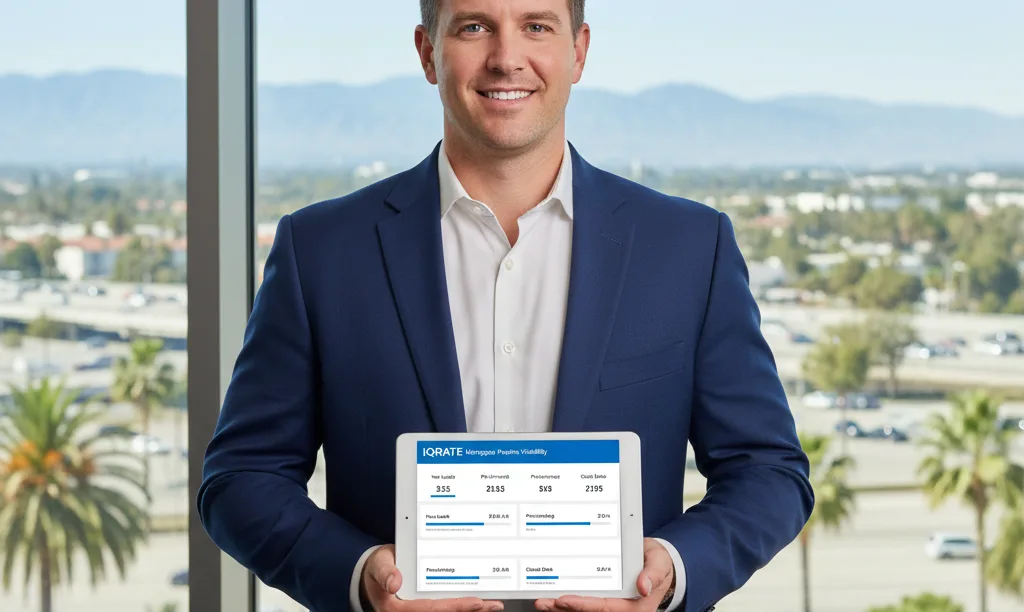
This is the command center. A shared, real-time dashboard allows the team lead and agents to see the status of every single client in the mortgage pipeline. You can instantly check if appraisals have been ordered, conditions have been cleared, and documents are ready for signing. This eliminates the need for constant 'just checking in' emails and calls, freeing up time for income-producing activities.
Implementing Standardized Workflows and Communication
Every client, whether they are buying a starter condo in Anaheim or a luxury home in a gated community, receives the same high level of service. The mortgage OS ensures a consistent process from application to funding. This includes automated milestone updates, standardized email templates, and a predictable timeline of events. The client experience becomes a reliable asset of your brand.
Leveraging Performance Analytics and Reporting
An effective mortgage OS provides data. You can track critical metrics that reveal the health of your partnership and your business. This includes average time-to-close, pre-approval-to-application conversion rates, and client satisfaction scores. This data empowers you to make informed decisions and hold your lending partner accountable.
How a Shared Dashboard Reduces Your Administrative Workload
The administrative burden of managing transactions is a major drain on a team lead's time. A shared pipeline dashboard is the single most effective tool for reducing this workload. It shifts the entire team from a reactive, manual follow-up model to a proactive, transparent system.
Consider the daily workflow without a dashboard:
- An agent asks you for an update on their client's loan.
- You don't know, so you email or text the LO.
- You wait for a response, which may take hours.
- The LO replies with a brief update: 'Appraisal ordered.'
- You relay this information back to your agent.
This multi-step process, multiplied across dozens of active files, consumes a significant portion of your day. Now, consider the workflow with a shared dashboard:
- An agent asks for an update on their client's loan for a property in Santa Ana.
- You both log into the shared dashboard. You see the appraisal was ordered yesterday, the inspection is scheduled for tomorrow at 10 AM, and the contact information for the appraiser is listed.
There is no back-and-forth, no waiting, and no ambiguity. This transparency empowers agents to answer client questions instantly and allows you, the team lead, to get a 30,000-foot view of the entire business in minutes. You can spot potential delays before they become problems and allocate resources effectively, all without a single follow-up call.
What Performance Metrics to Track With a Lending Partner
'What gets measured gets managed.' A true mortgage OS partnership is built on data and mutual accountability. You should be tracking specific Key Performance Indicators (KPIs) to ensure the system is working and driving your team forward. Insist on a monthly or quarterly business review with your lending partner to go over these numbers.

Key metrics to track include:
- Time from Application to 'Clear to Close' (CTC): What is the average number of days it takes for a file to be fully approved? Your goal in a competitive market like Orange County should be under 21 days.
- Pre-Approval to Application Rate: Of all the pre-approvals issued for your clients, what percentage convert into a live loan application? A low rate might indicate the pre-approvals aren't strong enough to win offers.
- Contingency Timeline Adherence: What percentage of loan and appraisal contingencies are met on or before the contract deadline? A rate below 98% is a major red flag.
- Communication Responsiveness: Track average response times for critical requests, such as offer-specific pre-approval letters or answers to underwriting questions.
- Client Satisfaction Score: After closing, a simple survey should be sent to every client. Measuring their satisfaction with the mortgage process provides direct feedback on your lending partner's performance and its reflection on your brand.
How Standardized Communication Protocols Protect Your Team’s Brand
Your brand is your most valuable asset. It's the promise of a specific experience that you make to every client. Standardized communication protocols ensure you deliver on that promise, every single time.
When your lending partner uses a mortgage OS, they adopt your team's communication standards. This means:
- Consistent Tone and Voice: All automated and manual communications with the client, from the initial 'Welcome' email to the final 'Congratulations on your funding' message, reflect your team's brand voice.
- Scheduled Updates: The system can mandate specific updates. For example, every Tuesday, the client and the agent automatically receive a detailed status update. This proactive communication prevents anxiety and builds trust.
- Co-Branded Materials: All key documents and communications are co-branded with your team's logo and the lender's. This presents a unified front to the client, reinforcing the idea that they are being serviced by a cohesive team, not two separate entities.
This level of consistency is impossible when your agents use different LOs. By standardizing communication, you ensure that a client buying in Anaheim with a new agent has the exact same positive, professional, and reassuring experience as a client buying in Santa Ana with your top producer. That is how you build a powerful, scalable brand reputation.
How a Mortgage OS Helps Onboard New Team Agents
Scaling a team requires an efficient and effective onboarding process. A mortgage OS is a powerful tool for accelerating a new agent's productivity and integrating them into your team's culture of excellence.
Without a system, a new agent is left to fend for themselves on the financing side. They might bring a relationship with a lender you don't know or trust, or they might struggle to find a reliable one. This introduces risk and inconsistency right from the start.
With a mortgage OS, the process is simple:
- Plug and Play: On day one, the new agent is introduced to the team's dedicated lending partner and given access to the shared dashboard.
- Immediate Confidence: They don't have to guess who to call for a pre-approval. They have a proven, reliable system to plug into, allowing them to focus on learning your sales process and generating leads.
- Built-in Mentorship: The transparent pipeline allows you and senior agents to oversee their first few transactions, offering guidance and ensuring compliance with the team's standards.
This systematic approach reduces the new agent's ramp-up time significantly. They can write their first offer with confidence, knowing the mortgage process is already handled by a trusted, integrated partner. It ensures your quality standards are met from their very first client.
What Is the Process for Integrating Your CRM with a Lender’s System?
For teams seeking the highest level of efficiency, integrating your Customer Relationship Management (CRM) software (like Follow Up Boss, Chime, or Sierra Interactive) with the lender's mortgage OS is the ultimate goal. This creates a seamless flow of information, eliminating nearly all manual data entry for loan statuses.
While the technical details vary, the integration process generally follows these steps:
- Discovery and API Review: The lender's tech team and your CRM provider meet to discuss goals. They determine if a direct API (Application Programming Interface) connection is possible. The API acts as a secure bridge that allows the two systems to talk to each other.
- Data Field Mapping: You decide exactly what information you want to sync. For example, you might map the 'Loan Status' field in the lender's system to a custom field called 'Mortgage Stage' in your CRM. You could sync key dates like 'Appraisal Due' and 'Closing Date'.
- Sandbox Development and Testing: The developers build the connection in a safe, non-public 'sandbox' environment. They test the data flow rigorously to ensure accuracy and reliability before it goes live.
- Deployment and Team Training: Once testing is complete, the integration is activated. Your team receives training on how to use the new, synced data within the CRM. Now, when the lender updates a loan status to 'Clear to Close' in their system, it automatically updates in your CRM, potentially triggering an automated congratulatory email to the client from your system. If inconsistent lending processes are holding your team back, it's time to explore a more systematic approach. A unified mortgage OS can provide the control and predictability you need to scale confidently in the competitive Southern California market.
Stop managing chaos and start building a scalable business. Implement a true mortgage operating system for your team. Apply now to unify your lending process and unlock your team’s full potential.
Author Bio
David Ghazaryan is the expert mortgage strategist and founder behind iQRATE Mortgages. With a mission to fund home loans that traditional banks won't touch, David specializes in helping clients with unique financial situations, including those recovering from foreclosure or bankruptcy. He expertly crafts smart, strategic, and stress-free mortgages by leveraging a vast network of over 100 lenders to secure competitive rates for investors and homebuyers alike. Praised for exceptional customer service, David has helped hundreds of families with a 97% satisfaction rate, guiding them to the mortgage they deserve.
References









