


Lender Rules for Using Cryptocurrency as a Loan Asset
When securing a jumbo loan in tech-centric hubs like Miami or Austin, lenders view cryptocurrency not as currency, but as an asset, similar to stocks or mutual funds. They will not accept Bitcoin, Ethereum, or any other digital asset directly. The core requirement is that all funds for your down payment and closing costs must be converted into U.S. dollars and held in a verifiable bank account.
Underwriters for jumbo loans adhere to strict guidelines that often exceed conventional loan standards. Their primary concerns are the stability and legitimacy of your funds. Because of crypto's anonymous and volatile nature, lenders demand a crystal-clear paper trail to comply with Anti-Money Laundering (AML) regulations and to verify that the funds are genuinely yours and not a disguised loan from another party.
Key Lender Stipulations
- Full Conversion to USD: All crypto must be sold and the proceeds deposited into a U.S. bank account.
- Sourced and Seasoned: You must prove the origin of the funds used to buy the crypto and let the liquidated cash 'season' in your account.
- No Direct Transfers: Lenders will reject any attempt to pay a down payment directly from a crypto exchange like Coinbase, Binance, or Kraken.
- Verifiable Paper Trail: Every step, from the initial crypto purchase to its sale and transfer to your bank, must be meticulously documented.
Crypto Fund Seasoning Requirements
'Seasoning' is the period lenders require funds to sit in your bank account before they can be used for a mortgage transaction. For most mortgage types, including jumbo loans, the standard seasoning period is 60 days. (The data, information, or policy mentioned here may vary over time.) This means the full, liquidated cash amount from your crypto sale must be in your checking or savings account for at least two full monthly statement cycles before you close on your home.
Why is this necessary?
- Verify Stability: It shows that the funds are stable and accessible, not just a temporary deposit that might disappear after closing.
- Confirm Ownership: It helps prove the money is yours and not a last-minute, undocumented loan from a friend or family member, which would need to be disclosed as a gift and could affect your debt-to-income ratio.
- Meet Regulatory Compliance: It satisfies federal regulations designed to prevent money laundering and financial fraud.
For example, if you plan to buy a luxury condo in Boca Raton and need $400,000 for the down payment from your crypto portfolio, you should liquidate the assets and deposit that $400,000 into your bank account at least three months before your target closing date to be safe. This ensures you have two clean bank statements to provide the underwriter.
Documenting the Source of Your Crypto Funds
Creating an unimpeachable paper trail is the most critical step in this process. You need to prove the entire lifecycle of your funds. The underwriter must be able to connect the dots from the very beginning to the final cash deposit. Failure to provide complete documentation is the number one reason crypto-sourced down payments are rejected.
Essential Documentation Checklist
- Proof of Initial Purchase: Bank or wire transfer statements showing the funds leaving your account to purchase the cryptocurrency on an exchange.
- Complete Transaction History: A full, unabridged transaction ledger from every exchange you used. This should show the date, amount, and type of crypto bought or sold. Most exchanges allow you to download this as a CSV or PDF file.
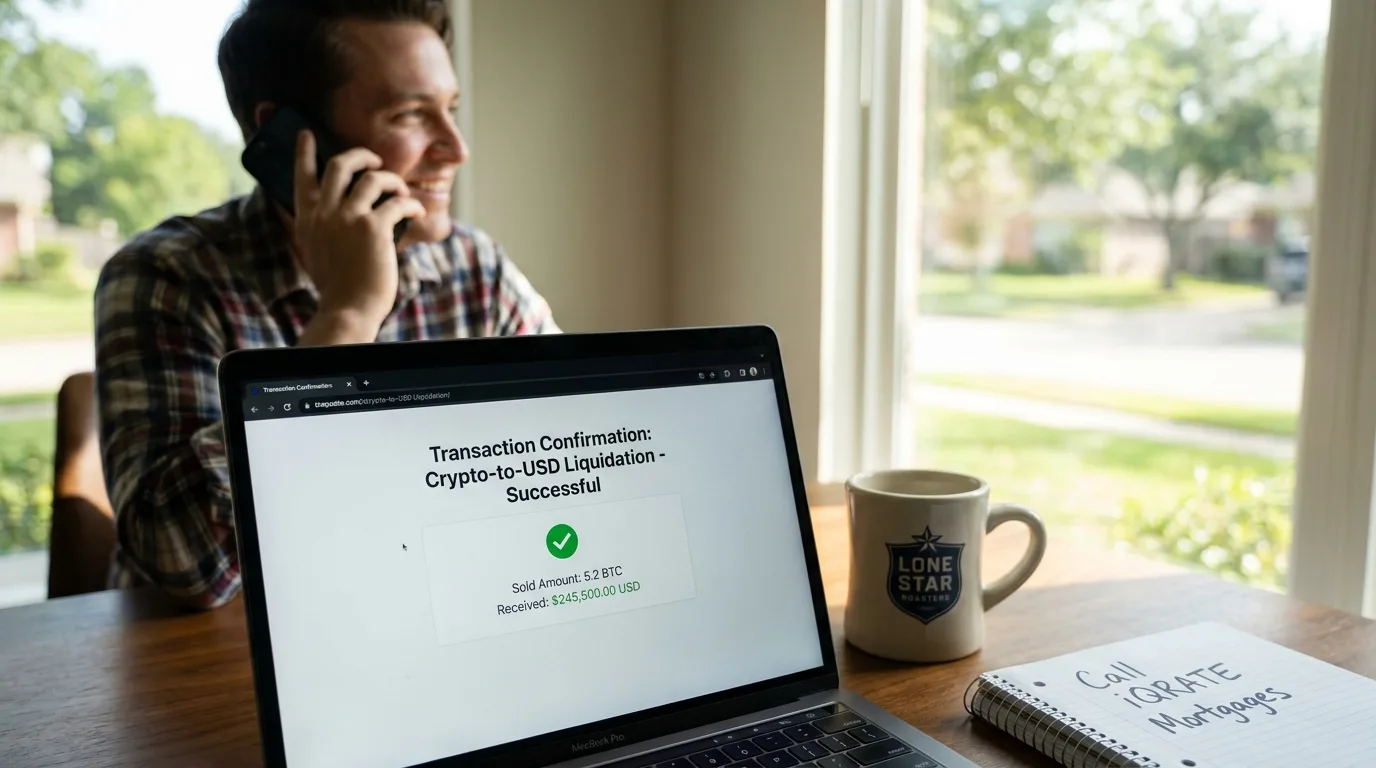
- Liquidation Transaction Record: A clear record of the final sale of your crypto into U.S. dollars.
- Exchange-to-Bank Transfer Receipt: A confirmation showing the liquidated U.S. dollars being transferred from the exchange to your personal bank account.
- Two Months of Bank Statements: The two most recent, consecutive bank statements showing the liquidated funds sitting in your account for the entire 60-day period. The deposit from the exchange must be clearly visible on the first statement.
When to Liquidate Crypto for a Miami Mortgage Process
Timing your liquidation is a strategic decision that balances market risk with mortgage process efficiency. The overwhelming recommendation from mortgage professionals is to liquidate all necessary crypto assets before you apply for a mortgage.
Liquidating Before Application (Recommended)
- Pros: This creates a clean, simple financial picture for the lender. By the time you apply, the money is already seasoned, appearing as simple cash in the bank. It removes all volatility risk during the sensitive underwriting period. If you're eyeing a property in a competitive market like Miami, this readiness makes your offer stronger.
- Cons: You may miss out on potential market gains if your crypto's value increases while you're house hunting.
Liquidating During Application (High-Risk)
- Pros: Allows you to potentially benefit from last-minute market upswings.
- Cons: This is extremely risky and not advised. A large, unseasoned deposit appearing in your account mid-process will trigger immediate scrutiny from the underwriter, potentially delaying or even derailing your closing. Any significant drop in your crypto's value could mean you no longer have sufficient funds for the down payment, causing the entire deal to collapse.
Documenting Transactions from Multiple Crypto Exchanges
Many crypto investors use multiple exchanges to trade different assets. When preparing for a mortgage, you must consolidate the paper trail from all of them. An underwriter will not piece together the history for you.
Steps to Consolidate Your History
- Download Ledgers: Get the complete transaction history from every exchange (e.g., Coinbase, Kraken, Gemini, etc.).
- Create a Summary Sheet: It's helpful to create a simple spreadsheet that summarizes the journey of your funds. For example: 'Transferred $20,000 from Bank of America to Coinbase on 01/15/2021. Purchased 0.5 BTC. Transferred 0.5 BTC to Kraken on 06/20/2022. Sold 0.5 BTC for $150,000 on Kraken on 03/10/2024. Transferred $150,000 to Bank of America on 03/11/2024.'
- Provide All Supporting Documents: Submit the summary sheet along with the official, detailed ledgers from each exchange. This proactive organization demonstrates transparency and makes the underwriter's job easier, leading to a smoother process.
Direct Down Payments From a Crypto Exchange
To be perfectly clear: lenders will not accept a down payment directly from any crypto exchange. There are zero exceptions to this rule. The funds must be transferred to a traditional, FDIC-insured U.S. financial institution under your name. The title company or closing attorney handling the transaction will only accept funds via wire or certified check from your personal bank account. Any attempt to wire funds from an account titled 'Coinbase' or another exchange will be rejected and could jeopardize your loan approval.
Protecting Your Austin Jumbo Loan from Market Volatility
The biggest risk of using crypto for a down payment is market volatility. If you need exactly $300,000 for your down payment on a home in Austin and your crypto portfolio is worth $310,000, you are exposed to immense risk. A minor market dip could wipe out your ability to close.

To protect yourself, you should liquidate more than you need. A safe buffer is typically 15-25% above the total cash required for your down payment and closing costs.
- Example:
- Jumbo Loan Amount: $1,200,000
- 20% Down Payment: $240,000
- Estimated Closing Costs: $30,000
- Total Cash Needed: $270,000
- Recommended Liquidation Amount (with 20% buffer): $270,000 x 1.20 = $324,000
Liquidating this higher amount ensures that even if you face unexpected costs or need to show additional cash reserves, you are well-prepared. (The data, information, or policy mentioned here may vary over time.) The excess funds can be kept as a post-closing emergency fund or reinvested after you've successfully purchased your home.
Tax Implications of Crypto Liquidation
Selling cryptocurrency is a taxable event. The IRS treats virtual currencies as property, meaning you are subject to capital gains tax on any profit you realize. This is a crucial financial consideration that must be factored into your budget.
- Short-Term Capital Gains: If you held the crypto for one year or less, the profit is taxed at your ordinary income tax rate, which is the highest possible rate.
- Long-Term Capital Gains: If you held the crypto for more than one year, the profit is taxed at the more favorable long-term capital gains rates (0%, 15%, or 20%, depending on your income). (The data, information, or policy mentioned here may vary over time.)
Failing to account for taxes can be a costly mistake. For instance, if you have a $200,000 capital gain from selling crypto for your down payment and fall into the 15% long-term bracket, you will owe the IRS $30,000. It is essential to consult with a qualified tax professional or CPA to understand your exact liability and set aside the necessary funds before you spend everything on the house. Using crypto for a down payment requires careful planning and expert guidance. If you're considering this path for a jumbo loan in Florida or Texas, working with a mortgage professional who understands the documentation process is key to a successful and stress-free closing.
The path to using digital assets for a mortgage requires careful planning and expert guidance. If you're ready to see how your crypto portfolio can open the door to your next home, you can apply now to start the conversation.
Author Bio
David Ghazaryan is the expert mortgage strategist and founder behind iQRATE Mortgages. With a mission to fund home loans that traditional banks won't touch, David specializes in helping clients with unique financial situations, including those recovering from foreclosure or bankruptcy. He expertly crafts smart, strategic, and stress-free mortgages by leveraging a vast network of over 100 lenders to secure competitive rates for investors and homebuyers alike. Praised for exceptional customer service, David has helped hundreds of families with a 97% satisfaction rate, guiding them to the mortgage they deserve.
References









