


Why Sellers Resist Repair Requests on Valid Inspection Findings
After a home inspection, it’s common for buyers to present a list of requested repairs. Yet, many sellers in competitive markets like Austin push back, even when the findings are legitimate. Their resistance isn't always about the money; it’s about risk mitigation. A seller's primary fear is the deal falling through, especially due to financing.
Imagine a seller in Austin who accepts an offer contingent on financing. They agree to $3,000 in electrical repairs. They take their home off the market, complete the work, and then, two weeks later, the buyer's loan is denied. The seller is now out the cost of repairs, has lost a month of market time, and must start the entire process over. This scenario is a seller’s nightmare and the primary reason they hesitate to agree to repairs for a buyer whose financial backing is uncertain. They are weighing the cost of the repair against the much larger potential cost of a failed transaction.
How a Standard Pre-Approval Letter Weakens Your Negotiation Position
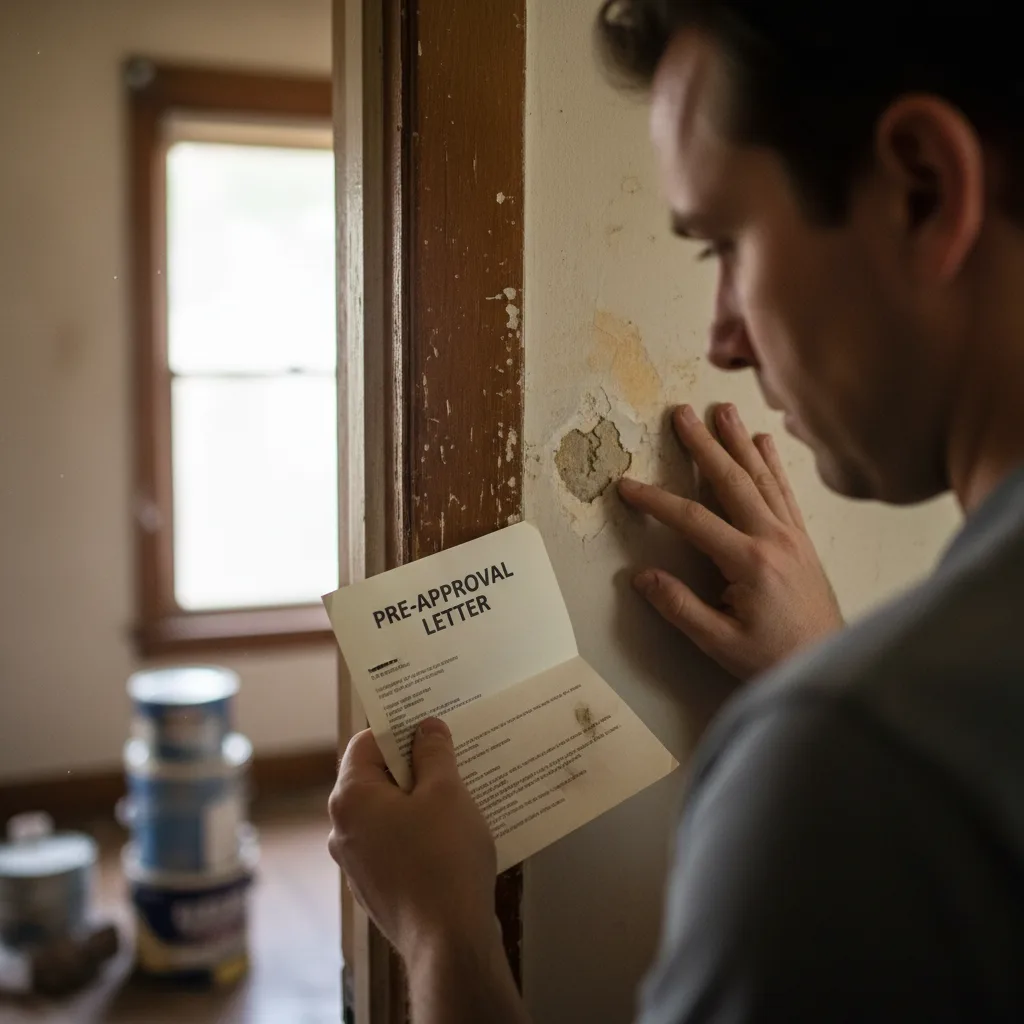
A standard pre-approval letter is a common first step, but it’s far from a binding commitment. Most pre-approvals are based on a superficial review of a buyer's stated income and a basic credit check. They are filled with conditions and disclaimers. Experienced listing agents and sellers know this. They see a pre-approval letter not as a guarantee, but as a 'maybe'.
When you submit an offer with a standard pre-approval and a list of repair requests, you are asking the seller to take a leap of faith. You're asking them to spend money and time on a buyer who has not been fully vetted by their lender. In a multi-offer situation, a seller will almost always favor the offer that presents the least amount of risk. A standard pre-approval, combined with repair demands, signals potential hurdles and uncertainty, placing your offer at a distinct disadvantage.
The 'Financing Guarantee' and Its Impact on Seller Psychology
This is where a Certified Buyer Program or a 'Financing Guarantee' changes the entire dynamic.(The data, information, or policy mentioned here may vary over time.) Unlike a pre-approval, a certified approval means the buyer's loan application has already been through the full underwriting process. The lender has verified every piece of documentation: pay stubs, tax returns, bank statements, and employment history. The only remaining conditions are typically the property appraisal and a clear title report.
Presenting an offer with this level of financial certainty fundamentally alters the seller's psychology. You are no longer asking them to gamble. You are presenting them with a done deal. Their fear of the financing falling apart vanishes. This confidence gives you immense leverage.

When a seller in San Antonio receives two similar offers, but one is from a certified buyer, their decision becomes simple. They know the certified buyer will close. Suddenly, your request for a $5,000 credit to address foundation issues isn’t seen as a nuisance; it's a manageable closing detail on a transaction that is virtually guaranteed.
How to Quantify the Value of Repair Credits Won for Your Buyer
Winning repair negotiations translates into tangible financial benefits for your buyer. The value isn't just about the dollar amount of the repair; it's about preserving the buyer's cash reserves and reducing their immediate financial stress.
Example: The Leaky Roof
Let's say a home inspection on a property in San Antonio reveals the roof needs significant repairs estimated at $7,000.
Scenario A (Standard Pre-Approval): The buyer requests a $7,000 credit. The seller, worried the deal might collapse anyway, counters with a $2,000 credit or refuses altogether. The buyer now has to find an extra $5,000 to $7,000 in cash to fix the roof immediately after closing, a time when their funds are already tight.
Scenario B (Certified Buyer): The buyer presents their certified approval, demonstrating their loan is secure. They request the $7,000 credit. The seller, confident in the closing, sees this as a reasonable request to finalize a sure thing. They agree to the full credit.
The value won is clear: your buyer keeps $7,000 in their bank account that they would have otherwise spent out-of-pocket. This money can be used for moving expenses, furniture, or to bolster their emergency fund. You have directly improved their financial position from day one of homeownership.
The Loan Documentation That Proves Your Buyer is a Safe Bet
To effectively leverage your buyer's financial strength, you need to understand and present the right documentation. The key is to show that the loan has moved beyond preliminary stages and has been fully underwritten.
- The Certified Approval Letter: This is the cornerstone. Unlike a pre-approval, this letter should explicitly state that the borrower's income, assets, and credit have been verified and approved by an underwriter. It will list the only remaining conditions, which are property-specific (e.g., appraisal, title, and homeowners insurance).
- Proof of Funds: While the approval letter confirms the loan, providing redacted bank statements showing sufficient funds for the down payment and closing costs adds another layer of confidence.
- Lender Introduction: The loan officer should be prepared to call the listing agent to personally vouch for the buyer's qualifications and the thoroughness of the underwriting review.
This package transforms the buyer from just another applicant into a 'cash equivalent' buyer in the eyes of the seller.
Presenting a Buyer's Financial Strength to the Listing Agent Effectively
Having a certified buyer is one thing; communicating that advantage is another. Your presentation strategy is crucial for maximizing your leverage.
- Lead with Strength: Submit the certified approval letter along with the initial offer. Don't wait until negotiations begin. This frames your offer as superior from the start.
- Facilitate a Lender-to-Agent Call: Have your loan officer proactively contact the listing agent. The loan officer can explain, 'David's file has already been fully underwritten and approved. We are simply waiting for an appraisal and title. We can close in as little as 21 days.'(The data, information, or policy mentioned here may vary over time.) This direct communication from the financial authority is incredibly powerful.
- Frame Repair Requests with Confidence: When you submit your repair request or credit addendum, you're not asking from a position of hope. You can frame it as, 'We have a guaranteed closing on our end. To finalize this smooth transaction, we need to address these specific inspection items valued at $X,XXX.' The subtext is clear: the financing is solid, so let's resolve these property issues and get to the closing table.
Can This Strategy Help Secure a Price Reduction Instead of Just Repairs?
Absolutely. The same leverage that wins repair credits can be used to negotiate the purchase price. This is particularly effective when a seller is either unwilling or unable to coordinate repairs themselves.
Consider a hot property in Austin with multiple offers. The inspection reveals a need for $10,000 in HVAC replacement. Many sellers would rather not deal with the hassle of hiring contractors before closing.
As a certified buyer, you can offer them a clean solution: 'Instead of managing the HVAC replacement, we are prepared to close this deal with certainty if you agree to a $10,000 price reduction.'
For the seller, this is often a more attractive option. They get the same net proceeds without any of the logistical headaches. For the buyer, a price reduction lowers their loan amount and monthly mortgage payment for the life of the loan, which can be even more valuable long-term than a one-time repair credit.
How Winning on Repairs Solidifies Your Client Relationship for Future Referrals
Real estate is a relationship business built on trust and results. When you successfully navigate repair negotiations and save your client thousands of dollars, you do more than just close a deal. You become their trusted advisor and advocate.
Clients remember the professionals who demonstrably protected their financial interests. By using a sophisticated financing strategy to win concessions, you show expertise that goes beyond simply finding a house. This exceptional service creates fiercely loyal clients who will not only return to you for their next transaction but will also become your most enthusiastic source of referrals. They will share their success story with friends, family, and colleagues, building your reputation as a strategic agent who delivers real, measurable value.
Ready to turn your offer into an undeniable asset? A Certified Buyer Program gives you the leverage to win at the negotiation table. Apply now to structure your financing and secure the best possible deal on your new home.
Author Bio
David Ghazaryan is the expert mortgage strategist and founder behind iQRATE Mortgages. With a mission to fund home loans that traditional banks won't touch, David specializes in helping clients with unique financial situations, including those recovering from foreclosure or bankruptcy. He expertly crafts smart, strategic, and stress-free mortgages by leveraging a vast network of over 100 lenders to secure competitive rates for investors and homebuyers alike. Praised for exceptional customer service, David has helped hundreds of families with a 97% satisfaction rate, guiding them to the mortgage they deserve.
References
Consumer Financial Protection Bureau - The home inspection process
U.S. Department of Housing and Urban Development - For Your Protection: Get a Home Inspection









