


How Lenders Calculate DSCR on Partially Rented Property
A Debt Service Coverage Ratio (DSCR) loan is an investor's best tool for financing rental properties because it qualifies based on the property's cash flow, not personal income. The standard formula is straightforward: Gross Annual Rental Income / Annual Mortgage Debt. While lenders traditionally look for a ratio of 1.25 or higher, many now offer programs with ratios of 1.0 or even lower, meaning the property generates enough income to cover its mortgage costs. (The data, information, or policy mentioned here may vary over time.)
However, this calculation gets complex when one unit of a duplex is vacant, especially if it needs repairs. Lenders cannot use the income from a non-existent lease. Instead, they must rely on a projection of future rent, which introduces risk they need to mitigate. For an investor targeting a duplex in Anaheim, the lender’s calculation will use a combination of actual and projected income.
Here’s how it works:
- Actual Income: The rent from the currently occupied unit is used as a baseline. If Unit A is leased for $2,800 per month, the lender will use that figure ($33,600 annually).
- Projected Income: For the vacant Unit B, the lender will order an appraisal that includes a Small Residential Income Property Appraisal Report (Form 1025). This report, completed by a licensed appraiser, determines the fair market rent for the vacant unit based on comparable rental properties in the immediate area.
- Combined Calculation: The lender adds the actual rent from Unit A to the appraiser's projected market rent for Unit B to arrive at the total gross income used for qualification.
Example: You're buying a duplex in Anaheim.
- Unit A is rented for $2,800/month.
- Unit B is vacant.
- The appraiser determines Unit B’s market rent is $2,700/month once repaired.
- Your total projected monthly income is $2,800 + $2,700 = $5,500.
- Your proposed monthly mortgage payment (PITI) is $4,200.
- Your DSCR would be $5,500 / $4,200 = 1.31, which meets the typical lender requirement.
Understanding the Pro Forma Rental Income Schedule
A 'pro forma' is a financial projection based on anticipated future conditions rather than historical data. In the context of a DSCR loan for a property with a vacant unit, the pro forma rental income schedule is the key document that makes the deal possible. This is not a guess; it's a formal assessment conducted by the appraiser and presented on official forms, such as the rent schedule within an appraisal report.
This schedule is used to establish the 'as-stabilized' or 'as-rented' income potential of the property. The appraiser analyzes several factors to determine a credible market rent for the vacant unit:
- Comparable Rentals: They find at least three similar rental properties in the same Irvine neighborhood that have recently been leased.
- Property Characteristics: They adjust the rent based on differences in square footage, bedroom/bathroom count, condition, and amenities (e.g., parking, in-unit laundry, yard).
- Market Trends: The appraiser considers local vacancy rates and demand, ensuring the projected rent is realistic for the current market.
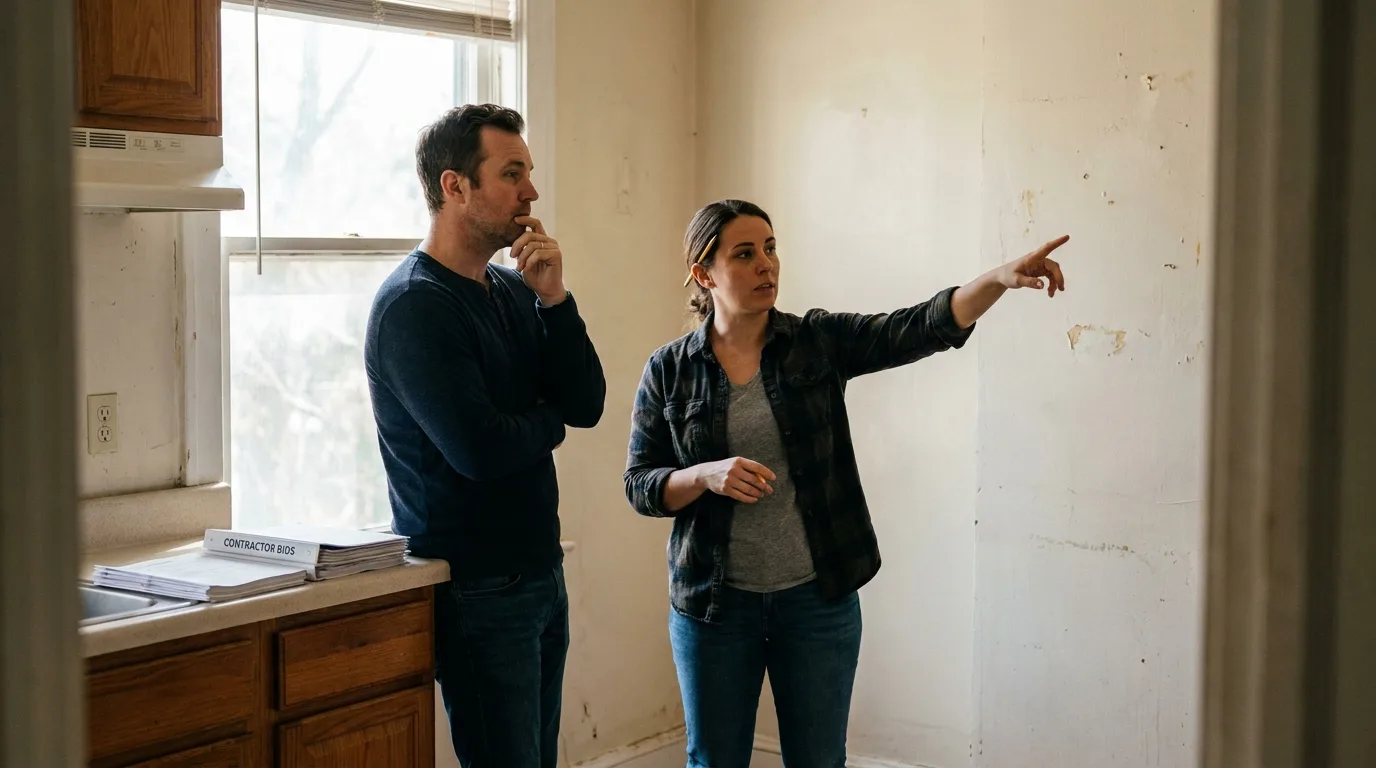
The lender treats this pro forma income as the official figure for the vacant unit. It allows them to underwrite the loan based on the property's full potential once it's fully operational and generating income from both units. Without this formal schedule, the loan would be denied, as the income from the single rented unit would almost certainly be insufficient to meet the DSCR requirement.
Do I Need to Provide Contractor Bids for the Vacant Unit Repairs?
Yes, absolutely. If the vacant unit requires repairs to become rent-ready, lenders will almost always require detailed contractor bids. A simple estimate on a napkin won't suffice. The lender needs to see a professional, itemized Scope of Work (SOW) from a licensed and insured contractor.
This requirement serves two main purposes:
- Confirms Your Plan: It proves to the lender that you have a concrete, actionable plan to bring the unit online and start generating the projected income. It shows you are a serious investor who has done their due diligence.
- Verifies Your Budget: The bids confirm that you have accurately budgeted for the renovation. Lenders want to avoid a scenario where you run out of money halfway through the repairs, leaving them with a loan on a partially non-performing asset.
A complete bid package should include:
- A line-by-line breakdown of all labor and material costs.
- The contractor's official letterhead with their contact information and license number.
- A projected timeline for completion.
Providing this information upfront demonstrates professionalism and significantly strengthens your loan application.
Will the Lender Require Higher Cash Reserves for This Type of DSCR Loan?
Yes, you should expect a higher cash reserve requirement. For a standard, fully rented investment property, a DSCR lender might require you to have 6 months of the total mortgage payment (PITI) in a liquid account after closing. (The data, information, or policy mentioned here may vary over time.) For a partially vacant property, especially one needing renovations, lenders will increase this requirement to mitigate their risk.
Expect the lender to ask for 9 to 12 months of PITI in reserves. (The data, information, or policy mentioned here may vary over time.) Furthermore, they will want to see that you have the full amount of the renovation budget set aside in a separate account, in addition to the PITI reserves.
Example:
- Proposed PITI: $4,200/month.
- Renovation Bid: $25,000.
- Standard Reserve (6 months): $25,200.
- Required Reserve for this loan (12 months): $50,400.
- Total liquid funds needed post-closing: $50,400 (reserves) + $25,000 (renovation) = $75,400.

This extra liquidity gives the lender confidence that you can cover the mortgage payments during the renovation period and handle any unexpected delays or costs without defaulting on the loan before the second unit's income stream is realized.
Can I Use a DSCR Renovation Loan to Fund Both the Purchase and Repairs?
Yes, this is an excellent strategy and a specific product offered by some DSCR lenders. A DSCR renovation loan combines the purchase financing and the repair budget into a single loan. This is an alternative to bringing your own cash to fund the renovations.
Here’s how it generally works:
- Loan Amount: The loan is based on the 'After Repair Value' (ARV) of the property. An appraiser will determine what the duplex will be worth after your planned renovations are complete.
- Funding: At closing, the loan funds the purchase of the property. The renovation funds are held in an escrow account by the lender.
- Draw Schedule: As you complete phases of the renovation, you request 'draws' from the escrow account to pay your contractors. The lender will typically send an inspector to verify the work has been completed before releasing funds.
This option is highly beneficial as it allows you to conserve your personal capital. However, these loans may have slightly higher interest rates or origination fees than a standard DSCR loan, and they involve more administrative oversight due to the draw process.
How Does the Appraiser Determine the 'As-Rented' Value in Anaheim?
Determining the 'as-rented' or 'as-stabilized' value is a critical part of the appraisal for this loan type. The appraiser in Anaheim will perform a dual analysis. First, they determine the 'as-is' value based on the property's current condition. Second, they determine the future value based on the successful completion of your proposed renovations.
To establish the 'as-rented' value, the appraiser will:
- Review the Scope of Work: They analyze your contractor bids and renovation plans to understand the quality and extent of the planned upgrades.
- Find 'After Repair' Comps: They will search for recently sold duplexes in the same Anaheim area that are in the condition your property will be in after repairs. This is different from finding comps for the property in its current state.
- Adjust for Differences: They will make value adjustments based on features, square footage, and location, comparing your future property to the already-renovated comps.
The final appraisal report will clearly state both the 'as-is' and 'as-rented' values. The lender will use the lesser of the purchase price or the 'as-is' value to determine the initial loan-to-value (LTV), but the 'as-rented' value is crucial for approving the renovation budget and the overall loan structure.
What Are the Risks of Using Projected Rent for Qualification in Irvine?
While using projected rent is a powerful tool, it's not without risks, particularly in a dynamic and high-cost market like Irvine. Investors must be aware of these potential pitfalls.
- Appraisal Shortfall: The appraiser's opinion of market rent might be lower than your own estimate. If the appraiser projects a rent of $3,200 but you needed $3,500 for the DSCR to work, the loan will be denied. It is critical to run conservative numbers when analyzing a deal.
- Market Fluctuations: The rental market can change. Between the time of your appraisal and the completion of your renovations (which could take months), local rents could soften. This would mean your actual rental income is lower than projected, tightening your cash flow.
- Renovation Delays: Contractor issues, permit delays, or discovering unforeseen problems can extend your renovation timeline. Every month the unit sits vacant is a month you are paying the full mortgage without the full projected income, draining your cash reserves.
- Vacancy Period: Even after the unit is rent-ready, it may take 30-60 days to find a qualified tenant. This leasing-up period needs to be factored into your financial planning.
Are There Alternatives to DSCR Loans for This Specific Scenario?
If a DSCR loan doesn't fit your situation, there are other financing avenues to explore for purchasing a partially vacant duplex:
- Hard Money Loan: This is a short-term, asset-based loan with higher interest rates and points. (The data, information, or policy mentioned here may vary over time.) It's an excellent tool for acquiring a property quickly, funding the renovation, and then refinancing into a long-term, lower-rate DSCR loan once both units are leased and stabilized. This is a core component of the BRRRR (Buy, Rehab, Rent, Refinance, Repeat) strategy.
- Conventional Investment Property Loan: If you have strong personal income (W-2s, tax returns) and a low debt-to-income ratio, a conventional loan from a bank may offer a better interest rate. However, the underwriting process is much more stringent regarding personal finances.
- Portfolio Loan: If you already own other investment properties, you may be able to secure a portfolio loan from a local bank or credit union. These lenders can be more flexible, as they look at the performance of your entire real estate portfolio rather than just one property. Navigating DSCR loans for properties with vacancies requires a strategic approach. If you're analyzing a deal in California, let's discuss how to structure your financing to ensure a smooth closing and maximize your investment's potential.
Ready to see how a DSCR loan can work for your partially-rented investment property? Take the next step and apply now to get a personalized assessment of your financing options.
Author Bio
David Ghazaryan is the expert mortgage strategist and founder behind iQRATE Mortgages. With a mission to fund home loans that traditional banks won't touch, David specializes in helping clients with unique financial situations, including those recovering from foreclosure or bankruptcy. He expertly crafts smart, strategic, and stress-free mortgages by leveraging a vast network of over 100 lenders to secure competitive rates for investors and homebuyers alike. Praised for exceptional customer service, David has helped hundreds of families with a 97% satisfaction rate, guiding them to the mortgage they deserve.
References
Fannie Mae - Single-Family Comparable Rent Schedule (Form 1007)
Consumer Financial Protection Bureau - Know Your Rights When You Rent









