


How Lenders Determine Future Rent on a Vacant Reno Property
A vacant, distressed property generates zero income, which seems like a non-starter for a loan based on cash flow. However, Debt Service Coverage Ratio (DSCR) lenders solve this problem by looking at a property's potential, not its current state. The key to this process is a specialized appraisal report that includes a Single-Family Comparable Rent Schedule, also known as Form 1007.
Here’s how it works for an investment property in Reno or Sparks:
- Hiring a Certified Appraiser: The lender hires an appraiser familiar with the local rental market, such as the neighborhoods around the University of Nevada, Reno, or the growing industrial areas in Sparks.
- Analyzing Comparable Rentals: The appraiser does not look at what the distressed property could rent for today. Instead, they identify 3-5 similar properties in the immediate area that are already renovated and currently rented. They analyze the rental rates, square footage, bedroom/bathroom count, and amenities of these comparable properties.
- Projecting Market Rent: Based on this data, the appraiser provides a professional opinion of the subject property’s fair market rent after the proposed renovations are complete. This figure is what the lender uses in their DSCR calculation.
For example, you find a fixer-upper in Sparks for $350,000 that needs $50,000 in renovations. In its current condition, it is unlivable. The appraiser, using Form 1007, finds similar renovated homes in the area renting for $2,800 per month. The lender will use this projected $2,800 figure to underwrite your loan, even though the property is currently vacant.
What Is an 'As-Repaired' Value Appraisal and How Does It Work?
The 'as-repaired' value (ARV) appraisal is the second critical component of financing a fixer-upper. It determines the future market value of the property once all renovations are finished. This is crucial because lenders base their loan-to-value (LTV) calculations on this future, higher value, allowing you to borrow more than if they used the current 'as-is' value.
The ARV Appraisal Process
The process is detailed and requires clear documentation from the investor:
- Scope of Work: You must provide the appraiser with a detailed list of all planned repairs and upgrades. This includes everything from the cost of materials and labor for a new kitchen to the specific model of appliances you plan to install. The more detailed your plan, the more accurate the ARV will be.
- Two-Value Assessment: The appraiser visits the property and assesses its current condition. They then use your scope of work and their market knowledge to determine two distinct values:
- 'As-Is' Value: The property's value in its current, distressed state.
- 'As-Repaired' Value: The projected market value after all renovations on your list are successfully completed.
- Lender's Calculation: The lender uses the ARV to determine your loan amount. For instance, if the 'as-is' value is $350,000 but the ARV is $450,000 after renovations, the lender might offer you a loan of 75% of the ARV, which would be $337,500. This is significantly more than 75% of the 'as-is' value ($262,500).

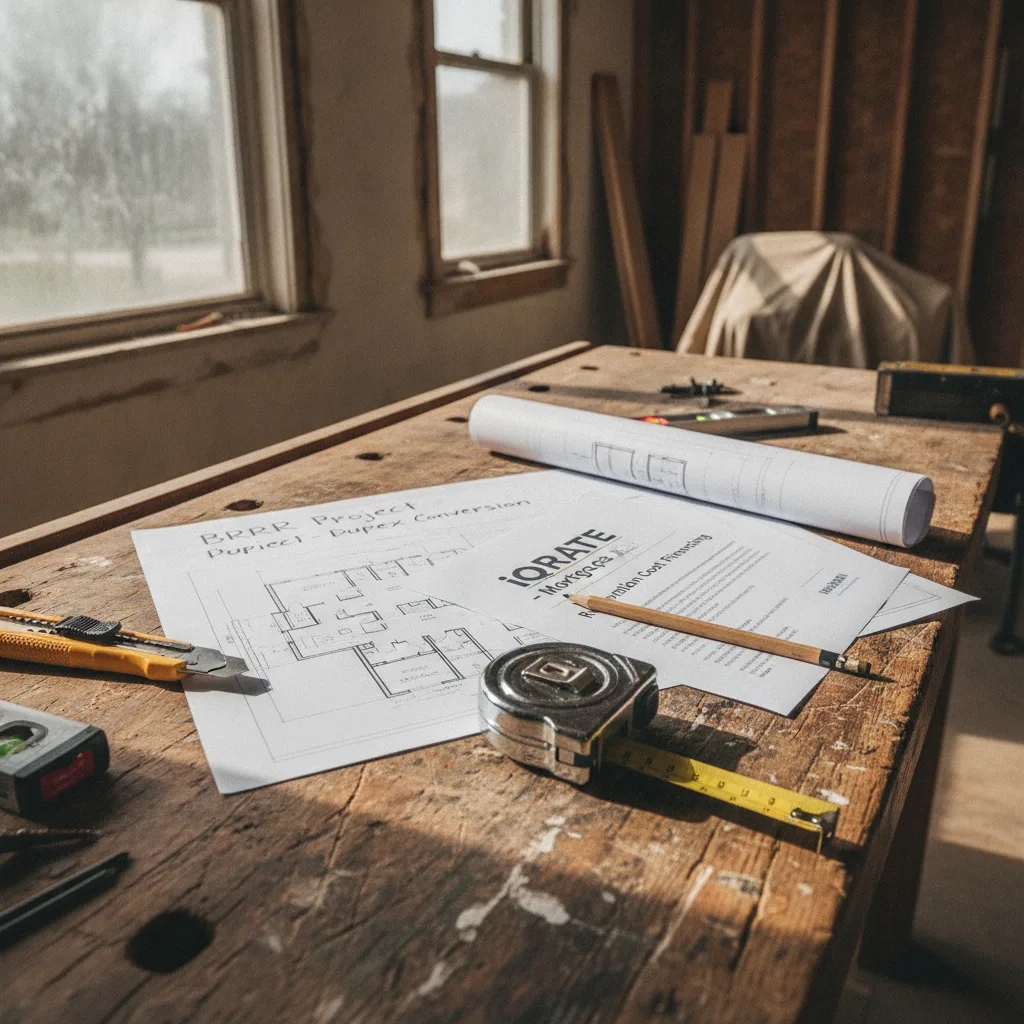
This method is fundamental to the 'Buy, Rehab, Rent, Refinance, Repeat' (BRRRR) strategy popular among investors in Reno. It allows you to finance a project based on its completed worth, unlocking its full potential from day one.
Can Renovation Costs Be Included in the DSCR Loan?
Yes, it is often possible to include renovation costs in a DSCR loan, but it functions differently than a standard purchase loan. These are often called 'rehab loans' or loans with a 'rehab component'. Lenders will not simply give you a check for the renovation budget at closing.
Instead, the renovation funds are placed into an escrow account. You then complete portions of the work and request a 'draw' from the account. The lender will send an inspector to verify the work has been completed according to the plan before releasing the funds for that phase. This process protects the lender's interest by ensuring the loan proceeds are used to increase the property's value as intended.
Example of a Rehab Loan Structure
- Purchase Price: $400,000
- Renovation Budget: $75,000
- Total Project Cost: $475,000
- Lender's Offer: 80% LTV on the purchase price and 100% of the renovation costs.
In this scenario, the lender would finance $320,000 for the purchase and place the $75,000 for renovations into escrow. You would close on the property, and as you complete the new flooring, paint, and kitchen remodel, you would submit draw requests to be reimbursed from the escrow account.
What Are the Reserve Requirements for a Fixer-Upper Rental Loan?
Lenders require borrowers to have liquidity reserves, which are funds held in a bank account after closing. For a fixer-upper project, these requirements are typically higher than for a turnkey rental property. The increased risk associated with construction delays, budget overruns, and vacancy periods makes lenders more cautious.
Expect to show reserves equal to 6 to 12 months of the property's total monthly payment (PITI: Principal, Interest, Taxes, and Insurance). (The data, information, or policy mentioned here may vary over time.) This demonstrates to the lender that you can cover the mortgage payments and unexpected costs during the renovation period before a tenant is in place.
If the projected PITI on your Sparks fixer-upper is $3,000 per month, a lender might require you to have between $18,000 and $36,000 in a savings or checking account at the time of closing. These funds must be seasoned, meaning they have been in your account for at least 60 days, to prove they are not from a last-minute loan.
Do I Need Personal Income to Qualify for This Type of Loan in Sparks?
No, you do not need to provide W-2s, tax returns, or pay stubs to qualify for a DSCR loan. This is the single biggest advantage for real estate investors, self-employed individuals, and anyone whose income is difficult to document with traditional methods.
The loan is qualified based on the property's ability to generate income, not your personal finances. The lender’s primary concern is the Debt Service Coverage Ratio, calculated as:
- DSCR = Gross Monthly Rental Income / Monthly PITI
Most lenders require a DSCR of 1.25 or higher. (The data, information, or policy mentioned here may vary over time.) Using our earlier example of a Reno rental with a projected rent of $2,800 and a PITI of $2,100:
- DSCR = $2,800 / $2,100 = 1.33
This 1.33 ratio exceeds the typical 1.25 minimum, so the property’s cash flow qualifies for the loan. The lender will still check your credit score (usually requiring 680 or higher) and review your asset reserves, but your personal income is not part of the equation. (The data, information, or policy mentioned here may vary over time.)
How Long Do I Have to Complete Repairs After Closing?
Lenders need the property to be stabilized and generating income as quickly as possible. The loan agreement will include a specific timeline for completing all renovations. This period typically ranges from 60 to 180 days after closing. (The data, information, or policy mentioned here may vary over time.)
The exact duration depends on the complexity of your scope of work. A simple cosmetic update might have a 60-day deadline, while a more extensive gut renovation could be given up to six months. It is critical to have a realistic construction schedule and reliable contractors lined up before you close. Failure to meet the deadline can result in penalties or even default on the loan terms, so clear planning is essential.
What Property Conditions Are Unacceptable for a DSCR Lender?
While DSCR loans are designed for properties needing work, there are limits. Lenders are financing an asset, not a liability. Certain conditions are considered too risky and will make a property ineligible for financing.
Unacceptable conditions typically include:
- Major Structural Defects: Cracked foundations, severe termite damage, or a collapsed roof are usually deal-breakers.
- Safety Hazards: Exposed electrical wiring, non-functional plumbing systems, or extensive toxic mold issues that make the property uninhabitable.
- Zoning or Permit Issues: Significant unpermitted additions or structures that violate local Reno or Sparks zoning codes.
- Teardown Condition: If the property is dilapidated to the point where it is more valuable as a vacant lot, a DSCR lender will not finance it. The loan is for renovation, not ground-up construction.
Is This a Better Option Than a Traditional Hard Money Loan?
A DSCR loan and a hard money loan serve different purposes, and the better option depends on your investment strategy. A DSCR loan is typically the superior choice for investors using the BRRRR method or intending a long-term hold.
Key Features of a DSCR Loan
- Purpose: Best for buy-and-hold investors.
- Term: Long-term, typically a 30-year fixed mortgage.
- Interest Rates: More competitive, closer to traditional mortgage rates (e.g., 7-9%). (The data, information, or policy mentioned here may vary over time.)
- Qualification: Based on property cash flow (DSCR) and borrower credit score.
- Strategy: Ideal for purchasing a property, renovating it, and then holding it as a long-term cash-flowing rental. It is often used to refinance out of a hard money loan.
Key Features of a Hard Money Loan
- Purpose: Best for short-term fix-and-flip projects.
- Term: Short-term, usually 6-18 months, often with a balloon payment.
- Interest Rates: Much higher (e.g., 10-15%) plus points upfront. (The data, information, or policy mentioned here may vary over time.)
- Qualification: Based almost entirely on the property's 'as-repaired' value.
- Strategy: Provides fast funding to acquire and renovate a property you intend to sell quickly for a profit. It is a bridge loan, not a permanent financing solution.
For an investor in Reno looking to build a rental portfolio, the path often involves both: use a hard money loan for the quick acquisition and rehab, then once the property is renovated and tenanted, refinance into a long-term, lower-rate DSCR loan to pull cash out and hold the asset.
If you're exploring financing for your next fixer-upper in Reno or Sparks, understanding the nuances of an 'as-repaired' DSCR loan is the first step. Ready to get started? Apply now to connect with a mortgage strategist who specializes in investment properties to analyze your deal and find the right lending partner.
Author Bio
David Ghazaryan is the expert mortgage strategist and founder behind iQRATE Mortgages. With a mission to fund home loans that traditional banks won't touch, David specializes in helping clients with unique financial situations, including those recovering from foreclosure or bankruptcy. He expertly crafts smart, strategic, and stress-free mortgages by leveraging a vast network of over 100 lenders to secure competitive rates for investors and homebuyers alike. Praised for exceptional customer service, David has helped hundreds of families with a 97% satisfaction rate, guiding them to the mortgage they deserve.
References
Fannie Mae Form 1007: Single-Family Comparable Rent Schedule









