


Why Lenders Require a Lease for a DSCR Loan in Henderson
A Debt Service Coverage Ratio (DSCR) loan is a powerful tool for real estate investors. Its core principle is simple: the property's rental income must be sufficient to cover its mortgage debt obligations. The standard formula lenders use is straightforward: Gross Rental Income / PITI (Principal, Interest, Taxes, and Insurance). A ratio of 1.25 or higher is often the benchmark, meaning the property generates 25% more income than its total housing expense. (The data, information, or policy mentioned here may vary over time.)
For lenders, a signed lease agreement is the gold-standard proof of this income. It's a legally binding contract that documents a consistent revenue stream, transforming the property from a speculative asset into a predictable, cash-flowing investment. In a bustling rental market like Henderson, where demand is high, a lease provides concrete evidence that the property can perform as expected. Without it, underwriters see a vacant property with zero current income and, therefore, a higher risk profile. They have no verified data to plug into their DSCR calculation, leading to an immediate denial from most traditional and even many non-QM lenders.
This requirement creates a significant bottleneck for investors using the BRRRR (Buy, Rehab, Rent, Refinance, Repeat) strategy. You've just completed an expensive renovation in Las Vegas and need to pull your capital out for the next deal, but you can't get the refinance without a tenant. The process of marketing the property, screening applicants, and signing a lease can take weeks or even months, leaving your capital tied up and delaying your investment momentum.
Securing a DSCR Loan with Market Rent Estimates
Fortunately, a specialized niche within the non-QM lending world caters directly to this scenario. Savvy lenders who specialize in financing for real estate investors understand that a newly renovated property's lack of a tenant is a temporary part of the business cycle, not a sign of a bad investment. Instead of relying on an existing lease, these lenders allow you to qualify for a DSCR loan using projected market rents.
This approach shifts the focus from the property's actual current income (which is zero) to its potential income. The lender's underwriting team will use an independent, third-party appraisal report to determine what the property should rent for in its current condition and location. This figure becomes the 'Gross Rental Income' in the DSCR calculation, allowing you to secure financing before a tenant ever moves in.
This product is a game-changer for investors in competitive Nevada markets. It eliminates the waiting period, allowing you to initiate a cash-out refinance on your Henderson property the moment renovations are complete. You can unlock the equity you've created through forced appreciation and redeploy that capital into your next acquisition much faster, significantly accelerating the growth of your portfolio.
The Appraisal Needed for Projected Rent in Las Vegas
The key that unlocks a no-lease DSCR loan is a specific type of appraisal. A standard appraisal that only determines the property's market value is not enough. For this loan, the appraiser must also complete a Form 1007 (Single-Family Comparable Rent Schedule) for single-family residences or a Form 1025 (Small Residential Income Property Appraisal Report) for 2-4 unit properties.
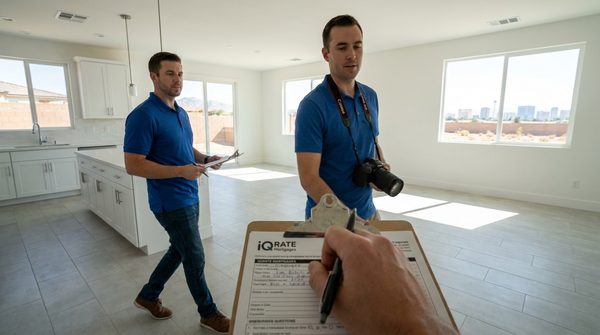
These forms require the appraiser to conduct a detailed analysis of comparable rental properties in the immediate vicinity. They don't just guess what your property could rent for; they find active listings and recently rented properties with similar characteristics—square footage, bed/bath count, condition, and amenities—to establish a data-backed opinion of fair market rent.
Let's walk through a realistic Las Vegas example:
- Your Property: A newly renovated 3-bedroom, 2.5-bathroom townhouse in the Summerlin area of Las Vegas.
- The Appraiser's Task: The appraiser identifies three comparable townhouses within a one-mile radius that have been rented in the last six months.
- Comparable 1: A slightly smaller unit with older finishes rented for $2,300/month.
- Comparable 2: A nearly identical unit in the same subdivision rented for $2,550/month.
- Comparable 3: A larger unit with a two-car garage rented for $2,700/month.
- The Conclusion: After making adjustments for differences in size, condition, and amenities, the appraiser completes Form 1007 and determines the fair market rent for your vacant townhouse is $2,500 per month.
The lender will now use this $2,500 figure to underwrite your DSCR loan. If your proposed PITI is $2,000, your DSCR would be 1.25 ($2,500 / $2,000), meeting the lender's requirement and allowing the loan to proceed.
Required Documents for a Vacant Property Refinance
The documentation for a no-tenant DSCR loan is streamlined and investor-focused. Since the loan is based on property income potential rather than personal income, you won't be asked for tax returns or pay stubs. However, the lender needs to verify the property details and your financial stability.
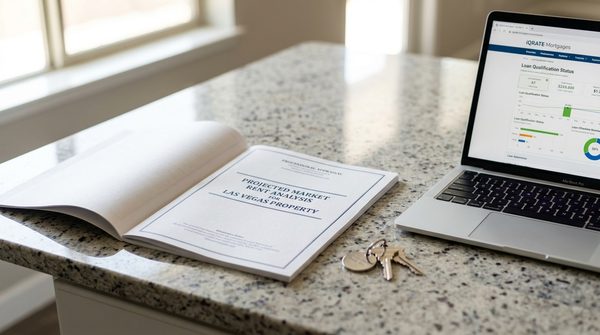
The document checklist typically includes:
- Full Appraisal Report with Form 1007 or 1025: This is the most crucial document, replacing the need for a lease agreement.
- Entity Documents: If you own the property in an LLC or corporation, you will need to provide the Operating Agreement, Articles of Organization, and other formation documents.
- Property Insurance Policy: A valid hazard insurance policy or a quote for a new policy is required.
- Proof of Funds for Reserves: Bank or brokerage account statements showing you have sufficient liquid assets to meet the reserve requirements.
- Mortgage Statement: If you are refinancing an existing loan, a copy of the current statement is needed.
- Closing Disclosure or Settlement Statement from Purchase: This document verifies your original purchase price and closing date, which is important for seasoning requirements.
- List of Renovations (Optional but Recommended): Providing a detailed list of upgrades and their costs can help justify the new appraised value to the underwriter, especially in a large cash-out refinance scenario.
Are Interest Rates Higher for a No-Tenant DSCR Loan?
Yes, you can generally expect the interest rate on a DSCR loan for a vacant property to be slightly higher than one for a property with a tenant in place. The difference is typically a small premium, often ranging from 0.25% to 0.50%. (The data, information, or policy mentioned here may vary over time.)
The reasoning behind this rate adjustment is based on risk. A property with a signed lease and a paying tenant is a de-risked asset—it is already generating cash flow. A vacant property, while having strong potential, still carries the risk of an extended vacancy period. The lender charges a slightly higher rate to compensate for this temporary uncertainty.
For most investors, this small rate increase is a strategic trade-off. Paying a marginally higher rate is often far more profitable than letting hundreds of thousands of dollars in capital sit dormant in a property while you search for the perfect tenant. The ability to access your equity immediately and deploy it into another income-producing asset typically outweighs the minor additional cost of the loan.
Refinance Timelines After Purchasing a Property
'Seasoning' refers to the length of time a lender requires you to own a property before they will allow you to do a cash-out refinance based on its new, appraised value. Many conventional and even some non-QM lenders impose a seasoning period of six to twelve months. (The data, information, or policy mentioned here may vary over time.)
However, a key advantage of working with sophisticated investor-focused lenders is the delayed financing exception. This rule is designed for investors who purchase properties with cash or private funding. Under this exception, you can refinance the property almost immediately after purchase—sometimes within 30 to 90 days—without waiting for a traditional seasoning period to expire. (The data, information, or policy mentioned here may vary over time.)
This is especially powerful for BRRRR investors. If you buy a distressed property in Henderson for $300,000 in cash, invest $50,000 in renovations, and the new appraisal comes in at $450,000, the delayed financing exception allows you to secure a loan based on the $450,000 value right away. You can pull out your original investment plus some of your new equity and move on to the next project without delay.
Reserve Requirements for Vacant Investor Loans
Lenders require borrowers to have cash reserves—liquid funds held in a bank or brokerage account—to ensure they can cover mortgage payments during vacancies or unexpected repairs. For a DSCR loan on a vacant property, the reserve requirements are understandably more stringent.
While a tenanted property might require 3 to 6 months of PITI payments in reserves, a vacant property loan often demands more. Lenders will typically require 6 to 12 months of PITI to be verified. (The data, information, or policy mentioned here may vary over time.) This larger cushion gives the lender confidence that you can handle the property's expenses for an extended period if it takes longer than expected to secure a tenant.
Let's put this into practice:
- Property: Your newly renovated single-family home in Las Vegas.
- Proposed Monthly PITI: $2,800.
- Lender's Reserve Requirement: 9 months.
- Total Reserves Needed: $2,800 x 9 = $25,200.
You will need to provide bank statements showing you have at least this amount in liquid, non-retirement funds available after the loan closes and you've received your cash out. If you're an investor in Nevada looking to understand your DSCR loan options for a vacant property, exploring programs that use projected rents can be a critical step. A knowledgeable mortgage strategist can help you navigate lender requirements and identify the right financing for your portfolio goals.
Ready to accelerate your real estate portfolio's growth? A DSCR loan using projected rents can unlock your capital faster. Apply now to explore personalized financing options for your next investment property.
Author Bio
David Ghazaryan is the expert mortgage strategist and founder behind iQRATE Mortgages. With a mission to fund home loans that traditional banks won't touch, David specializes in helping clients with unique financial situations, including those recovering from foreclosure or bankruptcy. He expertly crafts smart, strategic, and stress-free mortgages by leveraging a vast network of over 100 lenders to secure competitive rates for investors and homebuyers alike. Praised for exceptional customer service, David has helped hundreds of families with a 97% satisfaction rate, guiding them to the mortgage they deserve.
References
Fannie Mae - Single-Family Comparable Rent Schedule (Form 1007)









