


Understanding the DSCR Renovation Loan for a Vacant Property
For real estate investors in Reno and Sparks, finding a distressed property is often the easy part. The challenge arises when you try to finance a vacant fixer-upper that needs significant work. Traditional lenders and even standard Debt Service Coverage Ratio (DSCR) loans stumble here because there's no current tenant or rent to analyze. This is where a specialized DSCR renovation loan comes in.
This innovative loan product is designed specifically for investors. It combines the funds for both the property acquisition and the necessary renovations into a single loan. Instead of judging the property on its current, dilapidated state, the lender qualifies the loan based on its future potential as a cash-flowing asset. This solves the classic financing gap for investors who want to execute a 'buy, rehab, rent, and hold' strategy.
Qualifying Based on Future Property Potential
Unlike conventional loans that scrutinize your personal debt-to-income ratio, a DSCR loan focuses on the property itself. For a vacant fixer-upper, the lender underwrites the deal based on projected metrics:
- Future Rental Income: An appraiser estimates what the property will rent for after your planned renovations are complete.
- As-Repaired Value (ARV): The lender determines the property's future market value, which secures the loan.
- Investor Experience: Your track record in completing similar projects plays a significant role in approval.
Using Future Post-Renovation Rents to Secure Financing
Yes, the core advantage of a DSCR renovation loan is its ability to use projected, post-renovation rental income for qualification. This is the mechanism that makes financing a vacant property possible.
The process relies on a crucial document: the rental appraisal, often part of the main appraisal report. An appraiser, familiar with the Sparks rental market, will analyze your renovation plans (your 'scope of work') and compare your property to similar, recently updated rental units in the area. Based on this analysis, they provide an opinion of market rent, or what the property is expected to lease for once the work is done.
Lenders then use this figure to calculate the Debt Service Coverage Ratio. The formula is:
DSCR = Projected Gross Rental Income / Proposed PITI (Principal, Interest, Taxes, and Insurance)
Most lenders require a DSCR of 1.20 or higher. (The data, information, or policy mentioned here may vary over time.) If the appraiser projects your renovated Sparks duplex will rent for $4,000 per month and the total PITI on the new loan is $3,200, your DSCR would be 1.25 ($4,000 / $3,200), meeting the requirement.
The Critical Role of the As-Repaired Value (ARV) Appraisal
The As-Repaired Value, or ARV, is the estimated value of a property after all planned renovations have been completed. This figure is arguably the most important number in a renovation loan, as it determines the maximum loan amount you can receive.

An appraiser calculates the ARV by evaluating:
- The Purchase Price: The initial cost of the property.
- The Scope of Work: A detailed list of all planned repairs and upgrades, including material and labor costs.
- Comparable Sales: Prices of similar, recently sold properties in the same Reno neighborhood that are already in the improved condition you plan to achieve.
For example, you find a distressed single-family home in Reno for $350,000. Your contractor bids the renovation at $75,000. The appraiser finds that similar renovated homes in the area are selling for $550,000. This $550,000 becomes the ARV. Lenders typically finance up to 75-80% of the ARV. (The data, information, or policy mentioned here may vary over time.) In this case, 75% of $550,000 is $412,500. This amount is sufficient to cover the $350,000 purchase price and a large portion ($62,500) of your renovation budget.
Managing Renovations with a Draw Schedule
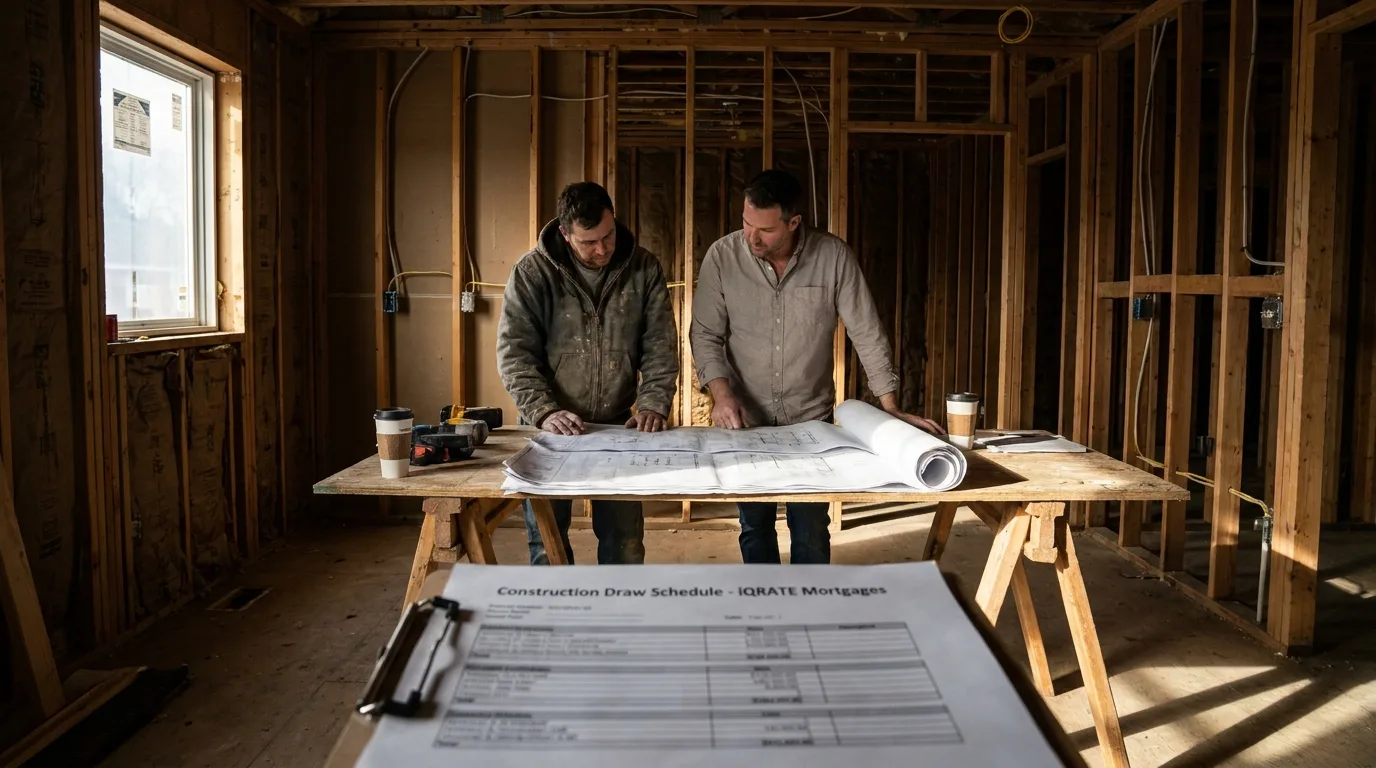
When you close on a DSCR renovation loan, you don't receive the entire renovation budget as a lump sum of cash. To protect their investment and ensure the work is completed as planned, lenders hold the renovation funds in an escrow account. These funds are then paid out through a process called a 'draw schedule'.
Here’s a typical workflow for construction fund distribution:
- Initial Work: You or your contractor typically fund the first phase of the project out-of-pocket.
- Draw Request: Once a significant portion of the work is complete (e.g., demolition and framing), you submit a draw request to the lender.
- Inspection: The lender sends an inspector to the property to verify that the work claimed in the draw request has been completed to a satisfactory standard.
- Fund Release: Upon a successful inspection, the lender releases that portion of the renovation funds, either to you or directly to your contractor.
This process repeats in stages until the project is 100% complete. A final inspection confirms the property is finished and ready for a tenant, at which point the final draw is released.
Experience Requirements for a Reno Renovation Loan
Lenders view DSCR renovation loans as a higher-risk product. They are not just lending on a tangible asset but are also betting on your ability to successfully manage a construction project. Consequently, they have stricter experience requirements, especially in a dynamic market like Reno.
While requirements vary by lender, investors are generally expected to demonstrate:
- Previous Fix-and-Flip or BRRRR Experience: Lenders want to see that you have successfully completed at least 1-3 similar projects in the last 2-3 years. (The data, information, or policy mentioned here may vary over time.)
- Existing Rental Portfolio: Owning other rental properties, even if they didn't require heavy renovation, shows you understand the business of being a landlord.
- Strong Team: Having a licensed and insured general contractor with a solid reputation can sometimes help offset a lack of personal experience.
First-time investors may find it difficult to qualify for this specific loan product. Lenders need confidence that you can handle budget overruns, timeline delays, and contractor management before they will fund both a purchase and a large-scale renovation.
DSCR Renovation Loan vs. Hard Money and Refinance
Another common strategy for financing a fixer-upper is to use a short-term hard money loan for the purchase and rehab, then refinance into a long-term DSCR loan once the property is stabilized. Which path is better depends on your project, timeline, and costs.
Hard Money Loan + Refinance Strategy
- Pros:
- Very fast funding, often in 7-14 days.
- Less focus on personal credit and more on the deal itself.
- Can often finance a higher percentage of the renovation costs.
- Cons:
- Significantly higher interest rates (often 10-15%). (The data, information, or policy mentioned here may vary over time.)
- Short loan terms, typically 6-18 months, creating pressure to finish quickly.
- Involves two separate loan closings, meaning double the closing costs.
All-in-One DSCR Renovation Loan
- Pros:
- One single closing, saving thousands in fees.
- Secures your long-term, 30-year fixed rate from the start.
- Lower interest rates compared to hard money.
- Cons:
- Slower closing timeline (typically 30-45 days).
- Stricter requirements for investor experience and credit.
- May require more cash reserves upfront.
For investors planning to hold the rental long-term, the all-in-one DSCR renovation loan is often the more streamlined and cost-effective option, avoiding the uncertainty and expense of a future refinance.
Eligible vs. Ineligible Renovation Projects
Lenders want to finance renovations that directly increase the value and rentability of the property. They generally approve non-structural and cosmetic improvements.
Permitted Renovations:
- Complete kitchen and bathroom remodels
- New flooring, paint, and drywall
- Updating electrical and plumbing systems
- New HVAC systems
- Roof replacement
- Window and door replacement
- Landscaping and exterior cosmetic fixes
Generally Disallowed Renovations:
- Structural changes like moving load-bearing walls
- Adding square footage or building an addition
- Major foundation repairs
- Projects that require zoning changes or complex permits
Your lender will require a detailed scope of work from your contractor before approving the loan to ensure all planned repairs are eligible for financing.
Estimating Cash Reserves for a Sparks Fixer-Upper Loan
Even though the loan covers the purchase and rehab, you will need significant liquid cash reserves to close the deal and manage the project. Lenders need to see you have the financial capacity to handle unforeseen costs and cover payments during the renovation period.
Here’s a breakdown of the cash you’ll likely need for a fixer-upper project in Sparks:
- Down Payment: Typically 20-25% of the total project cost (purchase price + renovation budget).
- Closing Costs: Approximately 2-5% of the total loan amount. (The data, information, or policy mentioned here may vary over time.)
- Renovation Contingency: Lenders often require you to have 10-20% of the total renovation budget set aside in reserves to cover unexpected expenses.
- PITI Reserves: You must show you have enough cash to cover the Principal, Interest, Taxes, and Insurance payments for 6-9 months while the property is vacant. (The data, information, or policy mentioned here may vary over time.)
Example Scenario: Sparks Fixer-Upper
Purchase Price: $300,000
Renovation Budget: $50,000
Total Project Cost: $350,000
Down Payment (25%): $87,500
Closing Costs (3% of loan): ~$7,875
Contingency (15% of rehab): $7,500
PITI Reserves (6 months @ $2,000/mo): $12,000
In this scenario, you would need approximately $114,875 in liquid reserves to qualify for and safely manage the project. A DSCR renovation loan can be a powerful tool for growing your rental portfolio in Nevada. If you have a specific fixer-upper project in mind, discussing the details with a mortgage strategist who specializes in investor loans can help you determine the best financing path forward.
Ready to turn that distressed property into a cash-flowing asset? If you have a fixer-upper project in mind, let's map out the best financing strategy for your specific deal. Apply now to connect with an investor loan specialist.
Author Bio
David Ghazaryan is the expert mortgage strategist and founder behind iQRATE Mortgages. With a mission to fund home loans that traditional banks won't touch, David specializes in helping clients with unique financial situations, including those recovering from foreclosure or bankruptcy. He expertly crafts smart, strategic, and stress-free mortgages by leveraging a vast network of over 100 lenders to secure competitive rates for investors and homebuyers alike. Praised for exceptional customer service, David has helped hundreds of families with a 97% satisfaction rate, guiding them to the mortgage they deserve.
References
CFPB - What is a debt-to-income ratio?
Fannie Mae - Investment Property Mortgage Financing
HUD - The Rehabilitation Mortgage Insurance Program (203(k))









