


Understanding the Mortgage Challenge for E-2 Visa Holders
As an E-2 treaty investor, you've demonstrated significant commitment and investment to launch a business in the United States. While this visa allows you to live and work here, it presents a unique profile to mortgage lenders. Unlike a W-2 employee with a predictable salary, your income is directly tied to the performance of your new enterprise. This is the primary reason lenders approach E-2 visa holder applications with extra caution.
Lenders prioritize stability and predictability. A new business, by its nature, has a limited track record. They perceive this as a higher risk compared to a borrower with a multi-year history at a single company. They will ask questions like:
- Is the business profitable?
- Is the income stream consistent?
- What happens if the business struggles?
Furthermore, the E-2 visa is a non-immigrant visa. It's temporary and its validity is contingent upon the continued success of your business. This non-permanent resident status can be a red flag for conventional loan programs that are designed for U.S. citizens and permanent residents. Lenders worry about the potential for a borrower to leave the country if their visa status changes, making it difficult to recoup losses in case of a default. These factors combine to create a significant hurdle, but not an insurmountable one.
Why Traditional Lenders Hesitate
Traditional lenders, especially large banks, rely heavily on automated underwriting systems (AUS). These systems are programmed to look for specific criteria: a two-year employment history, a U.S. credit score above a certain threshold, and a low debt-to-income ratio based on W-2 income. An E-2 visa holder's application rarely fits neatly into these boxes.
Your income isn't a simple salary; it's business profit. You may have a limited U.S. credit history. Your legal status is valid but not permanent. When an AUS flags these items, it often results in an automatic denial without a human ever reviewing the nuances of your strong financial position. This is why it is critical to work with a mortgage strategist who has access to lenders specializing in non-traditional scenarios.
Available Loan Programs for E-2 Visa Holders in Miami
Fortunately, the mortgage market has evolved to serve international clients, especially in global hubs like Miami and Aventura. E-2 visa holders are not limited to paying cash for property. Several specialized loan programs are designed specifically for foreign nationals and individuals with unique income situations.

Foreign National Loans
This is the most common and effective mortgage product for E-2 visa holders. Foreign National Loans are not backed by government agencies like Fannie Mae or Freddie Mac, which gives lenders the flexibility to set their own underwriting guidelines. They understand that you won't have a standard U.S. credit file or a W-2 job.
Instead of focusing on what you don't have, these programs focus on what you do have:
- Significant Assets: Lenders will verify your assets, both in the U.S. and abroad.
- Strong Business Performance: They will analyze your business's financial health to determine your qualifying income.
- Substantial Down Payment: These loans typically require a larger down payment, which reduces the lender's risk.
These are portfolio loans, meaning the lender keeps the loan on its own books rather than selling it. This gives them full control over the approval process.
Bank Statement Loans
For E-2 visa holders who have been operating their business for at least 12-24 months, a Bank Statement Loan can be an excellent option. Instead of tax returns or pay stubs, the lender analyzes your business bank statements to calculate your income. They typically review 12 or 24 months of deposits to establish a consistent monthly cash flow. This is ideal for business owners whose tax returns may not fully reflect their true profitability due to legitimate business deductions and expenses. For a new restaurant owner in Aventura, this program allows them to use their strong monthly revenue to qualify for a home loan, even if their first year's tax return shows a modest profit after startup costs.
Establishing Sufficient U.S. Credit History
A lack of U.S. credit history is a common obstacle. While some Foreign National Loan programs do not require a U.S. credit score, establishing one can significantly improve your loan terms and options. Most lenders want to see at least a 12-month history of credit in the United States.
How to Build Your Credit Profile
If you're new to the country, start building credit immediately. It doesn't have to be a complicated process:
- Get a Secured Credit Card: This is one of the easiest ways to start. You provide a cash deposit that becomes your credit limit. After 6-12 months of on-time payments, you can often transition to an unsecured card and get your deposit back.
- Open U.S. Bank Accounts: Lenders want to see that you are financially established in the country.
- Use Alternative Credit Data: Some lenders will consider alternative forms of credit history. This can include a 12-month history of on-time payments for things like rent, utilities, and cell phone bills. A letter from your landlord in Miami verifying a year of timely rent payments can be a powerful tool.
It's important to note that a lender may also pull an international credit report to supplement your U.S. file. Having a strong credit history in your home country can work in your favor.
Proving Your Business Income is Stable and Sufficient
This is the most critical part of your mortgage application. As an E-2 visa holder, the burden is on you to prove that your new business generates enough stable income to support your household expenses and the new mortgage payment. You must present your business as a reliable and ongoing enterprise.
Essential Documentation for Business Income
Be prepared to provide a comprehensive financial picture of your business. Lenders specializing in these loans will require:
- Business Formation Documents: Articles of incorporation, operating agreement, and your business license.
- A Letter from a CPA: A certified public accountant can prepare a letter that details the business's launch date, its financial health, and projects its continued profitability. This third-party verification adds significant credibility.
- Profit & Loss (P&L) Statements: You will need to provide year-to-date and possibly previous year P&L statements. These should be professionally prepared.
- Business Bank Statements: Typically, 12 to 24 months of statements are required to show consistent cash flow and revenue.
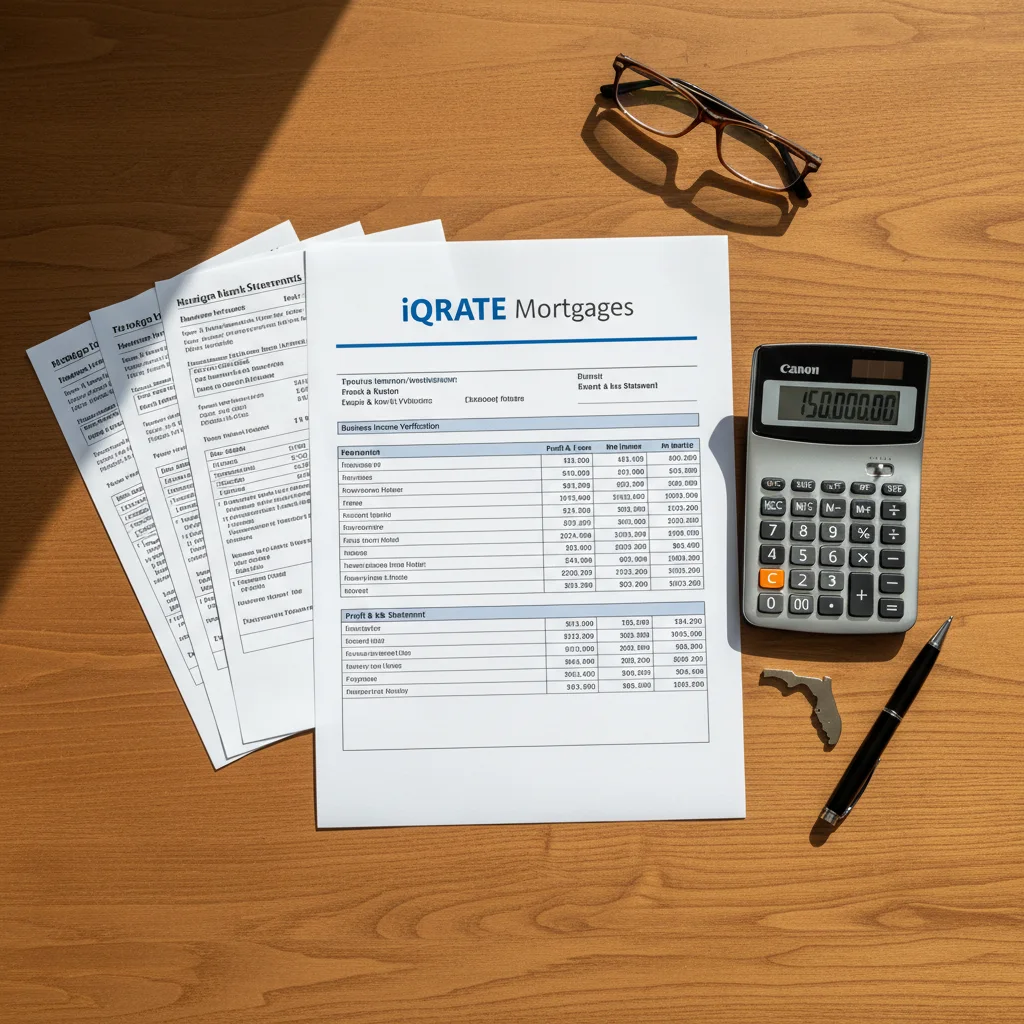
For example, if you opened a design studio in the Miami Design District, a lender would want to see your monthly invoices, deposits from clients, and a P&L that clearly shows revenue exceeding operating costs. They want to see a pattern of stability, not just one or two good months.
Down Payment Requirements for E-2 Visa Homebuyers
Due to the perceived higher risk, lenders require a more substantial down payment from E-2 visa holders than from typical U.S. borrowers. While a U.S. citizen might buy a home with as little as 3% down, you should expect to put down significantly more.
- Typical Down Payment: The standard requirement for a Foreign National Loan is between 20% and 30%. (The data, information, or policy mentioned here may vary over time.)
- Higher Down Payments Can Help: Providing a larger down payment, such as 40% or more, can strengthen your application. It lowers the lender's loan-to-value (LTV) ratio, reduces their risk, and may help you secure a better interest rate.
On a $700,000 condominium in Aventura, a 25% down payment would be $175,000. Lenders will also require you to have post-closing reserves, which are typically 6 to 12 months' worth of mortgage payments (including principal, interest, taxes, and insurance) left in your bank account after the closing. (The data, information, or policy mentioned here may vary over time.)
Can I Use Funds from My Foreign Bank Accounts?
Yes, you absolutely can use funds from foreign accounts for your down payment and closing costs. However, these funds must be properly sourced and seasoned. 'Seasoning' means the money must have been in your account for a certain period, usually 60 to 90 days, to prove it wasn't a last-minute loan from someone else.
You will need to provide:
- Bank Statements: At least two months of statements from the foreign institution, translated into English if necessary.
- Proof of Transfer: A wire transfer receipt showing the funds moving from your foreign account to your U.S. account.
Lenders need a clear paper trail to comply with U.S. anti-money laundering regulations. Be prepared for this level of scrutiny and have your documentation organized well in advance.
Required Document Checklist for an E-2 Visa Mortgage
Getting your paperwork in order is half the battle. A well-organized file makes the underwriting process smoother and faster. Here is a checklist of the documents you will almost certainly need:
- Visa and Passport: A valid, unexpired copy of your E-2 visa and your passport.
- Proof of U.S. Address: A utility bill or bank statement showing your current address in the United States.
- Income Documentation (Business):
- CPA letter verifying your business
- Profit & Loss statements
- 12-24 months of business bank statements
- Asset Documentation:
- 2-3 months of U.S. and foreign bank statements (all pages)
- Statements for any investment or retirement accounts
- Credit Verification:
- Letters of reference from creditors (if using alternative credit)
- Permission to pull U.S. and possibly international credit reports
- Purchase Contract: The fully executed sales contract for the property you wish to buy in Florida. Navigating the mortgage process on an E-2 visa requires specialized knowledge. To ensure your application is presented correctly to the right lenders, consider partnering with a mortgage expert who has a proven track record of success with treaty investors and foreign nationals.
Your investment in a U.S. business demonstrates your commitment. Let us help you take the next step toward homeownership. If you're ready to explore mortgage solutions tailored for E-2 visa holders in Florida, we invite you to Apply now for a no-obligation assessment.
Author Bio
David Ghazaryan is the expert mortgage strategist and founder behind iQRATE Mortgages. With a mission to fund home loans that traditional banks won't touch, David specializes in helping clients with unique financial situations, including those recovering from foreclosure or bankruptcy. He expertly crafts smart, strategic, and stress-free mortgages by leveraging a vast network of over 100 lenders to secure competitive rates for investors and homebuyers alike. Praised for exceptional customer service, David has helped hundreds of families with a 97% satisfaction rate, guiding them to the mortgage they deserve.
References
Fannie Mae: Eligibility of Non-U.S. Citizen Borrowers
Consumer Financial Protection Bureau (CFPB): What is a foreign national loan?








