


What is the first step for a non-United States buyer seeking a loan?
The absolute first step for any non-U.S. buyer eyeing a property in Florida is to get a mortgage pre-approval. This isn't just a suggestion; it's a strategic necessity. A pre-approval demonstrates to sellers in competitive markets like Miami that you are a serious, financially vetted buyer. More importantly, it gives you a clear and realistic budget to work with.
To achieve this, you must begin assembling your documentation before you even start looking at properties. The process for a foreign national is more document-intensive than for a U.S. citizen. Lenders specializing in these loans need to build a complete financial picture of you from scratch, using documents from your home country.
Think of it as building a financial identity for the lender. Starting this process early prevents significant delays later. A common mistake is finding the perfect condo in Aventura and then trying to gather paperwork from overseas. This can lead to missed opportunities, as the U.S. mortgage process moves quickly. Your initial conversation with a mortgage strategist should be about creating a personalized document checklist based on your country of residence and financial situation.
How do I prove my income with foreign tax returns in Miami?
Proving your income is the cornerstone of your mortgage application. Lenders need to see a stable and sufficient income stream to ensure you can afford the monthly payments. Since you don't have U.S. tax returns or W-2s, you will rely entirely on documentation from your home country.
Key Income Documents
- Foreign Tax Returns: Lenders typically require the last two years of your official, government-filed personal and business (if applicable) tax returns. These documents must show your gross income, deductions, and final taxable income, just as a U.S. return would.
- Employment Verification Letter (EVL): This is a critical document. Your employer must provide a letter on company letterhead that states your position, salary, start date, and employment status (full-time, permanent). The letter should include contact information for verification purposes and be signed by a representative from human resources or your direct manager. All monetary figures should be stated in your local currency and the U.S. dollar equivalent.
- Recent Pay Stubs: You will generally need to provide the most recent one to three months of pay stubs to show your current, consistent earnings. (The data, information, or policy mentioned here may vary over time.)
- For Self-Employed Buyers: If you own a business, you'll need more extensive documentation. This includes two years of business financial statements (profit and loss statements, balance sheets) prepared by a certified accountant in your country. A letter from your accountant verifying the business's stability and your income from it is also required.
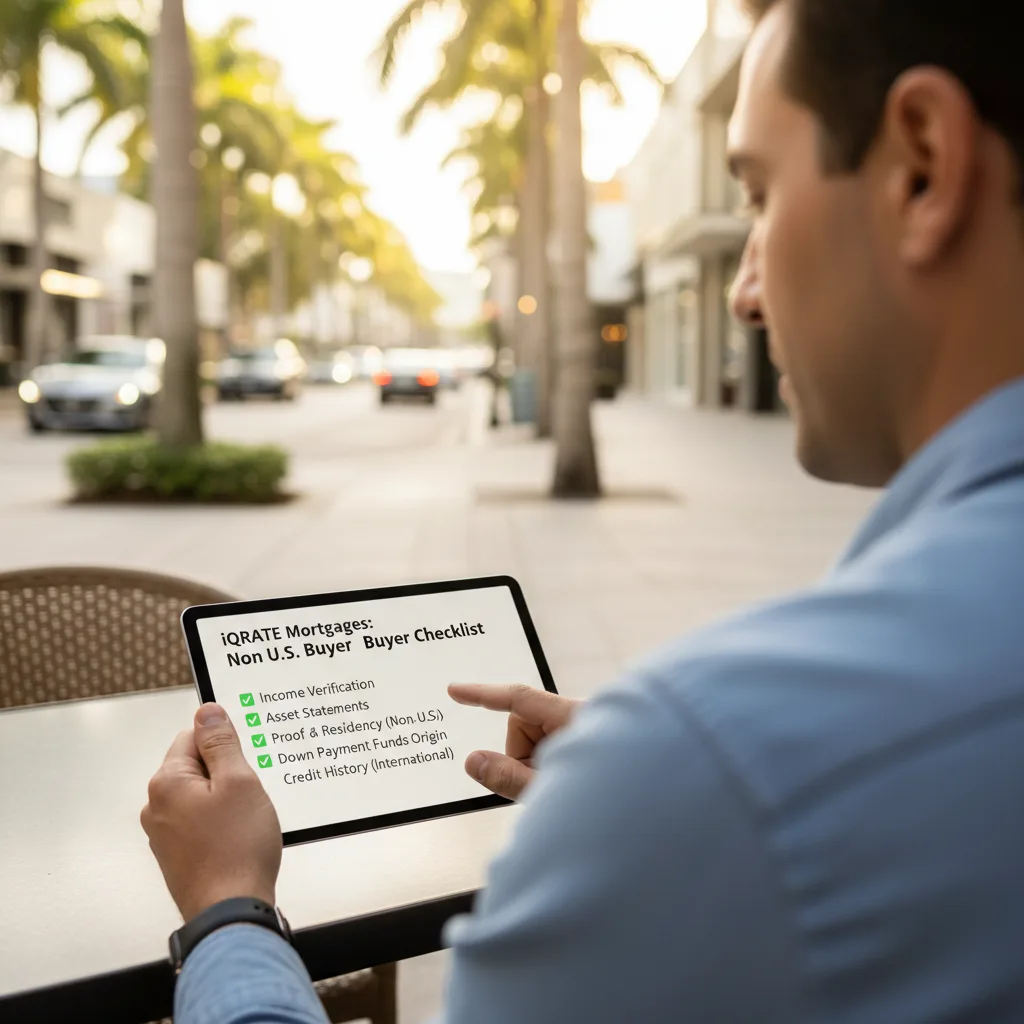
For example, if you're a buyer from Brazil looking at a property in Miami, the lender will need your Imposto de Renda Pessoa Física (IRPF) for the last two years, along with a letter from your employer in São Paulo, translated into English.
What kind of asset verification is required for an Aventura mortgage?
Asset verification confirms you have enough liquid funds for the down payment, closing costs, and required financial reserves. Foreign national loans often require a larger down payment, typically ranging from 25% to 40%, and significant reserves. Reserves are funds left over after closing, measured in months of mortgage payments (including principal, interest, taxes, and insurance). (The data, information, or policy mentioned here may vary over time.)
Lenders require this cushion because, as a foreign buyer, you present a slightly different risk profile. Having substantial assets demonstrates financial stability.
Essential Asset Documents
- Bank Statements: You'll need to provide statements from the last two to six months for all checking and savings accounts. These can be from banks in your home country or international banks. The statements must show your name, account number, and a clear history of funds. Any large, unusual deposits must be explained and sourced with a paper trail. (The data, information, or policy mentioned here may vary over time.)
- Investment and Retirement Accounts: Provide recent statements from any stock portfolios, mutual funds, or other investment accounts. This helps build a broader picture of your financial strength. Be aware that lenders may only consider a percentage of these assets as liquid, depending on the account type.
- Proof of Down Payment: The funds for your down payment must be 'seasoned,' meaning they have been in your account for at least 60 days. Lenders need to see that the money is yours and not a last-minute, un-sourced loan. If you plan to use funds from a property sale in your home country to purchase a home in Aventura, you will need to provide the closing statement from that sale. (The data, information, or policy mentioned here may vary over time.)
Imagine you want to buy a $1 million condo in Aventura with a 30% down payment ($300,000). You'll also need to cover closing costs (approx. 2-5%) and show reserves of 6-12 months. This could mean verifying access to over $400,000 in liquid assets. (The data, information, or policy mentioned here may vary over time.)
Do I need a United States bank account to get approved?
Yes, almost universally. While you can start the application process using your foreign bank accounts for asset verification, you will need to establish a U.S. bank account before your loan can close.
There are two primary reasons for this:
- Closing the Transaction: The funds for your down payment and closing costs must be wired to the closing agent or attorney from a U.S.-based bank account. Transferring large sums of money internationally at the last minute can cause delays and complications.
- Making Mortgage Payments: Lenders require you to have a U.S. bank account from which your monthly mortgage payments will be automatically debited. This ensures a reliable and seamless payment process throughout the life of the loan.
Opening a U.S. bank account is relatively straightforward. Many major banks have international client divisions and allow you to open an account with a valid passport and a secondary form of ID. It is wise to do this early in your property search.
Are translated documents required by mortgage lenders?
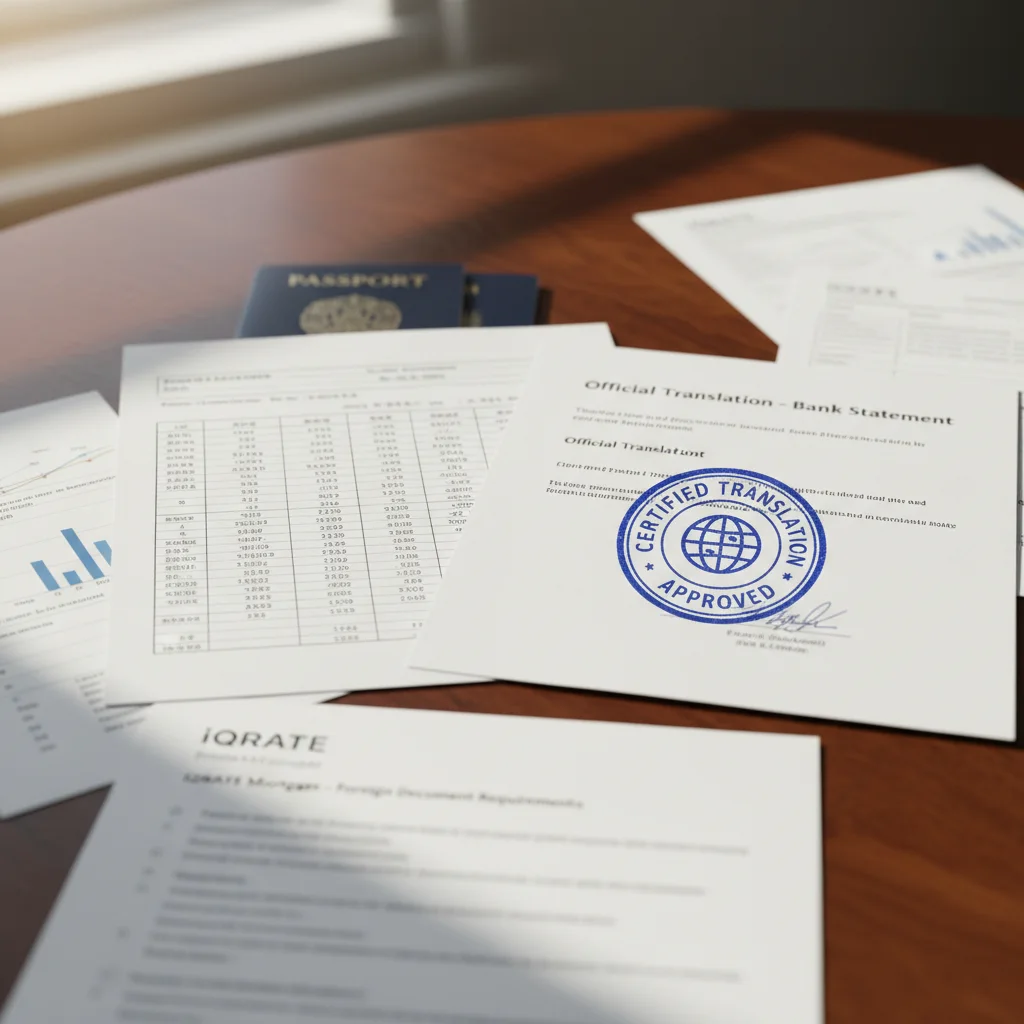
Absolutely. Any document that is not originally in English must be accompanied by a complete and certified translation. This is a non-negotiable requirement for all U.S. mortgage underwriters. The translation cannot be done by you, a friend, or a family member.
It must be performed by a professional, independent translation service. The translator must certify in writing that the translation is accurate and that they are competent to translate from the original language into English. This certification statement should be included with the translated documents. This rule applies to everything: tax returns, bank statements, employment letters, marriage certificates, and passports.
How do lenders verify my foreign credit history?
Since you won't have a U.S. Social Security Number or an established FICO score, lenders use alternative methods to assess your creditworthiness. They need assurance that you have a history of managing debt responsibly in your home country.
Methods for Credit Verification
- International Credit Report: Some lenders partner with services that can pull and analyze credit data from other countries. The availability and detail of these reports vary greatly depending on your country of origin.
- Letters from Creditors: The most common method is to obtain 'credit reference letters.' You will need to request letters from financial institutions with whom you have or had accounts. This can include:
- Your primary bank (checking/savings)
- Mortgage lenders in your home country
- Auto loan providers
- Credit card companies
These letters should state the type of account, the date it was opened, the loan amount or credit limit, the current balance, and your payment history. A clean history of on-time payments is what lenders are looking for. (The data, information, or policy mentioned here may vary over time.)
What visa or residency documentation is necessary for investor loans?
This is a point of frequent confusion. The type of visa you have, or don't have, directly influences the loan programs you qualify for. It's important to distinguish between a non-resident investor and a resident alien.
- Foreign National Investor Loans: This is the most common loan type for buyers who live abroad and are purchasing a second home or investment property in places like Miami. For these programs, you typically do not need a U.S. visa. The primary identification document required is a valid, unexpired passport from your home country. The loan is underwritten based on the property being a non-primary residence.
- Loans for Resident Aliens: If you live and work in the U.S. on a valid work visa (such as an H-1B, L-1, or O-1), you are often treated similarly to a U.S. citizen for mortgage purposes. You can qualify for conventional loans with standard down payments, provided you have established some U.S. credit. You will need to provide a copy of your visa, your Employment Authorization Document (EAD), and your Social Security Number. (The data, information, or policy mentioned here may vary over time.)
It is crucial to be clear about your residency status with your lender from the beginning, as it determines the entire framework for your loan application and the documents you'll need to provide. Navigating foreign document requirements for a Florida mortgage can be complex. For a clear path to securing your Miami or Aventura property, a mortgage strategist can provide a personalized checklist and connect you with lenders who understand the international market.
Ready to turn your Florida property dream into a reality? Our team specializes in helping international buyers navigate the mortgage process. Apply now to start your personalized consultation.
Author Bio
David Ghazaryan is the expert mortgage strategist and founder behind iQRATE Mortgages. With a mission to fund home loans that traditional banks won't touch, David specializes in helping clients with unique financial situations, including those recovering from foreclosure or bankruptcy. He expertly crafts smart, strategic, and stress-free mortgages by leveraging a vast network of over 100 lenders to secure competitive rates for investors and homebuyers alike. Praised for exceptional customer service, David has helped hundreds of families with a 97% satisfaction rate, guiding them to the mortgage they deserve.
References
Fannie Mae - Eligibility for Non-U.S. Citizens
Consumer Financial Protection Bureau - Documents You Need to Apply for a Mortgage









