


FHA and VA Minimum Property Requirements Explained
When you use a government-backed loan like an FHA or VA mortgage, the home you want to buy must meet specific health and safety standards. These aren't just suggestions; they are mandatory conditions for loan approval. The Department of Housing and Urban Development (HUD) sets FHA's Minimum Property Requirements (MPRs), and the Department of Veterans Affairs outlines similar standards for VA loans. The goal is to protect you, the buyer, from purchasing a home with significant defects and to protect the lender's investment.
The appraiser's job goes beyond determining the home's value. They act as the eyes for the lender, ensuring the property is safe, structurally sound, and secure. Think of it as the three 'S's':
- Safety: The property must be free from hazards that could harm the occupants. This includes issues like exposed wiring, lack of handrails on stairs, or evidence of lead-based paint.
- Security: The home must be a secure living space. This relates to the physical security of the property, ensuring it can be properly secured against unauthorized entry.
- Soundness: This refers to the structural integrity of the home. The appraiser checks for a sound roof that doesn't leak, a solid foundation without major cracks, and properly functioning mechanical systems.
If the appraiser for your potential home in Jacksonville identifies an issue that violates these standards, they will flag it in their report. The mortgage cannot be finalized until these problems are corrected and re-inspected.
What are the Most Common Repairs Required by Appraisers in Jacksonville?
Florida's climate and the age of some housing stock, particularly in historic areas like St. Augustine, mean certain issues pop up frequently during FHA and VA appraisals. An experienced appraiser knows exactly what to look for.
Here are some of the most common required repairs:
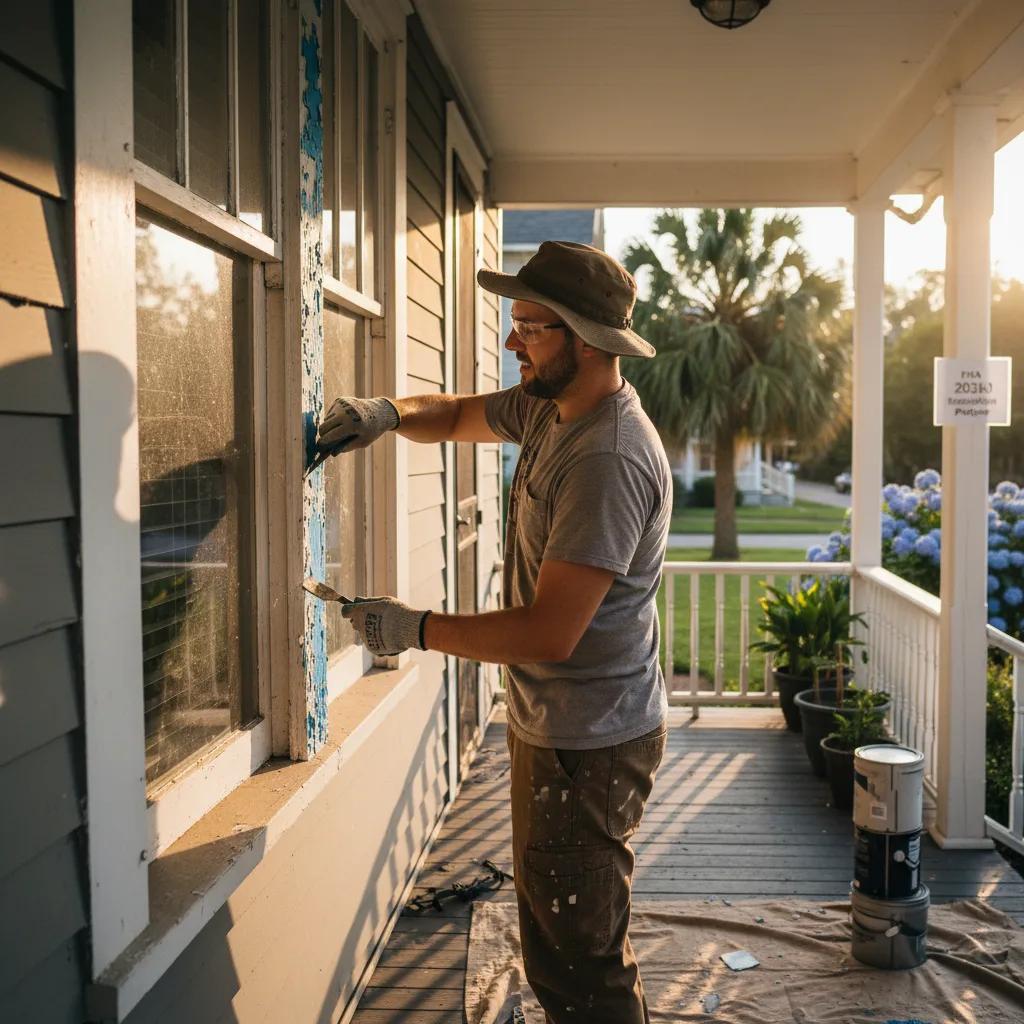
- Peeling or Chipping Paint: In homes built before 1978, this is an automatic red flag for potential lead-based paint hazards. The appraiser will require all peeling surfaces (interior and exterior) to be scraped and repainted.
- Roofing Issues: A roof must have at least two years of remaining life. Any signs of active leaks, significant damage, or deterioration will be called out. In a state with heavy rain and hurricanes, roof integrity is non-negotiable.
- Wood Rot or Termite Damage: Florida's humidity makes homes susceptible to wood-destroying organisms. The appraiser will note any visible damage to siding, window frames, or structural elements. A separate termite inspection (or Wood-Destroying Organism report) is often required for VA loans in Florida.
- Inadequate Electrical Systems: Frayed or exposed wiring is a major safety hazard. The appraiser will also check that the electrical panel is functional and meets basic safety codes.
- Plumbing and Water Issues: All plumbing fixtures must be in working order. Leaky faucets, low water pressure, or a non-functioning water heater must be repaired. The appraiser will also verify that the property has a safe source of potable water.
- Missing Safety Features: Items like missing handrails on staircases, broken windows, or non-operational smoke detectors are common and easily fixable items that will be flagged.
Who Is Legally Responsible for Paying for These Required Repairs?
This is the most common question buyers ask, and the answer is simple: no one is legally responsible. The responsibility for paying for appraisal-required repairs is entirely a matter of negotiation between the buyer and the seller. It is not dictated by FHA, VA, or state law.
Typically, the seller is expected to cover the costs. From their perspective, if they don't make the repairs for your FHA or VA loan, the same issues will likely arise with the next government-backed loan offer they receive. However, in a competitive market like Orlando, a seller might have multiple cash or conventional offers and refuse to pay.
Your options generally fall into three categories:
- The seller pays for all repairs before closing.
- You, the buyer, agree to pay for the repairs.
- You and the seller negotiate to split the cost.
This negotiation happens through your real estate agents and should result in a formal addendum to the purchase contract outlining who is responsible for what.
How Do I Negotiate Appraisal-Required Repairs with the Seller?
When the appraisal report comes back with a list of required repairs, don't panic. A structured negotiation is your best path forward.

- Review the Appraisal Report: The appraisal report will contain a list of the specific deficiencies that need to be corrected. Make sure you and your agent understand exactly what is being asked for.
- Get Contractor Bids: Immediately contact two or three licensed and insured contractors in the Jacksonville area to get written quotes for the required work. Vague estimates won't work; you need detailed bids that you can present to the seller. For example, if the appraiser noted 'evidence of roof leak', a bid should specify 'replace 10x10 section of shingles, underlayment, and flashing around vent pipe'.
- Present the Bids and a Proposal: Your agent will present the repair list and the contractor bids to the seller's agent. You can then propose a solution. For instance: 'The required roof and electrical repairs total $4,500 based on the attached quotes. We request that you complete and pay for these repairs prior to closing.'
- Be Prepared to Compromise: The seller may counter-offer. They might agree to the roof repair but ask you to cover the minor electrical fix. Be flexible and focus on the primary goal: getting the necessary work done so your loan can be approved.
Can the Seller Provide a Credit for the Repair Costs Instead?
For most FHA and VA required repairs, the answer is no. A simple seller credit at closing is usually not an option. The lender's primary concern is that the property meets MPRs before the loan funds and the title transfers to you. They need proof that the safety and soundness issues have been resolved.
Allowing a credit for the buyer to handle repairs later means the lender would be closing on a property that, at that moment, does not meet their guidelines. This is a risk they are unwilling to take.
The main exception to this rule is the escrow holdback, which is a formal, lender-approved process to manage post-closing repairs.
What Is an Escrow Holdback and How Does It Work for Repairs?
An escrow holdback is an excellent tool to save a deal when repairs cannot be completed before the closing date, perhaps due to weather delays or contractor scheduling. It allows the closing to proceed on time while ensuring funds are available to complete the work shortly after.
How an Escrow Holdback Works
An escrow holdback is an agreement where a portion of the seller's proceeds is held in an escrow account by the title company after closing. These funds are earmarked specifically for the completion of the appraiser-required repairs. Once the repairs are finished and verified, the money is released.
The Escrow Holdback Process
Let's say you're buying a home in St. Augustine, and the appraiser requires $3,000 in wood rot repair.
- Obtain Firm Bids: You get a detailed bid from a licensed contractor for $3,000.
- Lender Approval: You submit the bid to your lender. Lenders often require the holdback amount to be 1.5 times the actual cost to cover potential overruns. In this case, they would require a $4,500 holdback ($3,000 x 1.5). (The data, information, or policy mentioned here may vary over time.)
- Formal Agreement: An escrow holdback agreement is drafted and signed by you, the seller, and the lender.
- Closing and Funding: At closing, $4,500 is taken from the seller's net proceeds and placed into the escrow account.
- Complete Repairs: After you take possession of the home, you have a set timeframe (usually 30-60 days) to have the contractor complete the work.
- Final Inspection: The original appraiser or a certified inspector returns to the property to verify the repairs are completed satisfactorily.
- Release of Funds: With the final inspection report, the title company releases $3,000 to the contractor (or to you if you paid out-of-pocket). The remaining $1,500 surplus is then released to the seller.
Could I Switch to an FHA 203(k) Renovation Loan Mid-Process?
Yes, this is a powerful but more complex option. If the required repairs are extensive or if you've discovered other updates you'd like to make, switching to an FHA 203(k) loan can be a lifesaver. This loan program is designed to roll the purchase price and the cost of renovations into a single mortgage.
Understanding the FHA 203(k) Loan
There are two main types:
- Limited 203(k): For non-structural repairs and improvements up to $35,000. This is perfect for things like a new roof, updated HVAC, new windows, and kitchen or bath remodels.
- Standard 203(k): For major renovations, including structural work. It requires a HUD-approved consultant to oversee the project.
For most appraisal-required repairs, the Limited 203(k) is sufficient.
Is It Possible to Switch Loans?
Switching is possible, but it will significantly delay your closing. You are essentially starting the loan process over. Your lender will need to re-structure the application, and you will need to provide detailed contractor bids for all the work. A new appraisal will be ordered to determine the home's after-repaired value. While it adds time and complexity, it allows you to finance the repairs instead of paying out-of-pocket, making it a viable solution for a home that needs significant work to meet FHA standards.
What Happens if the Seller Refuses to Make Any of the Repairs?
If negotiations break down and the seller flatly refuses to pay for or allow any repairs, you still have options, but you'll have to make a tough decision.
- Pay for the Repairs Yourself: You can offer to pay for the repairs before closing. This is risky. You would be spending money on a home you don't yet own. If the sale falls through for any other reason (e.g., a last-minute title issue), you could lose that money.
- Use a Renovation Loan: This is where the FHA 203(k) becomes your primary tool. It removes the seller's financial responsibility entirely and puts the financing for the repairs into your hands.
- Terminate the Contract: If your purchase agreement includes an appraisal contingency (and it should), you have the right to cancel the contract and have your earnest money deposit returned if the property doesn't meet the lender's appraisal requirements. While disappointing, walking away from a deal with a completely uncooperative seller and a property with known defects can be the wisest financial decision.
Facing appraisal repair hurdles in Jacksonville or St. Augustine? Don't let them end your homebuying dream. With strategic solutions like escrow holdbacks and renovation loans, there's a path forward. Apply now to craft a plan and secure your new home.
Author Bio
David Ghazaryan is the expert mortgage strategist and founder behind iQRATE Mortgages. With a mission to fund home loans that traditional banks won't touch, David specializes in helping clients with unique financial situations, including those recovering from foreclosure or bankruptcy. He expertly crafts smart, strategic, and stress-free mortgages by leveraging a vast network of over 100 lenders to secure competitive rates for investors and homebuyers alike. Praised for exceptional customer service, David has helped hundreds of families with a 97% satisfaction rate, guiding them to the mortgage they deserve.
References
HUD Single Family Housing Policy Handbook 4000.1
VA Lenders Handbook, Chapter 12: Minimum Property Requirements
Consumer Financial Protection Bureau - Getting a Home Appraisal









