

What is the Federal Housing Administration 203(h) program?
The Federal Housing Administration (FHA) Section 203(h) program, formally known as 'Mortgage Insurance for Disaster Victims', is a specialized home loan designed to help individuals and families recover from a presidentially-declared major disaster. Its primary goal is to get people back into homes by removing one of the biggest barriers to homeownership: the down payment.
Unlike a standard FHA loan that requires a minimum 3.5% down payment, the 203(h) program allows for 100% financing. This means eligible applicants do not need to provide a down payment to purchase a new home or rebuild their existing one. This is a critical lifeline for families in areas like Fort Myers and Cape Coral who may have lost their savings or are facing immense unexpected expenses during the recovery process.
The loan can be used for two main purposes:
- To purchase a new single-family home: This can be an existing property or new construction located anywhere in the United States, not just in the disaster area.
- To rebuild on the existing lot: If you own your land and wish to stay in your neighborhood, the 203(h) loan can finance the complete reconstruction of your home on its original foundation.
It’s important to understand that the 203(h) program provides the mortgage insurance, which then allows FHA-approved lenders to offer these favorable financing terms. The loan itself comes from a private lender, not directly from the government. The FHA’s backing gives the lender the security needed to finance a home with zero down payment, making it a powerful tool for disaster recovery.
Who is eligible to apply for this disaster loan?
Eligibility for an FHA 203(h) loan is specific and tied directly to the disaster event. The program isn't available to the general public; it's exclusively for those whose homes were directly impacted. To qualify, you must meet several key criteria.
- Primary Residence Damaged or Destroyed: Your previous home must have been your primary residence. Vacation homes, second homes, or investment properties are not eligible for this program. The damage must be significant enough to require reconstruction or complete replacement.
- Located in a Presidentially-Declared Major Disaster Area (PDMDA): The property must be located within a county that has been officially declared a major disaster area by the President of the United States, making federal assistance available. For example, after a major hurricane, Lee County, which includes Fort Myers and Cape Coral, is often designated as a PDMDA. You can verify your area's status on FEMA's website.
- You Were the Owner or Renter: The program is available to both homeowners whose properties were destroyed and renters who were displaced. Renters can use the 203(h) loan to become homeowners.
- Intent to Occupy: The new property you purchase or rebuild must be intended as your new primary residence.
- Application Timeline: You must apply for the loan and have an FHA case number assigned within one year of the disaster declaration date.
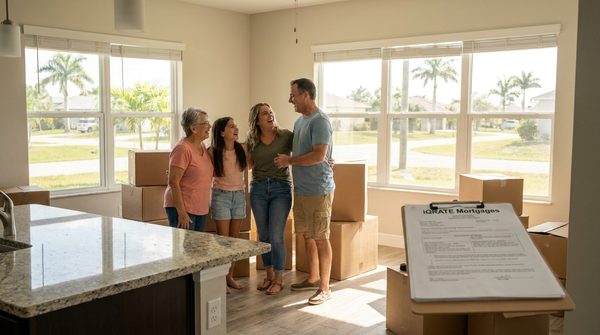
Consider a hypothetical family living in Cape Coral. Their canal-front home was destroyed by a hurricane surge. They were insured, but the payout won't cover the full cost of a new home at current prices. Because their home was their primary residence and was located in a PDMDA, they are prime candidates for a 203(h) loan. This would allow them to secure financing for a new home without needing to deplete their remaining funds for a down payment.
Do I have to buy a home in the same area in Fort Myers?
No, you are not required to buy a new home in the same location, county, or even the same state. This is one of the most flexible and beneficial features of the FHA 203(h) program. The FHA understands that disaster victims may need or want to relocate for various reasons, such as job opportunities, family support, or simply a desire to move away from a high-risk area.
For instance, if your primary residence in Fort Myers was rendered uninhabitable, you could use the 203(h) loan to purchase a home in another Florida city like Tampa or Orlando, or even in another state like Georgia or North Carolina. The only geographical requirement is that your previous home was located within the PDMDA. The new home can be anywhere in the United States, as long as it meets standard FHA property guidelines and you intend to occupy it as your principal residence.
This flexibility is crucial. It gives you the freedom to make the best decision for your family's future without being geographically tethered to the site of the disaster. You can move closer to relatives, accept a job offer in a new city, or find a community that feels safer, all while leveraging the 100% financing benefit of the 203(h) loan.
What are the credit score requirements for a 203(h) loan?
While the FHA 203(h) program is designed to be accessible, it is not a 'no-credit-check' loan. Lenders will still evaluate your creditworthiness to ensure you have the ability to repay the mortgage. However, both the FHA and lenders often apply more flexible and understanding underwriting standards for disaster victims.
FHA guidelines themselves do not set a minimum credit score, but the FHA-approved lenders who issue the loans do. Generally, most lenders will look for a minimum credit score of 620. (The data, information, or policy mentioned here may vary over time.) Some may go slightly lower, but a score in this range gives you the best chance of approval.
The key distinction with a 203(h) loan is how lenders view credit issues that arose because of the disaster. If you had a strong payment history before the disaster but then missed a few payments on a credit card or auto loan in the chaotic months that followed, underwriters are instructed to be more lenient. They can disregard these disaster-related delinquencies if you provide a letter of explanation detailing how the event caused the temporary financial hardship.
However, this leniency does not typically apply to pre-existing credit problems. If you had a history of late payments or collections before the disaster was declared, it will still be a factor in the lending decision. The goal is to help those who were in good financial standing get back on their feet, not to overlook long-term credit challenges.
How do I prove my previous residence was in a disaster area?
Proving that your home was in a disaster area and was damaged or destroyed is a critical step in the application process. Your lender needs clear, verifiable evidence to submit your loan for FHA insurance. You cannot simply state that your home was destroyed; you must provide documentation.
First, the lender will independently verify that your property's address falls within a PDMDA using official records from the Federal Emergency Management Agency (FEMA).
Second, you will need to provide evidence of the damage or destruction. The best forms of proof include:
- An insurance claim: A copy of the claim filed with your homeowner's insurance company detailing the extent of the damage and any settlement.
- A FEMA report: If you registered for assistance with FEMA, you will have documentation of their inspection and assessment of your property.
- A report from a licensed inspector: A written assessment from a qualified, independent home inspector, appraiser, or even a local building official that documents the property is uninhabitable.
- Photos and videos: While helpful as supporting evidence, photos alone are usually not sufficient. They should be paired with one of the official reports listed above.
For a homeowner in Cape Coral, this might involve providing the lender with their flood insurance claim documents and the official damage assessment report from the city's building department condemning the structure.
Can I use this loan to rebuild on my current lot in Cape Coral?
Yes, absolutely. The FHA 203(h) loan is an excellent tool for homeowners who love their neighborhood and want to rebuild on their own land. The program is not limited to purchasing a different property; it can be used as a construction loan to finance the reconstruction of a new single-family home on your existing lot.
When used for rebuilding, the loan functions similarly to a construction-to-permanent loan. The funds are placed in an escrow account and are disbursed to your builder in stages (or 'draws') as construction milestones are met. For example, draws might be scheduled after the foundation is poured, the framing is complete, and the home is under roof. An inspector will verify the work at each stage before the next payment is released to the builder.
This process ensures the loan funds are used as intended and that the construction meets FHA Minimum Property Standards. Using a 203(h) loan to rebuild in a place like Cape Coral allows you to stay in the community you've established while building a brand-new home that is often stronger and more resilient to future storms, as it will be built to the latest building codes.
Are there special documentation requirements?
Yes, in addition to the standard documentation required for any mortgage application (like pay stubs, W-2s, tax returns, and bank statements), the FHA 203(h) program has several unique documentation needs related to the disaster.
Your lender will require a specific package of evidence to prove your eligibility. Be prepared to provide:
- Proof of Previous Residence: You'll need to show the damaged property was your primary residence. This can be done with documents like utility bills, a driver's license, tax records, or a mortgage statement in your name at that address.
- Evidence of Damage and Location: As detailed earlier, this includes your insurance claims, FEMA reports, or official inspection reports confirming the property was in a PDMDA and was destroyed or rendered uninhabitable.
- A Signed Borrower Certification: You will need to sign a statement confirming that the property you are financing with the 203(h) loan will be your new primary residence.
- Construction Documents (if rebuilding): If you are rebuilding, you will need to provide the lender with a complete set of plans and specifications for the new home, a construction contract with a licensed builder, and a detailed budget.
Gathering these documents promptly is essential for a smooth application process, especially given the one-year deadline.
How long do I have to apply for the loan after the disaster?
This is one of the most critical rules of the FHA 203(h) program: there is a strict deadline. Borrowers have exactly one year from the date the President officially designates the area as a PDMDA to apply for the loan.
This doesn't mean the loan must be closed within a year. It means you must have submitted your application and the lender must have obtained an FHA case number for your loan within that 365-day window. Missing this deadline means you lose your eligibility for the program entirely.
For example, if a major hurricane prompted a PDMDA declaration for Lee County on September 29, 2022, affected residents in Fort Myers and Cape Coral would have until September 29, 2023, to have an FHA case number assigned. Given the time it takes to gather documentation, find a new property or a builder, and complete a loan application, it is crucial to start the process as soon as possible after the disaster. Waiting until the last few months could jeopardize your ability to secure this valuable financing.
Navigating disaster recovery is complex. If you believe the FHA 203(h) program could be your path forward in Fort Myers or Cape Coral, connect with a mortgage expert who understands disaster relief financing. Apply now to review your specific situation and timeline.
Author Bio
David Ghazaryan is the expert mortgage strategist and founder behind iQRATE Mortgages. With a mission to fund home loans that traditional banks won't touch, David specializes in helping clients with unique financial situations, including those recovering from foreclosure or bankruptcy. He expertly crafts smart, strategic, and stress-free mortgages by leveraging a vast network of over 100 lenders to secure competitive rates for investors and homebuyers alike. Praised for exceptional customer service, David has helped hundreds of families with a 97% satisfaction rate, guiding them to the mortgage they deserve.