


FHA Part-Time Work History Requirements in Dallas
When you apply for a Federal Housing Administration (FHA) loan in Dallas or anywhere in Texas, lenders focus on one primary factor: stability. They need assurance that your income is reliable and likely to continue for at least the next three years. For part-time employment, this means you can't just start a new job and expect that income to count toward your qualification.
The standard FHA requirement is a two-year history of part-time employment. This doesn't necessarily have to be with the same employer, but you must demonstrate a consistent pattern of working part-time for at least 24 months. The underwriter is looking for a track record that proves your part-time work is a regular and dependable part of your financial life, not a temporary or sporadic source of cash.
If you've held the same part-time job for two years, the process is straightforward. However, if you've switched jobs, the lender will analyze the transition. Did you move to a similar role? Was there a significant gap between jobs? A history showing you consistently hold part-time positions, even if they are with different companies, can satisfy the requirement. The key is proving that part-time work is your normal course.
What if I Have Less Than Two Years of History?
Qualifying with less than two years of history is difficult but not impossible. The FHA allows for exceptions if certain compensating factors are present. These are positive elements in your loan file that help offset the risk of a shorter work history. Strong compensating factors include:
- A large down payment: Putting down more than the FHA minimum of 3.5% shows financial strength.
- Significant cash reserves: Having several months of mortgage payments saved after closing demonstrates you can handle unexpected financial issues.
- Low debt-to-income (DTI) ratio: If your total debts, including the new mortgage, are a very small portion of your income, it reduces the lender's risk.
- A history of saving: Demonstrating a consistent pattern of saving money can show financial discipline.
Even with these factors, a lender will need to be convinced that your income is stable. For example, a nurse who has worked full-time for ten years and recently picked up a steady part-time hospital job one year ago may have a better chance of getting an exception than someone with a much shorter overall work history.
Primary vs. Secondary Part-Time Income for FHA Loans
When you have multiple jobs, lenders categorize them to determine how the income can be used. The distinction between primary and secondary income is crucial for underwriting an FHA loan, especially when both jobs are part-time.
- Primary Income: This is your main, most reliable source of earnings. If you have two part-time jobs, the one you have held longer and/or that provides the most consistent hours and pay is typically considered your primary income. The lender must be confident that this income stream is stable and likely to continue.
- Secondary Income: This refers to a second job that supplements your primary earnings. FHA guidelines are stricter for using secondary income. To count income from a second part-time job, you must have worked that job simultaneously with your primary job for the past two years without any significant interruptions.
Let's consider a homebuyer in Fort Worth. They have worked 25 hours a week at a retail store for three years. They also started working 15 hours a week as a barista two years ago. In this case, the retail job is the primary income, and the barista job is the secondary income. Because they have held both jobs together for a full two years, the income from both can likely be used to qualify for the mortgage.
However, if that same homebuyer started the barista job only six months ago, the income from it could not be used for qualification. The FHA sees this short history as insufficient evidence that the borrower can sustain the workload of two jobs long-term. The lender's main concern is preventing burnout and ensuring you can handle both work schedules and a mortgage payment without becoming overextended.
Averaging Income from Fluctuating Part-Time Jobs in Fort Worth
One of the biggest challenges for part-time workers is that their hours often fluctuate. One week you might work 30 hours, and the next, only 18. This variability makes lenders cautious. To address this, FHA guidelines require lenders to average your part-time income over a 24-month period. This method smooths out the peaks and valleys, providing a more conservative and realistic figure for your qualifying income.
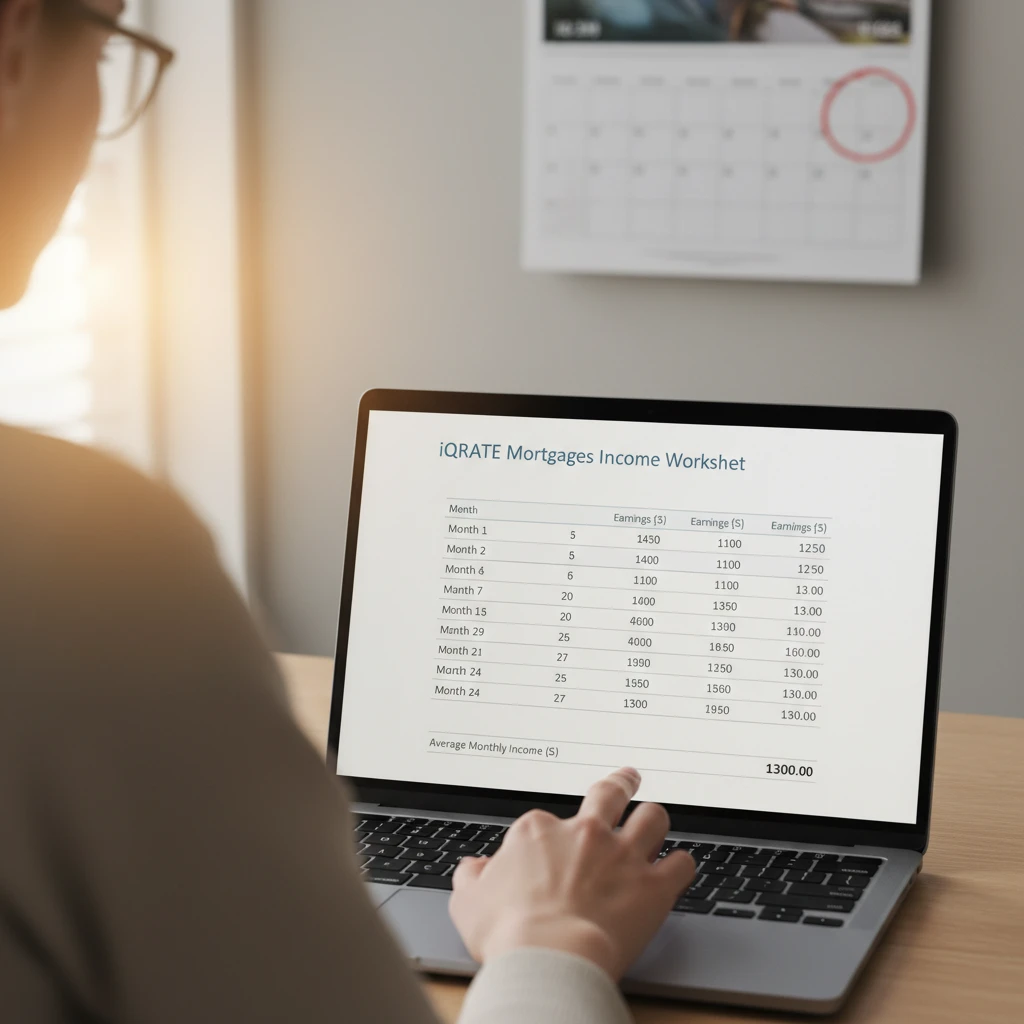
The lender will not simply use your most recent, highest-earning pay stub. Instead, they will gather your W-2s and pay stubs for the last two years and perform a detailed calculation.
How FHA Lenders Calculate Average Part-Time Income
Imagine you want to buy a home in Dallas and have worked part-time at a local clinic for the past two years. Your income history is as follows:
- Year 1 Total Earnings (from W-2): $22,000
- Year 2 Total Earnings (from W-2): $25,000
An underwriter would perform the following calculation:
- Total two-year income: $22,000 + $25,000 = $47,000
- Divide by 24 months: $47,000 / 24 = $1,958.33
The lender would use $1,958.33 as your gross monthly income for qualification purposes. It's important to note that if your income has been declining, the lender will be more cautious. For instance, if you earned $25,000 in Year 1 but only $22,000 in Year 2, the underwriter will likely use the lower, more recent income figure ($22,000 / 12 = $1,833.33) or ask for a detailed explanation for the decline.
Essential Documentation for Each Part-Time Employer
To prove your income history and stability, you must provide comprehensive documentation for each of your part-time employers. Being organized and prepared with these documents can significantly speed up the mortgage process. Your lender will typically request the following:
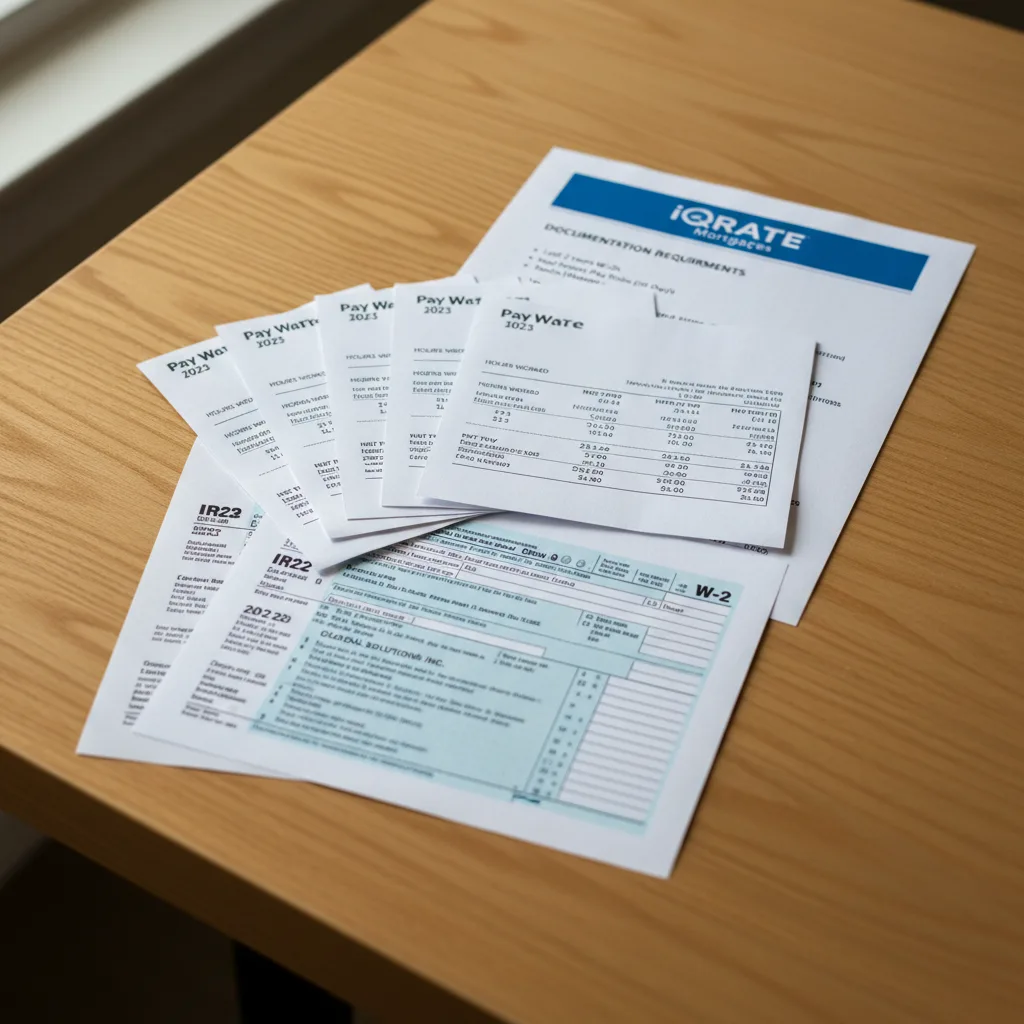
- Most Recent Pay Stubs: You'll need pay stubs covering the last 30 days for each job. These must show your name, the employer's name, your pay rate, hours worked, and year-to-date (YTD) earnings.
- W-2 Forms for the Past Two Years: W-2s provide an official summary of your annual earnings and taxes paid for each employer.
- Federal Tax Returns: Lenders will want to see your signed federal tax returns (Form 1040) for the past two years, especially if you have multiple sources of income.
- Verification of Employment (VOE): The lender will send a form directly to each employer's HR department to confirm your dates of employment, position, pay rate, and average hours worked. They will also ask about the likelihood of your continued employment.
- A Letter of Explanation (if needed): If there are any inconsistencies, such as a gap in employment or a recent change in your pay structure, be prepared to write a clear letter explaining the circumstances.
Will a Recent Employment Gap Hurt My FHA Approval?
An employment gap can be a red flag for lenders, but it doesn't automatically disqualify you. The FHA's main concern is whether the gap was an anomaly or part of a pattern of unstable employment. Generally, a gap of less than six months is manageable, provided you can explain it and have returned to a similar line of work.
For example, if you left a part-time job in Dallas, took three months off to care for a family member, and then started a new, similar part-time job, an underwriter will likely be understanding. You would need to provide a letter of explanation, and the lender would want to see that you have been at your new job for a period of time (usually a few months) to demonstrate stability.
However, a gap lasting more than six months is more problematic. If you were unemployed for a year, the FHA generally requires you to be back at work for at least six months before your income can be considered effective and stable. The two-year lookback period for income averaging would still apply, but the lender needs to see that you are firmly re-established in the workforce.
How a Raise Can Impact Your FHA Mortgage Qualification
Receiving a raise is fantastic news, but it may not immediately boost your qualifying income as much as you'd hope. Because FHA guidelines rely on a two-year average for variable income, a recent raise is only one part of a much larger calculation.
Let's say you've been working at a job in Fort Worth for two years. For the first 18 months, you earned $15 per hour. Six months ago, you received a raise to $18 per hour. The lender will not just use your new $18/hour rate. Instead, they will average your total earnings over the entire 24-month period. While the raise will increase the overall average, its impact is diluted by the 18 months you spent at the lower wage.
The lender needs to see a history of you receiving the higher pay rate. If the raise is very recent (within the last few months), its positive effect on your average income will be minimal. If the raise was part of a promotion to a new role with guaranteed hours, the underwriter might be able to make a more favorable calculation, but this is handled on a case-by-case basis.
How Lenders Verify Employment for Multiple Jobs
The Verification of Employment (VOE) is a critical, non-negotiable step in the mortgage process. Your lender will independently contact every employer you've listed for the past two years. This is not just a phone call; it's a formal process.
- Initial VOE: Early in the application process, your loan processor will send a standardized VOE form to each employer's HR department. This form asks for your start date, job title, current salary or wage, average hours per week for the last two years, and YTD earnings.
- Review and Analysis: The underwriter compares the information on the completed VOE forms with the pay stubs and W-2s you provided. Any discrepancies must be explained.
- Final Verbal VOE: Just before your closing date (often within 72 hours), the lender performs a final verbal verification. They call each employer one last time to confirm that you are still actively employed and that no changes to your employment status are expected. This final check ensures that nothing has changed between your loan approval and the closing table.
This meticulous process underscores why honesty and accuracy on your loan application are paramount. Lenders will verify everything, and a solid, well-documented history is the key to securing an FHA loan with part-time income. Qualifying for an FHA loan with part-time jobs requires careful documentation and a clear strategy. If you're navigating a complex income situation in Dallas or Fort Worth, working with a mortgage expert who understands FHA guidelines can make all the difference in achieving your homeownership goals.
Ready to see how your part-time income can work for you? Take the next step and apply for a mortgage today to get a clear path to homeownership.
Author Bio
David Ghazaryan is the expert mortgage strategist and founder behind iQRATE Mortgages. With a mission to fund home loans that traditional banks won't touch, David specializes in helping clients with unique financial situations, including those recovering from foreclosure or bankruptcy. He expertly crafts smart, strategic, and stress-free mortgages by leveraging a vast network of over 100 lenders to secure competitive rates for investors and homebuyers alike. Praised for exceptional customer service, David has helped hundreds of families with a 97% satisfaction rate, guiding them to the mortgage they deserve.
References
HUD 4000.1: FHA Single Family Housing Policy Handbook
CFPB: What is a debt-to-income ratio? Why is the 43% DTI ratio important?









