


Mortgage Insurance Calculations: FHA vs. Conventional in Miami
When you buy a home with less than a 20% down payment, lenders require mortgage insurance to protect themselves against default. However, how this insurance is calculated differs significantly between Federal Housing Administration (FHA) and Conventional loans. Understanding this difference is key to managing your housing costs in a market like Miami.
FHA Mortgage Insurance Premium (MIP)
FHA loans have a two-part mortgage insurance structure, collectively known as the Mortgage Insurance Premium (MIP).
- Upfront Mortgage Insurance Premium (UFMIP): This is a one-time charge, currently set at 1.75% of your base loan amount. You can pay this fee in cash at closing, but most buyers choose to roll it into their total loan balance. While this avoids an upfront cost, it means you're paying interest on the premium for the life of the loan.
- Annual Mortgage Insurance Premium (MIP): This is an ongoing cost, paid monthly as part of your mortgage payment. The rate for most borrowers making a minimum 3.5% down payment is 0.55% of the loan balance per year. This rate is divided by 12 and added to your monthly payment. Unlike private mortgage insurance, FHA MIP rates are not heavily influenced by your credit score.
Example: A Miami Home Purchase
Let's say you're buying a $450,000 home in Miami with a 3.5% down payment ($15,750). Your base loan amount is $434,250.
- UFMIP: $434,250 x 1.75% = $7,600 (This is added to your loan, making the new total loan amount $441,850)
- Annual MIP: $434,250 x 0.55% = $2,388.38 per year
- Monthly MIP Payment: $2,388.38 / 12 = $199.03
Conventional Private Mortgage Insurance (PMI)
Conventional loans use Private Mortgage Insurance (PMI), which is provided by private companies. The cost of PMI is highly personalized and based on risk. The main factors are:
- Credit Score: This is the most significant factor. A higher credit score results in a lower PMI rate.
- Loan-to-Value (LTV) Ratio: A larger down payment (lower LTV) reduces the lender's risk and lowers your PMI cost.
- Debt-to-Income (DTI) Ratio: A lower DTI can sometimes result in a better rate.
PMI rates typically range from 0.2% to 2.0% of the loan amount annually. For a borrower with a good credit score (e.g., 740+), the rate can be significantly lower than the FHA's MIP. (The data, information, or policy mentioned here may vary over time.)
Example: The Same Miami Home
Using the same $450,000 home with a 5% down payment ($22,500), your loan amount is $427,500.
Buyer with a 740 Credit Score: The PMI rate might be around 0.35%.
- $427,500 x 0.35% = $1,496.25 per year
- Monthly PMI Payment: $1,496.25 / 12 = $124.69
Buyer with a 680 Credit Score: The PMI rate could be closer to 0.75%.
- $427,500 x 0.75% = $3,206.25 per year
- Monthly PMI Payment: $3,206.25 / 12 = $267.19
As you can see, the conventional loan is cheaper for the buyer with a strong credit history, while the FHA loan offers a more affordable mortgage insurance option for the buyer with a lower score.
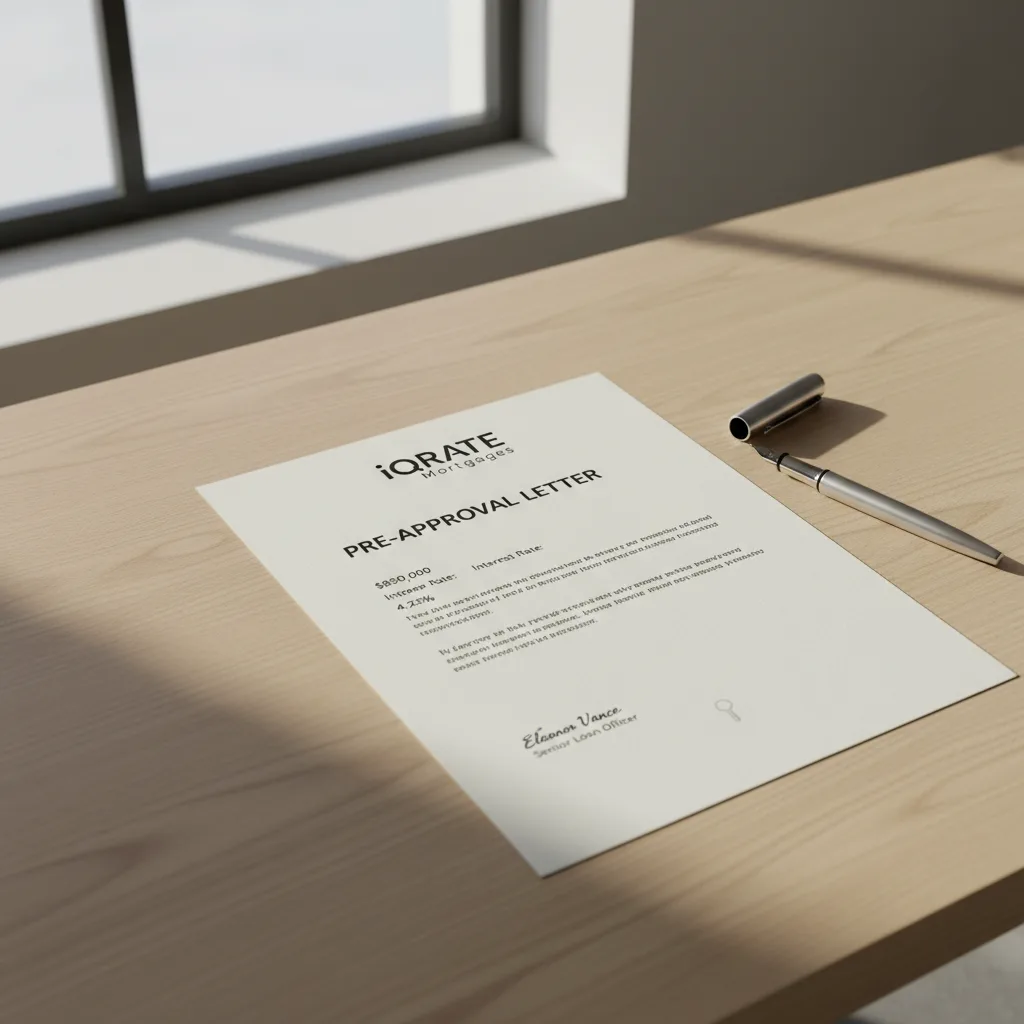
The Permanence of FHA Mortgage Insurance on an Orlando Home
One of the most critical differences between these loan types is how and when you can stop paying for mortgage insurance. This has massive long-term financial implications for homeowners in growing markets like Orlando.
FHA MIP Removal Rules
For most FHA borrowers today, the MIP is a long-term commitment. The rules depend on your original down payment:
- Down Payment Less Than 10%: If you make the minimum 3.5% down payment, you will pay the annual MIP for the entire life of the loan. The only way to remove it is to refinance into a different loan type, such as a conventional loan, once you have sufficient equity.
- Down Payment of 10% or More: If you put down 10% or more at purchase, you will pay the annual MIP for 11 years.
This is a significant drawback for FHA loans. Even after you've paid your loan down for years and your home value has appreciated, you cannot simply request to have the MIP removed.
Conventional PMI Removal Rules
Conventional loans offer much more flexibility. You can get rid of PMI in several ways:
- Request Removal: Once your loan balance reaches 80% of the original home value, you can contact your lender and request to have PMI canceled. You must have a good payment history.
- Automatic Termination: By law, lenders must automatically terminate your PMI when your loan balance is scheduled to reach 78% of the original home value.
- Appreciation: If your Orlando home value increases significantly, you can pay for a new appraisal. If the new appraisal shows your loan balance is now 80% or less of the new, higher value, you can request PMI cancellation.
This ability to shed the monthly mortgage insurance payment is a powerful advantage of conventional loans, saving you thousands of dollars over time.
Comparing Monthly Payments for a Starter Home in Hialeah
Let's apply these concepts to a practical scenario: buying a $400,000 starter home in Hialeah, Florida. We'll compare the estimated monthly payments for two different buyer profiles. For this example, we'll assume a 6.5% interest rate, $4,800 annual property taxes, and $1,800 annual homeowners insurance.
Scenario 1: Buyer with a 670 Credit Score
This buyer might struggle to get the best conventional PMI rates, making FHA a strong contender.
FHA Loan (3.5% Down Payment)
- Down Payment: $14,000
- Base Loan: $386,000
- UFMIP (1.75%): $6,755
- Total Loan Amount: $392,755
- Principal & Interest: $2,482
- Taxes & Insurance: $550
- Annual MIP (0.55% on base): $176.92
- Estimated Total Monthly Payment: $3,208.92
Conventional Loan (5% Down Payment)
- Down Payment: $20,000
- Loan Amount: $380,000
- Principal & Interest: $2,402
- Taxes & Insurance: $550
- PMI (approx. 0.80%): $253.33
- Estimated Total Monthly Payment: $3,205.33
In this case, the monthly payments are nearly identical. However, the FHA loan required less cash for the down payment, but the MIP is permanent. The conventional loan's PMI is higher but can eventually be removed.
Scenario 2: Buyer with a 750 Credit Score
For a buyer with excellent credit, the math changes dramatically.
FHA Loan (3.5% Down Payment)
- The FHA calculation remains the same regardless of credit score.
- Estimated Total Monthly Payment: $3,208.92
Conventional Loan (5% Down Payment)
- Down Payment: $20,000
- Loan Amount: $380,000
- Principal & Interest: $2,402
- Taxes & Insurance: $550
- PMI (approx. 0.38%): $120.33
- Estimated Total Monthly Payment: $3,072.33
Here, the conventional loan is over $135 cheaper per month due to the significantly lower PMI rate. This borrower would save over $1,500 per year and has a clear path to eliminating that PMI payment in the future.

Credit Score's Role in Conventional PMI Rates
As the Hialeah example illustrates, your credit score is the single most important variable in determining your conventional PMI cost. Insurers use your FICO score to predict risk. A higher score demonstrates a history of responsible credit management, making you a lower risk and earning you a better rate.
Here’s a general idea of how PMI rates can change based on credit score for a 95% LTV loan:
- 760+ Score: 0.25% - 0.40%
- 720-759 Score: 0.35% - 0.60%
- 680-719 Score: 0.55% - 0.90%
- 640-679 Score: 0.85% - 1.50%
Improving your credit score by even 20-30 points before applying for a mortgage can translate into substantial savings on your monthly PMI payment. (The data, information, or policy mentioned here may vary over time.)
How Your Down Payment Impacts Loan Costs in Florida
Your down payment directly influences both your loan type eligibility and your mortgage insurance costs.
- 3% to 4.99% Down (Conventional): You can get a conventional loan with as little as 3% down. However, this results in the highest PMI rates because the LTV is high.
- 3.5% Down (FHA): This is the minimum for an FHA loan. It offers access to the standard, non-credit-score-based MIP rate.
- 5% to 19.99% Down (Conventional): Every percentage point you add to your down payment reduces your PMI rate. Crossing key thresholds like 5%, 10%, and 15% down can lead to significant drops in your monthly PMI cost.
- 20% or More Down (Conventional): With 20% down, you avoid PMI altogether. This is the ideal scenario for a conventional loan, saving you from any monthly mortgage insurance costs from day one.
For FHA loans, putting more money down doesn't lower your annual MIP rate. However, if you put down 10% or more, you change the duration of the MIP from the life of the loan to 11 years, which is a major long-term benefit.
Seller Perceptions in Competitive Florida Markets
In a competitive real estate market like Miami or Orlando, the type of financing you use can impact a seller's decision. While it's illegal to discriminate based on financing type, sellers often have perceptions about which loans are easier to close.
- Conventional Loan Offers: These are often viewed as 'stronger' or less risky by sellers. The appraisal process is typically focused solely on the home's market value.
- FHA Loan Offers: FHA appraisals have a dual purpose: to determine the value and to ensure the property meets HUD's minimum safety and structural standards. An FHA appraiser might require repairs for things like peeling paint, a faulty handrail, or an old roof before the loan can be approved. Sellers may worry that these required repairs could delay closing or add unexpected costs, making them favor a conventional offer with fewer potential hurdles.
The Impact of Interest Rates on Total Loan Cost
Interest rates for FHA loans are often slightly lower than for conventional loans, especially for borrowers with lower credit scores. (The data, information, or policy mentioned here may vary over time.) This can make the FHA loan look more attractive on the surface. However, you must look at the total cost.
A slightly lower interest rate might save you $40 per month on your principal and interest payment, but if your FHA MIP is $80 more per month than the equivalent conventional PMI, you are still paying more overall. More importantly, the FHA MIP will continue for years—or even decades—after the conventional PMI would have been eliminated. That permanent MIP cost often negates any small advantage gained from a lower interest rate.
Uncovering Associated Fees in FHA and Conventional Loans
Neither loan type has 'hidden' fees, as all costs must be disclosed on your official Loan Estimate. However, the structure and names of the fees can be different.
- FHA's Key Fee: The most prominent fee unique to FHA is the Upfront Mortgage Insurance Premium (UFMIP). As explained, this 1.75% charge is typically added to your loan balance.
- Conventional's Key Fee: Conventional loans do not have an equivalent upfront insurance premium. The main variable cost is the PMI, which is paid monthly.
Both loan types will share common closing costs, including:
- Origination Fee: A charge from the lender for processing the loan.
- Appraisal Fee: The cost of having a licensed appraiser determine the home's value.
- Title Insurance & Search Fees: Costs to ensure the property title is clear of any liens or claims.
- Recording Fees: Fees paid to the county to record the sale.
Always compare the Loan Estimates from at least two to three different lenders to ensure you are getting a competitive deal on both the interest rate and the associated fees. (The data, information, or policy mentioned here may vary over time.) The choice between an FHA and a Conventional loan depends entirely on your personal financial profile. To see a clear, side-by-side comparison of your options based on your credit, down payment, and home price, the next step is to review a detailed Loan Estimate from a qualified mortgage strategist.
Navigating the complexities of FHA and Conventional loans is crucial for your financial future. See how these options stack up for your specific situation by taking the next step to apply now for a clear, personalized mortgage plan.
Author Bio
David Ghazaryan is the expert mortgage strategist and founder behind iQRATE Mortgages. With a mission to fund home loans that traditional banks won't touch, David specializes in helping clients with unique financial situations, including those recovering from foreclosure or bankruptcy. He expertly crafts smart, strategic, and stress-free mortgages by leveraging a vast network of over 100 lenders to secure competitive rates for investors and homebuyers alike. Praised for exceptional customer service, David has helped hundreds of families with a 97% satisfaction rate, guiding them to the mortgage they deserve.
References









