

Can I Get a Regular Mortgage for a Manufactured Home?
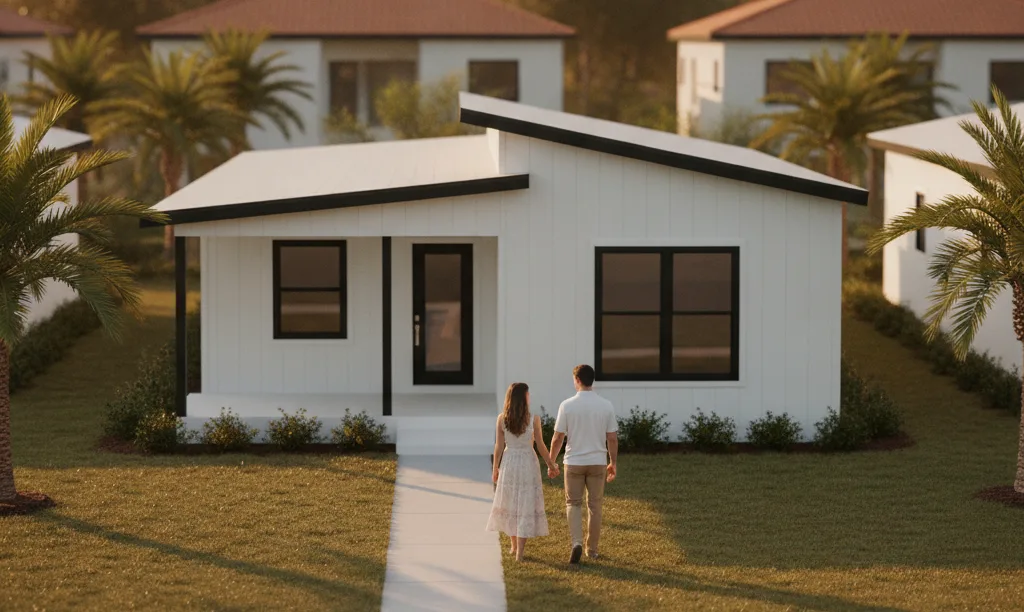
Yes, you absolutely can get a regular mortgage for a manufactured home, and this is a critical point many homebuyers in Florida miss. The misconception that these homes require a special, high-interest 'chattel loan' often steers buyers away from an affordable homeownership path. The key distinction lies in how the property is classified.
Personal Property (Chattel Loan): When a manufactured home is not permanently affixed to the land it sits on, it's considered personal property, much like a car or a boat. These loans, called chattel mortgages, typically come with higher interest rates and shorter repayment terms than traditional mortgages. They are common in mobile home parks where you own the home but lease the land.
Real Property (Standard Mortgage): To qualify for a standard FHA or Conventional loan, the manufactured home must be titled as 'real property'. This means the home and the land it occupies are sold as a single package. The home must be permanently attached to an approved foundation system, have the wheels and axles removed, and meet specific local and federal guidelines. When these conditions are met, the home is treated just like a site-built house for financing purposes.
For buyers in competitive markets like Tampa, understanding this difference is the first step. By ensuring the home you want is classified as real property, you unlock access to the favorable terms and lower interest rates of mainstream mortgage products.
What is the Difference Between a Mobile Home and a Manufactured Home?
While the terms are often used interchangeably, 'mobile home' and 'manufactured home' have distinct legal definitions that directly impact your ability to get financing. The dividing line is a specific date set by the U.S. Department of Housing and Urban Development (HUD).
Mobile Homes: These are factory-built homes constructed before June 15, 1976. This date is significant because it predates the implementation of the National Manufactured Housing Construction and Safety Standards Act. Homes built before this date do not adhere to any national construction code, making them largely ineligible for FHA and Conventional financing.
Manufactured Homes: These are factory-built homes constructed on or after June 15, 1976. They are built to the strict federal HUD code, which regulates everything from design and construction to energy efficiency and safety. To prove compliance, every manufactured home must have a 'HUD tag' or 'certification label', which is a small metal plate affixed to the exterior of each transportable section. This tag is the lender's proof that the home meets the necessary standards for financing.
When shopping for a home in Orlando, you must verify the presence of this HUD tag. If it has been removed or painted over, it can create significant hurdles for your lender and appraiser, potentially jeopardizing the loan.
What Are the Foundation Requirements for an FHA Loan in Tampa?
FHA financing has very specific and non-negotiable requirements for the foundation of a manufactured home. These rules are designed to ensure the home is a permanent, stable structure that will hold its value over the life of the loan. In Tampa, as elsewhere, the foundation must meet the guidelines outlined in HUD's Permanent Foundations Guide for Manufactured Housing.

Key requirements include:
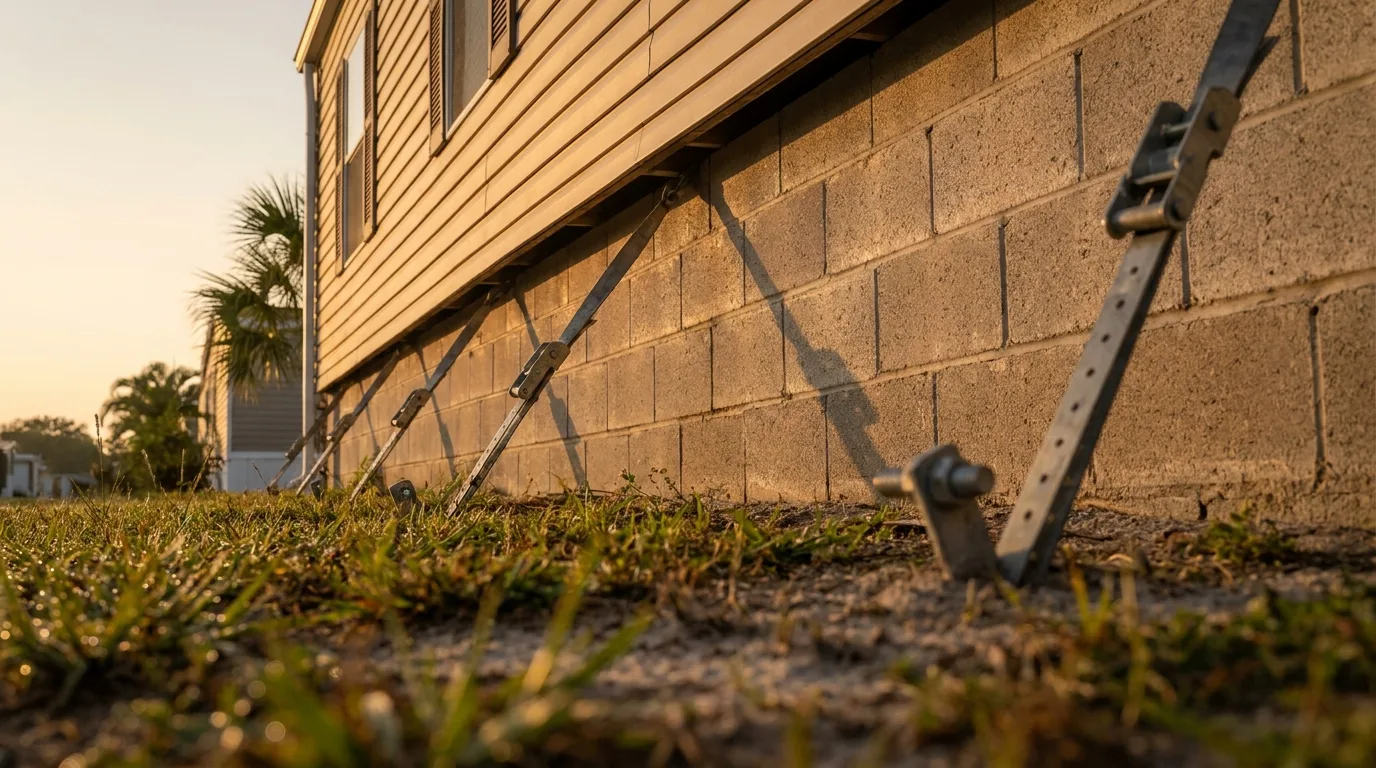
- Permanent Installation: The home must be permanently attached to the foundation system, which itself must be attached to the ground. The chassis must be properly anchored with tie-downs.
- Wheels and Axles Removed: All towing hitches, wheels, and axles used to transport the home must be permanently removed.
- Adequate Enclosure: The space between the bottom of the home and the ground must be enclosed by a continuous wall of concrete, masonry, or another weather-resistant material.
- Proper Drainage: The ground beneath the home must be graded to prevent water from pooling or accumulating under the structure.
- Engineer's Certification: An FHA-approved appraiser and underwriter will require a signed and stamped certification from a licensed structural engineer. This report confirms that the foundation was built according to HUD guidelines and meets all local code requirements.
These standards are stricter than what might be required for a chattel loan or even some Conventional loans, but they provide a layer of security for both the lender and the homeowner.
Are Down Payment Amounts Different for Manufactured Homes?
Yes, the minimum down payment can vary significantly between FHA and Conventional loans, which can influence which program is a better fit for your budget.
FHA Loan Down Payment
The Federal Housing Administration (FHA) is known for its low down payment requirements, and this extends to manufactured homes. For borrowers with a credit score of 580 or higher, the minimum down payment is just 3.5% of the purchase price. This makes FHA an incredibly attractive option for first-time homebuyers or those with limited savings.
- Example in Orlando: On a $220,000 manufactured home, an FHA loan would require a minimum down payment of $7,700 (3.5% of $220,000).
Conventional Loan Down Payment
Conventional loans, which are not government-insured, generally have stricter requirements. While programs like Fannie Mae's MH Advantage allow for a down payment as low as 3%, most conventional lenders will require at least 5% down for a manufactured home. Some may even require 10% or more, depending on your credit profile and the specific property. This is considered a risk-based adjustment due to the perceived depreciation risk of manufactured homes compared to site-built properties. (The data, information, or policy mentioned here may vary over time.)
- Example in Orlando: On the same $220,000 home, a conventional loan with a 5% down payment would require $11,000.
Does Conventional Financing Require a Higher Credit Score for These Homes?
Generally, yes. Conventional lenders often apply stricter credit score standards, known as 'overlays', for manufactured home loans. While the absolute minimum credit score for a conventional loan is typically 620, lenders may require a 640, 660, or even higher score specifically for manufactured housing. (The data, information, or policy mentioned here may vary over time.)
FHA loans are more lenient. The official FHA minimum is 580 for a 3.5% down payment. Some lenders can even go as low as 500 with a 10% down payment, though finding a lender for scores below 580 can be challenging.
Here's a quick comparison:
- FHA Loan: Minimum credit score of 580 is common. More forgiving of past credit issues.
- Conventional Loan: Minimum credit score of 620 is the baseline, but lenders often require 640+ for manufactured homes.
This difference makes FHA a vital option for buyers in Tampa and Orlando who have solid income but a less-than-perfect credit history.
How Does the Home's Age Affect My Loan Options in Orlando?
The age of the home is a critical factor, and the rules are quite clear for both FHA and Conventional financing. As mentioned earlier, any home built before June 15, 1976, is considered a 'mobile home' and is not eligible for either loan program.
For a home to be eligible, it must:
- Be built on or after June 15, 1976.
- Have the original, unaltered HUD Certification Label (the red metal tag) attached to each section of the home. Without this tag, financing is nearly impossible.
Additionally, the home must not have been moved from its original installation site. Both FHA and most Conventional loan programs will only finance a manufactured home that is being sold on its first permanent foundation. If a home has been installed, moved, and then re-installed elsewhere, it typically becomes ineligible for standard mortgage financing.
While FHA doesn't have a maximum age limit beyond the 1976 rule, some Conventional lenders may impose their own 'overlays', preferring not to finance homes older than 10 or 20 years. This is a lender-specific rule, not a requirement from Fannie Mae or Freddie Mac. (The data, information, or policy mentioned here may vary over time.)
What is an Engineer's Certification and Why Do I Need One?
An engineer's certification, sometimes called a foundation certification, is a formal report prepared by a licensed professional engineer. This document is a mandatory requirement for nearly all FHA and Conventional loans on manufactured homes. Its purpose is to verify that the home's foundation meets the stringent federal and local standards required to classify it as permanent real estate.
The engineer will visit the property and inspect:
- The type of foundation (e.g., slab, crawlspace).
- The anchoring and tie-down system that secures the home to the foundation.
- The proper removal of the wheels, axles, and towing hitch.
- The structural integrity of the foundation itself.
This certification provides the lender with the assurance that the home is permanently affixed to the land and will not be moved. It's the key document that transforms the home from 'personal property' to 'real property' in the eyes of the underwriter. The cost for this inspection and report typically falls to the buyer and is a necessary part of the closing costs. (The data, information, or policy mentioned here may vary over time.)
How Does the Appraisal Process Differ from a Site-Built Home?
The appraisal process for a manufactured home is more detailed than for a site-built home. The appraiser has several extra steps and verification requirements.
Verification of HUD Data Plate and Tags: The appraiser must locate and photograph the HUD Data Plate (a paper label found inside the home, often in a kitchen cabinet or closet) and the exterior HUD Certification Label (the red tag). These labels contain crucial information about the home's manufacturer, serial number, and date of construction.
Foundation Inspection: The appraiser will conduct a thorough inspection of the foundation to ensure it appears to meet HUD guidelines. They will confirm that the wheels and axles have been removed and that the home is properly secured.
Comparable Sales (Comps): This is one of the biggest differences. An appraiser must use other recently sold manufactured homes as comparable sales to determine the property's value. They cannot use site-built homes as primary comps. In areas like Tampa or Orlando where there is a good supply of manufactured housing, finding comps is usually straightforward. However, in more rural areas, a lack of recent, similar sales can make the appraisal challenging.
Condition and Additions: The appraiser will also note the home's overall condition and any additions, like porches or garages. For these additions to be included in the home's value, they must be structurally sound and built to local code. Navigating FHA and Conventional guidelines for a manufactured home in Florida requires expertise. If you're ready to explore your financing options in Tampa or Orlando, a mortgage strategist can help you find the right loan for your unique property and financial situation.
Securing the right mortgage for a manufactured home in Florida is much simpler with expert guidance. When you're ready to see how these financing options can work for you, take the first step and Apply now to get a clear picture of your potential.
Author Bio
David Ghazaryan is the expert mortgage strategist and founder behind iQRATE Mortgages. With a mission to fund home loans that traditional banks won't touch, David specializes in helping clients with unique financial situations, including those recovering from foreclosure or bankruptcy. He expertly crafts smart, strategic, and stress-free mortgages by leveraging a vast network of over 100 lenders to secure competitive rates for investors and homebuyers alike. Praised for exceptional customer service, David has helped hundreds of families with a 97% satisfaction rate, guiding them to the mortgage they deserve.
References
HUD - Manufactured Home Program
CFPB - What are my financing options for a manufactured home?









