


What's the Real Difference Between FHA MIP and Conventional PMI in Sacramento?
When buying a home in Sacramento with less than a 20% down payment, you'll encounter mortgage insurance. While both types serve to protect the lender if you default, they function very differently. Understanding this distinction is crucial for managing your long-term housing costs.
FHA Mortgage Insurance Premium (MIP) is a requirement for all FHA loans, which are insured by the Federal Housing Administration. It's designed to make homeownership accessible to buyers with lower credit scores and smaller down payments. MIP is non-negotiable and has a standardized rate structure.
Conventional Private Mortgage Insurance (PMI) is required for conventional loans (those not backed by the government) when the borrower's down payment is less than 20%. PMI rates are set by private companies and are highly dependent on your individual financial profile, including your credit score and down payment size.
Here’s a direct comparison for a Sacramento homebuyer:
- Loan Type: MIP is exclusive to FHA loans. PMI is exclusive to conventional loans.
- Cost Structure: FHA has two parts: an upfront premium (UFMIP) and a monthly premium. Conventional only has a monthly premium (though single-premium options exist).
- Credit Score Impact: FHA MIP rates are mostly the same for a borrower with a 640 credit score as for one with a 740. Conventional PMI rates are significantly lower for borrowers with higher credit scores.
- Cancellation: FHA MIP is difficult, and often impossible, to cancel without refinancing. Conventional PMI can be canceled once you have sufficient home equity.
How Long Must I Pay Mortgage Insurance on an FHA Loan in Fresno?
For many homebuyers in Fresno, the duration of FHA MIP is the biggest financial drawback. Unlike conventional PMI, you can't simply pay down your loan to 80% loan-to-value (LTV) and request its removal. The rules are strict and depend entirely on your original down payment.
There are two primary scenarios for FHA loans originated after June 3, 2013:
- Down Payment of 10% or More: If you make a down payment of at least 10%, you will pay the monthly FHA MIP for 11 years.
- Down Payment of Less Than 10%: If you make a down payment of less than 10% (most FHA borrowers put down the minimum 3.5%), you will pay the monthly FHA MIP for the entire life of the loan. The only way to remove it is to sell the home or refinance into a different loan type, such as a conventional mortgage.
Example in Fresno: Let's say you buy a home for $400,000 with a 3.5% down payment ($14,000). Your FHA loan is $386,000. You will pay the monthly MIP every month for 30 years unless you refinance out of the FHA loan.

Can I Remove PMI from a Conventional Loan Sooner Than FHA MIP?
Yes, absolutely. This is one of the most significant advantages of a conventional loan over an FHA loan for borrowers who anticipate building equity quickly. The Homeowners Protection Act gives you the right to cancel PMI.
Here are the conditions for removing PMI on a conventional loan:
- Borrower-Requested Cancellation: You can request that your lender cancel PMI once your loan balance reaches 80% of the home's original value. You must have a good payment history and may need to get a new appraisal to prove the home's value hasn't declined.
- Automatic Termination: By law, your lender must automatically terminate your PMI on the date when your principal balance is scheduled to reach 78% of the original value of your home. This happens even if you don't request it, provided you are current on your payments.
Comparing this to the FHA MIP rules, the difference is stark. A conventional borrower in Sacramento could potentially remove their mortgage insurance in 5-7 years through a combination of regular payments and home appreciation, while an FHA borrower with a minimum down payment is stuck with it for the loan's duration.
Which Mortgage Insurance Is More Expensive with a Lower Credit Score?
Conventional PMI is almost always more expensive for a borrower with a lower credit score. FHA MIP, on the other hand, becomes the more affordable and accessible option in this scenario.
PMI companies base their rates on risk. A lower credit score signifies higher risk, so they charge a higher premium. FHA's mission is to help this exact type of borrower, so its MIP rates are standardized and do not change dramatically based on credit score. The annual MIP rate for most FHA loans is 0.55% of the loan amount. (The data, information, or policy mentioned here may vary over time.)
Let's compare two hypothetical buyers purchasing a $500,000 home in Sacramento with 5% down ($25,000).
Buyer A (760 Credit Score):
- Conventional PMI: The rate might be around 0.35%. (The data, information, or policy mentioned here may vary over time.) On a $475,000 loan, that's approximately $139 per month.
- FHA MIP: The rate is 0.55%. On a $475,000 loan, that's approximately $218 per month (plus the upfront premium).
Buyer B (650 Credit Score):
- Conventional PMI: The rate could jump to 1.00% or higher. (The data, information, or policy mentioned here may vary over time.) On a $475,000 loan, that's approximately $396 per month.
- FHA MIP: The rate remains 0.55%. On a $475,000 loan, it's still $218 per month (plus the upfront premium).
In this example, FHA is the clear winner for the buyer with a lower credit score, saving them nearly $178 every month.
How Does My Down Payment Amount Affect My PMI Rate in Sacramento?
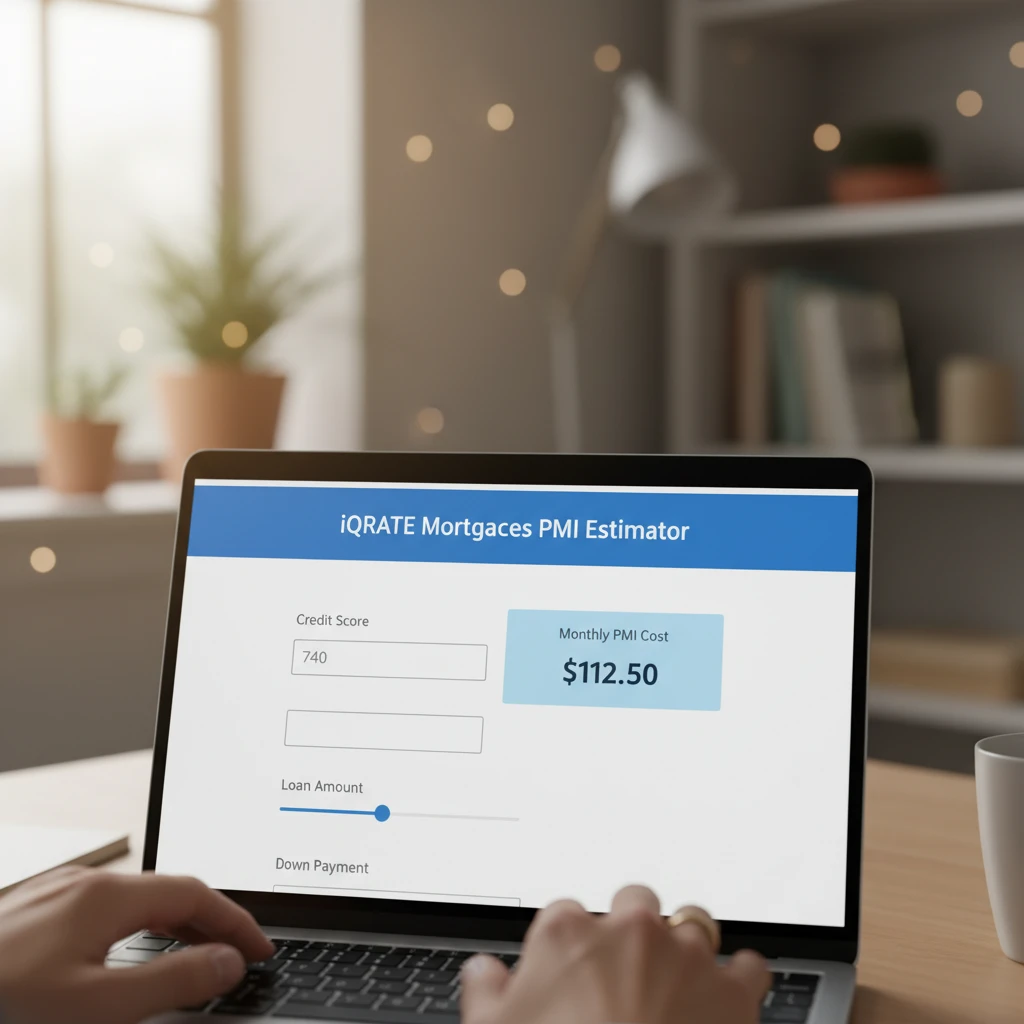
For conventional loans, your down payment amount has a direct and significant impact on your monthly PMI cost. A larger down payment reduces the lender's risk, which translates into a lower PMI rate for you. Lenders view a borrower with more 'skin in the game' as less likely to default.
PMI rate tiers are often based on LTV ratios. For example:
- 97% LTV (3% down): Highest PMI rate.
- 95% LTV (5% down): A noticeably lower rate than 3% down.
- 90% LTV (10% down): An even lower rate.
- 85% LTV (15% down): The lowest PMI rate tier before it's eliminated at 20% down.
Example in Sacramento: Imagine buying a $550,000 home. A buyer putting 3% down ($16,500) might pay a PMI rate of 0.78%, resulting in a monthly payment of around $347. (The data, information, or policy mentioned here may vary over time.) Another buyer putting 10% down ($55,000) might qualify for a rate of 0.38%, resulting in a monthly payment of only $157. (The data, information, or policy mentioned here may vary over time.) Making a larger down payment saves this buyer $190 per month.
Does FHA Have Both an Upfront and a Monthly Insurance Premium?
Yes, this is a key feature of FHA loans that often surprises first-time homebuyers in Fresno and across the country. FHA MIP consists of two separate costs:
- Upfront Mortgage Insurance Premium (UFMIP): This is a one-time fee equal to 1.75% of the base loan amount. It is paid at closing. However, the vast majority of borrowers choose to roll this cost into their total loan balance rather than paying it out of pocket. While this avoids a large upfront expense, it increases your total loan amount and the amount of interest you pay over time.
- Annual Mortgage Insurance Premium (MIP): This is the recurring cost, but it's paid in monthly installments. For most 30-year FHA loans with a down payment of less than 5%, the annual rate is 0.55% of the average loan balance for the year. (The data, information, or policy mentioned here may vary over time.) This amount is divided by 12 and added to your monthly mortgage payment.
Calculation Example: On a $400,000 loan in Fresno:
- UFMIP: $400,000 * 1.75% = $7,000. This is typically added to the loan, making the new total $407,000.
- Annual MIP (Year 1): $400,000 * 0.55% = $2,200 per year, or approximately $183 per month.
Is There a Scenario Where FHA Is Cheaper Than Conventional Long-Term?
While conventional PMI is often cheaper long-term due to its cancellability, there are specific situations where an FHA loan can be the more financially prudent choice, especially when considering accessibility.
The primary scenario involves a borrower with a low credit score. As shown earlier, the monthly FHA MIP payment can be substantially lower than a risk-adjusted conventional PMI payment. For a buyer struggling to qualify or manage monthly payments, the lower FHA cost makes homeownership possible.
Consider a homebuyer in Fresno with a 630 credit score and only a 3.5% down payment. They may not even qualify for a conventional loan, or if they do, the interest rate and PMI would be prohibitively high. The FHA loan provides a pathway to owning a home and starting to build equity. They can then work on improving their credit score and, in a few years, refinance into a conventional loan to eliminate the MIP, having already benefited from home appreciation.
How Do I Calculate the Total Lifetime Cost of Mortgage Insurance?
Calculating the total cost requires understanding the duration and rate for each loan type. Let's create a side-by-side comparison for a $500,000 home purchase in Sacramento with a 5% down payment ($25,000) and a 660 credit score. The loan amount is $475,000.
Conventional PMI Calculation
- Assumed PMI Rate (for 660 score, 5% down): 0.90% (The data, information, or policy mentioned here may vary over time.)
- Annual PMI Cost: $475,000 * 0.90% = $4,275
- Monthly PMI Cost: $4,275 / 12 = $356.25
- Time to Cancel: Let's assume it takes 8 years to reach 80% LTV through payments and appreciation.
- Total Lifetime PMI Cost: $356.25/month * 12 months/year * 8 years = $34,200
FHA MIP Calculation
- Upfront MIP (UFMIP): $475,000 * 1.75% = $8,312.50 (added to the loan)
- Annual MIP Rate: 0.55%
- Monthly MIP Cost (Year 1): ($475,000 * 0.55%) / 12 = $217.71
- Time to Cancel: With less than 10% down, MIP is for the life of the loan (30 years).
- Note: The monthly MIP amount slowly decreases as the loan balance is paid down. For simplicity, we'll use an average over the term.
- Total Lifetime MIP Cost (30 Years): The total MIP paid over 30 years would be substantial, likely over $50,000, plus the upfront UFMIP. The only way to stop this cost is to refinance. If the borrower refinances into a conventional loan after 5 years, the total FHA MIP cost would be:
- UFMIP = $8,312.50
- Monthly Payments: ~$215/month * 60 months = $12,900
- Total Cost Before Refinancing: $8,312.50 + $12,900 = $21,212.50
This calculation shows that while the monthly FHA payment is lower, a plan to refinance is critical to minimizing its total long-term cost. The right choice between FHA MIP and Conventional PMI depends entirely on your credit score, down payment, and long-term plans. Ready to see how these options apply to you? Apply now for a personalized cost analysis and expert guidance tailored to your mortgage needs.
Ready to see how these options apply to you? Apply now for a personalized cost analysis and expert guidance tailored to your mortgage needs.
Author Bio
David Ghazaryan is the expert mortgage strategist and founder behind iQRATE Mortgages. With a mission to fund home loans that traditional banks won't touch, David specializes in helping clients with unique financial situations, including those recovering from foreclosure or bankruptcy. He expertly crafts smart, strategic, and stress-free mortgages by leveraging a vast network of over 100 lenders to secure competitive rates for investors and homebuyers alike. Praised for exceptional customer service, David has helped hundreds of families with a 97% satisfaction rate, guiding them to the mortgage they deserve.
References
CFPB - When can I remove private mortgage insurance (PMI) from my loan?









