

Understanding DSCR Loans for Foreign Investors
Investing in Florida's thriving short-term rental market, especially in tourist hubs like Orlando and Kissimmee, is a goal for many global investors. However, the biggest hurdle is often financing. Traditional U.S. mortgages rely heavily on W-2 income, U.S. tax returns, and a domestic credit history—documents most non-US citizens simply don't have. This is where the Debt-Service Coverage Ratio (DSCR) loan becomes an essential tool.
A DSCR loan is a type of non-qualified mortgage (Non-QM) designed specifically for real estate investors. Its primary qualification method bypasses personal income verification entirely. Instead, it focuses on one simple question: Does the investment property generate enough income to cover its own mortgage debt?
The formula is straightforward:
DSCR = Gross Rental Income / Total Debt Service (PITI)
- Gross Rental Income: The projected or actual monthly rent the property will generate.
- Total Debt Service (PITI): The proposed monthly mortgage payment, which includes principal, interest, taxes, and insurance.
Lenders typically require a DSCR of 1.0 or higher. (The data, information, or policy mentioned here may vary over time.) A ratio of 1.0 means the rental income exactly covers the debt. A ratio of 1.25 means the property generates 25% more income than its expenses, indicating a healthy cash flow. For foreign national borrowers, some lenders may require a slightly higher ratio, such as 1.15 or 1.25, to mitigate perceived risk. (The data, information, or policy mentioned here may vary over time.)
Why DSCR is Ideal for Foreign Nationals
- No U.S. Income Required: Your income from your home country is not the primary factor. The property itself qualifies the loan.
- No U.S. Employment Verification: You don't need a job with a U.S. employer.
- Faster Underwriting: Since the lender is analyzing property cash flow instead of complex personal financial histories, the process can be more streamlined.
Required Documentation for Non-US Citizen Applicants
While DSCR loans simplify the income verification process, lenders still have stringent documentation requirements to verify identity, assets, and the legality of the transaction. Prepare to provide the following:
- Valid Passport: A clear, unexpired copy is mandatory for identity verification.
- Visa: A copy of your U.S. visa (e.g., B-1/B-2 tourist visa) is often required to prove you can legally enter the country to conduct business and manage your property.
- Proof of Foreign Residence: A utility bill or bank statement showing your name and address in your home country.
- Asset Verification: Lenders need to see proof of funds for the down payment and closing costs. This typically requires:
- Two to three months of bank statements from a reputable financial institution (either foreign or U.S.-based).
- Statements must show the funds have been 'seasoned'—meaning they have been in the account for at least 60-90 days. (The data, information, or policy mentioned here may vary over time.)
- If funds were recently deposited, you must provide a clear paper trail documenting their source (e.g., sale of another property, stock liquidation).
- International Credit Report: While not always mandatory, some lenders may request a credit report from your home country if one is available.
Underwriting Without a United States Credit History
Lacking a FICO score is a non-starter for conventional loans but is a common scenario for foreign national loans. Lenders have alternative methods to assess your creditworthiness:
- Emphasis on Down Payment: A larger down payment (typically 25-35%) significantly reduces the lender's risk. (The data, information, or policy mentioned here may vary over time.) This equity stake demonstrates your financial stability and commitment to the investment.
- Asset Reserves: In addition to the down payment, lenders will want to see that you have post-closing liquid reserves. This is typically calculated as a number of months of PITI payments. For example, six months of PITI in reserves shows you can cover the mortgage during potential vacancies. (The data, information, or policy mentioned here may vary over time.)
- Letters of Reference: Some lenders may accept letters from your financial institutions in your home country. These letters can attest to a long-standing, positive banking relationship.
- Property-Centric Analysis: Ultimately, the underwriter's focus shifts almost entirely to the property. A strong appraisal, positive rental income projections, and a desirable location in a market like Kissimmee are paramount.
Structuring Your Purchase: LLC vs. Foreign Corporation
How you take title to the property is a critical decision with legal and financial implications. For non-US investors, the most common and recommended vehicle is a U.S.-based Limited Liability Company (LLC).
Benefits of Using a U.S. LLC
- Liability Protection: An LLC separates your personal assets from your investment property. If a guest is injured at your Airbnb, any potential lawsuit is limited to the assets held within the LLC.
- Lender-Friendly: U.S. lenders are familiar and comfortable with the LLC structure. It simplifies the titling, insurance, and closing processes.
- Anonymity: An LLC can provide a layer of privacy for property ownership.
- Easier Banking: Opening a U.S. bank account under a registered U.S. LLC is far simpler than for a foreign entity.
Using a foreign corporation to purchase property is generally discouraged. It can create significant hurdles with title insurance companies, lenders, and compliance with U.S. regulations. Most lenders will require you to establish a new, single-purpose U.S. LLC for the transaction.
How Rental Projections Determine Loan Qualification
Since the property's income is the cornerstone of a DSCR loan, lenders must verify its potential earnings with objective data. They do not simply take the investor's or realtor's word for it. There are two primary methods used:
- The Appraisal's Comparable Rent Schedule (Form 1007): A licensed appraiser will analyze comparable short-term rentals in the immediate vicinity of your target property in Orlando. They will provide a professional opinion on the property's fair market rent, which the lender uses in their DSCR calculation.
- Third-Party Rental Data: For Airbnb-style properties, many modern lenders will also use data from services like AirDNA or Mashvisor. These platforms provide detailed projections on nightly rates, occupancy, and seasonality based on real-world data from existing local listings.
Example Calculation:
- Target Property: A 4-bedroom home in Kissimmee.
- Projected Gross Monthly Income (from AirDNA/Appraisal): $6,000
- Proposed Monthly PITI: $4,500
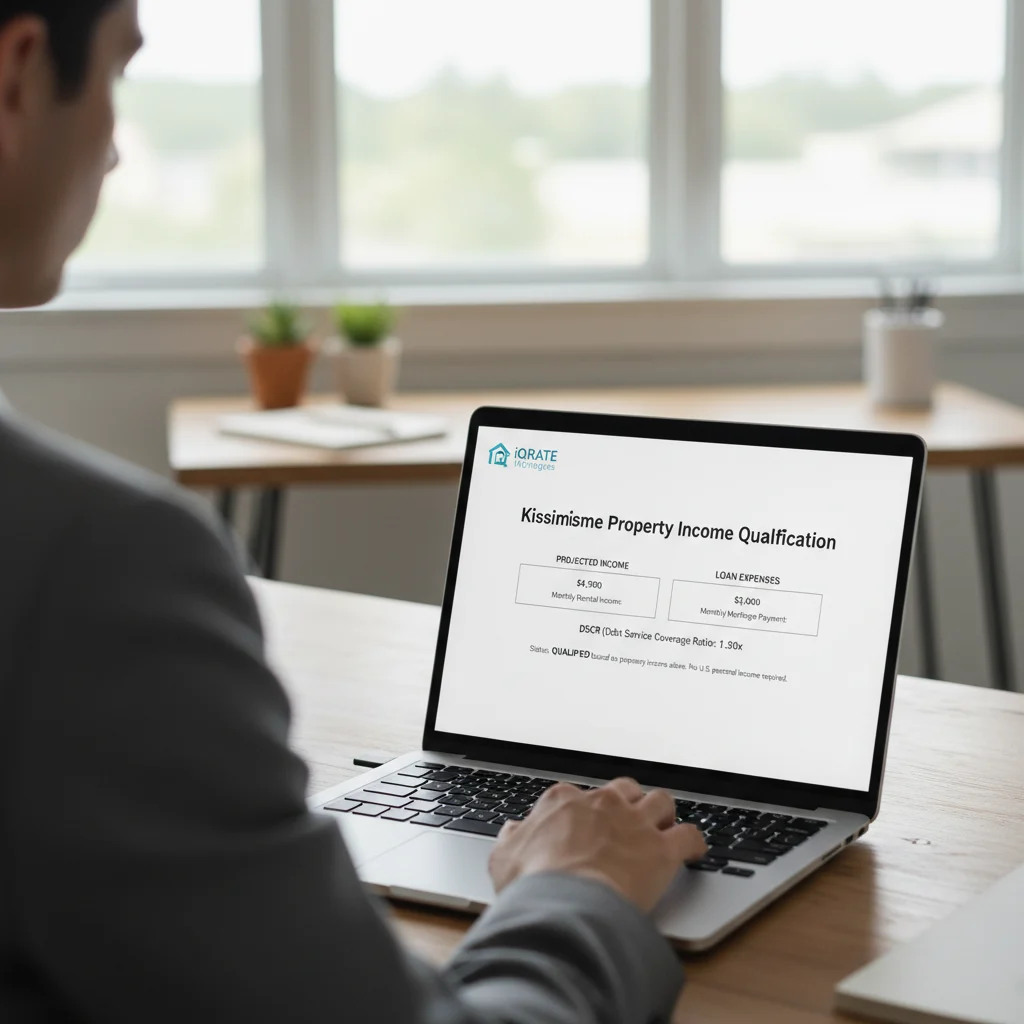
- DSCR Calculation: $6,000 / $4,500 = 1.33
In this scenario, the 1.33 DSCR is well above the typical 1.0 minimum, making it a strong candidate for loan approval.

Down Payment Requirements for Foreign National Loans
Yes, down payment requirements are consistently higher for non-US citizen borrowers. This is a non-negotiable risk management strategy for lenders. While a U.S. citizen investor might secure a loan with 20% down, a foreign national should plan for a down payment in the 25% to 35% range. (The data, information, or policy mentioned here may vary over time.)
The exact amount depends on several factors:
- Property Type: A single-family home might qualify for 25% down, while a condo-hotel could require 35% or more. (The data, information, or policy mentioned here may vary over time.)
- DSCR: A property with a very high DSCR (e.g., 1.50+) might be approved with a slightly lower down payment.
- Your Financial Profile: A borrower with significant liquid assets may be seen as a lower risk, potentially reducing the requirement.
Navigating Banking and Fund-Sourcing Hurdles
Getting the money into the U.S. and properly documented is often the most challenging part of the process.
- Open a U.S. Bank Account: Most lenders and title companies require the closing funds to come from a U.S. bank account. You should plan to open one as soon as you begin your property search. This can often be done with your passport and a secondary ID.
- Anticipate Wire Transfer Delays: International wire transfers are subject to strict anti-money laundering (AML) scrutiny. Wires can be delayed for days. Initiate your transfer well in advance of your closing date.
- Source and Season Your Funds: Do not move large sums of money around between accounts right before applying for your loan. Lenders need to see a clean, 60-90 day history for the funds you intend to use. Every large deposit must be documented with a clear paper trail. 'Gift funds' are often not allowed for foreign national investment loans.
Loan Differences: Orlando Condo-Hotels vs. Kissimmee Single-Family Homes
The type of property you choose has a massive impact on the financing process. A traditional single-family home or townhome offers the most straightforward path to a loan.
Single-Family Home Financing
Financing a detached single-family home or a unit in a planned unit development (PUD) in a place like Kissimmee is the standard for investment loans. Appraisals are simpler, title is clear, and lenders face fewer variables. The DSCR calculation is based purely on the home's rental potential and standard property taxes and insurance.
Condo-Hotel (Condotel) Financing
Condo-hotels, which are common in the Orlando resort area, are hybrids between a condominium and a hotel. They are significantly harder to finance for several reasons:
- Higher Risk Profile: Lenders view them as commercial ventures, which carry more risk than residential properties.
- Rental Restrictions: The condo association may limit when owners can use their units or force them into a specific rental management program, impacting income potential.
- High HOA Fees: Condotels often have very high monthly HOA fees that include utilities and resort amenities. These fees are included in the DSCR calculation and can make it difficult to achieve the required ratio.
- Fewer Lenders: Only a small subset of specialized lenders will finance condotels. This lack of competition often means higher interest rates and down payment requirements (often 35-40%). (The data, information, or policy mentioned here may vary over time.)
If you're a non-US citizen exploring an Airbnb investment in Florida, understanding your unique financing options is the first step. Partnering with a mortgage expert who specializes in foreign national and DSCR loans can simplify the process and unlock opportunities. Apply now to get started.
Author Bio
David Ghazaryan is the expert mortgage strategist and founder behind iQRATE Mortgages. With a mission to fund home loans that traditional banks won't touch, David specializes in helping clients with unique financial situations, including those recovering from foreclosure or bankruptcy. He expertly crafts smart, strategic, and stress-free mortgages by leveraging a vast network of over 100 lenders to secure competitive rates for investors and homebuyers alike. Praised for exceptional customer service, David has helped hundreds of families with a 97% satisfaction rate, guiding them to the mortgage they deserve.
References
Fannie Mae - Investment Properties
Consumer Financial Protection Bureau (CFPB) - What is a mortgage?
U.S. Department of Housing and Urban Development (HUD) - Homebuying









