


What is an asset-based jumbo loan for a property in Naples?
An asset-based jumbo loan is a specialized mortgage product designed for high-net-worth individuals who may not have traditional, verifiable income in the United States. Instead of relying on W-2s or U.S. tax returns, lenders qualify you based on your significant liquid assets. This approach is ideal for foreign national buyers purchasing luxury properties in markets like Naples, where conventional income documentation is often a major roadblock.
Here’s how it works: Lenders assess your global portfolio of stocks, bonds, mutual funds, and cash reserves. They use a formula to determine a hypothetical income stream from these assets, which then serves as the basis for your loan qualification. (The data, information, or policy mentioned here may vary over time.) For example, a buyer looking at a $3 million waterfront home in Naples might have a $10 million portfolio of publicly traded securities in their home country. A lender might consider a conservative percentage of that portfolio as sufficient to service the mortgage debt, even without any U.S.-based employment.
This financing tool acknowledges that many international buyers have substantial wealth but lack the specific paperwork U.S. banks typically require. It bypasses the need for U.S. pay stubs and tax history, focusing instead on the overall financial strength demonstrated by your global assets.

Can I get a mortgage in Palm Beach without a Social Security Number or United States credit?
Yes, you absolutely can secure a mortgage for a property in Palm Beach without a Social Security Number (SSN) or a U.S. credit history. Lenders who specialize in foreign national loans understand that new buyers in the U.S. will not have these credentials. They have established alternative methods for verifying your creditworthiness. (The data, information, or policy mentioned here may vary over time.)
Instead of a FICO score, lenders will use an alternative credit verification process. This typically involves:
- International Credit Reports: Some lenders can pull credit reports from certain countries, providing a history of your debt management abroad.
- Banker Reference Letters: A formal letter from your primary banking institution in your home country. This letter should state how long you have been a client, the average balances you maintain, and confirm that your accounts are in good standing.
- Utility and Rental Payment History: Providing 12 to 24 months of statements showing on-time payments for rent, utilities, or other recurring bills in your home country can serve as powerful proof of your financial discipline.
- Proof of Global Assets: A strong asset profile can also offset the lack of a traditional U.S. credit score. Demonstrating significant liquidity shows the lender you have the capacity to handle payments.
For a purchase in a competitive market like Palm Beach, having this documentation prepared in advance is crucial. It shows the lender you are a serious, well-qualified buyer despite not fitting the standard U.S. borrower profile.
What types of foreign assets can I use for down payment and qualification?
When securing a foreign national jumbo loan, lenders primarily focus on liquid or near-liquid assets that are easily verifiable and accessible. The goal is to see a clear financial picture that demonstrates your ability to fund the down payment and handle the ongoing mortgage obligations. While you may have significant global wealth, only certain asset classes are typically eligible for qualification purposes. (The data, information, or policy mentioned here may vary over time.)
Acceptable foreign assets generally include:
- Cash in Depository Accounts: This includes funds held in checking, savings, or money market accounts in reputable international financial institutions.
- Publicly Traded Securities: Stocks, bonds, and other securities held in a brokerage account. These must be easily valued and not subject to significant selling restrictions.
- Mutual Funds and ETFs: Investments in established funds are typically accepted, as their value is transparent and they are considered liquid.
- Vested Retirement Funds: Some lenders may consider funds from your home country's retirement or pension accounts, provided you can legally access them and there is clear documentation.
It's important to note what is not typically accepted for direct qualification or down payment sourcing. Illiquid assets like ownership in private companies, real estate equity in your home country, or personal property like art and automobiles are not used in the asset-based calculation. However, disclosing these can still help build a stronger overall financial profile for the lender.
How do lenders verify my income and employment from my home country?
Verifying foreign income and employment requires a different set of documents than a standard U.S. loan application. Since U.S. tax returns and W-2s are not available, lenders rely on a collection of alternative documents to confirm your financial stability and capacity to repay the loan. This process is common for high-end purchases in cities like Miami and Palm Beach, where international business owners and executives frequently buy property. (The data, information, or policy mentioned here may vary over time.)
To verify your income and employment, you will likely need to provide:
- An Employment Verification Letter: This must be a formal letter written on your employer’s official letterhead. It should state your position, your salary (converted to U.S. dollars), your start date, and confirm your employment is stable and ongoing. The letter must include contact information for verification.
- Accountant’s Letter: If you are self-employed, a letter from a licensed accountant or chartered professional accountant in your home country is critical. This letter will detail your business ownership, its history, and your income for the past two years.
- Recent Bank Statements: You will need to provide two to three months of personal and business bank statements from your home country. These statements should show regular income deposits that align with the figures provided in your employment or accountant letter.
All documents not in English must be professionally translated by a certified third-party service. The lender cannot accept translations done by the borrower or their family. Preparing these documents ahead of time will significantly streamline the underwriting process.
What are the typical down payment requirements for a foreign national jumbo loan?
Down payment requirements for foreign national jumbo loans are generally higher than for U.S. citizens. This is because lenders view these loans as having a slightly higher risk profile due to the complexities of verifying international credit and assets. For a luxury property in a desirable location like Naples, you should expect to put down a substantial amount.
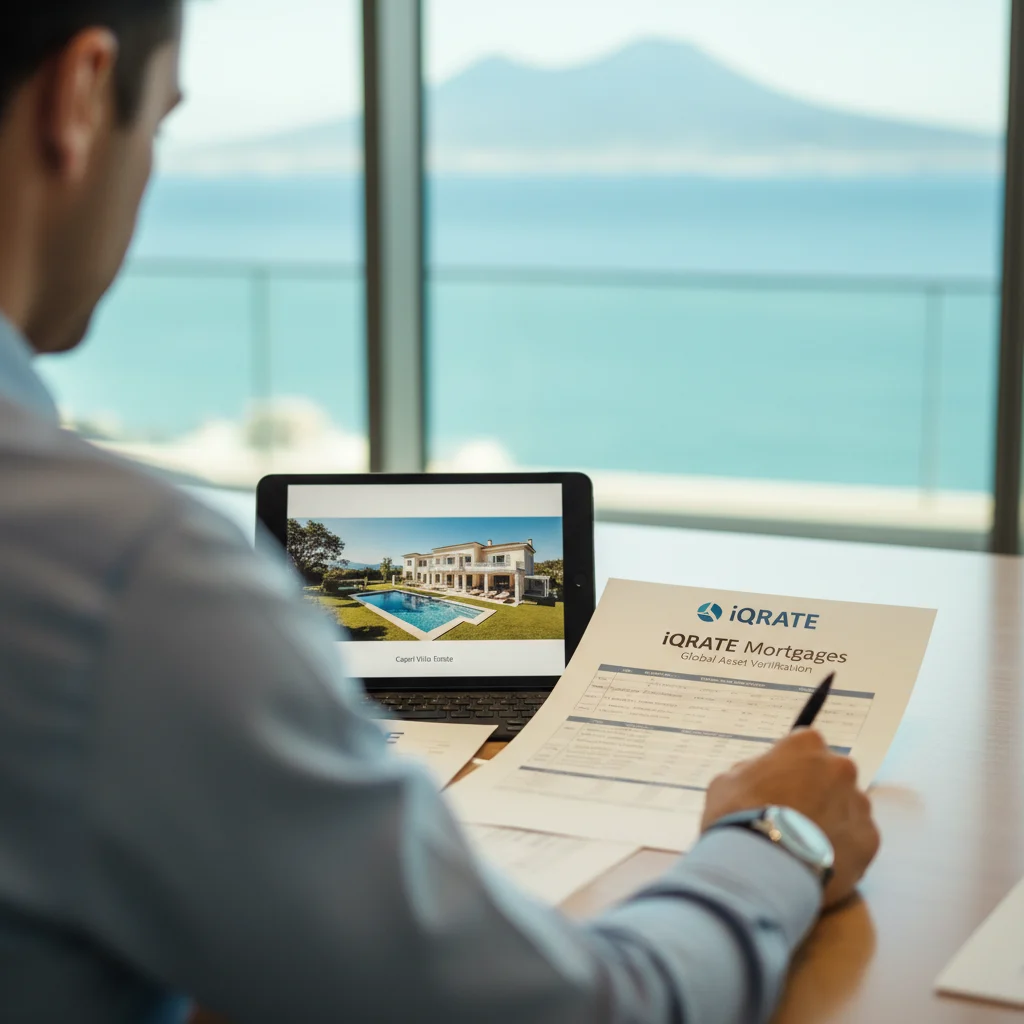
Typically, the minimum down payment for a foreign national jumbo loan starts at 30% of the purchase price. However, this can range up to 50% depending on several factors: (The data, information, or policy mentioned here may vary over time.)
- Loan Amount: Larger loan amounts often require larger down payments.
- Property Type: A single-family home may require a lower down payment than a non-warrantable condominium.
- Borrower’s Financial Profile: A borrower with exceptionally strong liquid assets and verifiable income may qualify for a 30% down payment, while a borrower with a more complex profile might be required to put down 40% or more.
Example: Let's say you are purchasing a $2.5 million vacation home in Palm Beach. A 30% down payment would be $750,000. A 40% down payment would be $1,000,000. In addition to the down payment, you must also show you have sufficient liquid reserves to cover closing costs and at least 12 months of mortgage payments (principal, interest, taxes, and insurance).
What specific legal documents are needed for a non-United States buyer?
Gathering the correct legal and identification documents is a critical step in the mortgage process for a non-U.S. buyer. Lenders have strict compliance standards and need to verify your identity and legal presence to proceed with the loan.
Here is a checklist of the essential documents you will need:
- Valid Passport: Your passport must be unexpired and serve as your primary form of identification.
- Valid U.S. Visa: You must have a valid visa that permits entry into the United States. For most property buyers, a B-1 (business) or B-2 (tourism) visa is sufficient. Lenders need to ensure you can legally travel to the U.S. to manage your property and financial affairs. (The data, information, or policy mentioned here may vary over time.)
- Proof of Foreign Address: You will need to provide a recent utility bill, bank statement, or government-issued document showing your name and current address in your country of residence.
- The Fully Executed Purchase Contract: This is the signed agreement between you and the seller for the Florida property you intend to buy.
- Translated Financial and Income Documents: As mentioned earlier, any document not originally in English must be accompanied by a certified translation.
Having these documents organized and ready to submit will prevent delays and demonstrate to the lender that you are prepared for the transaction.
How does holding the title in an LLC affect my loan application in Florida?
Many foreign nationals choose to purchase property in Florida through a Limited Liability Company (LLC) for liability protection and privacy. While this is a common and often recommended legal strategy, it can affect your mortgage application. Some conventional lenders are hesitant to lend to an entity rather than an individual.
However, lenders who specialize in foreign national financing are very familiar with this practice, especially for investment properties in markets like Miami or vacation homes in Naples. They will typically lend to a single-member LLC, but with a few key requirements: (The data, information, or policy mentioned here may vary over time.)
- Personal Guarantee: You, as the owner of the LLC, will be required to personally guarantee the loan. This means you are still personally responsible for repaying the debt if the LLC defaults.
- LLC Operating Documents: The lender will need to review the LLC’s formation documents, operating agreement, and Certificate of Good Standing to ensure it is a legitimate and properly structured entity.
Using an LLC does not typically impact the interest rate or down payment requirements, but it does add an extra layer of documentation to the underwriting process. It is essential to discuss your intention to use an LLC with your mortgage advisor early on to ensure you are working with a lender who is comfortable with this structure.
Are interest rates different for foreign national home loans?
Yes, interest rates on foreign national home loans are typically higher than those for conventional jumbo loans obtained by U.S. citizens with excellent credit. Lenders price these loans to account for the perceived additional risk and the more complex, labor-intensive underwriting process involved.
The rate differential can range from 0.50% to 1.5% higher, depending on the specifics of the loan and your financial profile. (The data, information, or policy mentioned here may vary over time.) Factors that influence the final interest rate include:
- Down Payment Amount: A larger down payment reduces the lender's risk and can result in a more favorable interest rate.
- Loan-to-Value (LTV) Ratio: A lower LTV (meaning a higher down payment) is always viewed more favorably.
- Overall Financial Strength: A borrower with very high liquidity and a strong global credit history may secure a rate on the lower end of the spectrum.
- Loan Program: Different lenders have unique programs, and rates can vary between them.
While the rate may be higher, the ability to leverage your global wealth to purchase prime real estate in Florida often makes it a worthwhile investment. Working with a mortgage broker who has access to multiple foreign national lenders is the best way to shop for and secure the most competitive rate available for your situation. Navigating a foreign national jumbo loan requires expert guidance. If you're ready to purchase a property in Florida, connect with a mortgage strategist who specializes in asset-based lending to explore your specific options and ensure a smooth process.
If you're ready to see how your global assets can secure a luxury property in Florida, our specialists in foreign national lending are here to guide you. Apply now for a confidential consultation to explore your personalized mortgage options.
Author Bio
David Ghazaryan is the expert mortgage strategist and founder behind iQRATE Mortgages. With a mission to fund home loans that traditional banks won't touch, David specializes in helping clients with unique financial situations, including those recovering from foreclosure or bankruptcy. He expertly crafts smart, strategic, and stress-free mortgages by leveraging a vast network of over 100 lenders to secure competitive rates for investors and homebuyers alike. Praised for exceptional customer service, David has helped hundreds of families with a 97% satisfaction rate, guiding them to the mortgage they deserve.
References









