


What type of visa is required to get a mortgage?
One of the most common misconceptions among foreign national buyers is that a specific work or immigrant visa is required to secure a mortgage in the United States. For investment properties, this is often not the case. Lenders offering foreign national loan programs are primarily concerned with your ability to repay the loan, not your residency status. However, the type of visa you hold can influence a lender's decision and the loan terms offered.
- B-1/B-2 (Tourist/Business) Visa: Many foreign nationals purchase investment properties or vacation homes using this common visa. Lenders understand that the property is not a primary residence and will structure the loan accordingly. You must prove you have significant ties to your home country and sufficient income and assets to support the property.
- H-1B (Specialty Occupation), L-1 (Intracompany Transfer), and other Work Visas: If you are in the United States on a work visa and intend to use the property as a primary residence, the process can sometimes be simpler. Lenders view you as a U.S. resident for tax purposes, which can open up more conventional financing options, though you will still face rigorous documentation requirements. It's important to note that the remaining duration of your visa can be a factor for some lenders.
Ultimately, for a foreign national loan on an investment property in Kissimmee or Orlando, having a valid passport and entry visa is the baseline requirement. The lender’s focus will be less on the visa type and more on the financial documentation you provide.
How do I provide proof of income from my home country?
Demonstrating stable and sufficient income is the cornerstone of any mortgage application. For foreign buyers, this means meticulously translating and converting your financial life into a format that U.S. lenders can understand and verify. You cannot simply state your income; you must prove it with official, third-party documentation.
Key Income Documents
- Employment Verification Letter: A formal letter from your employer, written on company letterhead. It must state your position, your salary in the local currency, your start date, and the terms of your employment (e.g., permanent, contract). The letter should include contact information for verification and be signed by a representative from the human resources or finance department.
- Recent Payslips: Typically, the last two to three months of payslips are required to show consistent earnings.
- Bank Statements: Two to three months of personal bank statements showing direct deposits from your employer that match your payslips.
- Tax Returns: Two years of official tax returns filed in your home country. This is a critical document for verifying long-term income stability.
Translation and Conversion
All documents not in English must be translated by a certified, independent translator. The translator must provide a letter certifying the accuracy of the translation. Additionally, all income and asset figures must be converted to U.S. dollars using a verifiable exchange rate, often from a recognized source like OANDA or the rate on the day the application is prepared. For example, if your annual salary is €90,000, you must present it as approximately $97,200 (using a 1.08 USD/EUR exchange rate), with the conversion calculation clearly shown.
What are the requirements for documenting my down payment funds?
Foreign national loans typically require a larger down payment than conventional loans for U.S. citizens, often ranging from 25% to 40%. (The data, information, or policy mentioned here may vary over time.) Lenders require this higher equity position to mitigate the perceived risk. The sourcing and seasoning of these funds are scrutinized intensely.

Sourcing and Seasoning Rules
Seasoning: Lenders need to see that the funds for your down payment and closing costs have been in your bank account for a period, typically 60 to 90 days. This is known as 'seasoning'. It proves the funds are yours and not a last-minute, un-repayable loan from someone else. You will need to provide at least two months of complete bank statements for all accounts holding these funds.
Acceptable Sources:
- Checking and savings accounts
- Investment accounts (stocks, bonds, mutual funds)
- Retirement funds (documentation on withdrawal terms is needed)
- A documented gift from a close family member. This requires a formal gift letter stating the funds are a gift with no expectation of repayment, along with evidence of the donor's ability to give the gift and a paper trail of the funds transfer.
Unacceptable Sources: Large, undocumented cash deposits are a major red flag and will almost certainly lead to a denial. Any deposit that is not from your regular payroll must be explained with a paper trail. For example, if you sold another property in Miami to fund your Orlando purchase, you must provide the final settlement statement from that sale.
Do I need a United States bank account to get a loan in Orlando?
Yes, absolutely. While you will source your down payment from your home country, establishing a U.S. bank account is a non-negotiable requirement for virtually all lenders. It serves several practical purposes and demonstrates a commitment to managing your financial obligations within the U.S. system.
First, you will need to wire your down payment and closing cost funds into this U.S. account prior to closing. The title company or closing attorney will draw the funds from this domestic account. Second, it is the account from which your monthly mortgage payments will be automatically debited. Trying to make international wire transfers every month is impractical, expensive, and prone to delays. Finally, having a U.S. bank account helps establish a financial footprint in the country, which lenders view favorably. Many large international banks and some U.S. banks allow non-residents to open accounts with proper identification.
What is the Foreign Investment in Real Property Tax Act (FIRPTA) and how does it apply?
FIRPTA is a U.S. federal law that imposes a tax on foreign persons when they sell or dispose of U.S. real property interests. It is crucial to understand that FIRPTA applies to the sale of the property, not the purchase. However, as a buyer, you have a direct role in its execution.
The law requires the buyer (or their closing agent) to act as a withholding agent for the Internal Revenue Service (IRS). When you purchase a property from a foreign person, you are generally required to withhold 15% of the gross sales price and remit it to the IRS within 20 days of closing. This ensures the foreign seller pays their due capital gains tax.
For example, if you buy a home in Kissimmee from a foreign seller for $500,000, you would be responsible for withholding $75,000 (15% of $500,000) and sending it to the IRS. The seller can later file a U.S. tax return to report the sale and may receive a refund if the actual tax liability is less than the amount withheld. There are some exemptions, most notably if the property will be used as your primary residence and the sales price is under $300,000, but this rarely applies to foreign national investors. A qualified real estate attorney or title company is essential to navigate this process correctly.
Can I get a home loan using an Individual Taxpayer Identification Number (ITIN)?
Yes. An ITIN is a tax processing number issued by the IRS for certain non-resident and resident aliens, their spouses, and dependents who cannot get a Social Security Number (SSN). For foreign nationals who earn rental income from their U.S. investment property, an ITIN is necessary to file U.S. tax returns.
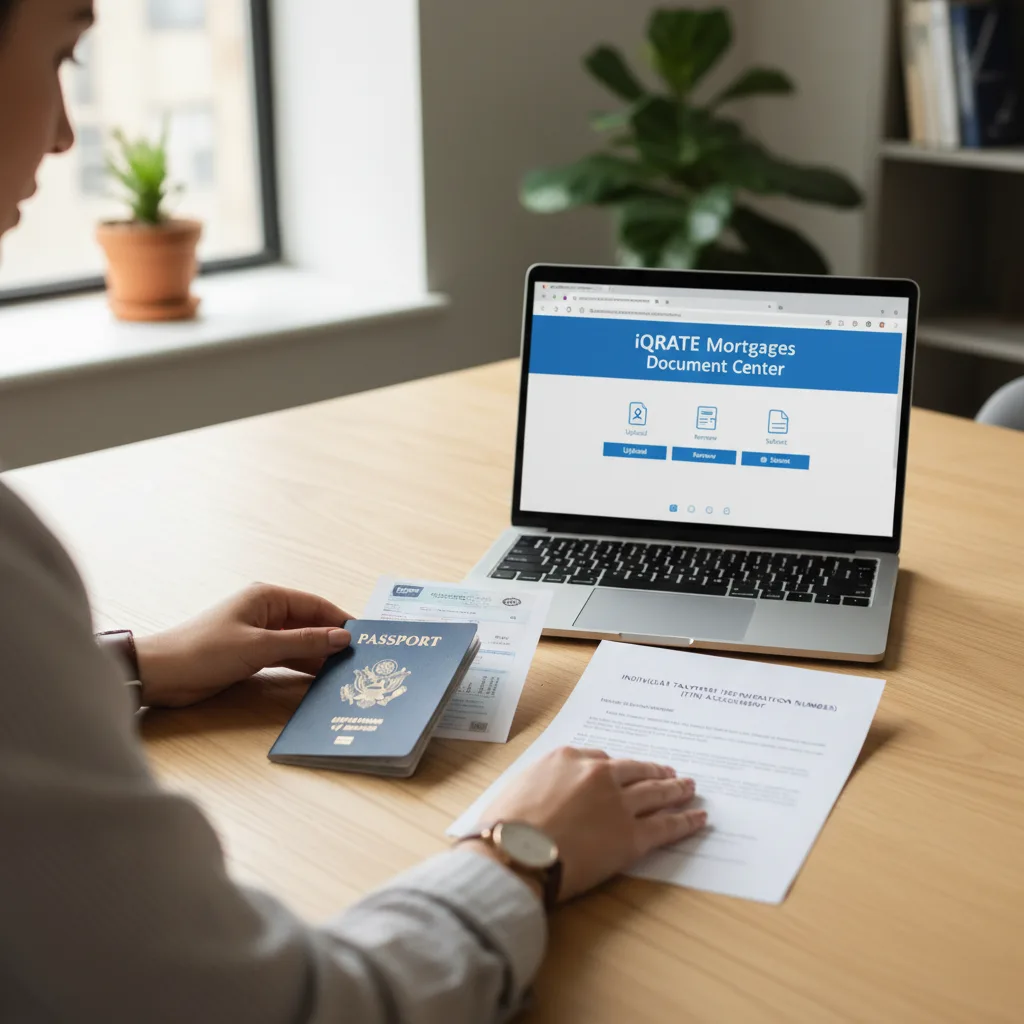
Many lenders offer specific ITIN mortgage programs designed for borrowers without an SSN. These programs function similarly to other foreign national loans but formally use the ITIN as the borrower's identifier. The documentation requirements are much the same, focusing on:
- A valid ITIN
- A valid passport and visa
- Proof of income from your home country
- Documentation of seasoned assets for the down payment
- An international credit report or alternative credit verification
ITIN loans are a vital financing tool, allowing foreign investors who are compliant with U.S. tax law to secure mortgages for properties in Orlando, Miami, and throughout Florida.
What are the typical mortgage interest rates for foreign buyers?
Foreign national borrowers should expect to pay a higher interest rate than a U.S. citizen with a comparable financial profile. Lenders price this risk premium into the rate, which can be anywhere from 0.5% to 1.5% higher than prevailing conventional rates. (The data, information, or policy mentioned here may vary over time.) For example, if a qualified U.S. buyer might secure a rate of 6.5% on an investment property, a foreign national buyer might be offered a rate between 7.0% and 8.0%.
Several factors influence the final interest rate:
- Down Payment Size: A larger down payment reduces the lender's risk. A borrower putting down 40% will likely get a better rate than one putting down the minimum 25%.
- Credit History: A strong, verifiable international credit history can lead to a more favorable rate.
- Loan-to-Value (LTV) Ratio: Lower LTV means less risk for the lender and can result in a better rate.
- Property Type: A single-family home may be viewed as less risky than a non-warrantable condo, affecting the rate.
How can I get a credit report if I do not have United States credit history?
Lenders need to assess your creditworthiness, but most foreign buyers lack a U.S. credit file and FICO score. To solve this, lenders rely on two primary methods:
International Credit Reports: Many lenders partner with third-party services that can pull credit information from your home country and format it in a way that U.S. underwriters can analyze. Reports from major credit bureaus in countries like Canada, the UK, and Australia are often easily accessible. It is crucial to work with a mortgage broker experienced in foreign national loans, as they will know which lenders accept these reports.
Alternative Credit Verification: If a formal international credit report is unavailable, some lenders will build an alternative credit history. This involves providing 12 months of verification of payments for recurring expenses. Examples include letters from your current landlord (rent verification), utility companies (electricity, water, gas), and other regular creditors in your home country. This manual underwriting process is more labor-intensive but provides a viable path to approval for borrowers from countries without a robust credit reporting system.
Securing a mortgage as a foreign national requires careful preparation and precise documentation. If you're ready to explore your loan options in Florida, our knowledgeable mortgage advisors can provide the clarity you need to move forward. Apply now to start your application.
Author Bio
David Ghazaryan is the expert mortgage strategist and founder behind iQRATE Mortgages. With a mission to fund home loans that traditional banks won't touch, David specializes in helping clients with unique financial situations, including those recovering from foreclosure or bankruptcy. He expertly crafts smart, strategic, and stress-free mortgages by leveraging a vast network of over 100 lenders to secure competitive rates for investors and homebuyers alike. Praised for exceptional customer service, David has helped hundreds of families with a 97% satisfaction rate, guiding them to the mortgage they deserve.
References
IRS - Foreign Investment in Real Property Tax Act (FIRPTA)
IRS - Individual Taxpayer Identification Number (ITIN)
CFPB - What documents can I expect to receive during the mortgage loan process?









