


What Does It Mean to 'Gross-Up' Non-Taxable Income?
When a lender evaluates your mortgage application, they focus heavily on your gross monthly income—the amount you earn before taxes are taken out. This creates a standardized way to compare all applicants. However, a problem arises when a portion or all of your income isn't taxable. Sources like Social Security Disability Insurance (SSDI), some pension plans, and child support are received tax-free.
If a lender only looks at the net amount you receive, say $3,000 per month in non-taxable disability benefits, they are not comparing it fairly to someone who earns $3,000 in taxable wages. That wage earner will have a much lower take-home pay after taxes.
To solve this disparity, underwriting guidelines allow lenders to 'gross-up' your non-taxable income. This means they increase the value of that income for calculation purposes to make it equivalent to a gross, pre-tax figure. It's a mathematical adjustment that acknowledges every dollar of your non-taxable income is available for your expenses, unlike a W-2 wage earner whose income is reduced by taxes. This simple but powerful step can be the difference between a loan denial and an approval, especially in high-cost markets like San Diego.
Which Types of Disability or Retirement Income Qualify in San Diego?
Not all income can be grossed-up. The key requirement is that the income must be verifiably non-taxable and likely to continue for at least three years. For homebuyers in San Diego and across California, several common income sources are eligible for this adjustment. An experienced loan officer will know to ask about these during your application.
Commonly accepted sources of non-taxable income include:
- Social Security Disability Insurance (SSDI): This is one of the most frequently grossed-up income types. Your annual Social Security benefit statement will typically indicate the taxable status.
- Supplemental Security Income (SSI): Similar to SSDI, these benefits are often eligible if they meet stability requirements.
- VA Disability Benefits: Compensation received from the Department of Veterans Affairs for a service-connected disability is non-taxable and can be grossed-up for both VA and other loan types.
- Certain Pension or Retirement Income: Some retirement plans, especially for government or public service employees, may provide non-taxable distributions.
- Child Support Payments: If you receive child support and can document that it is not taxed, it may be eligible. You must also prove a stable history of receiving payments and that they are court-ordered to continue for at least three years from the closing date.
- Public Assistance Programs: In some cases, income from stable and documented public assistance programs can be grossed-up.
The lender must be able to obtain documentation that explicitly states the income is tax-exempt. Simply receiving the income is not enough; its non-taxable status must be proven.
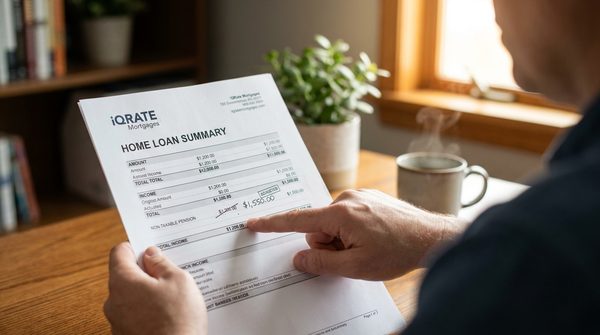
By How Much Can My Qualifying Income Be Increased in Anaheim?
The standard multiplier used by most lenders following Fannie Mae and Freddie Mac guidelines for conventional loans is 125%. This means your non-taxable income is increased by 25%. For FHA and VA loans, the gross-up is typically 115% (a 15% increase), or an amount based on the borrower's actual tax bracket from the previous year if that is higher and can be documented. (The data, information, or policy mentioned here may vary over time.) While 125% is the standard for conventional loans, it is not typically used for government-backed mortgages.
Let’s look at a practical example for a homebuyer in Anaheim, California.
- Applicant's Income: Maria receives $3,200 per month in non-taxable VA disability benefits.
- Lender's Calculation: The lender takes her monthly benefit and multiplies it by 1.25.
- Calculation: $3,200 (monthly income) x 1.25 = $4,000
- Result: For mortgage qualification purposes, the lender will use $4,000 as Maria's gross monthly income from this source, not the $3,200 she actually receives.
This $800 per month 'paper' increase in income has a massive impact on her borrowing power without her actually earning any more money. It simply levels the playing field and gives the underwriter a more accurate picture of her financial capacity.
What Documents Do I Need to Provide to the Lender?
To have your income grossed-up, you must provide clear and indisputable evidence that the income is non-taxable and stable. Lenders cannot make assumptions. Be prepared to provide the following documentation:
- Award Letter: This is the most critical document. It comes from the agency providing the benefits (e.g., Social Security Administration, Department of Veterans Affairs). The letter should detail the monthly payment amount and, ideally, mention its tax-free status.
- Recent Bank Statements: You will need to provide two to three months of bank statements showing the consistent, direct deposit of these funds into your account. The deposited amount must match the award letter.
- Federal Tax Returns: Lenders will often review your last one or two years of tax returns. They are looking to see that this specific income was not reported as taxable income, further confirming its status.
- Social Security Benefit Statement (Form SSA-1099): This form explicitly states how much, if any, of your Social Security benefits were considered taxable for the year. A box showing zero taxable income is powerful proof.
Providing this paperwork upfront can streamline your application and prevent delays. An organized file demonstrates to the underwriter that your income is reliable and correctly categorized.

How Does This Help My Debt-to-Income Ratio Calculation?
Your Debt-to-Income (DTI) ratio is arguably the most important number in your mortgage application. It's calculated by dividing your total monthly debt payments (including your future housing payment) by your gross monthly income. Most lenders want to see this ratio below 43-45%, although some programs allow for higher limits.
Grossing-up your income directly and powerfully lowers your DTI ratio.
Let's compare a scenario for a buyer in San Diego with and without the gross-up calculation.
Scenario Details:
- Monthly Non-Taxable Income: $2,800 (SSDI)
- Other Monthly Debts: $700 (car loan + credit cards)
- Proposed Monthly Housing Payment (PITI): $3,000
Calculation Without Grossing-Up
- Total Monthly Debts: $700 (other debts) + $3,000 (housing) = $3,700
- Gross Monthly Income: $2,800
- DTI Calculation: ($3,700 / $2,800) x 100 = 132% DTI
With a DTI of 132%, this applicant would be instantly denied. The lender's system sees the income as insufficient to cover the debts.
Calculation With a 25% Gross-Up
- Adjusted Gross Monthly Income: $2,800 x 1.25 = $3,500
- Total Monthly Debts: $700 + $3,000 = $3,700
- DTI Calculation: ($3,700 / $3,500) x 100 = 105.7% DTI
This is still too high, but what if the applicant was looking for a smaller loan? Let's adjust the housing payment.
Realistic Scenario With a 25% Gross-Up
Let's find the maximum housing payment this borrower could afford while staying under a 45% DTI ratio.
- Adjusted Gross Monthly Income: $3,500
- Maximum Allowable Debt: $3,500 x 0.45 = $1,575
- Maximum Housing Payment: $1,575 (max debt) - $700 (other debts) = $875
Without the gross-up, the maximum housing payment would be calculated from the $2,800 income ($2,800 * 0.45 = $1,260 total debt allowance), leaving only $560 for housing ($1,260 - $700). The gross-up calculation increased this applicant's housing affordability by over $300 per month, translating into tens of thousands of dollars in home price.
Do All Mortgage Loan Programs Allow for Grossing-Up Income?
Yes, virtually all major mortgage programs available in the U.S. have guidelines that permit the grossing-up of verified non-taxable income. This ensures fair treatment for borrowers with these income types.
- Conventional Loans (Fannie Mae & Freddie Mac): Both government-sponsored enterprises have clear guidelines allowing for grossing-up income, typically by 25%. This is the most common loan type where this strategy is used.
- FHA Loans: The Federal Housing Administration allows for grossing-up income, typically using a 115% multiplier or a figure based on the borrower's previous year's tax filings. (The data, information, or policy mentioned here may vary over time.)
- VA Loans: The Department of Veterans Affairs explicitly allows lenders to gross-up non-taxable income, which is particularly beneficial for veterans receiving disability compensation.
- USDA Loans: These rural development loans also follow standard underwriting practices and permit the adjustment for verified non-taxable income sources.
While the programs allow it, the final decision always rests with the individual lender's underwriting department. They must be satisfied with the documentation provided.
Why Might a Lender Not Offer to Gross-Up My Income?
Even though the rules permit it, you might encounter a situation where a lender or loan officer doesn't apply the gross-up. This can be frustrating and is often due to one of a few reasons:
- Inexperienced Loan Officer: Some loan officers, especially those new to the industry or who primarily handle straightforward W-2 borrower files, may simply be unaware of this specific guideline.
- Insufficient Documentation: If your award letter is unclear, your bank statements show inconsistent deposits, or you cannot prove the income is tax-exempt, the underwriter will reject the request. The burden of proof is on the borrower.
- Income Stability Concerns: The lender must be confident that the income will continue for at least three years. If an award letter for child support shows it ends in 18 months, for example, it cannot be used for qualification, let alone be grossed-up.
- Lender Overlay: Some lenders may have internal policies, known as 'overlays', that are stricter than the base guidelines from Fannie Mae or the FHA. They might require a higher credit score or a lower DTI ratio for files with non-traditional income. (The data, information, or policy mentioned here may vary over time.)
How Can I Ensure My Loan Officer Is Applying This Rule Correctly?
Advocating for yourself is key. If you receive non-taxable income, you should be proactive in discussing this with your loan officer from the very first conversation.
Here are a few steps you can take:
- Ask Directly: Start the conversation by saying, 'I receive non-taxable Social Security income. Are you familiar with the process for grossing-up this income for DTI calculation?' Their answer will immediately tell you about their experience level.
- Reference the Guidelines: Mention that you know Fannie Mae, Freddie Mac, and FHA guidelines allow for this. It shows you've done your research.
- Review Your Loan Estimate: When you receive your Loan Estimate document, ask your loan officer to show you where your gross monthly income is listed and how they arrived at that figure. It should reflect the adjusted, higher number.
- Work with a Specialist: The best strategy is to partner with a mortgage broker or loan officer who specializes in complex financial situations. They are far more likely to be experts in applying these types of underwriting rules to benefit their clients. If you receive non-taxable income in California, don't let its value be underestimated in your home loan application. Connect with a mortgage strategist who understands how to correctly apply gross-up rules to maximize your homebuying potential in San Diego, Anaheim, and beyond.
Ready to see how your non-taxable income can boost your homebuying power? Our mortgage experts are skilled in applying these rules to your advantage. Apply now to get a clear picture of what you can afford.
Author Bio
David Ghazaryan is the expert mortgage strategist and founder behind iQRATE Mortgages. With a mission to fund home loans that traditional banks won't touch, David specializes in helping clients with unique financial situations, including those recovering from foreclosure or bankruptcy. He expertly crafts smart, strategic, and stress-free mortgages by leveraging a vast network of over 100 lenders to secure competitive rates for investors and homebuyers alike. Praised for exceptional customer service, David has helped hundreds of families with a 97% satisfaction rate, guiding them to the mortgage they deserve.
References
Fannie Mae Selling Guide: Other Sources of Income









