


How Does Co-Signed Debt Impact My Debt-to-Income Ratio?
When you co-sign a loan for a friend or family member, you're not just lending them your good credit score; you're also taking on the full legal responsibility for the debt. From a mortgage lender's perspective, that debt is yours. This directly impacts your debt-to-income (DTI) ratio, which is one of the most critical factors in a mortgage approval.
Your DTI is a simple percentage that compares your total monthly debt payments to your gross monthly income. Lenders use it to assess your ability to manage monthly payments and repay a new mortgage. Most lenders look for a DTI of 43% or lower, though some programs allow for higher ratios. (The data, information, or policy mentioned here may vary over time.)
The problem is that the entire monthly payment for the co-signed loan is included in your DTI calculation, even if you've never made a single payment yourself.
A Real-World Orlando Example
Let's say you want to buy a home in Orlando, Florida. You earn a gross monthly income of $8,000. Your own monthly debts consist of:
- A car payment: $450
- Credit card minimum payments: $150
Your total personal debt is $600 per month. This gives you a DTI of 7.5% ($600 / $8,000), which is excellent.

However, two years ago, you co-signed a $500 monthly car payment for your daughter. Even though she has made every payment from her own bank account, the lender adds that $500 to your debt load. Your new total monthly debt, in the eyes of the underwriter, is now $1,100 ($600 + $500). This pushes your DTI up to 13.75%. While still low, that extra $500 payment reduces your borrowing power significantly. It could be the difference between qualifying for your dream home or being denied.
Lenders don't care about the informal arrangement you have with the primary borrower. The legal loan document states you are equally responsible, so the debt is counted against you unless you can prove otherwise.
What Specific Proof Is Needed to Exclude a Co-Signed Auto Loan?
To successfully exclude a co-signed debt from your DTI, you must provide a clean, undeniable paper trail showing the primary borrower is the one making the payments. Your word isn't enough; underwriters require concrete evidence. The goal is to prove that the funds came directly from the primary borrower's account and went to the lender without you ever touching the money.
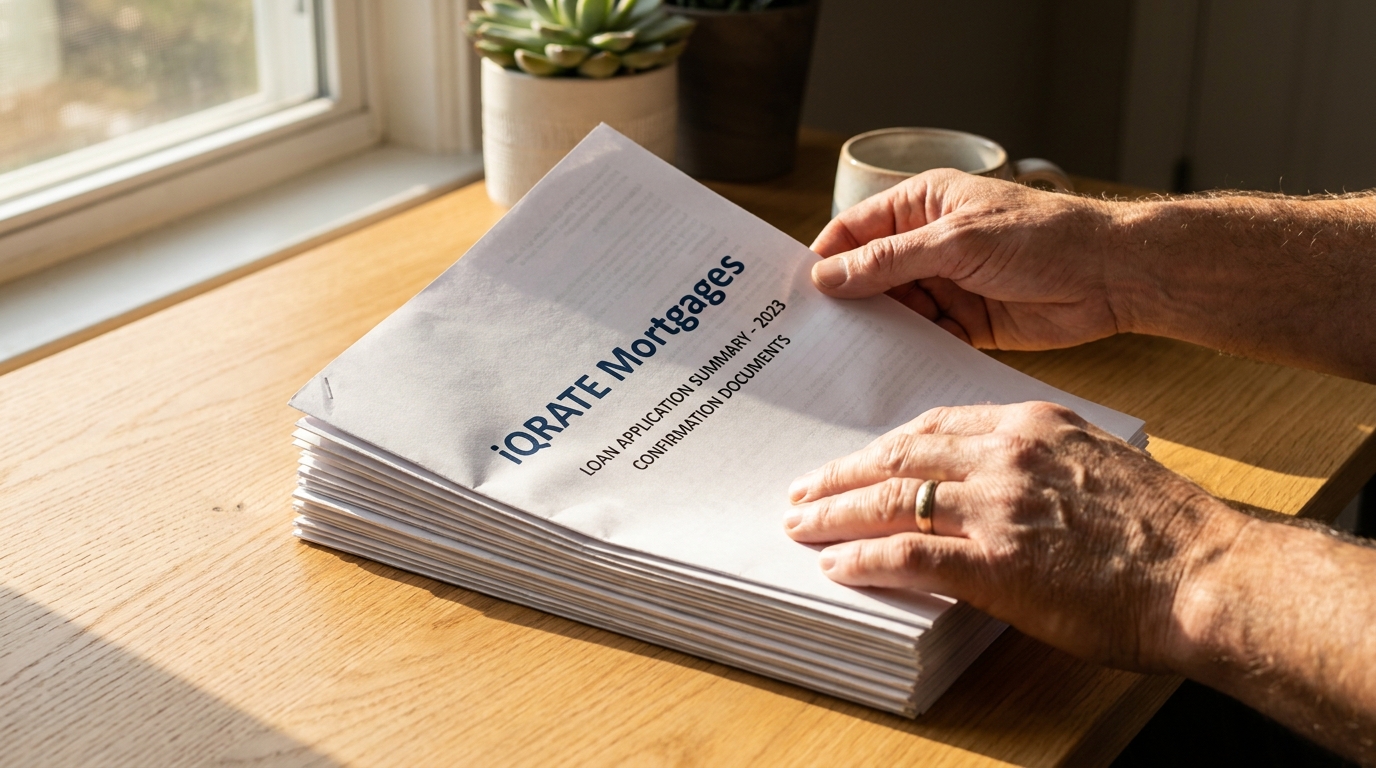
The required documentation typically includes:
- The Primary Borrower's Bank Statements: You will need complete copies of the primary borrower's bank statements for the required period (usually 12 months). The statements must clearly show their name, the account number, and the specific withdrawal for the loan payment each month. A simple transaction history printout is not sufficient.
- Canceled Checks (If Applicable): If payments were made by check, you need copies of the front and back of each canceled check for the last 12 months. The back of the check shows the endorsement from the lender, proving it was deposited.
- Proof of Electronic Transfer: If payments are made automatically, the bank statements should clearly identify the electronic funds transfer (EFT) to the specific lender each month.
It is critical that the payment is sourced directly from the primary borrower's account. If you give them cash or transfer them money to make the payment, the lender will deny your request to exclude the debt. The transaction must be clean and direct to demonstrate you are not financially involved.
How Many Months of Payment Proof Do I Need From the Primary Borrower?
The industry standard for both conventional and government-backed loans is 12 consecutive months of on-time payment proof. This is not a flexible guideline. Lenders need to see a full year of consistent payments made by the primary borrower to feel confident that you are not, and will not be, responsible for the debt.
This 12-month period must be the most recent 12 months leading up to your mortgage application. For instance, if you're applying for a mortgage in December, you'll need proof of payments from December of the previous year through November of the current year.
Why 12 months? This timeframe demonstrates a stable and reliable payment pattern. A shorter period, like six months, could be seen as a temporary arrangement set up just to help you qualify for a mortgage. A full year shows a history of independence and responsibility on the part of the primary borrower, which is what underwriters need to see to justify excluding the liability.
What Happens If the Primary Borrower Made a Late Payment?
A single late payment made by the primary borrower within the last 12 months is a deal-breaker. If there is even one payment that was more than 30 days late, the 12-month clock resets entirely.
For example, imagine you're preparing to buy a home in Kissimmee. You've gathered 11 months of perfect payment proof from your brother for the truck loan you co-signed. But you discover he made a late payment 8 months ago. Unfortunately, all the previous on-time payments no longer count toward your 12-month history. The clock restarts from the month after the late payment. You would need to wait for 12 new consecutive, on-time payments to pass before you could apply for your mortgage and ask for the debt to be excluded.
Lenders are extremely strict about this. A late payment demonstrates risk. It indicates that the primary borrower is not consistently able to handle the debt on their own, which increases the likelihood that you, the co-signer, may have to step in. For the lender, that possibility means the debt must remain on your side of the DTI ledger.
Should I Ask to Be Removed From the Loan Before Applying for a Mortgage?
Yes, absolutely. Being formally removed from the loan is the cleanest and most definitive way to solve the problem. If you can get your name off the co-signed debt entirely, it will no longer appear on your credit report or be a factor in your DTI. This eliminates the need to gather documentation and removes any uncertainty from the underwriting process.
There are two primary ways to achieve this:
- Co-signer Release: Check the original loan agreement. Some loans, particularly private student loans, include a 'co-signer release' clause. This provision allows the co-signer to be removed from the loan after the primary borrower makes a certain number of consecutive, on-time payments (e.g., 24, 36, or 48). The primary borrower must also typically meet certain credit and income requirements at the time of the request. This is less common for auto loans but is always worth investigating.
- Refinancing: The primary borrower can apply for a new loan in their name only. The new loan pays off the original co-signed debt, and the old account is closed. This effectively removes you from the obligation. Success here depends entirely on the primary borrower's ability to qualify for the new loan on their own. Their credit score, income, and DTI must have improved enough since the original loan was taken out.
While being removed is the ideal solution, it's often not possible. If a co-signer release isn't an option and the primary borrower can't qualify to refinance, the documentation method is your best and only strategy.
Does This Process Work for Both Conventional and FHA Home Loans?
Yes, the strategy of excluding a co-signed debt with 12 months of payment proof is widely accepted for both conventional and government-backed mortgage programs.
- Conventional Loans (Fannie Mae & Freddie Mac): The guidelines set by Fannie Mae, a major player in the mortgage market, explicitly allow for the exclusion of a 'contingent liability' if the lender can document that the primary borrower has been making the payments. They specifically state that 12 months of canceled checks or bank statements proving the primary party made all payments is sufficient evidence.
- FHA Loans: The Federal Housing Administration (FHA) has very similar rules. The FHA requires the lender to obtain 12 months of payment proof from the primary borrower to exclude the debt from the co-signer's DTI calculation. The goal is the same: to show that the co-signer is not the one responsible for the monthly payments.
Regardless of the loan program, the quality and clarity of your documentation are paramount. The evidence must be clear, consistent, and irrefutable.
Can I Use This Strategy If the Co-Signed Account Is a Student Loan in Sanford?
Yes, this strategy can also be applied to co-signed student loans, but there are important nuances to be aware of, especially concerning federal loans.
Let's consider a scenario in Sanford, Florida. You co-signed for your nephew's student loans while he attended a local college.
- Private Student Loans: For private student loans that are in active repayment, the process is identical to that of an auto loan. You must provide 12 months of bank statements or canceled checks from your nephew showing he has made every payment on time from his own funds.
- Federal Student Loans: This is where it gets more complex.
- If the federal loan is in active repayment and your nephew is making regular monthly payments, the 12-month proof strategy generally works.
- However, if the loan is in deferment, forbearance, or an Income-Driven Repayment (IDR) plan with a $0 monthly payment, lenders have different rules. Even with a $0 required payment, many lenders must calculate a hypothetical payment and add it to your DTI. This is often calculated as 0.5% or 1% of the total loan balance. (The data, information, or policy mentioned here may vary over time.) For a $50,000 student loan, this could mean adding a $250 or $500 'phantom' payment to your monthly debts, which can seriously impact your qualification.
If the co-signed student loan is in active repayment, gather your proof. If it is in deferment or an IDR plan, it's crucial to speak with a mortgage expert who can navigate the specific guidelines for different loan programs regarding these types of debts. If you're facing challenges with a co-signed debt impacting your mortgage plans in Orlando or Kissimmee, the key is proactive documentation. Gather your proof and speak with a mortgage strategist who understands these complex scenarios to chart a clear path to approval.
A co-signed loan doesn't have to be the end of your home buying journey. If you're ready to get a clear picture of your borrowing power and how to handle this specific challenge, our team is here to help. Apply now to begin the conversation and take the first step toward your new home.
Author Bio
David Ghazaryan is the expert mortgage strategist and founder behind iQRATE Mortgages. With a mission to fund home loans that traditional banks won't touch, David specializes in helping clients with unique financial situations, including those recovering from foreclosure or bankruptcy. He expertly crafts smart, strategic, and stress-free mortgages by leveraging a vast network of over 100 lenders to secure competitive rates for investors and homebuyers alike. Praised for exceptional customer service, David has helped hundreds of families with a 97% satisfaction rate, guiding them to the mortgage they deserve.
References
What is a debt-to-income ratio? | Consumer Financial Protection Bureau
B3-6-05, Contingent Liabilities | Fannie Mae Selling Guide
Debts Paid By Others | FHA Single Family Housing Policy Handbook









