

What is Lien Subordination and Why Is It Required for an IRRRL?
When you have a mortgage, the lender places a 'lien' on your property. This is a legal claim that secures their financial interest until the loan is paid off. The 'lien position' determines who gets paid first if you default and the home is sold through foreclosure. Your primary mortgage is always the first lien, and any subsequent loans, like a HELOC, are junior liens (e.g., second lien, third lien).
When you refinance with a VA IRRRL, you are getting a brand-new loan to pay off your old one. The old first lien is released, and the new VA IRRRL must take its place as the new first lien. However, your existing HELOC is already sitting in the second position. Without a formal agreement, it would automatically move into the first position once the old mortgage is paid off. No primary mortgage lender will ever agree to be in second place behind a HELOC.
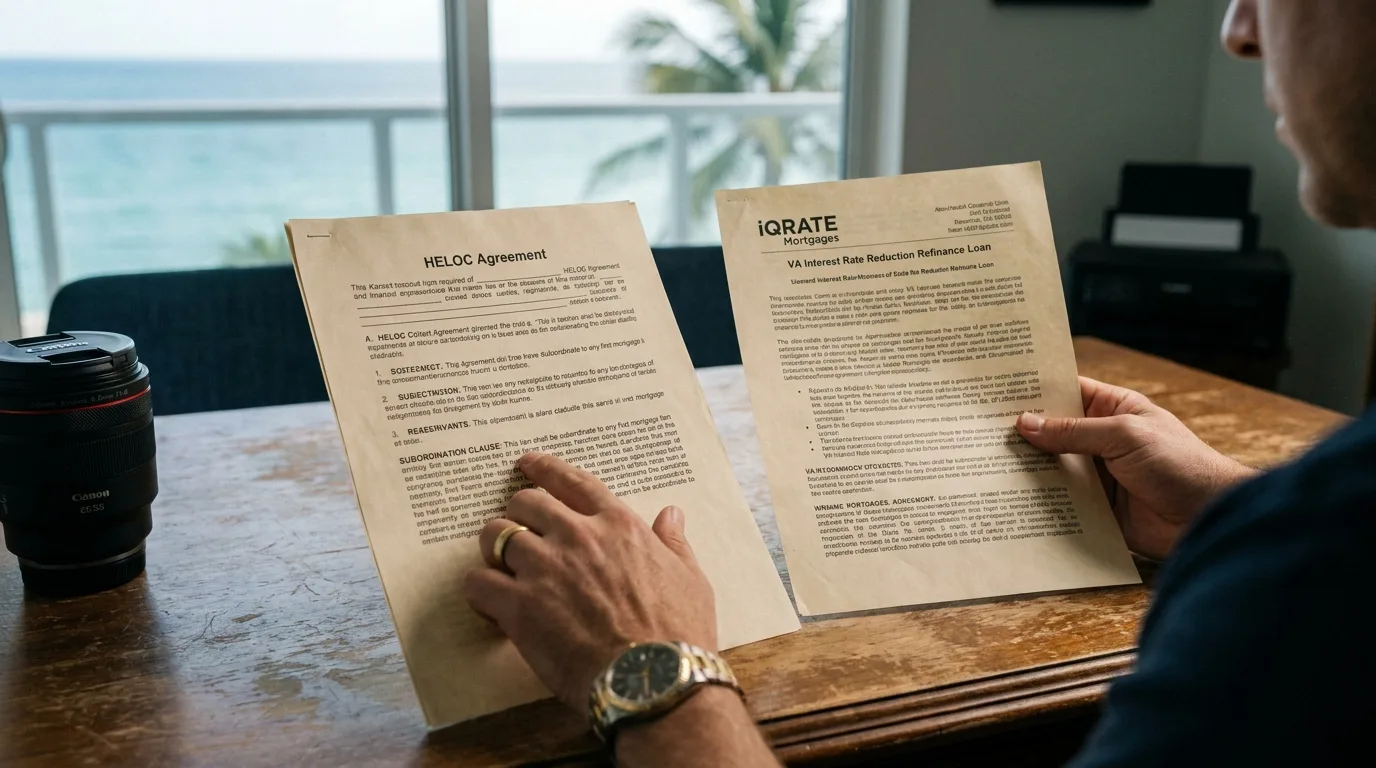
This is where lien subordination comes in. A subordination agreement is a legally binding document where your HELOC lender explicitly agrees to keep their loan in the second lien position, allowing your new VA IRRRL to take the primary first lien spot. It's a non-negotiable requirement for any refinance when a second mortgage exists.
Why Would My Current HELOC Lender Refuse to Subordinate?
You might assume your HELOC lender would be happy to sign the paperwork, but denials are surprisingly common. Their refusal is almost always a business decision based on a new assessment of risk. Here are the primary reasons your request might be denied in Florida:
- Unfavorable Loan-to-Value (LTV) Ratio: Lenders have strict limits on the combined LTV (CLTV), which is the total of all loans divided by the home's value. If property values in your Orlando neighborhood have dropped, your CLTV might now exceed their threshold. For example, if your home is now worth $500,000, your new IRRRL will be for $350,000, and your HELOC has a balance of $80,000, your CLTV is 86% (($350,000 + $80,000) / $500,000). If the HELOC lender's policy caps CLTV at 85%, they will deny the subordination request. (The data, information, or policy mentioned here may vary over time.)
- Changes in Your Financial Profile: The lender will re-evaluate your creditworthiness. If your credit score has fallen, your income has decreased, or you've taken on significant new debt since you first opened the HELOC, you now represent a higher risk to them. They may not be willing to stay in a second position behind a large new loan if they believe your ability to repay has weakened.
- Features of the New Loan: Sometimes, the issue is with the new IRRRL itself. While IRRRLs are typically straightforward, if the new loan amount is significantly higher than the old one (perhaps from rolling in closing costs and funding fees), it increases the HELOC lender's risk. They are now second in line behind a larger debt, meaning they are less likely to recover their money in a foreclosure.
- Internal Lender Policy: Some banks and credit unions simply have rigid internal policies that prohibit subordination. They may have been burned by losses in the past or decided the administrative hassle isn't worth it. In these cases, the denial has nothing to do with you personally; it's just their way of doing business. (The data, information, or policy mentioned here may vary over time.)
What is the Step-by-Step Process for Requesting Subordination?
Navigating the subordination process requires patience and coordination between your new IRRRL lender and your current HELOC lender. Your new lender should drive the process.
- Notify Your New Lender: The moment you apply for the VA IRRRL, inform your loan officer that you have an existing HELOC. This is the most important first step. They will know exactly what to do and will begin preparing the necessary paperwork.
- Provide HELOC Information: You will need to provide your new lender with a copy of your HELOC statement, which includes your account number and the lender's contact information.
- The New Lender Submits a Request: Your new lender's processing team will formally contact your HELOC lender's subordination department. They will submit a package containing the subordination request, a copy of your new loan application, the estimated closing statement, and sometimes a new appraisal if the HELOC lender requires one.
- HELOC Lender Underwriting: The request enters the HELOC lender's queue. An underwriter will review the package, re-evaluate the risk based on your current financials and property value, and make a decision.
- Approval and Document Preparation: If approved, the HELOC lender will draft the subordination agreement. This legal document is then sent to your new lender or the title company.
- Signing and Recording: The subordination agreement must be signed and legally recorded with the county, often at the same time as your new mortgage documents. This officially solidifies the lien positions.
Are There Fees Associated With a Subordination Agreement?
Yes, you should expect to pay a fee for the subordination service. HELOC lenders charge this fee to cover the administrative and legal costs of reviewing your file and preparing the legal documents. The cost typically ranges from $75 to $300, although it can sometimes be higher depending on the lender. (The data, information, or policy mentioned here may vary over time.)
This fee is considered a closing cost and will be listed on your settlement statement. It is paid by you, the borrower, as part of the funds you bring to closing or, if permitted, rolled into your loan amount.
What Are My Options if My Subordination Request is Denied?
A denial can feel like a dead end, but you still have several strategic options to save your refinance. Don't panic; instead, work with your mortgage advisor to determine the best path forward.
Appealing the Lender's Decision
First, find out the specific reason for the denial. If the reason was a low property value, you could pay for a new appraisal to challenge their number. If it was based on incorrect information about your income or assets, you can provide updated documentation. A direct appeal with new information can sometimes be enough to reverse the decision.
Paying Off and Closing the HELOC
If you have the savings, the most straightforward solution is to pay the HELOC balance down to zero and formally close the account. Once the lien is released, there is nothing to subordinate, and your VA IRRRL can proceed without issue. This is the cleanest but often least feasible option for many homeowners.
Consolidating Both Loans with a VA Cash-Out Refinance
This is a very common and effective strategy. Instead of an IRRRL, you would apply for a VA cash-out refinance. This type of loan allows you to get a new, larger mortgage that pays off both your existing VA loan and your HELOC. The result is a single new VA mortgage and one monthly payment. The main drawbacks are that the VA funding fee is higher for cash-out loans, and the interest rate may be slightly higher than what you would get with a streamlined IRRRL.
Can I Pay Off the HELOC with the Veteran Affairs IRRRL?
No, this is a critical rule of the VA IRRRL program. An IRRRL is strictly for reducing your interest rate and monthly payment on an existing VA loan. It is not a cash-out loan. VA guidelines expressly forbid you from using IRRRL proceeds to pay off other debts, including a second mortgage or HELOC. Attempting to do so is a violation of the program's purpose. To consolidate a HELOC with your primary mortgage, you must use a VA cash-out refinance.
How Long Does the Subordination Process Typically Take in Miami?
Waiting for a subordination agreement is one of the most common causes of closing delays. In a busy market like Miami, you should budget extra time for this step. From the initial request to receiving the signed agreement, the process typically takes anywhere from two to six weeks. (The data, information, or policy mentioned here may vary over time.)
Delays can be caused by several factors:
- Lender Volume: Large national banks often have significant backlogs in their subordination departments.
- Communication Gaps: Slow communication between your new lender and the HELOC servicer can stall the process.
- Paperwork Issues: Missing or incomplete documents in the request package can send it to the back of the line.
It is crucial to have your new lender start the subordination request as early as possible in the loan process to avoid pushing back your closing date.
Should I Talk to My Mortgage Lender or HELOC Lender First?
Always start with your new mortgage lender—the one providing the VA IRRRL. While it may seem logical to call your HELOC provider first, they won't be able to do anything without a formal request and a complete package of documents from your refinancing lender.
Your new loan officer and their processing team are experts at this. They know exactly what each HELOC lender requires, how to package the request for the best chance of approval, and who to contact to follow up. Let them initiate and manage the entire subordination process on your behalf. They have the experience and systems in place to handle the communication and paperwork efficiently. If you're facing a subordination denial in Florida or just starting the IRRRL process with a HELOC, the right strategy is key. Contact a mortgage expert who understands VA loans and complex lien scenarios to explore your best options.
Dealing with lien subordination can be a major hurdle in your VA IRRRL refinance. Don't let a HELOC stop you from securing a lower interest rate. Our team is experienced in navigating these complex scenarios. Apply now to get expert guidance and see how much you could save.
Author Bio
David Ghazaryan is the expert mortgage strategist and founder behind iQRATE Mortgages. With a mission to fund home loans that traditional banks won't touch, David specializes in helping clients with unique financial situations, including those recovering from foreclosure or bankruptcy. He expertly crafts smart, strategic, and stress-free mortgages by leveraging a vast network of over 100 lenders to secure competitive rates for investors and homebuyers alike. Praised for exceptional customer service, David has helped hundreds of families with a 97% satisfaction rate, guiding them to the mortgage they deserve.
References
Consumer Financial Protection Bureau - What is a subordination agreement?
U.S. Department of Veterans Affairs - Interest Rate Reduction Refinance Loans









