


Required Income Documents From Each Gig Platform
When you apply for a mortgage in Las Vegas as a gig worker, underwriters require a comprehensive paper trail to verify your income's stability. Unlike a W-2 employee with a predictable paycheck, your earnings must be proven over time. You are essentially treated as a self-employed business owner, and the documentation reflects that. Be prepared to provide the following from each platform you work with, such as Uber, DoorDash, Instacart, or Upwork.
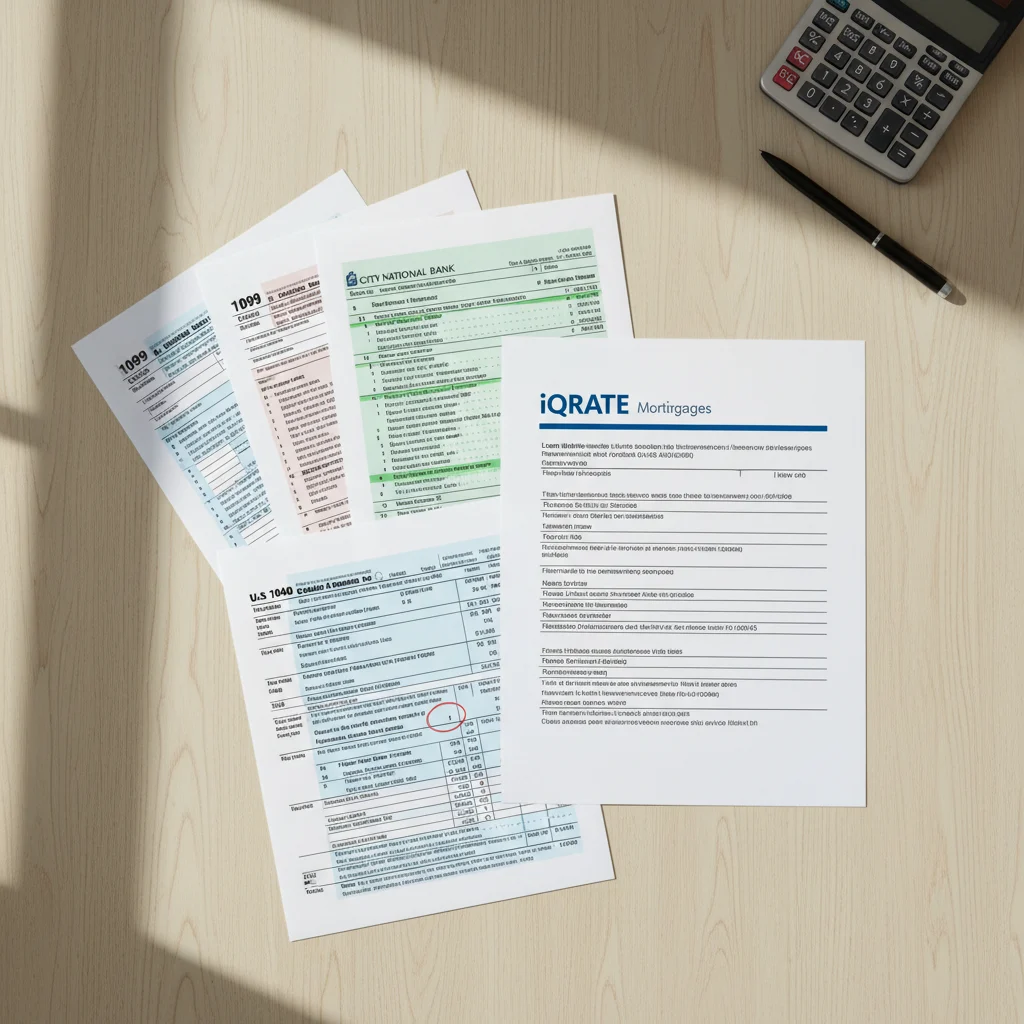
- Form 1099-NEC (Nonemployee Compensation): This is the most critical document. It reports the gross income each platform paid you during the calendar year. Lenders use this as the starting point for their calculations.
- Form 1099-K: Some platforms use this form to report payments processed through a third-party network. If you receive one, you must provide it.
- Complete Federal Tax Returns (Past Two Years): You will need to submit your full tax returns, including all schedules. For gig workers, the most important is Schedule C (Profit or Loss from Business), which details your gross income and, crucially, all the business expenses you deducted.
- Bank Statements (Minimum 2-3 Months): Lenders want to see consistent deposits from your gig work. Providing statements from both your personal and business accounts helps paint a clear picture of your cash flow.
- Year-to-Date Profit and Loss (P&L) Statement: If you are applying mid-year, a P&L statement prepared by you or an accountant shows your income and expenses for the current, incomplete year. This demonstrates that your income is stable or growing.
Lender Income Averaging: 12 vs. 24 Months
One of the most common points of confusion for gig workers is how lenders turn fluctuating monthly payments into a single, reliable income figure for qualification. The industry standard is to average your income over a 24-month period. This long-term view helps smooth out seasonal highs and lows, giving the lender confidence in your ability to make future mortgage payments.

However, there are exceptions. If you have a strong history and can demonstrate stability, some loan programs may allow for a 12-month average. This is often possible if you have been in the same line of work for at least five years, even if part of that was as a W-2 employee. (The data, information, or policy mentioned here may vary over time.)
How the Calculation Works
Let's break it down with a realistic example for a homebuyer in Henderson, Nevada.
- Year 1 Net Income (from Schedule C): $55,000
- Year 2 Net Income (from Schedule C): $65,000
24-Month Average Calculation:
- Add the net incomes from both years:
$55,000 + $65,000 = $120,000 - Divide the total by 24 months:
$120,000 / 24 = $5,000 - Qualifying Monthly Income: $5,000
If Year 2 income was lower than Year 1, the lender would likely use the lower figure or ask for a detailed explanation for the decline. Consistent or increasing income is key.
Proving Consistent History with Fluctuating Pay in Henderson
Gig work income is rarely the same month to month. One month you might earn $7,000, and the next, it could be $4,500. While this is normal for you, it can look like instability to an underwriter. Your job is to provide context and evidence that this fluctuation is part of a stable, predictable pattern.
Here’s how to build a strong case for your Henderson mortgage application:
- Use a Separate Business Bank Account: Funnel all your earnings from every gig platform into one dedicated business account. This creates a clean, easy-to-follow record of deposits. It prevents underwriters from having to sift through personal transactions to find your income.
- Highlight Deposits on Bank Statements: Before submitting your statements, use a highlighter to mark every single deposit from your gig platforms. You can even include a cover letter or summary sheet that totals the deposits for each month.
- Provide a Detailed P&L Statement: A well-organized, year-to-date P&L can show that even with fluctuating revenue, your business remains profitable and on track with previous years.
- Write a Letter of Explanation (LOE): If you had a particularly slow month, address it proactively. Explain the reason, whether it was due to a vacation, seasonality common in your industry (e.g., fewer tourist rideshares in the Las Vegas summer), or a temporary focus on a different platform.
Will Gaps in Gig Employment History Cause a Loan Denial?
A short gap in your gig work history is not an automatic loan denial, but it does require an explanation. Lenders are primarily concerned with long, unexplained periods without income.
- Short Gaps (Less than 30 days): These are generally not a major issue. Most lenders understand that taking a vacation or a brief break is normal. You may be asked to provide a simple written explanation.
- Long Gaps (More than 30-60 days): A gap of several months will raise a red flag. The underwriter will need a very compelling reason for the gap, such as a documented medical issue or family emergency. You must also be able to show that you have since returned to the same line of work and have re-established a consistent pattern of earnings for at least 6-12 months post-gap. (The data, information, or policy mentioned here may vary over time.)
If you switched from a W-2 job to full-time gig work in the same field without a gap, this is often viewed favorably. For example, if you were a W-2 delivery driver and then started driving for DoorDash, the lender can use your W-2 history to support your new self-employment income, potentially reducing the two-year history requirement.
How Lenders Account for Business Expenses
This is the single most important concept for gig workers to understand: Lenders qualify you based on your net income, not your gross income. Your net income is what remains after you subtract all your business-related expenses on your Schedule C tax form.
Many self-employed individuals are advised to maximize their deductions to lower their tax burden. While this is a smart tax strategy, it directly reduces the amount of income you can use to qualify for a mortgage. Every dollar you write off is a dollar you can't use for loan qualification.
Example: The Impact of Write-Offs
Imagine a gig worker in Las Vegas has the following financials:
- Gross Income from all platforms: $110,000
- Business Expenses (Mileage, phone, supplies, etc.): $40,000
- Net Income (Line 31 on Schedule C):
$110,000 - $40,000 = $70,000
The lender will use the $70,000 figure (or a 24-month average of it) to determine the loan amount, not the $110,000 you actually received. Before applying for a mortgage, it may be strategic to reduce your write-offs for a year or two to show a higher qualifying income.
The Best Way to Organize Your Bank Statements
An underwriter's job is to analyze risk. The more organized your financial documents are, the easier it is for them to verify your income and approve your loan. Disorganized, messy bank statements can lead to delays and unnecessary questions.
Follow these steps for a smooth review process:
- Consolidate Your Income: As mentioned, use a single bank account for all business deposits. This is the cleanest method.
- Provide All Pages: When you submit bank statements, you must include all pages, even the blank ones or those containing only legal disclaimers. A missing page will halt the process.
- Explain Large, Non-Business Deposits: If you have any large, unusual deposits that are not from your gig work (e.g., a gift from a relative, sale of a car), be prepared to source them. Provide a letter of explanation and a paper trail showing where the money came from.
- Avoid Bounced Checks or Overdrafts: Lenders see this as a sign of financial mismanagement. Ensure your accounts are in good standing for at least 6-12 months before applying.
Using a Profit and Loss Statement for Your Las Vegas Application
A Profit and Loss (P&L) statement is a financial summary of your business's revenues, costs, and expenses over a specific period. For a mortgage application, it’s most often used to document your income for the current year, since you haven't filed taxes for it yet.
While you can create your own P&L, a statement prepared and signed by a third-party professional like a Certified Public Accountant (CPA) or tax preparer carries significantly more weight with an underwriter. It should be broken down by month and match the deposits shown on your business bank statements. This P&L, combined with your bank statements, serves as proof that your income for the current year is consistent with the income reported on your previous two years of tax returns.
Getting a Home Loan with Less Than Two Years of Gig Work
While the two-year history rule is standard, it's not set in stone. Under certain circumstances, you may be able to qualify for a conventional loan with as little as 12 months of gig work history. (The data, information, or policy mentioned here may vary over time.)
To be considered for this exception, you typically need to meet these conditions:
- Strong Related Experience: You must provide evidence that you worked in the same industry or had a similar job role as a W-2 employee before starting your gig work. For example, a former W-2 graphic designer who now works as a freelance designer on Upwork.
- Sufficient Income: Your 12-month average income must be enough to comfortably qualify for the loan.
- Strong Overall Profile: You will need excellent credit, a low debt-to-income ratio, and significant assets or reserves.
Documentation for this scenario includes your last W-2, pay stubs from your previous job, and your full tax return from the most recent year showing your self-employment income. Navigating a mortgage application with gig worker income can be complex. If you're in Nevada and need a clear strategy to present your earnings, working with a mortgage expert who specializes in self-employed borrowers can make all the difference in getting your loan approved.
Navigating the mortgage process with a variable income can feel challenging, but you don't have to do it alone. If you're ready to see how your gig work can translate into homeownership, we're here to help you build a strong application. Apply now to get a clear and personalized path forward.
Author Bio
David Ghazaryan is the expert mortgage strategist and founder behind iQRATE Mortgages. With a mission to fund home loans that traditional banks won't touch, David specializes in helping clients with unique financial situations, including those recovering from foreclosure or bankruptcy. He expertly crafts smart, strategic, and stress-free mortgages by leveraging a vast network of over 100 lenders to secure competitive rates for investors and homebuyers alike. Praised for exceptional customer service, David has helped hundreds of families with a 97% satisfaction rate, guiding them to the mortgage they deserve.
References
Fannie Mae Selling Guide: B3-3.1-09, Other Sources of Income
Consumer Financial Protection Bureau (CFPB): Explore the home loan process









