

Why Lenders Scrutinize Large Deposits in Sacramento
When you apply for a mortgage in Sacramento, your lender will review your bank statements for the last 60 to 90 days. (The data, information, or policy mentioned here may vary over time.) They are looking for stability, sufficient funds for closing, and any unusual activity. A large, undocumented deposit is one of the biggest red flags an underwriter can find. It is not because they are suspicious of your family's generosity; it is because they must comply with federal regulations and their own risk management protocols.
There are two primary reasons for this scrutiny:
- Anti-Money Laundering (AML) Laws: Federal laws like the Bank Secrecy Act and the Patriot Act require financial institutions to monitor for and report suspicious activity. A large sum of money appearing in an account without a clear source could theoretically be linked to illegal activities. Lenders are on the front lines of preventing this and must source all large deposits.
- Undisclosed Debt: The underwriter’s main job is to confirm your ability to repay the loan. If a $40,000 deposit appears in your account, they have no way of knowing if it is a true gift or a loan from a relative that you are expected to repay. An undisclosed loan would increase your monthly obligations and your debt-to-income (DTI) ratio, potentially making you ineligible for the mortgage. They must prove the money is a gift, not a debt.
For example, if you are buying a home in Folsom for $750,000 and a $75,000 deposit suddenly appears in your checking account, the underwriter will halt the process. They will issue a 'prior to approval' condition requiring you to source those funds. Until you can provide a satisfactory paper trail and explanation, your loan application is at a standstill.
The Correct Way to Receive a Down Payment Gift
To avoid issues, it is critical to handle gift funds according to lender guidelines from the very beginning. The goal is to create a clean, easy-to-follow paper trail that leaves no room for questions. There are two primary, lender-approved methods for receiving a down payment gift.
- Method 1: Donor to Escrow (The Preferred Method) This is the cleanest and most recommended approach. The person giving you the gift wires the funds directly to the escrow or title company handling the transaction. This way, the money never touches your personal bank account, eliminating the need for underwriters to scrutinize your statements for the deposit. You will still need to provide a signed gift letter from the donor.

Method 2: Donor to Borrower (Requires a Perfect Paper Trail) If the funds must go through your account, the process must be flawless.
- Sign the Gift Letter First: Before any money is moved, the donor must sign a formal gift letter. We will detail what this includes below.
- Use a Traceable Method: The donor should transfer the money via a wire transfer or cashier's check. Never use cash. Cash is nearly impossible to source and is a massive red flag for lenders.
- Document the Entire Path: You will need to provide the lender with copies of everything: the signed gift letter, the donor's bank statement showing they had the funds to give, a copy of the wire receipt or cashier's check, and your bank statement showing the exact amount being deposited.
Following these steps ensures the underwriter can clearly see where the money came from, that it was a legitimate gift, and that no new debt was created.
Essential Documents from the Gift Donor
If you have already made the mistake of depositing the gift funds without documentation, your emergency action plan is to retroactively gather all the paperwork the lender needs. You must contact the person who gave you the money immediately and ask them to provide the following documents:
A Signed Gift Letter: This is a non-negotiable formal letter. It must be signed and dated by the donor and include:
- The donor's full name, address, and phone number.
- Your full name and your relationship to the donor (e.g., 'mother', 'father', 'grandparent').
- The exact dollar amount of the gift (e.g., '$50,000').
- The address of the property you are purchasing in Sacramento.
- A clear and explicit statement that the money is a gift and there is no expectation of repayment, in any form, ever.
Proof of the Donor's Ability to Give: The donor must prove they had the funds available to give. This typically requires providing one to two months of their bank statements. The statements must show their name and account number, and crucially, they must show that the gift amount was in their account before it was transferred to you. (The data, information, or policy mentioned here may vary over time.) They can black out other transaction details if they wish, but the balance and key information must be visible.
Evidence of the Fund Transfer: You need to document the money's journey from the donor's account to yours. This requires:
- A copy of the wire transfer confirmation or a copy of the front and back of the cleared cashier's check.
- A copy of your bank statement showing the deposit of the exact same amount from the transfer.
Writing a Letter of Explanation for the Gift Funds
In addition to the donor's documents, you will need to write a Letter of Explanation (LOE) to the underwriter. This is your chance to clearly and concisely explain the situation, acknowledge the mistake, and show that you have corrected it.
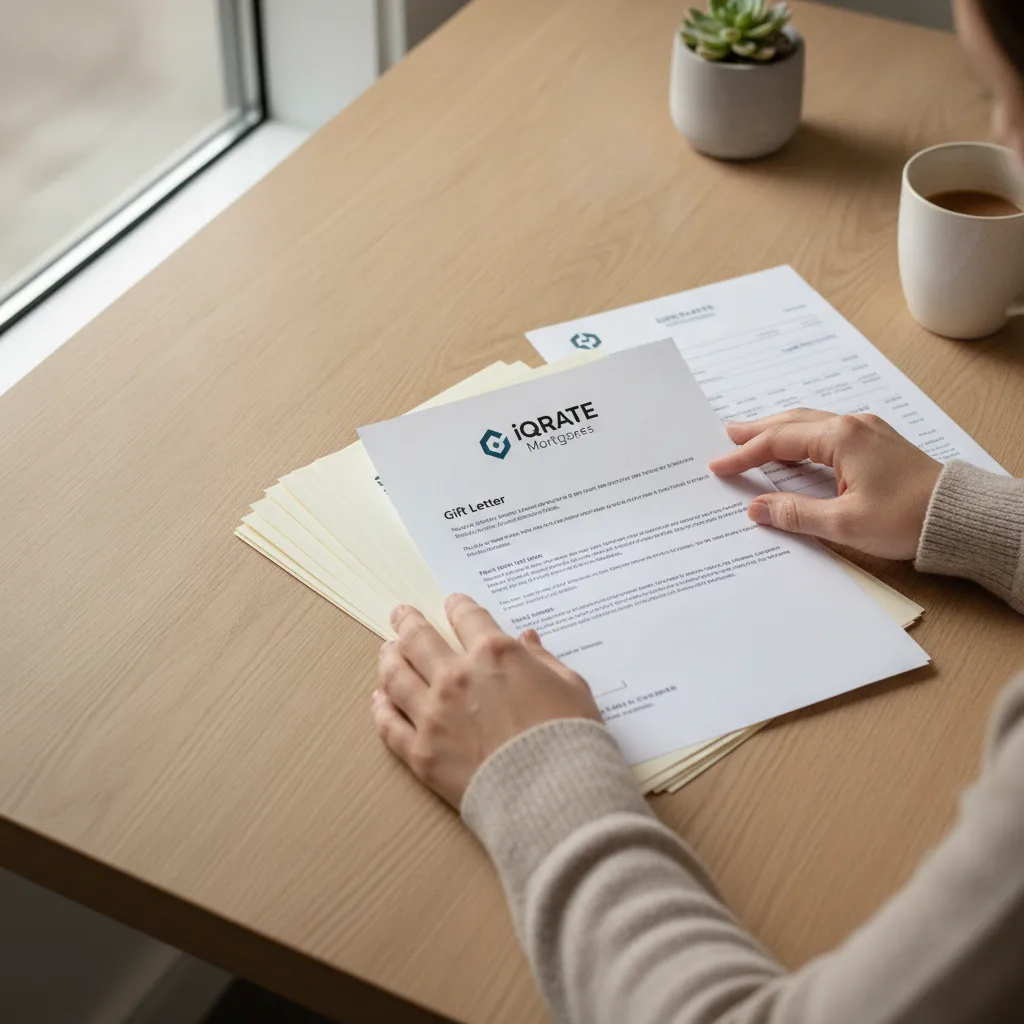
Your LOE should be simple and factual. Do not add emotional details. Follow this structure:
- State the Facts: Begin by identifying the transaction. 'To the Underwriting Department, this letter is in reference to the deposit of $50,000 into my checking account (ending in 1234) on October 26, 2023.'
- Explain the Source: Clearly state where the money came from. 'This deposit was a gift from my mother, Jane Doe, to be used for the down payment and closing costs for the property located at 123 Main Street, Folsom, CA.'
- Acknowledge the Procedural Error: Briefly explain what happened. 'At the time of the transfer, we were not aware of the specific documentation requirements for gift funds and the money was transferred directly into my account for convenience.'
- Confirm Corrective Action: Detail the documents you are providing to resolve the issue. 'To properly source these funds, we have attached the following documents: a signed gift letter from Jane Doe, her bank statement showing the availability of the funds prior to transfer, and the wire transfer confirmation.'
- Sign and Date: End with your signature and the date.
This letter, combined with the supporting documents, provides the underwriter with the complete package they need to clear the condition.
Can You Reverse the Transaction and Redo It?
In some cases, it might seem easier to just 'undo' the mistake. This would involve you transferring the exact gift amount back to the donor's account, and then having them re-send it the correct way (ideally, directly to escrow). While this is technically possible, it is often not the best solution.
Reversing the transaction creates two more large transactions that the underwriter must now review and question: the money leaving your account and the money leaving the donor's account a second time. This can complicate the file further and will almost certainly cause more delays. The better approach is usually to document the original transaction retroactively as described above. Only consider reversing the transaction as a last resort and after discussing it thoroughly with your loan officer.
Handling Gift Money from a Foreign Bank Account in Folsom
Using gift funds from a non-U.S. foreign bank account adds significant complexity, especially for buyers in competitive markets like Folsom. Lenders apply an even higher level of scrutiny to foreign funds due to the difficulty in verifying the source and the path of the money.
Expect these additional requirements:
- Document Translation: All documents, including bank statements and letters from foreign institutions, will need to be translated into English by a certified translator.
- Currency Conversion: You will need to provide documentation showing the currency exchange rate at the time of the transfer.
- Clear Paper Trail: The international wire transfer receipt is critical. It must show a clear path from the foreign bank to your U.S. bank account.
This process takes much longer than sourcing domestic funds. If you are using a foreign gift, you must inform your loan officer at the very beginning of the process to build extra time into your closing timeline.
Will This Mistake Delay My Closing Date in Sacramento?
Yes, absolutely. A last-minute discovery of an undocumented large deposit is one of the most common causes of closing delays. When an underwriter flags the deposit, your loan file is effectively paused. The timeline looks like this:
- The underwriter issues a condition for sourcing the funds.
- Your loan officer notifies you.
- You must contact the donor to request sensitive financial documents.
- You gather the documents, write your LOE, and submit them to the lender.
- The loan processor reviews the package and sends it back to the underwriter.
- Your file goes back into the underwriter's queue, which could take 24-72 hours or more, depending on their workload. (The data, information, or policy mentioned here may vary over time.)
This entire process can easily add a week or more to your timeline, jeopardizing the closing date in your purchase contract. This can create stress and potentially put your earnest money deposit at risk if you cannot get an extension from the seller.
How to Prevent Gift Fund Problems from the Start
Prevention is always the best strategy. If you know you will be receiving a gift for your down payment, follow these simple rules:
- Communicate Early and Often: Tell your loan officer about the gift at your very first meeting. They will give you specific instructions based on their lender's requirements.
- Do Not Move Any Money: Instruct your generous family member not to transfer any money until you have received clear instructions from your lender.
- Never Accept Cash: Insist on a wire transfer or cashier's check for all transactions.
- Prepare the Donor: Let the person giving the gift know in advance that they will need to sign a letter and provide a bank statement. This manages their expectations and ensures their cooperation.
- Aim for Donor-to-Escrow: Whenever possible, have the donor wire the funds directly to the title or escrow company. It is the simplest and safest path to a smooth closing. Gift fund rules can be complex. If you're planning on using a gift for your down payment in California, discussing the process with a mortgage strategist upfront can prevent stressful, last-minute surprises and ensure a smooth closing.
The rules for down payment gifts can be complex, but they shouldn't stand in the way of your homeownership goals. If you're ready to proceed with a team that can provide clear guidance on every step of the process, we invite you to Apply now.
Author Bio
David Ghazaryan is the expert mortgage strategist and founder behind iQRATE Mortgages. With a mission to fund home loans that traditional banks won't touch, David specializes in helping clients with unique financial situations, including those recovering from foreclosure or bankruptcy. He expertly crafts smart, strategic, and stress-free mortgages by leveraging a vast network of over 100 lenders to secure competitive rates for investors and homebuyers alike. Praised for exceptional customer service, David has helped hundreds of families with a 97% satisfaction rate, guiding them to the mortgage they deserve.
References
CFPB: What is a gift letter for a mortgage, and what should it say?









